Best Electrical Sockets 2026 for Global Buyers

Electrical Sockets may look simple, but the wrong choice can leave a plug loose, block a neighboring outlet, or fail to suit local voltage and plug types. For global buyers, the details matter: socket configuration, rated voltage and current, grounding, shutter design, materials, and installation method. Electrical engineer Elena Ward offers a practical reminder: “A socket is only the right choice when its rating, design, and installation fit the equipment and the place it will be used.” Treat this as a buying principle, not a substitute for product documentation or qualified advice.

This guide to the Best Electrical Sockets 2026 compares options for homes, offices, and commercial projects. It considers everyday details, too: whether a bulky adapter hides the next outlet, whether a child-resistant shutter is included, and whether the terminal layout suits the installer. Small differences can matter. A polished faceplate tells you little about the quality of internal contacts.

There is no single best socket for every market. Standards, plug shapes, and installation practices vary by region, so buyers should check the manufacturer’s specifications and applicable local requirements before ordering. Compare certified product information, warranty terms, and replacement availability—not just price or appearance. Some listings leave key details unclear. That deserves a second look. Our overview aims to make those trade-offs easier to see, while recognizing that a product ranking cannot replace an on-site assessment or professional installation.
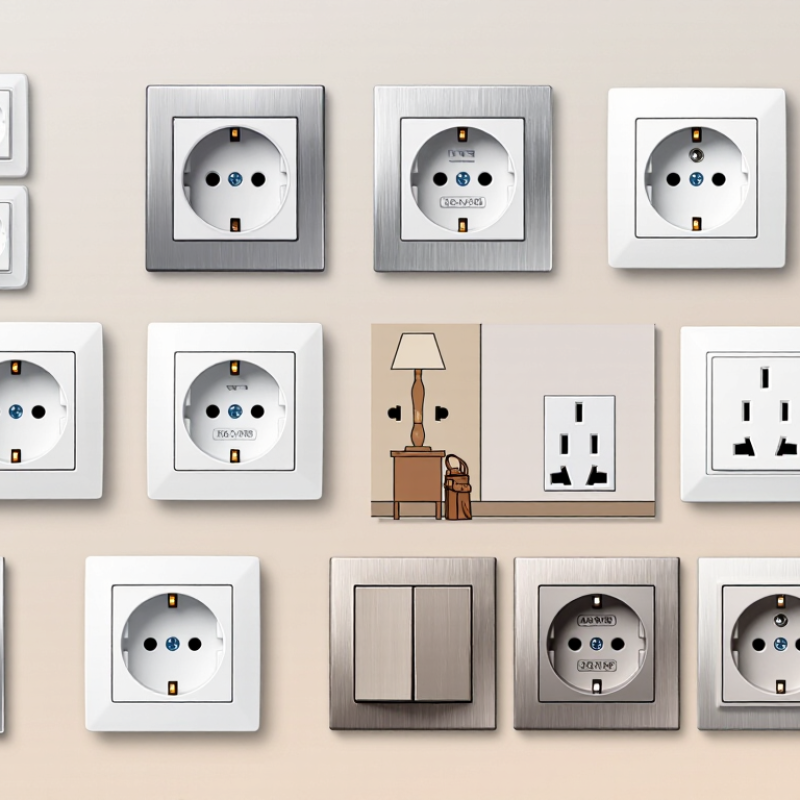
Best Electrical Sockets 2026 for Global Buyers

Electrical Socket Basics: Designs, Ratings, and Core Components

Electrical sockets look simple, but their designs serve different plug shapes, wiring systems, and environments. A familiar faceplate does not guarantee compatibility. Buyers should check the socket pattern, rated voltage, and rated current against the intended equipment and local supply. These details matter more than appearance.

Core components usually include the faceplate, contact mechanisms, insulated housing, and terminals for conductors. Grounding contacts provide a protective path where the electrical system supports one. Shutters can help block access to live contacts, while a suitable enclosure helps resist dust or moisture. Check the product markings and installation instructions; a high current rating alone does not confirm suitability for every use. Small details count.

Ratings need careful reading. Voltage and current describe different limits, and neither should be guessed from the socket’s size. Environmental ratings, such as an IP code, indicate protection under specified test conditions, not unlimited exposure. For global purchasing, compare applicable product standards and have a qualified electrician verify the installation requirements. A tidy outlet can still conceal unsuitable wiring. That is easy to miss. Faceplate color and finish may attract attention, yet safe compatibility depends on the less visible specifications.

Best Electrical Sockets 2026 for Global Buyers

Electrical Socket Basics: Typical Nominal Mains Voltage by Market

Values show common nominal supply voltages: Japan, 100 V; the United States and Canada, 120 V; and the European Union, United Kingdom, and Australia, 230 V. Local standards and installations can vary. Before selecting a socket or appliance, verify voltage, frequency, current rating, and plug compatibility.

Global Plug and Socket Standards: Regional Types and Compatibility

Global plug and socket standards differ by shape, pin arrangement, voltage, and frequency. Type A and B sockets are common in North America; Type G is used in the United Kingdom and several other markets. Much of continental Europe uses Type C or F. IEC 60083 documents national plug and socket systems, while IEC 60884-1 specifies safety requirements for household plugs and socket-outlets. These standards are useful references, but they do not make regional systems interchangeable.

Compatibility requires more than a matching shape. Check the appliance’s rated voltage and frequency against the destination supply, then confirm that its plug fits securely. A travel adapter changes the connection shape; it does not convert voltage. For manufacturers and importers, product testing should match the intended market and the relevant local requirements. Small details matter: pin dimensions, grounding, shutter design, and socket retention can all affect safe use. A neat comparison chart can still mislead if it leaves out these details.

Tips: Read the appliance label before packing it. Look for voltage, frequency, and current ratings. If the voltage differs, confirm whether the appliance supports both ranges; an adapter alone will not solve a mismatch. And check the socket in person. Charts can miss wear, loose fit, or local variations.

Comparing Socket Features: Safety, Smart Controls, and USB Charging

For global buyers, a socket’s safety features matter more than a polished faceplate. Look for secure earthing, child-resistant shutters, and clear current and voltage ratings. Overload protection can help, but it does not replace correct wiring or a properly rated circuit. NFPA’s Electrical Fires report estimated that electrical distribution and lighting equipment were involved in about 34,000 U.S. home structure fires annually from 2015 to 2019. The report also recorded an annual average of 470 civilian deaths and 1,100 injuries. Not a small risk. Check that the socket’s approvals match the destination market, and have a qualified electrician confirm installation requirements.

Smart controls add convenience, but their value depends on the task. A wall switch or app can schedule a lamp, while energy monitoring may reveal a device drawing power overnight. Remote control is less useful if the socket loses Wi-Fi or needs an account to operate. USB charging needs equally careful comparison: USB-IF’s USB Power Delivery 3.1 specification allows power levels up to 240 watts, but built-in socket ports may deliver far less. Read the port’s output label, especially when charging laptops or multiple devices. A slower port can still suit a phone. I would not choose by port count alone; heat, charging speed, and serviceability are easy to overlook. Check local plug format, voltage, and frequency before buying.

How to Choose an Electrical Socket for Your Region and Application

Choosing an electrical socket starts with the destination, not the product photo. Plug shapes differ, but voltage and frequency matter just as much. A device marked 100–240 V may accept a wider supply range; a fixed-voltage appliance may not. Check its nameplate, then confirm the socket’s voltage, current rating, and earthing arrangement match the installation. Small print matters. Also check whether local requirements call for shutters, child-resistant features, or a specific mounting style. These details are easy to miss when comparing online listings.

The application changes the choice. A kitchen counter may need a socket suited to damp conditions and positioned away from splashes. A workshop tool can draw far more current than a bedside lamp. Match the socket rating to the circuit and expected load; a familiar plug shape does not guarantee compatibility. For outdoor or dusty areas, check the enclosure’s ingress-protection rating and installation instructions. An adapter can resolve a plug-shape mismatch, but it cannot fix unsuitable voltage, missing grounding, or an overloaded circuit. That distinction is easy to overlook. Wiring practices vary by region, so confirm local requirements with a qualified electrician before installation. Even a carefully selected socket may be unsuitable if the existing circuit is not.

Installation, Certification, and Safety Checks for Global Buyers

Electrical socket selection starts with the destination, not the product photo. Check the local voltage, frequency, plug type, and required current rating before ordering. A socket that fits the wall may still be unsuitable for the circuit. During installation, a qualified electrician should confirm conductor size, grounding, and secure terminal connections. Loose wiring can overheat behind a neat faceplate. Keep power isolated while work is underway.

Tips: Ask the supplier for current test reports and certification details for the exact model. Check that markings match the destination market’s requirements; a logo alone proves little. After installation, inspect for cracked covers, exposed copper, or a warm faceplate under normal use. Stop using the outlet if it smells burnt or feels unusually hot.

For damp areas, confirm the socket and protective device are rated for that location. Protection requirements vary by country and room, so verify them locally. Test residual-current protection using its test control as instructed. Do not rely on travel adapters for permanent installations. I have found that paperwork can be confusing, and I may miss a detail; verify uncertain ratings with the installer or an accredited testing body before purchase.


Powder Coat Booths

For those larger-sized parts, or smaller quantity runs, we have 2 independent powder coat booths and ovens. The quality, durability and affordability of today’s powder coating finishes make this the process of choice for world-class companies.

Powder coating advantages over other forms of coating are many. Materials used in the Powder coating process can be metals and non-metals that come in a multitude of thicknesses, textures, colors, etc. Another of Powder coating’s biggest advantages over conventional coatings is its ability to create finishes in many different textures. Powder Coating Booths allow us the ability to apply these advantages to large products.

Wet Paint Line

Tri-State Fabricators runs a full-service conveyor line for painting. Wet painting can provide protection or decoration to many different part styles. From start to finish, every project is easier to undergo random and point-based inspection by our skilled painting team.

Advantages to our Wet Paint Line are these lines start with product prep and ends with a thorough inspection of a high quality finished product. Our ability to complete large and small projects with a superior finish and doing so in a timely and economical fashion. This passes along the savings in production to our customers. When powder coating ins not an option, our Wet Paint Line gets the job done right the first time.

Wet Paint Booths

When the parts get big and heavy we roll-out our custom paint racks and oversize booth. By utilizing our partnerships with all the major paint brands, we can match virtually any color with wet paint.

The advantages of having access to a Wet Paint Booth are many. Large projects of many different shapes can be loaded into the booth. The Wet Paint Booth offers an environment that is much more controlled than a typical parts painting operation.

Not only are they used because of their controlled environment, but they’re are also advantageous when it comes to applying paint to parts that are needed in industries that require specialty coatings such as medical, aerospace, etc.

Military CARC

Our military forces have some very high standards when it comes to the finish of their vehicles and equipment. From the first pre-treatment step to final coat, it takes a great deal of knowledge and experience to protect the men and women of our armed forces. They deserve only the best, and Tri-State Fabricators provides it.

All of our processes are closely monitored by our staff and management teams. Both of which are highly trained in the processes of metal fabrication and finishing. Tri-State Fabricators’ goal is to always fully satisfy each and every customer, including the military. We will always put a 110% into what we do.

Glass-Bead Blasting

Abrasive media blasting is an excellent way to remove old paint, rust, and increase the paint/powder adhesion. Glass beads produce a much smoother and brighter finish than angular abrasives; leaving the part clean yet without any dimensional change. Chemically inert and environmentally friendly, we can recycle our beads approximately 30 times; making them a more preferred method of metal cleaning or surface finishing.

Advantages to Glass Bead Blasting are many. Glass bead blast media is used when a project is needing rough surfaces need to become smooth for applications of coatings such as paint. It is typically used to clean paint and rust from a product surface without deforming the surface it is being used on. Overall, compared to many other blasting media, Glass Bead Blasting is a very economical choice and those savings are always passed on to our customers.

Part Washing

Tri-State Fabricators utilize a zinc phosphate wash to clean and etch the material to ensure the best paint adhesion possible. The unique design of our 3-stage wash system does the work like a 5-stage. From Cleaning and rinsing to conversion coating and post-treatment, Our Part Washing process is a complete service and works throughout the fabrication service and the finishing service.

Along with the previously mentioned benefits, Curing is a vital chemical reaction that leaves the product finish hard and relatively safe from mild abrasion and aggressive corrosion. This process can be done in more than one way; ambient air-dry or in curing ovens at temps that exceed 240°.

Burn-Off Oven

From fixing paint mistakes (someone else’s of course) to simply cleaning our paint line hooks, our burn-off oven is put to good use. After a quick burn-off, a little clean up, and a fresh coat of paint, your parts will look better than new.

Why does our Burn-Off Oven work so well? Because super heating the air around parts turns the materials into ashes. From paint and powder coatings to rubber and machining oils, high temps do the job without degrading the integrity of the part.

Masking

Masking is a vital part of producing high quality products. We have die-cut masking patterns to protect machined surfaces as well as a wide range of plugs and caps to protect threaded holes and bolts. We provide permanent and temporary masking.

Masking allows the selected sections of a product to be protected from a fabrication or finishing service. This can be with both chemicals when etching and tapes, paints when only finishing just a section of the product. Masking is great in aiding the customization process of a project.

Screen Printing

Screen printing is a photographic process that transfers artwork onto a porous nylon screen which allows colored ink to flow through the screen and be deposited on an aluminum or plastic component. We can generally have just about any design created onto a screen for your parts.

Some of the advantages of Screen Printing are, brand recognition for your business displaying on your products, assembly instructions, product warnings/hazards, etc. Tri-State Fabricators produces Screen Printing of the highest quality so you know it’s durable.

Metal Finishing

Metal Finishing is the art of treating the exterior portion of product, often metal but can also be made of other materials, so that the surface is clean and free of any debris. Then the process of applying coats or either paint of powder coat takes place. This coating process improves the quality of the product in both appearance and resistance to wear and corrosion.

Tri-State Fabricators, Inc., understands that a project typically isn’t complete until a high-quality finish has been added to your product. This is why our painting and powder coating teams continuously inspect the products throughout the Metal Finishing process.



