What Are the Best Electric Mini Trucks in 2026?
Electric Mini Trucks are gaining attention as businesses and local operators seek compact vehicles for short, repetitive routes. Their appeal is practical: a narrow chassis can fit crowded streets, while an open bed can carry tools, produce, or landscaping supplies. But “mini truck” is not a uniform global category. Vehicle size, payload ratings, and road-use rules vary by market, so comparisons need clear context.
The broader electric-vehicle market is expanding quickly. The International Energy Agency’s Global EV Outlook 2025 reports that electric car sales exceeded 17 million in 2024, representing more than one in five new cars sold worldwide. That figure signals momentum, not proof that every small truck is a sound purchase. The IEA’s headline sales data do not isolate mini trucks, and buyers should not confuse market growth with model-level performance. Real routes matter.
This guide compares leading 2026 options through details that affect daily work: usable payload, driving range, charging time, cargo-bed dimensions, warranty coverage, and local availability. A truck’s advertised range may shrink when it carries heavy loads or faces cold weather. A few inches can also decide whether a pallet fits. Small details count. We will distinguish published specifications from independent test results where possible, and flag gaps when comparable data are unavailable. That approach is less tidy than naming one universal winner, but more useful. The best choice depends on the job, charging access, and total operating costs—not a glossy brochure alone.
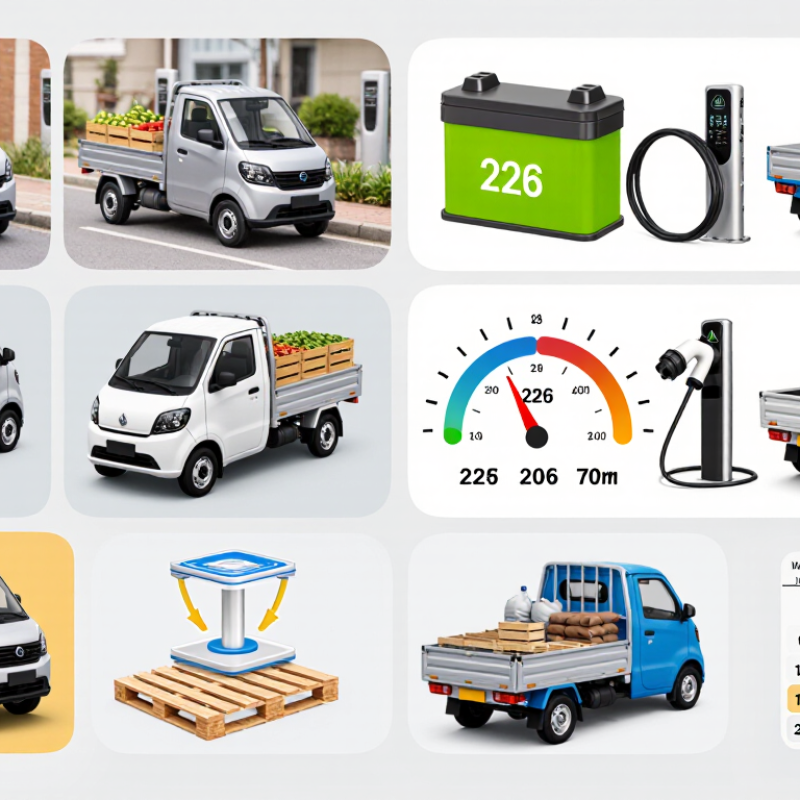
Defining Electric Mini Trucks and Their Role in 2026
An electric mini truck is a compact, battery-powered utility vehicle designed to carry people and modest loads over short routes. Unlike a passenger car, it often has an open cargo bed, upright seating, and a tight turning circle. Its exact size and capabilities vary; “mini truck” is not one universal technical class. That fuzzy label can confuse buyers. In 2026, these vehicles can serve farms, campuses, warehouses, and neighborhood businesses where full-size trucks feel oversized. They are not automatically suited to every road or workload.
Their role depends on practical details: payload, cargo-bed dimensions, ground clearance, charging access, and real-world range. A truck that handles daily deliveries may struggle with steep slopes or heavy equipment. Cold weather and frequent stops can also reduce usable range. Electric drivetrains can make low-speed work quieter, but charging still takes planning. The category is promising, though its limits deserve an honest look.
Tips: Measure your usual cargo before comparing models. Check range with a safety margin, not just the advertised figure. If possible, test the truck on your actual route, including ramps, narrow turns, and a full load. A short trial can reveal awkward details a specification sheet misses.
How to Compare the Leading Electric Mini Truck Models
When comparing leading electric mini trucks in 2026, look beyond advertised range. The International Energy Agency’s Global EV Outlook 2024 reports nearly 54,000 electric truck sales worldwide in 2023, about 1.2% of truck sales. That figure covers trucks broadly, not mini trucks alone. Still, it shows why model-specific evidence matters.
Compare payload, bed dimensions, usable battery capacity, charging speed, and warranty coverage. Then check range estimates against your own route, cargo, hills, and weather. A truck carrying toolboxes through stop-and-go streets may perform differently from one tested unloaded. Published figures look tidy; daily work rarely does. Ask dealers for loaded-range data and inspect charging access at your depot. This comparison is imperfect, but real duty-cycle details are more useful than a single headline number.
Tips: Write down a typical workday’s distance and cargo weight. Test-drive with a realistic load, if possible. Note cabin comfort and turning space, too. Small details count. Then compare total operating costs, including electricity, maintenance, and downtime—not just the purchase price.
What Are the Best Electric Mini Trucks in 2026?
A practical starting point for comparing compact electric trucks is the Japanese kei-class size limit.
The chart shows Japanese kei-class maximum exterior dimensions, not a model ranking: 340 cm long, 148 cm wide, and 200 cm high. Kei trucks are also subject to a 350 kg maximum payload limit. Compare each truck’s real-world range, charging, payload, and local-market availability separately; range figures can vary by test cycle and configuration.
Range, Payload, Charging, and Work Capability
For electric mini trucks, useful range means distance with a loaded bed, repeated stops, and enough charge left for an unexpected detour. The market is growing—but your route still matters
The International Energy Agency’s Global EV Outlook 2024 reports nearly 54,000 electric truck sales worldwide in 2023, about 1.2% of truck sales. That signals a growing market, not a guarantee that any truck suits your route. Track daily distance, cargo weight, and idle time for a week before comparing models. Small details matter. A payload figure also needs context: account for passengers, tools, and fitted equipment, not just the boxes in the bed. I would not treat a catalog range as a shift plan; that is an easy mistake.
Charging can determine whether the truck is ready for the next shift.
The U.S. Department of Energy’s Alternative Fuels Data Center gives a broad Level 2 benchmark of about 10–20 miles of range per charging hour; DC fast charging may add about 60–80 miles in 20 minutes. Actual rates vary with battery size, temperature, charger output, and vehicle limits. Check the truck’s charging specifications and test at your work site. For work capability, compare loaded range, rated payload, bed dimensions, turning space, and time spent waiting to charge. A short route with heavy cargo may be harder than a longer, lighter delivery loop. One uncertainty remains: winter heating and stop-start work can reduce available range, so leave a practical reserve instead of planning around the best-case figure.
Best Electric Mini Trucks for Different Needs
For city errands, choose an electric mini truck with a tight turning radius, clear visibility, and a bed that fits your regular loads. Check its usable range against your actual route, not an idealized estimate. Cold weather, hills, and heavy cargo can reduce distance between charges. A short commute may need only a modest battery, while rural work calls for more range and dependable charging access. Small is useful, but cramped controls are not.
Tips: Measure your parking space and typical cargo before comparing models. Ask for payload figures, including passengers and accessories. Test the truck with a familiar load if possible. Bring a tape measure.
For landscaping or small-business deliveries, prioritize payload, bed height, tie-down points, and low-speed maneuverability. Recreation buyers may care more about ground clearance, weather protection, and room for gear. Charging time matters too: a vehicle parked overnight has different needs from one used throughout the day. Compare warranty terms and service availability in your area, not just advertised specifications. I would not assume the highest range is always best; extra capacity can mean extra cost. And honestly, a comfortable seat may matter more after a long workday than a flashy display.
What to Consider Before Choosing a Mini Truck
Before comparing electric mini trucks, define the work they must do each week. A vehicle carrying tools across a farm needs different capacity from one moving parcels through narrow streets. Write down your usual load, longest route, steepest grade, and available charging hours. Be specific. Published range figures may not match a cold morning with a full bed and frequent stops, so leave a practical buffer.
Check payload and bed dimensions together; a spacious-looking cargo area can still reach its rated limit quickly. Measure doorways, parking bays, and turning space at the actual worksite. Then check ground clearance, tire type, and braking performance on the surfaces you use. If routes include rough gravel, try a loaded vehicle rather than relying on a smooth test drive. That detail is easy to miss.
Charging matters as much as range. Confirm outlet capacity, charging time, and whether overnight charging fits your routine. Ask about battery coverage, parts availability, and local repair support; downtime can outweigh a low purchase price. Compare visibility, seat comfort, mirrors, and controls during a real drive, ideally with a typical load. No setup fits everyone. The right choice may involve a compromise, especially when carrying capacity and compact dimensions pull in different directions.





