


What Is the Best Duraband Nozzle Band Heater for 2026?

Choosing the best Duraband Nozzle Band Heater for 2026 is less about picking the highest wattage and more about matching the heater to the nozzle. A close fit supports even heat transfer; a loose band can leave cold spots near the melt channel. Measure the nozzle’s outside diameter and heated length before comparing products. Fit comes first.

Check voltage, wattage, lead style, and temperature-sensing options against your machine’s requirements. These details affect installation and control, not just the product listing. In a production setting, a poorly matched heater may cause slow warm-up, temperature swings, or avoidable downtime. Small details matter. Material, insulation, and lead protection also deserve attention, especially where space is tight or cables face repeated movement. Confirm specifications with the manufacturer or supplier when a listing is unclear.

This guide explains the practical criteria for evaluating a Duraband Nozzle Band Heater, including sizing, heat output, construction, and compatibility. It does not assume one model suits every press or processing setup. That would be too simple. Compare verified specifications, consult equipment documentation, and consider actual operating conditions before choosing. A heater that performs well on one machine may not be the right fit for another. Even careful selection has limits: installation quality, controller settings, and maintenance can affect results. The aim is a better-informed choice, not a promise of identical performance across applications.
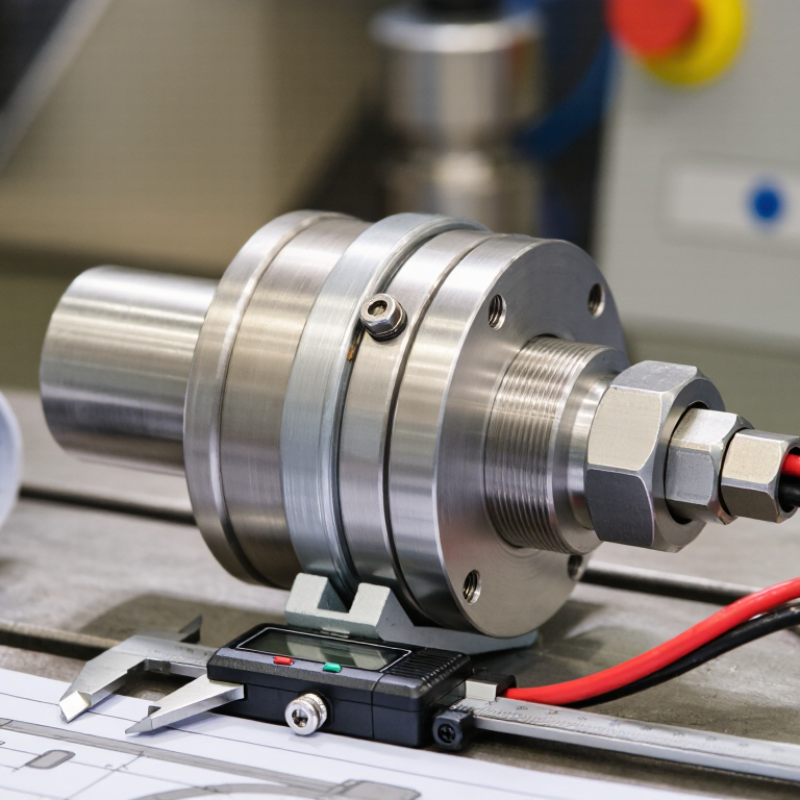
What Is the Best Duraband Nozzle Band Heater for 2026?

Define Duraband Nozzle Band Heaters by Design, Materials, and Heat Transfer

A nozzle band heater is a cylindrical resistance heater clamped around a molding-machine nozzle. Its metal sheath must sit close to the nozzle, with a secure fit and minimal air gaps. Inside, resistance wire generates heat; mica or ceramic insulation separates it from the outer casing. The design is compact, but fit matters. A loose band can create uneven temperatures across the nozzle surface. The U.S. Department of Energy’s 2015 Improving Process Heating System Performance sourcebook estimates that process heating uses about 2.3 quadrillion Btu annually in U.S. manufacturing. That scale makes heat loss worth controlling, even on a small machine component.

Heat moves from the wire through insulation and sheath, then into the nozzle mainly by conduction. Air gaps increase resistance to that transfer; the outer surface also loses heat through convection and radiation. Stainless steel sheaths offer corrosion resistance, while copper components can spread heat quickly but need protection from wear and oxidation. Ceramic insulation tolerates high temperatures; mica is often chosen for thinner, compact assemblies. The weak point is often ordinary: poor contact, damaged insulation, or an oversized heater. Measure the nozzle diameter and heated length, then compare temperatures at several points during operation. A tidy specification can still mislead. The machine’s actual temperature pattern should guide the final choice.


Match Nozzle Diameter, Heater Width, Voltage, and Wattage to the Machine

A nozzle band heater should fit the machine, not just the catalog description. Measure the nozzle’s outside diameter at the heating zone, then check the available straight length. A band that is too wide may overlap a shoulder or leave a cold section near the tip. Too narrow, and heat may concentrate in one small area. Leave room for the lead exit and clamp; tight clearances are easy to overlook.

Match voltage and wattage to the machine’s supply and temperature-control system. For a resistive heater, power follows P = V²/R, so a voltage mismatch can materially change heat output. The U.S. Department of Energy’s Improving Process Heating System Performance sourcebook notes that process heating represents roughly 60% of energy use in manufacturing. That figure is a sector-wide estimate, not a nozzle-sizing rule, but it shows why avoidable heat loss matters. Compare the heater’s rated voltage and wattage with the machine documentation, and confirm the controller can support the load. Measure twice. A small mistake here can mean slow recovery—or an overheated nozzle.

What Is the Best Nozzle Band Heater for 2026? Match Nozzle Diameter, Heater Width, Voltage, and Wattage to the Machine

Use this guide to narrow down a nozzle band heater size. The wattages below are illustrative starting points, not specifications for a particular heater. Confirm the heater’s actual inside diameter, width, voltage, wattage, lead arrangement, and temperature-sensor requirements against the machine and heater supplier’s specifications.

Measured Nozzle Outside Diameter Suggested Heater Inside Diameter Typical Heater Width Common Supply Voltage Illustrative Wattage Range Typical Selection Guidance
20 mm (0.79 in) Match the measured diameter; allow only the fit clearance specified by the heater maker 20–25 mm (0.79–0.98 in) 120 V or 240 V, as supported by the machine 75–150 W For compact nozzles, check that the heater clears the nozzle shoulder and nearby tooling.
25 mm (0.98 in) Match the measured diameter; verify the heater’s stated fit tolerance 20–30 mm (0.79–1.18 in) 120 V or 240 V, as supported by the machine 100–200 W A narrower heater may suit limited space; choose width based on the heated area and available clearance.
30 mm (1.18 in) Match the measured diameter; do not rely on nominal machine size alone 25–35 mm (0.98–1.38 in) 120 V or 240 V, as supported by the machine 150–250 W Check the nozzle’s cylindrical contact area so the heater sits flat and does not overlap a shoulder.
35 mm (1.38 in) Match the measured diameter and confirm the required clearance 25–40 mm (0.98–1.57 in) 120 V or 240 V, as supported by the machine 175–300 W Compare wattage with the machine’s control output and the original heater rating.
40 mm (1.57 in) Match the measured diameter; confirm the inside-diameter tolerance with the supplier 30–40 mm (1.18–1.57 in) 120 V or 240 V, as supported by the machine 200–350 W Consider nozzle mass, target temperature, heat loss, and warm-up time when selecting wattage.
45 mm (1.77 in) Match the measured diameter and check for a close, even fit 30–45 mm (1.18–1.77 in) 120 V or 240 V, as supported by the machine 250–400 W Verify that the wider band does not interfere with the mold, guard, wiring, or adjacent components.
50 mm (1.97 in) Match the measured diameter; use the heater maker’s fit specification 35–50 mm (1.38–1.97 in) 120 V or 240 V, as supported by the machine 300–500 W Check current draw, controller capacity, and terminal or lead clearance before installation.

Before ordering: Measure the nozzle’s outside diameter at the heater mounting location, then confirm heater inside diameter and width. Match voltage exactly to the machine circuit. Do not assume that a higher wattage is suitable: confirm the machine controller, wiring, and temperature limits can support it. Heater power varies with construction, dimensions, supply voltage, and manufacturer design; use the heater nameplate and machine documentation as the final reference.

Compare Watt Density (W/in²), Temperature Limits (°C), and Heat-Up Time

Choosing a barrel band heater requires more than matching its diameter. Compare watt density in W/in², temperature limits in °C, and expected heat-up time. Watt density indicates how concentrated the heat is across the contact area. A higher value may warm a small barrel quickly, but can create hot spots when fit is poor. Measure the barrel carefully; even a narrow gap can slow heat transfer.

Check the heater’s rated temperature against your actual process target, not just the barrel material’s limit. Keep a margin for the controller, sensor placement, and surrounding conditions. Heat-up time also depends on barrel mass, material, insulation, and power supply. A rough estimate helps, but real equipment may take longer. A tidy spreadsheet can still miss heat loss.

Tips: Compare specifications at the same barrel diameter and supply voltage. Ask for test conditions behind any heat-up claim. Check that the band sits snugly, then monitor temperature at more than one point during a trial. Small details matter. If readings vary widely, pause and review fit, sensor location, and control settings before increasing power.

Evaluate Electrical Safety Using IEC 60519-1 as an Industry Benchmark

What Is the Best Duraband Nozzle Band Heater for 2026?

When comparing nozzle band heaters, treat electrical safety as a design question, not a feature claim. IEC 60519-1 offers an industry benchmark for safety in industrial electroheating installations. It can guide a review, but it does not automatically certify an individual heater or its installation. Check that the standard’s scope and current edition fit the equipment being assessed.

Inspect the heater’s rated voltage, terminals, lead insulation, and protective earthing provisions. Look for clear wiring instructions and protection suited to the circuit. During installation, a technician should check that leads cannot rub against sharp edges or hot surfaces. Small details matter. A loose connection may heat locally, even when the outer band looks intact. Record inspection and test results, including the conditions under which measurements were taken.

A useful comparison also considers the machine around the heater. Confirm that temperature controls, overcurrent protection, and the mounting arrangement work together as intended. Ask for traceable test information and technical documentation, rather than relying on a brief safety statement. One limitation: a tidy report cannot reveal every fault that develops after repeated thermal cycles. Recheck connections during planned maintenance, and investigate changes in discoloration, odor, or heating consistency.

Rank 2026 Options by Fit, Thermal Uniformity, Service Life, and Cost

For 2026, rank nozzle band heaters by fit before wattage. Match the band’s diameter and width to the nozzle’s mounting surface. A close fit supports even heat transfer and reduces the need for excessive clamping force. Measure carefully. Check terminal clearance and lead direction against the machine layout. Small gaps matter. An undersized band can create hot spots, while an oversized one may heat slowly or loosen during cycling. Favor a secure clamp and a sensor position near the nozzle’s working zone. Catalog wattage alone tells little about real performance.

Thermal uniformity comes next. Compare readings at several points after a controlled warm-up, not just the controller display. Even contact can reduce temperature swings, though process settings still matter. For service life, inspect the sheath, insulation, terminals, and signs of wear from repeated heating and cooling. Rank cost by installation time, energy use, replacement frequency, and rejected parts—not purchase price alone. The cheapest option can look sensible on paper. Sometimes it isn’t. Resin type, cycle rate, and maintenance habits can change the ranking, so track actual temperatures and failures before standardizing a choice.

Powder Coat Booths

For those larger-sized parts, or smaller quantity runs, we have 2 independent powder coat booths and ovens. The quality, durability and affordability of today’s powder coating finishes make this the process of choice for world-class companies.

Powder coating advantages over other forms of coating are many. Materials used in the Powder coating process can be metals and non-metals that come in a multitude of thicknesses, textures, colors, etc. Another of Powder coating’s biggest advantages over conventional coatings is its ability to create finishes in many different textures. Powder Coating Booths allow us the ability to apply these advantages to large products.

Wet Paint Line

Tri-State Fabricators runs a full-service conveyor line for painting. Wet painting can provide protection or decoration to many different part styles. From start to finish, every project is easier to undergo random and point-based inspection by our skilled painting team.

Advantages to our Wet Paint Line are these lines start with product prep and ends with a thorough inspection of a high quality finished product. Our ability to complete large and small projects with a superior finish and doing so in a timely and economical fashion. This passes along the savings in production to our customers. When powder coating ins not an option, our Wet Paint Line gets the job done right the first time.

Wet Paint Booths

When the parts get big and heavy we roll-out our custom paint racks and oversize booth. By utilizing our partnerships with all the major paint brands, we can match virtually any color with wet paint.

The advantages of having access to a Wet Paint Booth are many. Large projects of many different shapes can be loaded into the booth. The Wet Paint Booth offers an environment that is much more controlled than a typical parts painting operation.

Not only are they used because of their controlled environment, but they’re are also advantageous when it comes to applying paint to parts that are needed in industries that require specialty coatings such as medical, aerospace, etc.

Military CARC

Our military forces have some very high standards when it comes to the finish of their vehicles and equipment. From the first pre-treatment step to final coat, it takes a great deal of knowledge and experience to protect the men and women of our armed forces. They deserve only the best, and Tri-State Fabricators provides it.

All of our processes are closely monitored by our staff and management teams. Both of which are highly trained in the processes of metal fabrication and finishing. Tri-State Fabricators’ goal is to always fully satisfy each and every customer, including the military. We will always put a 110% into what we do.

Glass-Bead Blasting

Abrasive media blasting is an excellent way to remove old paint, rust, and increase the paint/powder adhesion. Glass beads produce a much smoother and brighter finish than angular abrasives; leaving the part clean yet without any dimensional change. Chemically inert and environmentally friendly, we can recycle our beads approximately 30 times; making them a more preferred method of metal cleaning or surface finishing.

Advantages to Glass Bead Blasting are many. Glass bead blast media is used when a project is needing rough surfaces need to become smooth for applications of coatings such as paint. It is typically used to clean paint and rust from a product surface without deforming the surface it is being used on. Overall, compared to many other blasting media, Glass Bead Blasting is a very economical choice and those savings are always passed on to our customers.

Part Washing

Tri-State Fabricators utilize a zinc phosphate wash to clean and etch the material to ensure the best paint adhesion possible. The unique design of our 3-stage wash system does the work like a 5-stage. From Cleaning and rinsing to conversion coating and post-treatment, Our Part Washing process is a complete service and works throughout the fabrication service and the finishing service.

Along with the previously mentioned benefits, Curing is a vital chemical reaction that leaves the product finish hard and relatively safe from mild abrasion and aggressive corrosion. This process can be done in more than one way; ambient air-dry or in curing ovens at temps that exceed 240°.

Burn-Off Oven

From fixing paint mistakes (someone else’s of course) to simply cleaning our paint line hooks, our burn-off oven is put to good use. After a quick burn-off, a little clean up, and a fresh coat of paint, your parts will look better than new.

Why does our Burn-Off Oven work so well? Because super heating the air around parts turns the materials into ashes. From paint and powder coatings to rubber and machining oils, high temps do the job without degrading the integrity of the part.

Masking

Masking is a vital part of producing high quality products. We have die-cut masking patterns to protect machined surfaces as well as a wide range of plugs and caps to protect threaded holes and bolts. We provide permanent and temporary masking.

Masking allows the selected sections of a product to be protected from a fabrication or finishing service. This can be with both chemicals when etching and tapes, paints when only finishing just a section of the product. Masking is great in aiding the customization process of a project.

Screen Printing

Screen printing is a photographic process that transfers artwork onto a porous nylon screen which allows colored ink to flow through the screen and be deposited on an aluminum or plastic component. We can generally have just about any design created onto a screen for your parts.

Some of the advantages of Screen Printing are, brand recognition for your business displaying on your products, assembly instructions, product warnings/hazards, etc. Tri-State Fabricators produces Screen Printing of the highest quality so you know it’s durable.

Metal Finishing

Metal Finishing is the art of treating the exterior portion of product, often metal but can also be made of other materials, so that the surface is clean and free of any debris. Then the process of applying coats or either paint of powder coat takes place. This coating process improves the quality of the product in both appearance and resistance to wear and corrosion.

Tri-State Fabricators, Inc., understands that a project typically isn’t complete until a high-quality finish has been added to your product. This is why our painting and powder coating teams continuously inspect the products throughout the Metal Finishing process.
