


Cross Border Trucking connects factories, distribution centers, and customers across national borders. For global buyers, a reliable carrier can mean fewer missed delivery windows and clearer shipment updates. A delayed truck can leave a loading bay idle, interrupt production, or push back a store delivery. Small failures add up.
The scale of global trade makes the inland connection important. UNCTAD’s Review of Maritime Transport 2024 reports that more than 80% of world trade by volume is carried by sea, so many international supply chains also depend on dependable road transport between ports, warehouses, and border crossings. The World Bank’s Logistics Performance Index 2023 assesses 139 economies across customs, infrastructure, shipment arrangements, logistics competence, tracking, and timeliness. These measures offer useful context, though they do not rate every carrier or route.
This guide compares seven cross-border trucking companies through practical considerations: service coverage, shipment visibility, equipment options, delivery coordination, and support when plans change. A polished website is not proof of consistent performance. Ask about the specific lane, expected handoffs, tracking frequency, and escalation contacts before choosing a provider. Even careful comparisons have limits; seasonal congestion, border procedures, and local operating conditions can change results. There is no universal best carrier. The right fit depends on your cargo, destinations, schedule, and tolerance for uncertainty.
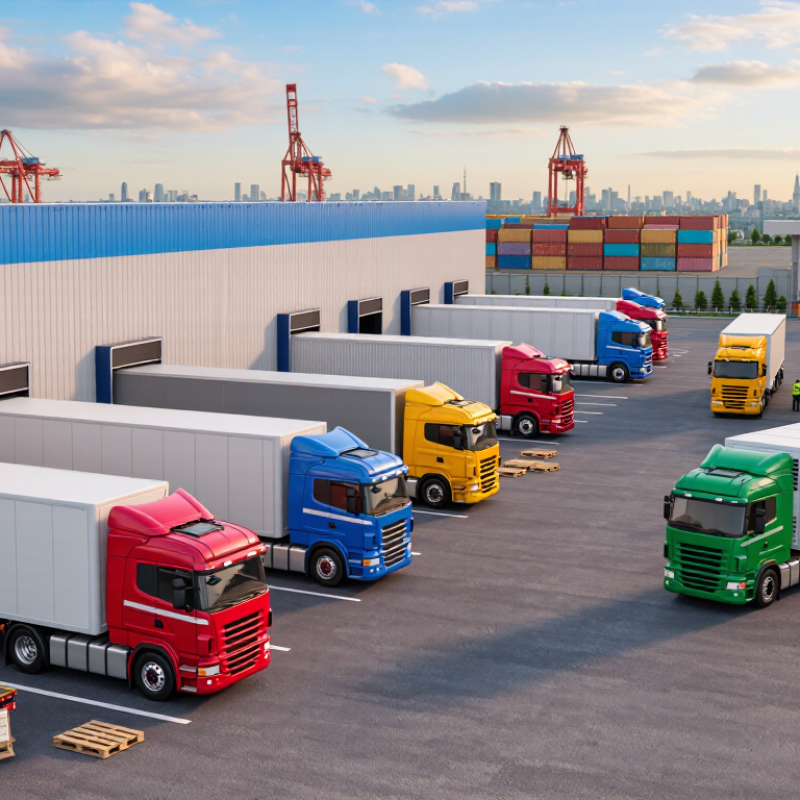
Cross-border trucking moves freight by road between countries, but the trip involves more than a driver and a delivery address. Buyers should map every handoff: pickup, export processing, border inspection, possible trailer transfer, and final delivery. A pallet may wait while documents are checked, even when the highway is clear. Transit estimates should include this uncertainty, not just driving hours.
Before booking, clarify who prepares shipping documents, coordinates customs clearance, and pays duties or storage charges. Requirements differ by route and shipment, so confirm details with a qualified customs professional and the carrier. Share accurate product descriptions, package counts, weights, and delivery hours. Ask whether the load stays on one vehicle and how seals, temperature, or damage are recorded. A useful quote explains extra fees and delay procedures. It is easy to focus too heavily on distance; handoffs deserve equal attention. No plan removes every delay, so review assumptions before promising a firm arrival date.
Tips: Send documents before pickup and check that the invoice, packing list, and labels match. Keep one contact available during border hours. Photograph pallets before loading, and agree on how to report delays. Small checks help.

Choosing an international trucking company takes more than comparing a rate per mile. Check whether its routes match your actual origin, destination, and border crossings. Ask who handles each transfer, especially when local partners take over. Details matter.
Reliable providers explain how they manage shipment documents, border procedures, and unexpected inspections. Request a sample tracking update and ask how often location data refreshes. A dashboard is useful, but a named contact matters when a truck misses its delivery window. Ask for evidence. Review insurance limits, claims steps, and written service commitments before signing. Confirm whether temperature control, secure parking, or special equipment is available when your cargo requires it.
Compare quotes line by line. Fuel, waiting time, tolls, storage, and currency adjustments can change the final bill. Ask for a realistic delivery range, not only the fastest estimate. A low quote can still be the wrong choice if it excludes common delays. No metric is perfect. On-time percentages may hide difficult routes or small sample sizes, so ask what period and lanes the figures cover. Also request references from customers with similar shipment sizes and destinations. A carrier’s answers should be specific, consistent, and easy to verify.
Seven leading cross-border trucking companies stand out through different strengths, not one universal ranking. Some specialize in short regional routes and know which border crossings face morning delays. Others use broad carrier networks to connect factories, warehouses, and inland terminals. A refrigerated freight specialist may be the better fit for temperature-sensitive goods, while a flatbed operator handles oversized industrial equipment. The right choice depends on the shipment.
For buyers, practical details reveal more than a sales promise. Ask how the carrier tracks a load after it crosses the border, who checks shipment documents, and how quickly dispatch reports a delay. A reliable provider can explain handoffs, estimated arrival windows, and escalation contacts in plain language. Request recent performance data for your specific lane, rather than relying only on company-wide averages.
Other leading providers focus on time-critical deliveries, flexible capacity during seasonal peaks, or shipment visibility through digital tracking. Some coordinate closely with customs professionals; others work through established partners. Compare insurance coverage, communication practices, and experience with your cargo type. Small details matter. A polished tracking screen cannot prevent every delay, and even experienced carriers can miss an estimate. Rankings also shift by route, so a careful trial shipment may reveal more than a broad “best” label.
| Anonymous Service Profile | Representative Cross-Border Market | Common Freight Options | Border and Documentation Considerations | Typical Buyer Fit |
|---|---|---|---|---|
| Profile 1 — North American network | United States–Canada | Full truckload, less-than-truckload, dry van, temperature-controlled freight | Shipments require applicable customs documentation. USMCA preferential tariff treatment depends on the goods meeting rules of origin and the importer making a valid claim. | Buyers moving manufactured goods, retail products, or temperature-sensitive freight between the two countries. |
| Profile 2 — Mexico gateway operator | United States–Mexico | Full truckload, less-than-truckload, cross-dock and transload services | Customs entry and export processes apply. USMCA tariff preferences are conditional on product-specific origin rules; requirements vary by commodity and shipment. | Importers and exporters seeking regular freight movements between U.S. and Mexican production or distribution sites. |
| Profile 3 — European Union road network | Cross-border routes between EU member states | Full truckload, groupage, palletized freight, refrigerated transport | There are generally no routine customs duties or customs declarations for goods moving within the EU customs union, though VAT, excise, safety, and product-specific rules may still apply. | Businesses distributing goods across multiple EU markets from regional warehouses or manufacturing hubs. |
| Profile 4 — UK–EU freight operator | United Kingdom–European Union | Full truckload, groupage, trailer movements, temperature-controlled loads | Customs formalities apply to goods moving between Great Britain and the EU. Declarations, commodity codes, and supporting documents depend on the goods and route. | Buyers managing recurring shipments between British suppliers and EU customers or distribution centers. |
| Profile 5 — Southeast Asian regional carrier | Selected cross-border routes within ASEAN | Full truckload, less-than-truckload, container drayage, regional distribution | Customs procedures remain country-specific. ASEAN trade preferences may be available when applicable origin requirements and documentation are satisfied. | Companies sourcing or selling across neighboring Southeast Asian markets and needing regional road connections. |
| Profile 6 — Southern African corridor operator | South Africa and neighboring Southern African markets | Full truckload, dry freight, project cargo, cross-border distribution | Border procedures and permits vary by country, cargo, and route. The Southern African Customs Union has a common external tariff, but this does not remove every border or regulatory procedure. | Buyers moving industrial, consumer, or agricultural goods along established regional trade corridors. |
| Profile 7 — South American regional carrier | Selected Mercosur and neighboring-country corridors | Full truckload, dry van, refrigerated freight, regional consolidation | Customs clearance and local transport rules apply. Mercosur preferences are subject to applicable product-origin rules and country-specific procedures. | Importers and exporters needing road transport between South American production centers, border crossings, and ports. |
Note: Company names and brands are intentionally omitted. These are representative regional service profiles, not a verified company ranking or carrier-specific performance claims. Confirm current route coverage, customs services, transit times, and shipment requirements directly with the selected provider.
Route choice shapes more than transit time. Compare border crossings, permitted truck capacity, transfer points, and backup corridors. A direct route may still lose hours at a congested checkpoint. A cheaper route can require extra handling when trailers change hands. Details matter.
The World Bank’s 2023 Logistics Performance Index assessed 139 economies, including customs, infrastructure, shipment tracking, and timeliness. It offers useful corridor context, but country scores cannot predict one carrier’s performance. Ask providers for recent lane-level transit ranges, border-wait records, and clearances handled on similar routes. Strong customs teams check commercial invoices, cargo descriptions, origin details, and filing deadlines before dispatch. At a land border, one missing document can leave a loaded trailer waiting. IRU’s 2023 Global Truck Driver Shortage Report estimated about 3 million unfilled driver positions across 36 countries. Capacity pressure may affect departures on less-served lanes, though that figure is not a service forecast. Request named escalation contacts and written plans for inspections or delays. One weak point remains: published on-time rates often exclude customs holds.
Comparing Routes, Services, and Customs Expertise
Regional trade-framework membership offers geographic context for route planning; it does not indicate a trucking company’s coverage, transit times, or customs performance. Confirm current lane availability, permits, and border requirements with your carrier.
Choosing a cross-border trucking partner starts with your actual shipping needs, not a broad promise of global coverage. Compare service on the specific routes you use, including pickup windows, border handoffs, and delivery schedules. Ask how the carrier tracks freight when it changes vehicles or operators. Clear milestone updates can help your team respond when a shipment misses a planned departure. Check that its insurance scope, equipment, and temperature controls match your cargo and operating requirements.
Tips: Share a sample shipment profile before requesting a quote. Include pallet dimensions, weight, loading hours, and delivery constraints. Ask for proof of route coverage and a written escalation process. Small details matter.
Price deserves attention, but the lowest quote may leave gaps in communication or service. Review accessorial fees, expected transit times, and how delays are reported. A short pilot on one lane can reveal more than a polished sales presentation. Track on-time delivery and damage claims over several shipments. No partner will be perfect; even a careful review can miss a weak handoff. Revisit performance regularly, especially when volumes or routes change.


For those larger-sized parts, or smaller quantity runs, we have 2 independent powder coat booths and ovens. The quality, durability and affordability of today’s powder coating finishes make this the process of choice for world-class companies.
Powder coating advantages over other forms of coating are many. Materials used in the Powder coating process can be metals and non-metals that come in a multitude of thicknesses, textures, colors, etc. Another of Powder coating’s biggest advantages over conventional coatings is its ability to create finishes in many different textures. Powder Coating Booths allow us the ability to apply these advantages to large products.
Tri-State Fabricators runs a full-service conveyor line for painting. Wet painting can provide protection or decoration to many different part styles. From start to finish, every project is easier to undergo random and point-based inspection by our skilled painting team.
Advantages to our Wet Paint Line are these lines start with product prep and ends with a thorough inspection of a high quality finished product. Our ability to complete large and small projects with a superior finish and doing so in a timely and economical fashion. This passes along the savings in production to our customers. When powder coating ins not an option, our Wet Paint Line gets the job done right the first time.
When the parts get big and heavy we roll-out our custom paint racks and oversize booth. By utilizing our partnerships with all the major paint brands, we can match virtually any color with wet paint.
The advantages of having access to a Wet Paint Booth are many. Large projects of many different shapes can be loaded into the booth. The Wet Paint Booth offers an environment that is much more controlled than a typical parts painting operation.
Not only are they used because of their controlled environment, but they’re are also advantageous when it comes to applying paint to parts that are needed in industries that require specialty coatings such as medical, aerospace, etc.
Our military forces have some very high standards when it comes to the finish of their vehicles and equipment. From the first pre-treatment step to final coat, it takes a great deal of knowledge and experience to protect the men and women of our armed forces. They deserve only the best, and Tri-State Fabricators provides it.
All of our processes are closely monitored by our staff and management teams. Both of which are highly trained in the processes of metal fabrication and finishing. Tri-State Fabricators’ goal is to always fully satisfy each and every customer, including the military. We will always put a 110% into what we do.
Abrasive media blasting is an excellent way to remove old paint, rust, and increase the paint/powder adhesion. Glass beads produce a much smoother and brighter finish than angular abrasives; leaving the part clean yet without any dimensional change. Chemically inert and environmentally friendly, we can recycle our beads approximately 30 times; making them a more preferred method of metal cleaning or surface finishing.
Advantages to Glass Bead Blasting are many. Glass bead blast media is used when a project is needing rough surfaces need to become smooth for applications of coatings such as paint. It is typically used to clean paint and rust from a product surface without deforming the surface it is being used on. Overall, compared to many other blasting media, Glass Bead Blasting is a very economical choice and those savings are always passed on to our customers.
Tri-State Fabricators utilize a zinc phosphate wash to clean and etch the material to ensure the best paint adhesion possible. The unique design of our 3-stage wash system does the work like a 5-stage. From Cleaning and rinsing to conversion coating and post-treatment, Our Part Washing process is a complete service and works throughout the fabrication service and the finishing service.
Along with the previously mentioned benefits, Curing is a vital chemical reaction that leaves the product finish hard and relatively safe from mild abrasion and aggressive corrosion. This process can be done in more than one way; ambient air-dry or in curing ovens at temps that exceed 240°.
From fixing paint mistakes (someone else’s of course) to simply cleaning our paint line hooks, our burn-off oven is put to good use. After a quick burn-off, a little clean up, and a fresh coat of paint, your parts will look better than new.
Why does our Burn-Off Oven work so well? Because super heating the air around parts turns the materials into ashes. From paint and powder coatings to rubber and machining oils, high temps do the job without degrading the integrity of the part.
Masking is a vital part of producing high quality products. We have die-cut masking patterns to protect machined surfaces as well as a wide range of plugs and caps to protect threaded holes and bolts. We provide permanent and temporary masking.
Masking allows the selected sections of a product to be protected from a fabrication or finishing service. This can be with both chemicals when etching and tapes, paints when only finishing just a section of the product. Masking is great in aiding the customization process of a project.
Screen printing is a photographic process that transfers artwork onto a porous nylon screen which allows colored ink to flow through the screen and be deposited on an aluminum or plastic component. We can generally have just about any design created onto a screen for your parts.
Some of the advantages of Screen Printing are, brand recognition for your business displaying on your products, assembly instructions, product warnings/hazards, etc. Tri-State Fabricators produces Screen Printing of the highest quality so you know it’s durable.
Metal Finishing is the art of treating the exterior portion of product, often metal but can also be made of other materials, so that the surface is clean and free of any debris. Then the process of applying coats or either paint of powder coat takes place. This coating process improves the quality of the product in both appearance and resistance to wear and corrosion.
Tri-State Fabricators, Inc., understands that a project typically isn’t complete until a high-quality finish has been added to your product. This is why our painting and powder coating teams continuously inspect the products throughout the Metal Finishing process.

