7 Best Cordierite Saggar Suppliers for Global Buyers?

Choosing the right Cordierite Saggar supplier can affect kiln efficiency, product consistency, and replacement costs. Global buyers often compare price first, yet performance usually depends on more than a quotation. Thermal shock resistance, dimensional stability, porosity, wall thickness, and firing temperature must match the application. A saggar that looks durable in a catalog may crack after repeated loading and cooling.

This guide reviews seven Cordierite Saggar suppliers serving international buyers. The comparison considers manufacturing experience, material quality, customization options, export capability, packaging, and after-sales communication. Practical details matter. Ask whether the supplier controls raw material blending, records firing conditions, and checks flatness before shipment. For example, a 300-millimeter saggar may need different reinforcement from a smaller laboratory model. Small differences can become expensive.

No supplier is perfect. That matters. Some companies offer strong technical support but higher minimum order quantities. Others provide competitive prices but limited documentation or slower responses. This article does not present a permanent ranking. Market conditions, production capacity, and regional logistics can change. Buyers should request recent test data, sample units, tolerances, and written warranty terms before placing a large order. Independent testing may also be sensible for demanding ceramic, electronic, or advanced-material applications. A careful decision balances laboratory evidence with real operating experience, not promotional claims alone.

7 Best Cordierite Saggar Suppliers for Global Buyers?

What Are Cordierite Saggars and Why Do Global Buyers Use Them?

What Are Cordierite Saggars and Why Do Global Buyers Use Them?

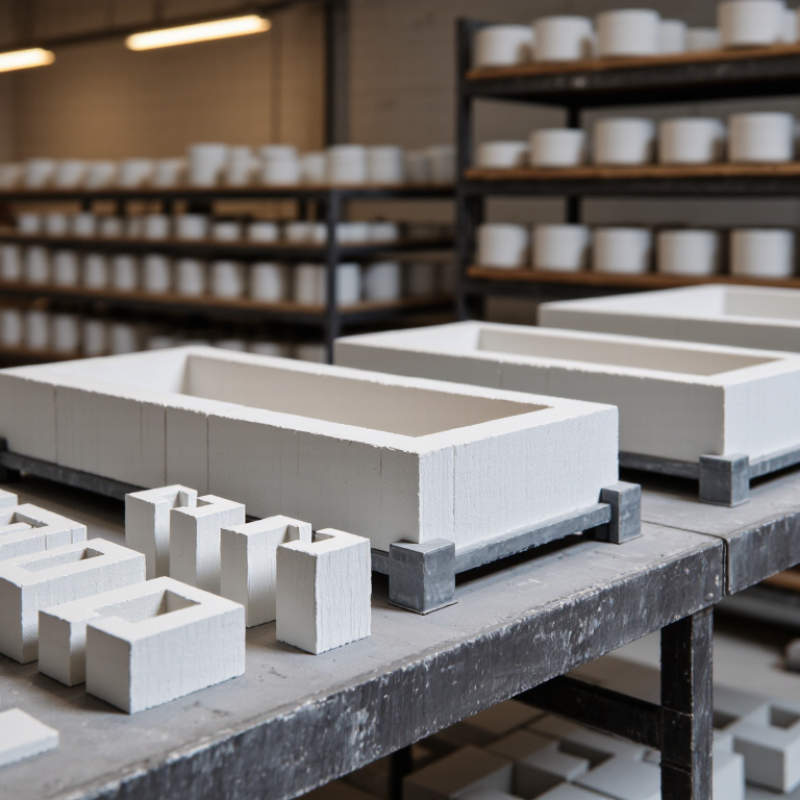
Cordierite saggars are reusable ceramic boxes used during high-temperature firing. They hold powders, pellets, or shaped parts inside a kiln. Their walls reduce direct flame contact, dust exposure, and accidental mixing. This matters when producing battery materials, electronic ceramics, porcelain, and other precision products.

Thermal stability is their main advantage. A review in the Journal of the European Ceramic Society reports cordierite’s thermal expansion at roughly 2–3 × 10⁻⁶ K⁻¹, depending on composition and porosity. Low expansion helps reduce cracking during rapid heating and cooling. The European Commission’s Ceramic Manufacturing BREF reports firing temperatures commonly ranging from about 850°C to 1,450°C across ceramic products. Saggar design must match that duty.

But cordierite is not automatically the best choice. Repeated cycles can cause edge chipping, warping, or surface contamination. Buyers should check wall thickness, loading weight, kiln atmosphere, and actual cooling speed. A saggar that survives one trial may fail after fifty cycles. That assumption deserves testing. Practical audits should record weight loss, cracks, powder pickup, and dimensional change after each firing group. Global buyers also compare nesting efficiency, export packaging, replacement frequency, and usable internal volume, not only the purchase price.

7 Best Cordierite Saggar Suppliers for Global Buyers? — What Are Cordierite Saggars and Why Do Global Buyers Use Them?
A practical, brand-neutral comparison of supplier profiles, technical requirements, and global purchasing considerations
Supplier Profile Typical Product Range Common Buyer Applications Key Technical Requirements Typical Operating Considerations Best Fit for Global Buyers Verification Documents to Request
1. High-Volume Industrial Producer Standard cordierite saggars in rectangular, square, and round formats High-volume firing of ceramic powders, electronic components, catalysts, and technical ceramics Consistent dimensions, stable wall thickness, low warpage, repeatable batch quality Cordierite is selected for its low thermal expansion and good thermal-shock resistance; actual service life depends on firing cycle, load, handling, and atmosphere Buyers requiring repeat orders, standardized tooling, and predictable production capacity Dimensional inspection reports, batch records, thermal-cycle test data, and sample approval records
2. Custom-Engineering Specialist Made-to-order saggars with custom footprints, lids, grooves, slots, handles, or stacking features Unusual furnace layouts, specialty powders, research production, and customized firing fixtures Accurate drawings, controlled tolerances, suitable corner radii, and designs that reduce stress concentration Custom geometry can improve furnace utilization, but sharp corners and uneven wall thickness may increase thermal stress Buyers whose standard saggar sizes create excessive unused furnace space or handling problems CAD drawings, tolerance tables, prototype approval procedures, and engineering-change control documents
3. Electronic-Materials Saggar Supplier Clean, smooth, low-contamination saggars for electronic and advanced ceramic powders Ferrite, dielectric, piezoelectric, battery-related ceramic materials, and other sensitive powder processes Low particle shedding, controlled surface condition, suitable chemical compatibility, and stable firing behavior Product chemistry and surface cleanliness should be matched to the powder system; cordierite is not automatically suitable for every formulation Buyers prioritizing contamination control and product yield over the lowest purchase price Chemical composition, surface-finish specification, contamination-control procedure, and compatibility test results
4. High-Temperature Ceramic Fixture Supplier Heavy-duty saggars, setter plates, kiln furniture, and compatible covers Repeated kiln firing, technical ceramics, powder calcination, and demanding thermal-processing environments Appropriate refractoriness, mechanical strength at temperature, resistance to thermal cycling, and adequate load capacity Cordierite products are commonly valued for low thermal expansion; maximum use temperature must be confirmed for the specific formulation and firing atmosphere Buyers needing coordinated kiln-furniture systems rather than a single saggar size Maximum recommended service temperature, hot-load information, thermal-shock test method, and usage guidelines
5. Small-Batch and Laboratory Supplier Small saggars, sample trays, crucible-style containers, and short-run custom pieces Universities, laboratories, pilot lines, formulation development, and low-volume specialty production Short lead times, flexible quantities, traceable materials, and accurate small-part dimensions Small-format products are useful for development work, but laboratory performance should not be assumed to represent full-scale production performance Buyers validating a powder, firing profile, or new product before committing to production quantities Material certificate, sample photographs, dimensional report, small-order terms, and repeatability data
6. Export-Focused Packaging Supplier Export-ready standard saggars with protective packaging, palletization, and shipment documentation International distributors, furnace operators, contract manufacturers, and multi-country procurement programs Packaging that protects brittle ceramic goods from impact, moisture control where needed, clear labeling, and pallet stability Cordierite saggars are ceramic products and can crack from impact even when thermal properties are suitable; packaging quality is part of total cost Buyers importing by sea or air who need reliable delivery and reduced breakage claims Packing specification, drop-test or packaging validation record, export dimensions, HS classification support, and claims procedure
7. Integrated Technical-Ceramics Partner Saggars combined with setters, kiln shelves, trays, tubes, crucibles, and technical consultation Production lines seeking coordinated refractory components and process support Compatibility across components, stable raw-material control, process guidance, and documented quality management Saggar life is affected by thermal profile, stacking pressure, powder interaction, cleaning practice, and handling; system-level advice can reduce premature failure Buyers wanting one technical contact for kiln furniture, replacement planning, and process optimization Quality-management certification, raw-material controls, application references, replacement recommendations, and corrective-action records
Buyer note: Cordierite is a magnesium-alumino-silicate ceramic generally selected for low thermal expansion and good resistance to thermal shock. Exact composition, porosity, strength, chemical resistance, maximum service temperature, and service life vary by formulation and manufacturing process. Always confirm values through the supplier’s technical datasheet, sample testing, and a production-cycle trial before purchasing.

How to Evaluate Cordierite Saggar Suppliers for International Purchasing

How to Evaluate Cordierite Saggar Suppliers for International Purchasing

Choosing among the seven best cordierite saggar suppliers requires more than comparing prices. Ask for material test reports, dimensional tolerances, and firing records from recent production batches. Cordierite content matters because it affects thermal expansion and resistance to cracking. Request samples with your actual firing temperature, atmosphere, and loading method.

Inspect the saggar edges and base carefully. Uneven surfaces can damage delicate ceramic parts during stacking. Ask whether the supplier controls wall thickness, porosity, and flatness during production. A reliable supplier should explain its inspection process clearly.

Vague answers deserve caution.

Small samples help, but they may not reveal long-term warping. Run repeated kiln cycles before approving a large order.

International purchasing adds practical risks. Confirm packaging details, pallet strength, moisture protection, and replacement policies. Obtain clear shipping terms, production lead times, and minimum order quantities in writing.

Check whether the supplier can provide export documents and consistent batch identification. Communication speed is useful, but technical accuracy matters more. A fast reply cannot correct unsuitable saggar geometry.

One common mistake is judging quality from photographs alone. Ask for videos, inspection data, and a written response to possible defects. Leave room for improvement, because even experienced buyers can overlook kiln loading conditions.

Seven Leading Cordierite Saggar Suppliers for Global Buyers

Seven Leading Cordierite Saggar Suppliers for Global Buyers

The seven leading cordierite saggar suppliers serve different production needs. High-volume Asian factories often offer competitive pricing and flexible mold sizes. Precision kiln-furniture specialists focus on tight tolerances and stable wall thickness. Battery-material suppliers usually develop saggars for repeated firing cycles. Technical ceramic producers emphasize low thermal expansion and controlled porosity. Regional manufacturers may provide faster delivery and easier technical communication. Custom engineering workshops suit unusual furnace layouts. Finally, integrated exporters can manage packaging, inspection, and documentation for international shipments.

Market data supports careful supplier screening. Grand View Research reports that the global advanced ceramics market is expanding steadily, with demand driven by electronics, energy, and industrial processing. Mordor Intelligence also identifies thermal stability and corrosion resistance as major growth factors. Cordierite remains useful because its low thermal expansion helps reduce cracking during rapid heating and cooling. However, published performance figures can vary. A saggar rated for 1,300°C may perform differently under alkaline powders, repeated loading, or uneven kiln airflow. That detail is easy to miss.

Tips: Request three test samples from each supplier. Measure warpage after ten firing cycles. Check corner chipping, surface dust, and internal dimensions. Ask for batch-level test records, not only a general certificate. A practical trial with your own powder is more reliable than a polished brochure. I would also compare replacement rates, not just unit prices; the cheaper option may become expensive after several damaged cycles.

How the Top Suppliers Compare on Quality, Customization, and Delivery

Comparing seven cordierite saggar suppliers requires more than reading product sheets. In kiln trials, experienced buyers inspect wall thickness, corner strength, flatness, and surface finish. These details affect stacking, airflow, and product contamination. High-quality suppliers provide consistent cordierite content and controlled firing records. They also explain thermal expansion data clearly. A polished catalog is not enough.

Customization separates capable suppliers from simple resellers. The strongest candidates adjust length, width, height, wall thickness, and vent placement. They can also match loading equipment and firing temperatures. One supplier may offer excellent prototypes but struggle with large batches. Another may produce quickly but reject unusual shapes. That trade-off matters. Sample testing remains essential.

Delivery performance depends on more than production speed. Reliable suppliers confirm tooling dates, inspection points, packaging methods, and shipment schedules. Each saggar should arrive protected from impact, with batch identification and inspection records. Ask how damaged units are replaced. Ask for realistic lead times, not optimistic promises. Some suppliers provide impressive samples, yet their communication weakens after an order is placed. That is a warning sign. Buyers should compare seven suppliers using the same drawings, test conditions, and acceptance limits. Even then, predictions can fail. A longer trial may reveal warping, glaze sticking, or unexpected breakage.

What Global Buyers Should Check Before Placing an Order

7 Best Cordierite Saggar Suppliers for Global Buyers?

Before placing an order, global buyers should inspect more than a supplier’s product photos. Cordierite saggars must survive repeated heating, cooling, loading, and cleaning. Ask for test data covering thermal shock resistance, maximum service temperature, porosity, and dimensional tolerance. Request a recent batch report, not an old laboratory sheet.

Samples reveal practical details. Check the saggar’s flatness on a level table. Measure wall thickness at several points. Look for cracks, warped corners, rough inner surfaces, and uneven firing marks. Test the sample through your actual kiln cycle when possible. A saggar that performs well in a short trial may fail after repeated thermal cycling. That lesson is easy to miss.

Supplier capability also matters. Confirm production capacity, mold control, inspection methods, and replacement procedures. Ask whether each batch receives traceable inspection records. Clarify minimum order quantities, lead times, export packaging, moisture protection, and pallet strength. Wooden crates may look secure, yet internal movement can damage corners during ocean transport. Photos before shipment help, but they do not replace inspection.

Reliable suppliers communicate limits clearly. They should explain how cordierite composition, kiln atmosphere, loading weight, and firing speed affect service life. Be cautious when a supplier promises universal performance. It rarely exists. Compare at least three quotations using the same specifications. Include tolerances, drawings, test methods, and acceptance standards. A lower unit price can become expensive after breakage, delays, and inconsistent firing results.

Powder Coat Booths

For those larger-sized parts, or smaller quantity runs, we have 2 independent powder coat booths and ovens. The quality, durability and affordability of today’s powder coating finishes make this the process of choice for world-class companies.

Powder coating advantages over other forms of coating are many. Materials used in the Powder coating process can be metals and non-metals that come in a multitude of thicknesses, textures, colors, etc. Another of Powder coating’s biggest advantages over conventional coatings is its ability to create finishes in many different textures. Powder Coating Booths allow us the ability to apply these advantages to large products.

Wet Paint Line

Tri-State Fabricators runs a full-service conveyor line for painting. Wet painting can provide protection or decoration to many different part styles. From start to finish, every project is easier to undergo random and point-based inspection by our skilled painting team.

Advantages to our Wet Paint Line are these lines start with product prep and ends with a thorough inspection of a high quality finished product. Our ability to complete large and small projects with a superior finish and doing so in a timely and economical fashion. This passes along the savings in production to our customers. When powder coating ins not an option, our Wet Paint Line gets the job done right the first time.

Wet Paint Booths

When the parts get big and heavy we roll-out our custom paint racks and oversize booth. By utilizing our partnerships with all the major paint brands, we can match virtually any color with wet paint.

The advantages of having access to a Wet Paint Booth are many. Large projects of many different shapes can be loaded into the booth. The Wet Paint Booth offers an environment that is much more controlled than a typical parts painting operation.

Not only are they used because of their controlled environment, but they’re are also advantageous when it comes to applying paint to parts that are needed in industries that require specialty coatings such as medical, aerospace, etc.

Military CARC

Our military forces have some very high standards when it comes to the finish of their vehicles and equipment. From the first pre-treatment step to final coat, it takes a great deal of knowledge and experience to protect the men and women of our armed forces. They deserve only the best, and Tri-State Fabricators provides it.

All of our processes are closely monitored by our staff and management teams. Both of which are highly trained in the processes of metal fabrication and finishing. Tri-State Fabricators’ goal is to always fully satisfy each and every customer, including the military. We will always put a 110% into what we do.

Glass-Bead Blasting

Abrasive media blasting is an excellent way to remove old paint, rust, and increase the paint/powder adhesion. Glass beads produce a much smoother and brighter finish than angular abrasives; leaving the part clean yet without any dimensional change. Chemically inert and environmentally friendly, we can recycle our beads approximately 30 times; making them a more preferred method of metal cleaning or surface finishing.

Advantages to Glass Bead Blasting are many. Glass bead blast media is used when a project is needing rough surfaces need to become smooth for applications of coatings such as paint. It is typically used to clean paint and rust from a product surface without deforming the surface it is being used on. Overall, compared to many other blasting media, Glass Bead Blasting is a very economical choice and those savings are always passed on to our customers.

Part Washing

Tri-State Fabricators utilize a zinc phosphate wash to clean and etch the material to ensure the best paint adhesion possible. The unique design of our 3-stage wash system does the work like a 5-stage. From Cleaning and rinsing to conversion coating and post-treatment, Our Part Washing process is a complete service and works throughout the fabrication service and the finishing service.

Along with the previously mentioned benefits, Curing is a vital chemical reaction that leaves the product finish hard and relatively safe from mild abrasion and aggressive corrosion. This process can be done in more than one way; ambient air-dry or in curing ovens at temps that exceed 240°.

Burn-Off Oven

From fixing paint mistakes (someone else’s of course) to simply cleaning our paint line hooks, our burn-off oven is put to good use. After a quick burn-off, a little clean up, and a fresh coat of paint, your parts will look better than new.

Why does our Burn-Off Oven work so well? Because super heating the air around parts turns the materials into ashes. From paint and powder coatings to rubber and machining oils, high temps do the job without degrading the integrity of the part.

Masking

Masking is a vital part of producing high quality products. We have die-cut masking patterns to protect machined surfaces as well as a wide range of plugs and caps to protect threaded holes and bolts. We provide permanent and temporary masking.

Masking allows the selected sections of a product to be protected from a fabrication or finishing service. This can be with both chemicals when etching and tapes, paints when only finishing just a section of the product. Masking is great in aiding the customization process of a project.

Screen Printing

Screen printing is a photographic process that transfers artwork onto a porous nylon screen which allows colored ink to flow through the screen and be deposited on an aluminum or plastic component. We can generally have just about any design created onto a screen for your parts.

Some of the advantages of Screen Printing are, brand recognition for your business displaying on your products, assembly instructions, product warnings/hazards, etc. Tri-State Fabricators produces Screen Printing of the highest quality so you know it’s durable.

Metal Finishing

Metal Finishing is the art of treating the exterior portion of product, often metal but can also be made of other materials, so that the surface is clean and free of any debris. Then the process of applying coats or either paint of powder coat takes place. This coating process improves the quality of the product in both appearance and resistance to wear and corrosion.

Tri-State Fabricators, Inc., understands that a project typically isn’t complete until a high-quality finish has been added to your product. This is why our painting and powder coating teams continuously inspect the products throughout the Metal Finishing process.