


What Are the Best Commercial Downlights for 2026?

Choosing the best Commercial Downlights for 2026 takes more than comparing wattage or sleek product photos. A fitting should deliver useful light across the actual ceiling height, task, and operating hours. Check efficacy, glare control, color rendering, dimming compatibility, and replaceable components. A bright beam can still feel harsh over a checkout counter or leave dark patches between aisles. Details matter.

Lighting researcher Mark Rea’s work offers a useful reminder, paraphrased here: “Good lighting should serve people, not just satisfy a specification.” That is a practical lens for evaluating products, not a substitute for a project-specific lighting plan. Compare photometric data and confirm that drivers work with the intended controls. Ask suppliers about warranty terms, testing, and long-term product availability. Small print matters.

This guide will compare options for offices, retail spaces, hospitality venues, and other commercial settings. It will also examine beam angles, color temperature, glare, energy use, and installation considerations. The right choice depends on the room. A narrow beam may suit a display, while a wider distribution can help create more even general lighting. There is no single winner for every project, and product specifications do not always predict how a space will feel. That deserves a second look. Before selecting a fixture, verify its performance against the room layout and the needs of the people using it.
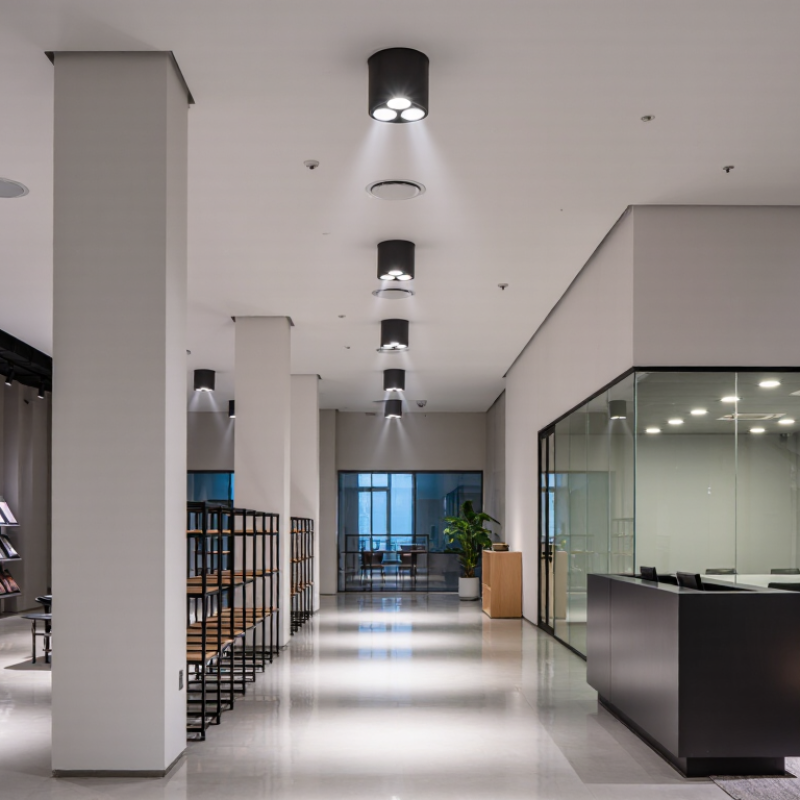
What Are the Best Commercial Downlights for 2026?

What Are Commercial Downlights and How Are They Used?

Commercial downlights are ceiling-mounted luminaires that send light downward, usually from a recessed opening. They can use replaceable lamps or integrated LED modules. In offices, they illuminate desks and walkways; in shops, adjustable versions can highlight shelves or displays. Their compact appearance is useful, but spacing and beam angle matter: poorly planned fixtures can leave bright patches beside dim corners. The U.S. Energy Information Administration’s 2018 Commercial Buildings Energy Consumption Survey reported that lighting used about 17% of commercial-building electricity. That makes efficient, well-controlled lighting a practical design consideration.

Downlights are selected by more than wattage. Check lumen output, color temperature, color rendering, glare, dimming compatibility, and whether the fixture suits the ceiling and room conditions. The U.S. Department of Energy’s Energy Saver guidance says LEDs use at least 75% less energy and can last up to 25 times longer than incandescent lighting. Those figures are broad comparisons, not a promise for every fixture or installation. A mock-up can reveal uncomfortable glare before a whole ceiling is fitted. Sometimes the simpler layout wins.

Tips: Match beam spread to ceiling height and task. For a desk, check glare from a seated position; for a display, aim the beam at the product, not visitors’ eyes. Record the selected settings, too. That step is easy to forget.


Which Features Define the Best Commercial Downlights in 2026?

For 2026, the best commercial downlights should combine high efficacy with controlled glare, reliable dimming, and serviceable components. The U.S. Department of Energy’s LED Basics guidance reports that LEDs use at least 75% less energy than incandescent lighting and can last up to 25 times longer. Treat that as a broad technology benchmark, not a guarantee for any fixture. Compare delivered lumens per watt, rated life, and warranty terms.

Light quality matters in offices, shops, and corridors. Look for a stated color-rendering index, consistent color temperature, and optics that keep bright sources out of people’s direct sightlines. The IEA’s Energy Efficiency 2023 report notes that LEDs account for nearly half of global lighting sales, reflecting how widely the technology has been adopted. Yet adoption alone does not ensure comfort. A perfect datasheet can still produce a harsh ceiling.

Controls should support smooth dimming and occupancy or daylight response where appropriate. Check compatibility before installation; flicker or uneven dimming can undermine an otherwise efficient system. Also review cutout dimensions, ceiling depth, thermal performance, and access to drivers. Small details matter. In a real retrofit, even a few millimeters can complicate installation, and that is easy to overlook when comparing specifications.

How Do Commercial Downlight Types and Specifications Compare?

Fixed downlights suit corridors and open offices, where broad, even beams reduce visible scallops on floors. Adjustable gimbal models aim light at shelves or displays, but narrow beams can create harsh bright spots. Wall-wash versions spread light vertically; check spacing guidance and measured photometry, not just the beam-angle label. Details matter. Compare delivered lumens and efficacy in lumens per watt, then check color temperature, color rendering, dimming range, and driver compatibility. A high lumen rating alone says little about comfort.

The U.S. Department of Energy’s Energy Saver guidance reports that LEDs use at least 75% less energy and last up to 25 times longer than incandescent lighting. These are broad technology benchmarks, not guarantees for every commercial downlight or installation. For a fair comparison, review independent test data and the fixture’s published lifetime rating, rather than assuming all LED models perform alike. A spec sheet can still mislead. In a low-ceiling meeting room, a deep-regressed optic may control glare better than a brighter, exposed source; in a retail aisle, adjustable optics may be more useful. I would also verify insulation-contact suitability, plenum depth, and emergency or sensor requirements for the actual site. One detail is easy to miss: dimmers and LED drivers do not always cooperate smoothly.

What Are the Best Commercial Downlights for 2026?

Typical luminous-efficacy ranges by downlight type (lumens per watt). Compare these ranges with each product’s tested specifications and project requirements.

Ranges are representative market estimates, not guaranteed performance values. Actual efficacy varies with output, optics, color temperature, dimming, and driver choice. Also check glare control, color quality, dimming compatibility, and applicable safety ratings.

Which Downlights Work Best for Different Commercial Spaces?

The best commercial downlight depends on the task, ceiling, and people using the space. In open offices, choose low-glare optics and even spacing to reduce bright spots on screens. A neutral white light, around 3500K to 4000K, often feels alert without looking overly cool. For reception areas, warmer light can make wood, stone, and faces feel more welcoming. Small details matter.

Retail spaces need light that shows product colors accurately. Look for a high color rendering index, especially near clothing, food, or makeup displays. A narrower beam can highlight shelves, while general lighting keeps aisles comfortable. In corridors and stairwells, consistent pools of light help people see changes in level. Kitchens and service areas usually benefit from brighter, cooler illumination and suitable moisture protection. Check the fitting’s rating against actual exposure, not just the room name.

Tips: Compare beam angles and glare data, then test a sample in the real ceiling. Review the floor, wall, and display finishes at night as well as during daylight. A neat plan can still leave a dark patch beside a cabinet; adjust spacing after the test if needed.

What Are the Best Commercial Downlights for 2026? — Which Downlights Work Best for Different Commercial Spaces?

Commercial Space Suitable Downlight Type Light Quality to Consider Beam and Glare Protection and Controls Why It Works
Offices and meeting rooms Recessed LED downlight with a diffused or low-glare optic Neutral white, commonly around 3500–4000 K; CRI 80 or higher is a common baseline Broad, even distribution; check glare performance and layout for screen-based work Dimming and occupancy or daylight controls can help reduce energy use; select emergency versions where required by the project Diffused light and carefully planned spacing can support visual comfort and reduce harsh pools of light.
Retail sales floors Adjustable accent downlights, often combined with general ambient lighting CRI 90 or higher can be useful where accurate product color rendering matters; choose CCT to suit merchandise and store design Narrower beams can highlight displays; wider beams can provide general illumination. Aim carefully to limit glare and spill. Dimming or scene controls allow lighting to be adjusted for different merchandising needs Adjustable optics help create focal points, while separate ambient lighting maintains overall visibility.
Restaurants and cafés Dimmable recessed downlights with diffused optics, supplemented by accent lighting where appropriate Warm white, often around 2700–3000 K, for a warmer atmosphere; consider CRI 90 or higher where food appearance is important Use controlled, comfortable light over tables and avoid direct glare in seated sightlines Dimming supports different service periods; use an appropriate IP rating in areas exposed to moisture or cleaning Warm color and adjustable levels can create distinct dining scenes without relying on one uniform brightness.
Hotels and hospitality corridors Recessed downlights with diffused optics; use dimmable fittings where scene control is desired Warm or neutral white, selected to match the interior scheme; consistent color appearance across fittings is important A broad distribution can reduce dark patches in corridors; avoid excessive brightness and glare Consider occupancy controls in suitable back-of-house or low-use areas; emergency lighting must be addressed separately where required Consistent light and well-planned spacing support wayfinding and a cohesive guest experience.
Healthcare and examination areas Recessed, easy-to-clean LED downlights with a sealed or smooth-front design where needed Neutral white is commonly used; verify color-rendering and flicker requirements for the specific task and facility Uniform, low-glare light for general areas; task-specific lighting may be needed for clinical examinations Choose ingress protection and cleanability to suit the room, cleaning method, and local healthcare requirements Sealed, cleanable designs can suit hygiene-sensitive spaces, but room-specific standards and clinical needs must guide selection.
Schools and training rooms Recessed LED downlights with diffusers or low-glare optics Neutral white, commonly around 3500–4000 K; CRI 80 or higher is a common baseline Even distribution across desks and boards; check glare from both seated and standing viewpoints Dimming and daylight controls can be useful near windows; select robust fittings appropriate to the room Comfortable, consistent illumination helps support reading, writing, and screen use.
Retail stockrooms and light-industrial areas Durable LED downlights or surface-mounted equivalents suited to the ceiling and environment Neutral white; select output based on mounting height, task, and the lighting design Choose distribution to suit shelving, aisles, and work surfaces; avoid shadows in task areas Check IP and impact ratings against dust, moisture, and mechanical risks; occupancy sensors may suit intermittent-use zones Environment-matched construction and aisle-aware distribution are more important than appearance alone.
Washrooms and changing rooms Sealed LED downlights with a smooth, cleanable face Neutral white is a practical general choice; CRI 80 or higher is a common baseline Diffused light helps limit harsh shadows around mirrors and changing areas Select the IP rating according to the fitting’s exact location and applicable electrical rules; IP44 is not suitable for every bathroom zone Appropriate sealing and careful location selection help address moisture and cleaning conditions.
Selection note: These are general application guidelines, not product specifications or a substitute for a lighting design. Confirm illuminance, uniformity, glare, controls, emergency-lighting provisions, fire-rating needs, and applicable local codes for each project. IP ratings describe protection against ingress and must be selected for the actual installation conditions.

How Can Businesses Evaluate Cost, Efficiency, and Maintenance?

Choosing commercial downlights for 2026 starts with the room, not the catalogue. Map ceiling height, task areas, operating hours, and existing controls. A reception desk needs comfortable, even light; a stockroom may need stronger vertical visibility. Check maintained illuminance and uniformity against the work being done, then request photometric files from suppliers. Numbers matter.

Compare total cost over the expected service life, not purchase price alone. Include energy use, driver replacement, access equipment, and electrician labor. Estimate annual electricity use from input watts, fixture count, and actual operating hours; apply your local rate. Confirm dimming compatibility before choosing controls. Small mismatch, real headache. Review efficacy and color quality together: high output per watt is less useful if faces look harsh or shelves appear uneven.

Maintenance deserves a site walk. Note whether fittings sit above high ceilings, dusty work areas, or hard-to-reach displays. Ask about rated lifetime, warranty terms, replaceable drivers, and spare-part availability. Ratings depend on test conditions, so compare like with like. Pilot a few units during normal business hours. Check glare from seated and standing positions, and record cleaning time. I would not treat the first estimate as precise: switching patterns and dust can shift costs. Keep the assumptions visible.

Powder Coat Booths

For those larger-sized parts, or smaller quantity runs, we have 2 independent powder coat booths and ovens. The quality, durability and affordability of today’s powder coating finishes make this the process of choice for world-class companies.

Powder coating advantages over other forms of coating are many. Materials used in the Powder coating process can be metals and non-metals that come in a multitude of thicknesses, textures, colors, etc. Another of Powder coating’s biggest advantages over conventional coatings is its ability to create finishes in many different textures. Powder Coating Booths allow us the ability to apply these advantages to large products.

Wet Paint Line

Tri-State Fabricators runs a full-service conveyor line for painting. Wet painting can provide protection or decoration to many different part styles. From start to finish, every project is easier to undergo random and point-based inspection by our skilled painting team.

Advantages to our Wet Paint Line are these lines start with product prep and ends with a thorough inspection of a high quality finished product. Our ability to complete large and small projects with a superior finish and doing so in a timely and economical fashion. This passes along the savings in production to our customers. When powder coating ins not an option, our Wet Paint Line gets the job done right the first time.

Wet Paint Booths

When the parts get big and heavy we roll-out our custom paint racks and oversize booth. By utilizing our partnerships with all the major paint brands, we can match virtually any color with wet paint.

The advantages of having access to a Wet Paint Booth are many. Large projects of many different shapes can be loaded into the booth. The Wet Paint Booth offers an environment that is much more controlled than a typical parts painting operation.

Not only are they used because of their controlled environment, but they’re are also advantageous when it comes to applying paint to parts that are needed in industries that require specialty coatings such as medical, aerospace, etc.

Military CARC

Our military forces have some very high standards when it comes to the finish of their vehicles and equipment. From the first pre-treatment step to final coat, it takes a great deal of knowledge and experience to protect the men and women of our armed forces. They deserve only the best, and Tri-State Fabricators provides it.

All of our processes are closely monitored by our staff and management teams. Both of which are highly trained in the processes of metal fabrication and finishing. Tri-State Fabricators’ goal is to always fully satisfy each and every customer, including the military. We will always put a 110% into what we do.

Glass-Bead Blasting

Abrasive media blasting is an excellent way to remove old paint, rust, and increase the paint/powder adhesion. Glass beads produce a much smoother and brighter finish than angular abrasives; leaving the part clean yet without any dimensional change. Chemically inert and environmentally friendly, we can recycle our beads approximately 30 times; making them a more preferred method of metal cleaning or surface finishing.

Advantages to Glass Bead Blasting are many. Glass bead blast media is used when a project is needing rough surfaces need to become smooth for applications of coatings such as paint. It is typically used to clean paint and rust from a product surface without deforming the surface it is being used on. Overall, compared to many other blasting media, Glass Bead Blasting is a very economical choice and those savings are always passed on to our customers.

Part Washing

Tri-State Fabricators utilize a zinc phosphate wash to clean and etch the material to ensure the best paint adhesion possible. The unique design of our 3-stage wash system does the work like a 5-stage. From Cleaning and rinsing to conversion coating and post-treatment, Our Part Washing process is a complete service and works throughout the fabrication service and the finishing service.

Along with the previously mentioned benefits, Curing is a vital chemical reaction that leaves the product finish hard and relatively safe from mild abrasion and aggressive corrosion. This process can be done in more than one way; ambient air-dry or in curing ovens at temps that exceed 240°.

Burn-Off Oven

From fixing paint mistakes (someone else’s of course) to simply cleaning our paint line hooks, our burn-off oven is put to good use. After a quick burn-off, a little clean up, and a fresh coat of paint, your parts will look better than new.

Why does our Burn-Off Oven work so well? Because super heating the air around parts turns the materials into ashes. From paint and powder coatings to rubber and machining oils, high temps do the job without degrading the integrity of the part.

Masking

Masking is a vital part of producing high quality products. We have die-cut masking patterns to protect machined surfaces as well as a wide range of plugs and caps to protect threaded holes and bolts. We provide permanent and temporary masking.

Masking allows the selected sections of a product to be protected from a fabrication or finishing service. This can be with both chemicals when etching and tapes, paints when only finishing just a section of the product. Masking is great in aiding the customization process of a project.

Screen Printing

Screen printing is a photographic process that transfers artwork onto a porous nylon screen which allows colored ink to flow through the screen and be deposited on an aluminum or plastic component. We can generally have just about any design created onto a screen for your parts.

Some of the advantages of Screen Printing are, brand recognition for your business displaying on your products, assembly instructions, product warnings/hazards, etc. Tri-State Fabricators produces Screen Printing of the highest quality so you know it’s durable.

Metal Finishing

Metal Finishing is the art of treating the exterior portion of product, often metal but can also be made of other materials, so that the surface is clean and free of any debris. Then the process of applying coats or either paint of powder coat takes place. This coating process improves the quality of the product in both appearance and resistance to wear and corrosion.

Tri-State Fabricators, Inc., understands that a project typically isn’t complete until a high-quality finish has been added to your product. This is why our painting and powder coating teams continuously inspect the products throughout the Metal Finishing process.
