7 Best CNC Panel Benders for Global Buyers
Choosing a Cnc Panel Bender is a major decision for manufacturers handling cabinets, enclosures, doors, and other sheet-metal parts. The right machine can reduce manual handling and produce consistent bends across repeated jobs. Yet no single model suits every factory. Sheet thickness, panel size, bend complexity, floor space, and production volume all shape the choice.
This guide compares seven panel benders for global buyers, focusing on practical factors rather than headline specifications alone. It considers machine capacity, automation, control systems, tooling flexibility, operator access, and after-sales support. These details matter when a machine must fit an existing production line and keep running through demanding shifts. Ask suppliers for sample parts, clear technical documentation, installation plans, and references from comparable applications. A specification sheet is useful, but it cannot show every real-world limitation. Some trade-offs are easy to miss. For example, higher automation may improve throughput while requiring more setup expertise and maintenance planning. Buyers should also confirm which services are available in their region and what response times they can expect. Availability can vary.
The rankings offer a starting point, not a substitute for testing parts or checking requirements with qualified engineers. Compare each machine against your actual materials, tolerances, and expected workload. A careful review now can prevent costly mismatches later. No choice is perfect.
Panel Bender Basics: CNC Axes, Folding Cycles, and Sheet-Metal Range
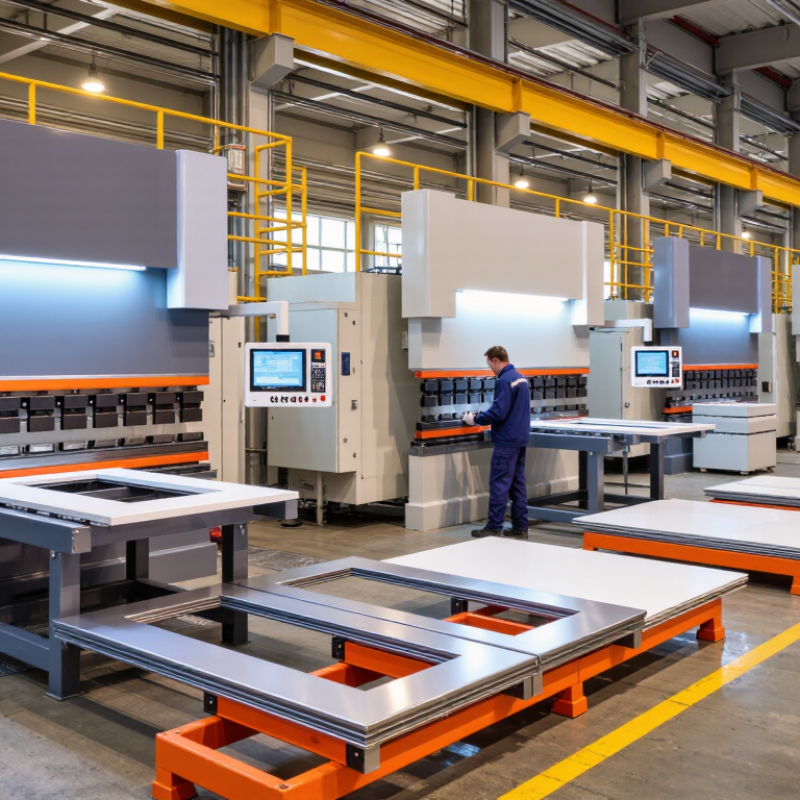
A CNC panel bender coordinates sheet positioning, clamping, and folding through programmable axes. Axis names and counts vary by machine, so compare what each axis physically controls: the backgauge sets the blank’s position, while folding tools form flanges in sequence.
A typical cycle loads and aligns the sheet, clamps it, then bends edges upward or downward. The machine may reposition the workpiece between folds. Small details matter. A high axis count alone does not guarantee faster production; handling time, tool changes, and part geometry can dominate the cycle.
Sheet-metal range means more than minimum and maximum thickness. Check blank length, depth, material type, tensile strength, and the smallest flange the tooling can form.
The World Steel Association’s World Steel in Figures 2024 reports 1,892.0 million tonnes of crude steel production in 2023.
That figure describes upstream scale, not panel-bender demand, but it underscores why material variation matters. A machine rated for mild steel may behave differently with stainless steel or coated stock. Honestly, catalog limits can be easy to misread. Ask suppliers to demonstrate your actual part, including short returns and narrow flanges, and record the cycle time, bend accuracy, and any manual repositioning.
Buyer Metrics: Maximum Sheet Size, Thickness, Accuracy, and Changeover Time
For a shortlist of seven CNC panel benders, compare usable sheet dimensions, not just the largest advertised blank. A wide sheet may exceed the machine’s working envelope once gripping and tool clearance are considered. Check maximum length, width, diagonal handling, and the material grade behind each thickness rating. A machine rated for 2 mm mild steel may not handle 2 mm stainless steel equally well. Ask suppliers to run your actual part geometry and provide a written trial record.
Accuracy needs a definition. ISO 230-2:2014 describes tests for positioning accuracy and repeatability of numerically controlled axes; it does not guarantee finished-part tolerance. Request measured flange angles and dimensions across repeated bends, including a long panel. Changeover time should include tool swaps, program selection, first-piece adjustment, and operator handling. Watch the clock. Deloitte and The Manufacturing Institute estimated that U.S. manufacturing could need 3.8 million workers by 2033, with 1.9 million jobs potentially unfilled. That makes repeatable setup and low operator dependence practical buying criteria, not just convenience. One imperfect measure remains: quoted changeover times often exclude real-world part variation. Insist on a witnessed changeover using your tooling and material.
Seven Machines Compared: Capacity, Automation, Tooling, and Regional Support
7 Best CNC Panel Benders for Global Buyers
Comparing seven CNC panel benders means looking beyond advertised speed. Check maximum sheet thickness, working length, bend height, and repeatability against real parts. A 1.5-millimeter stainless-steel panel behaves differently from a thin aluminum enclosure. Ask suppliers for sample bends using your material, not just a demonstration sheet. Small details matter.
Automation changes the labor and throughput equation. Compare manual loading, automatic tool changes, and robotic handling, then check how easily operators can recover from a setup error. The International Federation of Robotics reported 541,302 industrial robots installed worldwide in 2023. That figure signals broad automation investment, but it does not guarantee that a robotic cell fits every shop. Not the whole story. Floor space, programming skills, and maintenance capacity also shape the return.
Tooling access and regional support can decide whether a capable machine stays productive. Compare standard tooling ranges, changeover time, spare-part lead times, and local technician coverage. Deloitte’s 2024 Smart Manufacturing Survey found that 92% of surveyed manufacturers viewed smart manufacturing as a key competitiveness driver over the next three years. Treat that as context, not a purchase promise. A detailed service plan may matter more than one extra automated feature. It is easy to overlook. Buyers should also confirm training, software support, and response times in their operating region.
Safety and Compliance: ISO 12100:2010 and ISO 13849-1:2023
For a CNC panel bender, safety starts with a documented risk assessment, not a list of fitted guards. ISO 12100:2010 provides a framework for identifying hazards, estimating risk, and reducing it through design and protective measures. Check how the assessment addresses the machine’s full working cycle: loading a large sheet, clamping, bending, unloading, and clearing a jam. Watch for pinch points near the folding beam and unexpected movement during setup. Small details matter.
ISO 13849-1:2023 addresses safety-related parts of control systems. Ask the supplier to explain the required Performance Level for each safety function, such as emergency stops, guarded access, and safe restart. Request evidence that the design and validation match those requirements, including relevant circuit diagrams and test records. Paperwork alone is not enough. During a factory review, observe whether an opened guard stops hazardous motion and whether the machine prevents an automatic restart after power returns. These checks reveal gaps that a brochure may miss. Standards support a sound safety process, but buyers should also confirm applicable local requirements and ensure operators receive practical training. No assessment is perfect; operating conditions change, so risk reviews need to remain active.
Global Ownership Costs: Power, Installation, FAT/SAT, Warranty, and Service
For global buyers, compare a CNC panel bender’s measured power draw, not only its rated motor capacity. The U.S. Energy Information Administration reported an average industrial electricity price of about 8.1 cents per kilowatt-hour in 2023. At that benchmark, a sustained 1 kW difference over 4,000 operating hours costs about $324 yearly, before demand charges. Local tariffs may change the result sharply. The IEA’s Energy Efficiency 2023 report estimates that industry uses roughly 37% of global energy, making efficiency a meaningful ownership factor. Small loads add up. Request typical and standby consumption, then model both against your shift pattern.
Installation costs can include rigging, foundation work, leveling, electrical upgrades, and operator training. Confirm these in writing before comparing quotations. A factory acceptance test should record sample-part dimensions, cycle time, repeatability, and agreed functions. Site acceptance should repeat key checks after installation, using the buyer’s material where practical. Define who pays for retesting if results fall short. Warranty comparisons should specify parts, labor, travel, response times, and exclusions—not just duration. Ask for service coverage and spare-part lead times for your location. Even a careful spreadsheet can miss site delays; allow contingency for access, utilities, and commissioning.
7 Best CNC Panel Benders for Global Buyers — Global Ownership Costs: Power, Installation, FAT/SAT, Warranty, and Service
| Planning profile | Typical working width | Connected load | Estimated annual electricity cost | Installation & commissioning allowance | FAT / SAT budget allowance | Warranty planning assumption | Annual service budget |
| 1. Compact entry-level cell | Up to 1,000 mm | 18 kW | About US$2,400/year | US$4,000–8,000 | FAT: US$0–1,500; SAT: US$1,500–3,000 | Budget for 12 months; confirm start date, exclusions, and travel terms | US$2,500–4,000/year |
| 2. General-purpose standard cell | 1,000–1,250 mm | 22 kW | About US$2,900/year | US$5,000–10,000 | FAT: US$0–2,000; SAT: US$2,000–4,000 | Budget for 12 months; verify parts, labor, and response coverage | US$3,000–5,000/year |
| 3. Wide-format production cell | 1,250–1,500 mm | 26 kW | About US$3,400/year | US$6,000–12,000 | FAT: US$0–2,500; SAT: US$2,500–4,500 | Budget for 12 months; check commissioning and consumable exclusions | US$3,500–5,500/year |
| 4. High-throughput cell | 1,500–2,000 mm | 30 kW | About US$4,000/year | US$8,000–15,000 | FAT: US$0–3,000; SAT: US$3,000–5,000 | Budget for 12 months; confirm uptime and service-level terms separately | US$4,000–6,500/year |
| 5. Heavy-duty panel cell | 1,500–2,500 mm | 34 kW | About US$4,500/year | US$9,000–18,000 | FAT: US$0–3,500; SAT: US$3,500–6,000 | Budget for 12 months; confirm coverage for tooling and high-wear items | US$4,500–7,000/year |
| 6. Automation-ready cell | 1,500–2,500 mm | 38 kW | About US$5,000/year | US$12,000–25,000 | FAT: US$1,000–5,000; SAT: US$4,000–8,000 | Budget for 12 months; clarify integration and third-party equipment coverage | US$5,000–8,000/year |
| 7. Large-format integrated line | 2,000–3,200 mm | 42 kW | About US$5,500/year | US$15,000–35,000 | FAT: US$2,000–7,000; SAT: US$5,000–12,000 | Budget for 12 months; negotiate regional parts stock and escalation coverage | US$6,000–10,000/year |
Basis and limitations: These are illustrative planning profiles, not quotations or specifications for particular products. Annual electricity cost assumes 2,000 operating hours, average demand at 55% of connected load, and electricity at US$0.12/kWh. Installation allowances cover typical rigging, leveling, and commissioning labor; building work, freight, duties, taxes, and electrical upgrades are excluded. FAT/SAT allowances vary by scope and location; FAT may be included in a purchase contract, while travel and accommodation may be charged separately. Warranty and service terms must be confirmed in writing with the supplier.





