


China Best CNC Lathe Parts Manufacturers

Choosing among China’s best CNC lathe parts manufacturers requires more than comparing prices or polished factory photos. The market operates at a serious industrial scale. The International Federation of Robotics reported 276,288 industrial robots installed in China in 2023, representing 51% of global installations. That figure, published in World Robotics 2024, reflects a highly automated manufacturing base—but it does not certify any individual supplier. Details matter.

For buyers, Cnc Lathe Parts quality is visible in less dramatic places: a consistent shaft diameter, clean threads, burr-free edges, and a batch inspection report that matches the shipped components. Ask manufacturers about material traceability, dimensional inspection methods, surface finishes, and how they handle drawing revisions. Request samples that represent normal production, not only a specially prepared showcase piece. A coordinate-measuring machine report can help verify critical dimensions, while clear records make recurring orders easier to assess. These checks are useful for automotive, machinery, medical-device, and electronics applications, where fit and repeatability affect assembly and service life.

Price still matters. So do lead times, communication, and the supplier’s willingness to flag a tolerance that may be difficult to hold. No shortlist replaces direct verification. Samples can mislead. A careful comparison should weigh documented process controls alongside cost and capacity, rather than treating “best” as a universal label. The strongest manufacturer for one drawing may not suit another project’s material, volume, or inspection needs. This guide explains how to evaluate Chinese CNC lathe suppliers with evidence, practical questions, and realistic expectations.
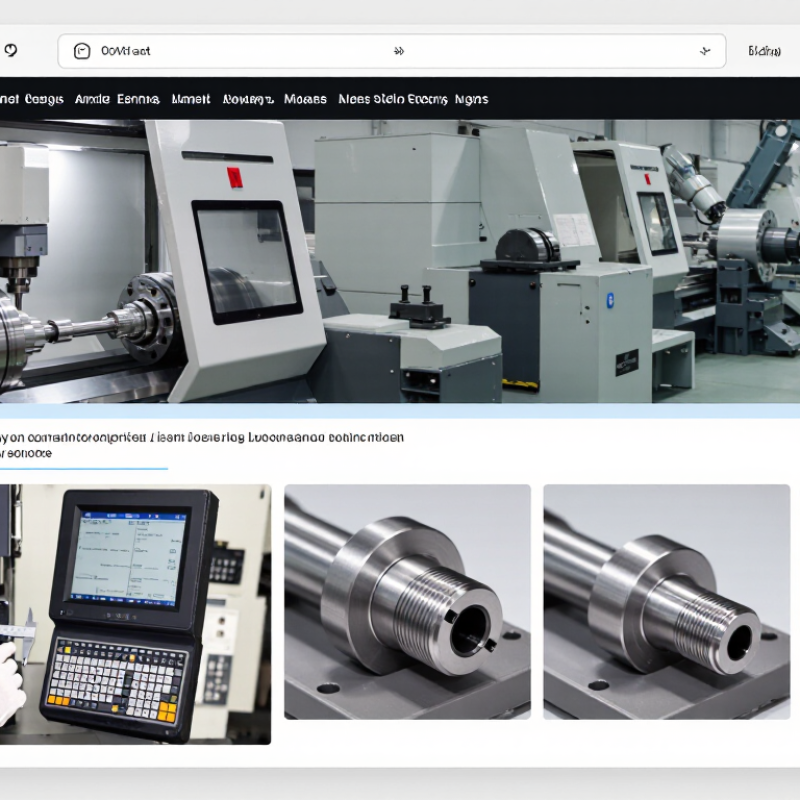
China Best CNC Lathe Parts Manufacturers

What CNC Lathe Parts Manufacturers in China Produce

China Best CNC Lathe Parts Manufacturers

CNC lathe parts manufacturers in China produce components by cutting rotating bar stock or blanks. Common products include precision shafts, sleeves, bushings, pins, threaded fittings, spacers, and rollers. Small parts may fit inside a fingertip; larger turned pieces support industrial equipment. Materials often include aluminum, stainless steel, brass, and carbon steel, selected for load, corrosion exposure, and cost.

Many workshops combine turning with drilling, boring, threading, grooving, and face milling. Live-tooling machines can add cross-holes or flats without moving the part to another setup. That can reduce handling. It does not guarantee perfect results, though: thin walls may distort, and long shafts can deflect during cutting. Good production planning considers geometry, batch size, and operation sequence before machining begins.

Manufacturers may also provide deburring, polishing, heat-treatment coordination, and finishes such as anodizing or plating. Quality checks commonly use micrometers, gauges, and coordinate-measuring equipment to verify diameters, runout, and threads. Buyers should share clear drawings, material requirements, and realistic tolerances. A smooth surface looks reassuring, but it cannot prove dimensions are correct. Inspection records and sample approval offer stronger evidence, though documentation may not reveal every variation between batches.


How CNC Lathe Parts Are Designed and Manufactured

China Best CNC Lathe Parts Manufacturers
How CNC Lathe Parts Are Designed and Manufactured

CNC lathe part design starts with its intended function. Engineers specify the material, loads, mating features, and critical dimensions before building a CAD model. A shaft may need a tight tolerance on its bearing seat, while its end face allows more variation. That choice affects machining time and inspection cost. Not every surface needs perfection.

The drawing guides tool selection, workholding, and cutting order. For a stainless-steel sleeve, a shop may rough-turn the outside, bore the center, then finish the bearing face. Tool geometry, chip flow, and heat can all shift dimensions. Designers should allow a secure grip and avoid thin walls that may vibrate during cutting. Small details matter. A drawing can look complete and still leave awkward questions about how to hold the part.

Automation is changing production, but it does not replace process judgment. The International Federation of Robotics’ World Robotics 2023 report records 553,052 industrial robot installations worldwide in 2022, 5% above 2021. This is broad industry data, not a count of CNC lathes; it offers useful context for increasingly automated production cells. First-piece inspection should check diameter, runout, and surface finish against the drawing. I would also question any tight tolerance without a clear functional reason. That step is easy to skip.

China Best CNC Lathe Parts Manufacturers — How CNC Lathe Parts Are Designed and Manufactured

Surface Roughness Grades for CNC Lathe Part Design

Designers specify surface finish using Ra, the arithmetic mean roughness, to communicate functional and manufacturing requirements. The chart shows common ISO roughness grade values; the finish achieved by CNC turning depends on factors such as material, tooling, machine condition, and cutting parameters.

Key Capabilities of Chinese CNC Lathe Parts Manufacturers

China’s CNC lathe parts manufacturers are judged by more than machine count. Strong suppliers translate drawings into stable turning plans, select suitable inserts, and control tool wear across a production run. Ask how they hold concentricity, surface finish, and thread dimensions—not just their best-case tolerance. A useful shop-floor detail: operators should record tool offsets and inspect first-off parts before releasing a batch.

Grand View Research estimated the global CNC machine market at USD 101.2 billion in 2023, with projected growth through 2030. This market estimate signals sustained investment, but it does not prove any supplier’s quality. Look for practical evidence: calibrated gauges, documented inspection results, material certificates, and traceable batch records. For complex parts, request a sample report showing measured dimensions against the drawing.

Engineering support is another key capability. Experienced teams can flag thin walls, awkward clamping points, or deep bores before machining begins. They may suggest small design changes that reduce chatter or scrap. Still, a polished brochure proves little. Ask for a sample part, its inspection record, and a clear explanation of how defects are handled. Even capable factories can miss details when specifications are vague; confirm critical dimensions and revision control before ordering.

China Best CNC Lathe Parts Manufacturers - Key Capabilities of Chinese CNC Lathe Parts Manufacturers

Capability Area Typical Capability Why It Matters What Buyers Can Verify
Turning Processes CNC turning for cylindrical components, including facing, grooving, threading, boring, and contour turning. Some facilities also use mill-turn equipment for parts requiring both turning and milling. Process selection affects part geometry, setup time, and the number of operations required. Review the proposed process plan, machine capability, sample parts, and how secondary operations are handled.
Materials Commonly machined materials include aluminum alloys, carbon and alloy steels, stainless steels, brass, copper, and engineering plastics. Material choice influences strength, corrosion resistance, machinability, weight, and cost. Confirm the specified grade, material certificates where required, and traceability from incoming stock to finished parts.
Dimensional Control Inspection methods may include micrometers, calipers, bore gauges, thread gauges, height gauges, and coordinate measuring machines, depending on the part and tolerance requirements. Consistent measurement helps control fit, function, and interchangeability across production batches. Specify critical dimensions and tolerances on the drawing; request inspection records for those characteristics.
Surface Finish Surface finish is controlled through machining parameters, tooling, and, when specified, secondary processes such as polishing or grinding. Surface quality can affect sealing, sliding contact, appearance, and coating performance. State the required finish on the drawing and agree on the measurement method and inspection locations.
Threading and Features Parts can be produced with internal or external threads, shoulders, grooves, cross-holes, and other turned features, subject to geometry and equipment limits. Feature design affects manufacturability, tool access, cycle time, and inspection requirements. Provide complete thread specifications, including standard, size, pitch, tolerance class, and any required gauging.
Finishing and Secondary Operations Depending on the supplier's process network, parts may receive deburring, heat treatment, plating, anodizing, passivation, or other specified finishes. Secondary processes can change dimensions, surface properties, and corrosion or wear performance. Identify finish standards and acceptance criteria, and clarify which processes are performed in-house or by qualified subcontractors.
Quality Management Manufacturing controls may include incoming inspection, in-process checks, final inspection, documented procedures, and corrective-action processes. A documented quality system supports repeatability and clearer handling of nonconforming parts. Review relevant quality-system certificates, inspection plans, sample reports, and nonconformance procedures. Verify certificate scope and validity.
Production Volume CNC turning is used for prototypes, small batches, and repeat production; suitable volumes depend on part complexity, equipment, and production planning. Batch size affects setup cost, lead time, tooling choices, and the most economical process route. Request quotations for the expected order quantity and forecast, and confirm capacity and lead-time assumptions.
Technical Communication Effective suppliers can review drawings, clarify tolerances and materials, and identify potential manufacturing or inspection concerns before production. Early clarification reduces the risk of mismatched specifications and avoidable revisions. Assess the quality of drawing feedback, questions about critical features, and revision-control practices during the quotation stage.
Packaging and Export Readiness Export orders may require protective packaging, part identification, quantity records, and shipping documents appropriate to the order and destination. Proper packing helps protect finished parts and supports accurate receiving and traceability. Agree on packaging, labeling, documentation, shipping terms, and responsibility for freight before placing the order.

Note: Capabilities vary by facility, equipment, part geometry, material, and order requirements. Confirm tolerances, certifications, processes, and delivery commitments directly with each prospective supplier.

How to Evaluate and Select a CNC Lathe Parts Supplier

China Best CNC Lathe Parts Manufacturers

How to Evaluate and Select a CNC Lathe Parts Supplier

Choosing a CNC lathe parts supplier takes more than comparing unit prices. Start with your drawing, material grade, tolerances, surface finish, and annual volume. Ask how the supplier checks critical dimensions, and request sample inspection records. For a small shaft, for example, confirm how diameter and concentricity are measured. Clear answers matter. Also check whether the supplier can explain its machining sequence and identify likely production risks before quoting.

Tips: Send a complete drawing and specify which dimensions are critical. Ask for a sample part, inspection report, and details about measuring equipment. Compare lead times and communication, not just price. A polished quote is not proof of consistent production.

When reviewing samples, use suitable measuring tools and compare results against your own requirements. Check edges, threads, and surface marks under good light; these details can reveal handling or finishing issues. Discuss how changes to material, quantity, or tolerance may affect cost and delivery. One imperfect sample does not tell the whole story, but unexplained variation deserves a closer look. Even a capable supplier may not be the right fit for every part.

Industries That Use CNC Lathe Parts Made in China

Industries That Use CNC Lathe Parts Made in China

CNC-turned parts serve automotive, aerospace, medical, and industrial applications. Vehicle makers use shafts, sleeves, threaded connectors, and valve bodies. Precise dimensions help these parts fit bearings and seals. The International Energy Agency reported nearly 14 million electric cars were sold worldwide in 2023, about 18% of total car sales. This shift supports demand for motor shafts and thermal-management fittings, though not every electric vehicle component is turned.

Aerospace and maintenance operations use precision fittings, bushings, and hydraulic components. The International Air Transport Association reported that air-travel demand rose 36.9% in 2023 compared with 2022. More flying can mean more inspections and replacement needs, but it does not guarantee higher orders for every supplier. Small parts matter. Buyers should review material records, dimensional inspection results, surface finish, and traceability, rather than judging suppliers on unit price alone.

Medical equipment makers use turned stainless-steel and titanium parts in instrument handles, connectors, and fluid-control assemblies. Factories also need rollers, couplings, and pneumatic fittings to keep production lines running. Chinese manufacturers offer a range of machining capacity and production options. Still, “made in China” alone says little about suitability. Confirm tolerances, sample results, process controls, and delivery consistency before production. That assumption deserves scrutiny.

Powder Coat Booths

For those larger-sized parts, or smaller quantity runs, we have 2 independent powder coat booths and ovens. The quality, durability and affordability of today’s powder coating finishes make this the process of choice for world-class companies.

Powder coating advantages over other forms of coating are many. Materials used in the Powder coating process can be metals and non-metals that come in a multitude of thicknesses, textures, colors, etc. Another of Powder coating’s biggest advantages over conventional coatings is its ability to create finishes in many different textures. Powder Coating Booths allow us the ability to apply these advantages to large products.

Wet Paint Line

Tri-State Fabricators runs a full-service conveyor line for painting. Wet painting can provide protection or decoration to many different part styles. From start to finish, every project is easier to undergo random and point-based inspection by our skilled painting team.

Advantages to our Wet Paint Line are these lines start with product prep and ends with a thorough inspection of a high quality finished product. Our ability to complete large and small projects with a superior finish and doing so in a timely and economical fashion. This passes along the savings in production to our customers. When powder coating ins not an option, our Wet Paint Line gets the job done right the first time.

Wet Paint Booths

When the parts get big and heavy we roll-out our custom paint racks and oversize booth. By utilizing our partnerships with all the major paint brands, we can match virtually any color with wet paint.

The advantages of having access to a Wet Paint Booth are many. Large projects of many different shapes can be loaded into the booth. The Wet Paint Booth offers an environment that is much more controlled than a typical parts painting operation.

Not only are they used because of their controlled environment, but they’re are also advantageous when it comes to applying paint to parts that are needed in industries that require specialty coatings such as medical, aerospace, etc.

Military CARC

Our military forces have some very high standards when it comes to the finish of their vehicles and equipment. From the first pre-treatment step to final coat, it takes a great deal of knowledge and experience to protect the men and women of our armed forces. They deserve only the best, and Tri-State Fabricators provides it.

All of our processes are closely monitored by our staff and management teams. Both of which are highly trained in the processes of metal fabrication and finishing. Tri-State Fabricators’ goal is to always fully satisfy each and every customer, including the military. We will always put a 110% into what we do.

Glass-Bead Blasting

Abrasive media blasting is an excellent way to remove old paint, rust, and increase the paint/powder adhesion. Glass beads produce a much smoother and brighter finish than angular abrasives; leaving the part clean yet without any dimensional change. Chemically inert and environmentally friendly, we can recycle our beads approximately 30 times; making them a more preferred method of metal cleaning or surface finishing.

Advantages to Glass Bead Blasting are many. Glass bead blast media is used when a project is needing rough surfaces need to become smooth for applications of coatings such as paint. It is typically used to clean paint and rust from a product surface without deforming the surface it is being used on. Overall, compared to many other blasting media, Glass Bead Blasting is a very economical choice and those savings are always passed on to our customers.

Part Washing

Tri-State Fabricators utilize a zinc phosphate wash to clean and etch the material to ensure the best paint adhesion possible. The unique design of our 3-stage wash system does the work like a 5-stage. From Cleaning and rinsing to conversion coating and post-treatment, Our Part Washing process is a complete service and works throughout the fabrication service and the finishing service.

Along with the previously mentioned benefits, Curing is a vital chemical reaction that leaves the product finish hard and relatively safe from mild abrasion and aggressive corrosion. This process can be done in more than one way; ambient air-dry or in curing ovens at temps that exceed 240°.

Burn-Off Oven

From fixing paint mistakes (someone else’s of course) to simply cleaning our paint line hooks, our burn-off oven is put to good use. After a quick burn-off, a little clean up, and a fresh coat of paint, your parts will look better than new.

Why does our Burn-Off Oven work so well? Because super heating the air around parts turns the materials into ashes. From paint and powder coatings to rubber and machining oils, high temps do the job without degrading the integrity of the part.

Masking

Masking is a vital part of producing high quality products. We have die-cut masking patterns to protect machined surfaces as well as a wide range of plugs and caps to protect threaded holes and bolts. We provide permanent and temporary masking.

Masking allows the selected sections of a product to be protected from a fabrication or finishing service. This can be with both chemicals when etching and tapes, paints when only finishing just a section of the product. Masking is great in aiding the customization process of a project.

Screen Printing

Screen printing is a photographic process that transfers artwork onto a porous nylon screen which allows colored ink to flow through the screen and be deposited on an aluminum or plastic component. We can generally have just about any design created onto a screen for your parts.

Some of the advantages of Screen Printing are, brand recognition for your business displaying on your products, assembly instructions, product warnings/hazards, etc. Tri-State Fabricators produces Screen Printing of the highest quality so you know it’s durable.

Metal Finishing

Metal Finishing is the art of treating the exterior portion of product, often metal but can also be made of other materials, so that the surface is clean and free of any debris. Then the process of applying coats or either paint of powder coat takes place. This coating process improves the quality of the product in both appearance and resistance to wear and corrosion.

Tri-State Fabricators, Inc., understands that a project typically isn’t complete until a high-quality finish has been added to your product. This is why our painting and powder coating teams continuously inspect the products throughout the Metal Finishing process.
