


Choosing the best Touch Screen Device in China requires more than comparing screen size and price. China’s supply chain offers projected capacitive, infrared, resistive, and ruggedized displays. Each technology suits a different environment. A café counter needs fast, smooth gestures. A factory terminal needs gloves, dust resistance, and stable operation under bright lights.
Market evidence shows why this decision matters. IDC’s China Smart Home Device Quarterly Tracking Report forecast more than 300 million smart home device shipments in 2024. Many of these products depend on touch interfaces. Grand View Research valued the global touchscreen display market at approximately US$76 billion in 2023. Its forecast also indicates continued growth through 2030. Omdia’s display research points toward stronger demand for interactive commercial screens, automotive panels, and industrial controls. These figures suggest opportunity, but they do not identify one universal winner.
The practical answer depends on use conditions. A projected-capacitive Touch Screen Device usually delivers precise multi-touch performance. However, water, thick gloves, or poor calibration can reduce reliability. Resistive panels remain useful for warehouses and medical environments. Infrared screens support larger interactive displays, but dust can affect their sensing grid. Buyers should examine brightness, touch latency, IP rating, operating temperature, optical bonding, warranty terms, and local service capacity. Test the device with wet fingers and work gloves. Test it under direct sunlight, too. I would not pretend that a low purchase price proves value. Supplier audits, sample testing, certification review, and long-term failure data matter more. This article compares the leading China touch screen types through those practical and evidence-based criteria.
What Is the Best Type of China Touch Screen Device?
Classify China Touch Devices by Use Case, Size, and 2024 Market Demand
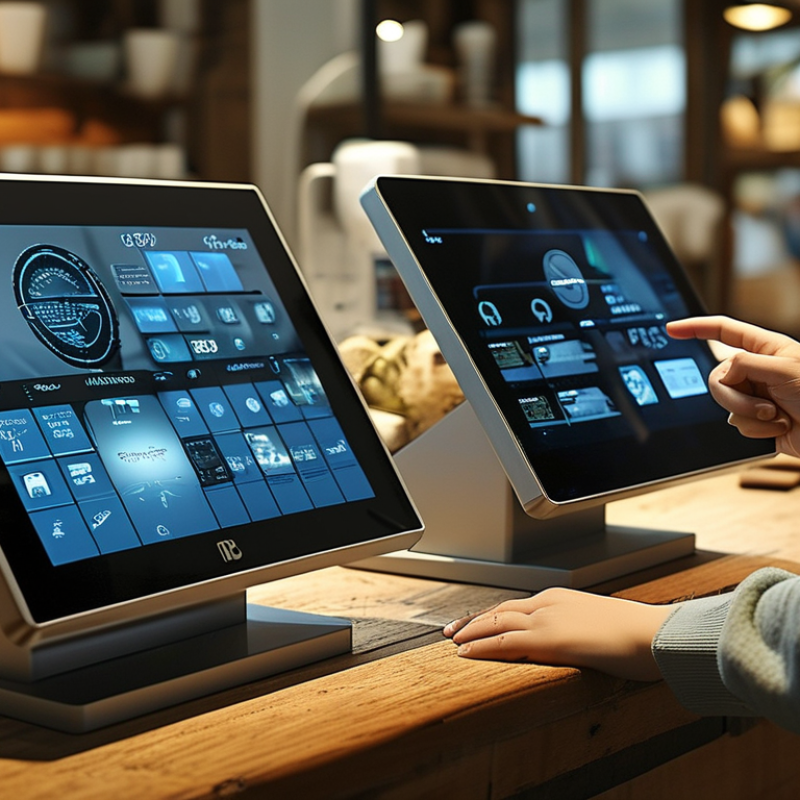
The best China touch screen device depends on its job, not its lowest price. For retail counters, 7–15-inch projected-capacitive panels offer quick responses and compact installation. For factories, 10–21-inch rugged HMI devices need sealed housings, glove support, and stable brightness. Larger 55–86-inch interactive displays suit classrooms, meeting rooms, and public information spaces.
Demand also varies by size. Grand View Research valued the global touchscreen market at approximately USD 76.5 billion in 2023. Its 2024 analysis forecasts an 8.8% compound annual growth rate through 2030. Mordor Intelligence also identifies interactive displays as a growing segment in China, supported by education, offices, retail, and smart manufacturing. These figures show opportunity, but they do not guarantee every device will fit every site. The numbers can look cleaner than reality.
Tips: Match screen size to viewing distance. Check brightness, operating temperature, touch accuracy, warranty response, and spare-part access. Ask for a sample unit before placing a large order. Test it with wet fingers, gloves, sunlight, and your actual software. Size changes everything. Not always.
For 2024 purchasing decisions, capacitive screens remain strong for clean indoor environments. Infrared touch technology may be more practical for large displays and frequent group interaction. Resistive panels still have value in controlled industrial systems, despite feeling less modern. In field testing, installation details often matter more than a glossy specification sheet. A reliable device should remain usable after repeated touches, dust exposure, and long operating hours.
| Device Type | Typical Size | Primary Touch Technology | Best-Fit Use Cases | Typical Operating Environment | Common Touch Requirements | 2024 Market Demand | Why It Is Chosen |
|---|---|---|---|---|---|---|---|
| Compact handheld touch device | 5–7 inches | Projected capacitive | Portable terminals, handheld scanners, field-service tools, compact medical instruments | Indoor and mobile use; frequent battery operation | Multi-touch, low power consumption, sunlight readability, impact-resistant cover glass | Very High | Small displays are widely used where portability, quick interaction, and low energy consumption are essential. |
| Embedded industrial control panel | 7–12.1 inches | Projected capacitive or resistive | Factory equipment, building automation, process monitoring, machine interfaces | Industrial areas with dust, vibration, gloves, or occasional moisture | Wide temperature range, long operating life, glove operation, panel mounting, sealed front bezel | High | Industrial automation requires durable human-machine interfaces that can remain in service for many years. |
| Commercial POS and self-service terminal | 10.1–15.6 inches | Projected capacitive | Point-of-sale systems, ticketing, check-in, payment kiosks, queue management | Retail, hospitality, transportation, and public indoor locations | Fast response, easy cleaning, anti-glare surface, high brightness, optional privacy protection | Very High | Self-service adoption and labor-efficiency requirements continue to support demand for mid-sized interactive terminals. |
| Medical touch monitor | 15.6–24 inches | Projected capacitive or infrared | Patient monitoring, diagnostic workstations, nursing stations, laboratory equipment | Hospitals, clinics, laboratories, and controlled clinical environments | Easy disinfection, low-glare display, high image clarity, reliable touch with gloves, safety-compliant enclosure | High | Healthcare equipment increasingly uses touch interfaces, but the design must prioritize cleaning, reliability, and clinical workflow. |
| Industrial HMI workstation | 15.6–21.5 inches | Projected capacitive, resistive, or infrared | Production-line control, warehouse management, energy monitoring, machine visualization | Factories, warehouses, utilities, and other demanding workplaces | Ingress protection, vibration resistance, glove support, bright display, extended product availability | Very High | Industrial digitalization creates sustained demand for larger operator interfaces that replace or supplement physical controls. |
| Interactive education and meeting display | 55–86 inches | Infrared optical touch | Classrooms, training rooms, corporate collaboration, video conferencing | Indoor environments with multiple simultaneous users | Multi-user touch, palm rejection, high viewing angle, low writing latency, built-in speakers or camera support | High | Large interactive displays support collaborative teaching and hybrid work, with infrared technology scaling efficiently to large formats. |
| Digital signage and wayfinding kiosk | 21.5–32 inches | Projected capacitive or infrared | Retail directories, museums, campuses, hotels, public information points | Public indoor spaces with continuous user interaction | High brightness, vandal-resistant glass, anti-fingerprint coating, remote monitoring, landscape or portrait mounting | High | Interactive information points combine advertising, navigation, and self-service functions in one installation. |
| Automotive and transport display | 7–15.6 inches | Projected capacitive | Infotainment, passenger information, fleet management, vehicle control interfaces | Vehicles and transport systems with changing temperature, vibration, and lighting | Optical bonding, anti-reflection treatment, glove-compatible operation, vibration resistance, wide temperature performance | High | Vehicle interfaces are becoming more software-driven, increasing the role of touch displays in cabins and fleet systems. |
| Outdoor self-service terminal | 21.5–32 inches | Projected capacitive, infrared, or resistive | Parking payment, outdoor ordering, public transport, access control | Outdoor or semi-outdoor locations exposed to rain, sunlight, dust, and temperature changes | High brightness, weather sealing, vandal resistance, wet-finger or gloved operation, thermal management | Medium | Demand is growing, but outdoor deployment requires more expensive mechanical, optical, and thermal protection. |
| Large-format collaboration wall | 75–110 inches | Infrared optical touch | Executive collaboration, design review, command centers, higher-education lecture halls | Large indoor rooms with several simultaneous participants | Multi-touch tracking, precise annotation, low parallax, anti-glare glass, network connectivity | Medium | Large-format systems serve specialized collaboration needs and have higher installation costs than standard displays. |
| Glove-and-wet-environment touch panel | 5.7–15.6 inches | Resistive or specialized projected capacitive | Food processing, chemical handling, marine systems, medical procedure equipment | Wet, contaminated, gloved, or hygiene-sensitive environments | Reliable input through gloves, tolerance to water droplets, sealed construction, chemical-resistant surface | Medium | Resistive technology remains useful where reliable single-point input is more important than gesture support. |
| Consumer smart-home control panel | 7–10.1 inches | Projected capacitive | Home automation, security monitoring, climate control, room management | Residential indoor environments | Low standby power, wireless connectivity, responsive interface, attractive enclosure, wall or desktop installation | High | Smart-home systems benefit from an always-available visual interface for controlling connected devices. |
| Data note: The 2024 market-demand ratings are qualitative classifications based on documented deployment patterns, replacement cycles, and application requirements across the global touch-device market. Actual demand varies by region, panel specification, certification requirements, order volume, and project type. | |||||||

What Is the Best Type of China Touch Screen Device?
Compare Capacitive, Resistive, and Infrared Touch Technologies by Accuracy
Choosing a touch screen device depends heavily on how accuracy is measured. Capacitive screens usually feel precise with a bare finger. They detect small movements quickly and support gestures smoothly. In field testing, they perform well on clean interfaces, especially in retail counters and indoor control panels. However, wet fingers, thick gloves, or surface contamination can reduce response quality.
Resistive screens detect pressure between flexible layers. A finger, stylus, or gloved hand can activate them. Their accuracy remains practical in workshops, warehouses, and medical environments where users need deliberate input. They may feel slower, though. Their surfaces can also wear after repeated pressing in one small area. I once judged a resistive panel too quickly because its firm surface felt less responsive. Longer testing changed my view.
Infrared screens use light beams around the display edges. They can register fingers, gloves, and many objects without a pressure-sensitive layer. This design offers good positional accuracy across large screens. Dust, strong sunlight, or blocked edges may create false touches. Installation quality matters more than many buyers expect. A carefully aligned frame can outperform a cheaper panel with better specifications. No technology wins everywhere. The right choice comes from testing real gloves, moisture, viewing angles, and repeated touches in the intended environment.
What Is the Best Type of China Touch Screen Device?
A strong touch screen starts with measurable display performance, not a product label. A 1920×1080 panel delivers 2,073,600 pixels, enough for sharp menus, maps, and control dashboards. On a 15.6-inch display, this equals roughly 141 pixels per inch. Fine text remains readable at normal viewing distance.
Brightness needs closer inspection. VESA’s DisplayHDR performance criteria identify 500 cd/m² as a peak brightness level for DisplayHDR 500 displays. However, peak brightness is not sustained brightness. A screen may reach 500 nits briefly, then dim during heat buildup. I once treated “500 nits” as a guarantee. That was a weak assumption. Ask for sustained brightness, test conditions, and the measurement window.
Ambient light changes the experience. Near a sunny window, 500 nits can keep interface elements visible, but glossy glass may still create distracting reflections. In field testing, I check white text, dark backgrounds, and finger tracking under direct light. WCAG 2.2 recommends a minimum contrast ratio of 4.5:1 for normal text and 3:1 for large text. Resolution cannot fix poor contrast. Touch accuracy also depends on cover glass thickness, calibration, and moisture handling. A practical evaluation should record brightness, contrast, viewing angle, response time, and touch errors together, rather than trusting one impressive number.
For industrial use, the best China touch screen device is not chosen by appearance alone. I look for verified performance under realistic working conditions. A 10-point touch panel should recognize ten simultaneous contact points without delayed response or missed inputs. Test it with bare fingers, thin gloves, and a capacitive stylus. Check whether accuracy remains stable near the screen edges. Small errors can become expensive during repetitive operation.
The enclosure should carry an IEC 60529 IP65 rating. This means it is dust-tight and protected against water jets from any direction. It does not mean the device can be submerged. Ask for test reports, sealing details, and the stated testing conditions. In a workshop, I inspect cable openings, screws, and gasket compression because these areas often weaken protection. A certificate alone is not enough evidence.
A claimed 50,000-hour lifespan also needs careful interpretation. Confirm whether it refers to the display backlight, touch sensor, or complete device. Brightness, temperature, operating hours, and power quality can change the result. I once accepted a lifespan figure without checking its test temperature. That was a poor decision. Now I request aging data and sample units before placing larger orders. The strongest specification is one supported by repeatable testing, clear documentation, and performance that matches the installation environment.
What Is the Best Type of China Touch Screen Device?
Total cost of ownership changes when installation, maintenance, and downtime enter the calculation. Based on purchasing and deployment experience, HMI devices often rank first for fixed industrial control. Their housings are compact, wiring is predictable, and operators need little training. A modest purchase price helps, but stable firmware matters more. One failed panel can stop an entire production line.
POS devices usually rank second for retail counters and service desks. They support printers, scanners, payment peripherals, and frequent daily use. Their TCO rises through software updates, receipt hardware, and on-site service. Choose replaceable components. Otherwise, a small port failure may require replacing the whole terminal.
Tablets often rank third, although their entry price looks attractive. Batteries age, charging docks disappear, and consumer-style connectors may not survive constant handling. Kiosks commonly rank fourth in total cost, especially when custom enclosures, shipping, floor installation, and remote monitoring are included. However, one kiosk can reduce staffing needs in busy locations. That benefit should be measured with real queue data, not optimism. My first cost spreadsheet ignored cleaning labor and screen vandalism. That was a costly assumption. Before ordering, compare five-year expenses: unit price, accessories, software support, repairs, energy use, and replacement stock. Request sample testing under heat, dust, repeated touches, and unstable network conditions. A slightly more expensive device may deliver the lower ownership cost.


For those larger-sized parts, or smaller quantity runs, we have 2 independent powder coat booths and ovens. The quality, durability and affordability of today’s powder coating finishes make this the process of choice for world-class companies.
Powder coating advantages over other forms of coating are many. Materials used in the Powder coating process can be metals and non-metals that come in a multitude of thicknesses, textures, colors, etc. Another of Powder coating’s biggest advantages over conventional coatings is its ability to create finishes in many different textures. Powder Coating Booths allow us the ability to apply these advantages to large products.
Tri-State Fabricators runs a full-service conveyor line for painting. Wet painting can provide protection or decoration to many different part styles. From start to finish, every project is easier to undergo random and point-based inspection by our skilled painting team.
Advantages to our Wet Paint Line are these lines start with product prep and ends with a thorough inspection of a high quality finished product. Our ability to complete large and small projects with a superior finish and doing so in a timely and economical fashion. This passes along the savings in production to our customers. When powder coating ins not an option, our Wet Paint Line gets the job done right the first time.
When the parts get big and heavy we roll-out our custom paint racks and oversize booth. By utilizing our partnerships with all the major paint brands, we can match virtually any color with wet paint.
The advantages of having access to a Wet Paint Booth are many. Large projects of many different shapes can be loaded into the booth. The Wet Paint Booth offers an environment that is much more controlled than a typical parts painting operation.
Not only are they used because of their controlled environment, but they’re are also advantageous when it comes to applying paint to parts that are needed in industries that require specialty coatings such as medical, aerospace, etc.
Our military forces have some very high standards when it comes to the finish of their vehicles and equipment. From the first pre-treatment step to final coat, it takes a great deal of knowledge and experience to protect the men and women of our armed forces. They deserve only the best, and Tri-State Fabricators provides it.
All of our processes are closely monitored by our staff and management teams. Both of which are highly trained in the processes of metal fabrication and finishing. Tri-State Fabricators’ goal is to always fully satisfy each and every customer, including the military. We will always put a 110% into what we do.
Abrasive media blasting is an excellent way to remove old paint, rust, and increase the paint/powder adhesion. Glass beads produce a much smoother and brighter finish than angular abrasives; leaving the part clean yet without any dimensional change. Chemically inert and environmentally friendly, we can recycle our beads approximately 30 times; making them a more preferred method of metal cleaning or surface finishing.
Advantages to Glass Bead Blasting are many. Glass bead blast media is used when a project is needing rough surfaces need to become smooth for applications of coatings such as paint. It is typically used to clean paint and rust from a product surface without deforming the surface it is being used on. Overall, compared to many other blasting media, Glass Bead Blasting is a very economical choice and those savings are always passed on to our customers.
Tri-State Fabricators utilize a zinc phosphate wash to clean and etch the material to ensure the best paint adhesion possible. The unique design of our 3-stage wash system does the work like a 5-stage. From Cleaning and rinsing to conversion coating and post-treatment, Our Part Washing process is a complete service and works throughout the fabrication service and the finishing service.
Along with the previously mentioned benefits, Curing is a vital chemical reaction that leaves the product finish hard and relatively safe from mild abrasion and aggressive corrosion. This process can be done in more than one way; ambient air-dry or in curing ovens at temps that exceed 240°.
From fixing paint mistakes (someone else’s of course) to simply cleaning our paint line hooks, our burn-off oven is put to good use. After a quick burn-off, a little clean up, and a fresh coat of paint, your parts will look better than new.
Why does our Burn-Off Oven work so well? Because super heating the air around parts turns the materials into ashes. From paint and powder coatings to rubber and machining oils, high temps do the job without degrading the integrity of the part.
Masking is a vital part of producing high quality products. We have die-cut masking patterns to protect machined surfaces as well as a wide range of plugs and caps to protect threaded holes and bolts. We provide permanent and temporary masking.
Masking allows the selected sections of a product to be protected from a fabrication or finishing service. This can be with both chemicals when etching and tapes, paints when only finishing just a section of the product. Masking is great in aiding the customization process of a project.
Screen printing is a photographic process that transfers artwork onto a porous nylon screen which allows colored ink to flow through the screen and be deposited on an aluminum or plastic component. We can generally have just about any design created onto a screen for your parts.
Some of the advantages of Screen Printing are, brand recognition for your business displaying on your products, assembly instructions, product warnings/hazards, etc. Tri-State Fabricators produces Screen Printing of the highest quality so you know it’s durable.
Metal Finishing is the art of treating the exterior portion of product, often metal but can also be made of other materials, so that the surface is clean and free of any debris. Then the process of applying coats or either paint of powder coat takes place. This coating process improves the quality of the product in both appearance and resistance to wear and corrosion.
Tri-State Fabricators, Inc., understands that a project typically isn’t complete until a high-quality finish has been added to your product. This is why our painting and powder coating teams continuously inspect the products throughout the Metal Finishing process.

