What Is the Best China Plastic Cup Lids Making Machine?
Choosing the best Plastic Cup Lids Making Machine is not simply a matter of selecting the fastest model. The right choice depends on lid design, material, production volume, and quality targets. A small beverage producer may need flexible tooling, while a large packaging factory may prioritize cycle speed and automated stacking. Different needs. Different machines.
In real production, operators often judge equipment by details that brochures overlook. A stable thermoforming process should maintain even heating across every sheet. The lid should fit the cup smoothly, without warped edges, weak sealing points, or excessive trimming waste. Servo-driven forming, accurate temperature control, fast mold changes, and reliable cooling can improve consistency. These features matter during long shifts. They also affect labor costs.
This guide compares key machine types, output capacity, mold options, energy use, and maintenance requirements. It also examines material compatibility, including common food-packaging plastics such as PP and PET. Buyers should request sample testing before signing a purchase agreement. A clear sample speaks louder than a sales promise. Check the lid’s sealing performance, stacking accuracy, noise level, and scrap rate under realistic conditions.
No machine is perfect. Some high-speed systems may offer excellent output but require skilled technicians and expensive tooling. Lower-cost equipment may appear attractive, yet weaker automation can create hidden labor expenses. Reliable suppliers should provide technical documents, safety information, training, spare-parts support, and verifiable customer references. This practical comparison aims to help manufacturers make a confident decision, while recognizing that the best machine must match the factory’s actual workflow.
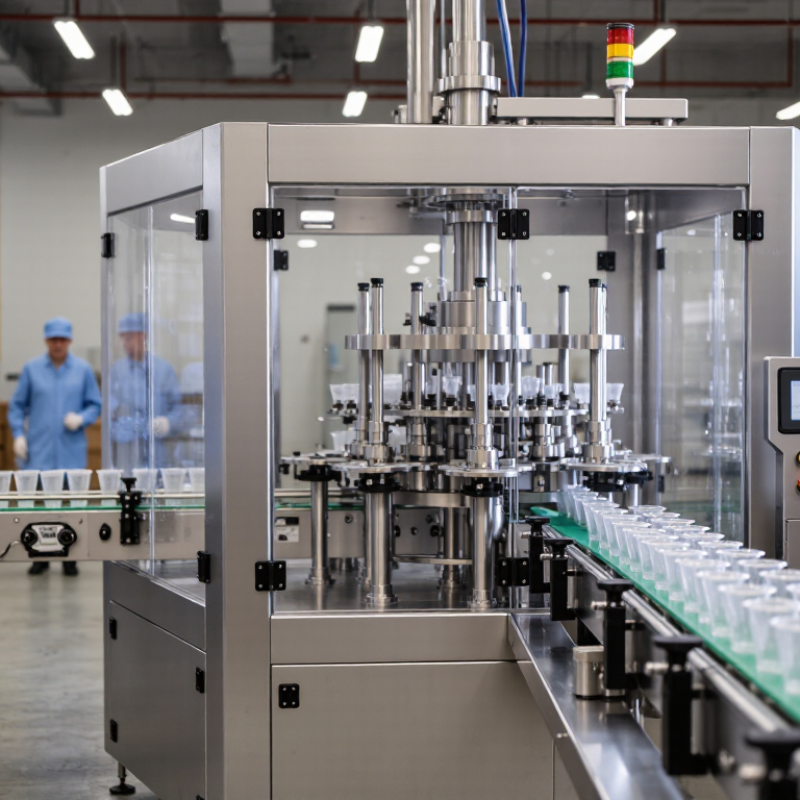
Types of China Plastic Cup Lid Making Machines
What Is the Best China Plastic Cup Lids Making Machine?
Plastic cup lid production does not rely on one universal machine. The suitable choice depends on lid design, resin, output, and acceptable waste. In China, common equipment includes thermoforming machines, injection molding machines, and separate punching or trimming units. Each type solves a different production problem.
Thermoforming machines heat PET, PP, or similar sheet and press it over molds. They suit flat lids, dome lids, and medium-to-high volume orders. Material rolls feed continuously, which can reduce labor. However, sheet thickness must remain stable. Small temperature changes may create weak rims or uneven sealing.
Injection molding machines melt plastic pellets and fill precise molds. They work well for rigid lids, threaded designs, and detailed features. Cycle control is important. Cooling channels, clamping force, and mold maintenance affect consistency more than advertised speed.
Some factories choose integrated lines with forming, cutting, stacking, and inspection. Others use modular machines, allowing easier upgrades when orders change. In practical trials, I would check sealing performance, edge smoothness, noise, energy use, and cleaning access. A fast machine is not automatically the best machine. It may produce more rejects. Buyers should request sample runs and measured data, not only catalog figures. I would also review operator training and spare-part response. These details are easy to overlook, and they often decide whether production remains stable after installation.
Key Features of the Best Plastic Cup Lid Making Machine
What Is the Best China Plastic Cup Lids Making Machine?
The best plastic cup lid making machine should deliver stable output, clean edges, and repeatable dimensions. PlasticsEurope reported global plastics production of 413.8 million tonnes in 2023. This scale reflects strong demand, but it also increases pressure to reduce waste and energy use. A reliable machine needs servo-driven forming, accurate temperature control, and a responsive PLC system. These features help maintain lid shape during long production runs. Quick mold changes also matter. Operators lose valuable hours when tooling adjustments require complicated manual work.
Material control is equally important. A suitable machine should process common food-contact sheet materials with steady heating and low deformation. Automatic stacking, vision inspection, and edge-trim monitoring can reduce handling errors. Energy meters and production data logs support better maintenance decisions. According to a 2024 packaging machinery market analysis by PMMI, automation and connected production remain major investment priorities. However, more automation does not always mean better performance. Poor calibration can create faster waste.
Tips: Test the machine with your actual lid diameter, sheet thickness, and sealing design. Check cycle time after continuous running, not only during a short demonstration. Ask for samples from several mold cavities. Inspect the rim closely. A small weakness can cause leakage complaints. Also, review spare-part access and technician training. These details are easy to ignore, and that is a mistake. A perfect machine does not exist; the best choice balances output, energy use, maintenance, and operator skill.
How to Evaluate Machine Performance and Product Quality
The best China plastic cup lids making machine should prove performance on your material, mould, and target lid design. Do not judge it by advertised cycle speed alone. Measure cycle time, uptime, scrap rate, energy use, and changeover minutes during a supervised trial. A stable machine should produce consistent sealing rings, clean edges, and accurate stacking after several hours. Check lid diameter, pull-off force, warpage, and fit with real cups. Record results, not promises.
Tips: Request at least three production runs using the intended resin. Inspect samples from the beginning, middle, and end of each run. Use ISO 2859-1 sampling methods for acceptance checks, and ask for capability data such as Cpk for critical dimensions. A machine that runs quickly but creates frequent burrs is not efficient. I have seen buyers overlook cooling stability. That mistake becomes expensive later. Also compare actual energy consumption per 1,000 lids, not the motor’s rated power.
Quality control should reflect wider industry pressure. The OECD Global Plastics Outlook reported 353 million tonnes of plastic waste in 2019, while only 9% was recycled. Material-saving design therefore matters. Evaluate thin-wall consistency, startup waste, and compatibility with recycled content when relevant. Request traceable inspection records, maintenance instructions, and operator training. Independent testing is useful, although no report replaces a factory trial. The “best” machine may not be the fastest one. It may be the one producing acceptable lids every shift, with fewer surprises.
Production Process and Essential Technical Specifications
What Is the Best China Plastic Cup Lids Making Machine?
Production Process and Essential Technical Specifications
The best plastic cup lids making machine depends on lid design, material, and required output. Thermoforming lines suit lightweight lids made from PP or PET sheets. Injection molding suits thicker lids with detailed sealing structures. Smithers forecasts the global packaging market will approach 1.2 trillion dollars by 2028. This growth increases demand for faster, cleaner, and more consistent lid production.
The process usually includes sheet heating, mold forming, edge cutting, stacking, and quality inspection. A reliable thermoforming machine should provide 400–700 millimeters of forming width and stable heating across multiple temperature zones. Servo-driven indexing can improve positioning accuracy and reduce material waste. A practical cycle speed is often 25–45 cycles per minute, depending on lid size and cavity count. Automatic stacking matters. Poor stacking can damage rims before packaging.
Material thickness commonly ranges from 0.25 to 0.60 millimeters. The machine should control temperature within a narrow range, preferably around ±2°C during production. PlasticsEurope reported global plastic production at 400.3 million tonnes in 2022, showing the scale of this industry. Yet volume alone should not define machine quality. In production trials, higher speed sometimes created warped edges and weak sealing. That result is easy to overlook. Scrap collection, mold cooling, and real-time thickness checks deserve equal attention. A machine that saves energy but produces unstable lids is not truly efficient.
Plastic Cup Lid Production Capacity by Mold Cavity Count
The chart shows the theoretical hourly output of a plastic cup lid injection molding machine using a typical 8-second cycle. Output is calculated as: mold cavities × 3,600 seconds ÷ cycle time. Actual production may be lower because of cooling efficiency, material feeding, trimming, inspection, and machine downtime. For PP cup lids, common machine requirements include approximately 80–160 tons of clamping force, a 4–8 second cycle time, and automated part removal.





