


Choosing the China best FR209E Type Coupler Body supplier requires more than comparing unit prices. The component must withstand repeated impact, tensile loads, vibration, and harsh track conditions. A coupler body may appear simple, yet its casting quality affects fleet safety, maintenance intervals, and operating costs.
The UNIFE World Rail Market Study 2024 reports continued growth in global rail investment, driven by fleet renewal and infrastructure expansion. This trend increases demand for dependable railway components and traceable manufacturing. For buyers, supplier evaluation should include material specifications, heat-treatment records, dimensional inspection, and batch-level documentation. The AAR Manual of Standards and Recommended Practices also shows why railway components need controlled production and qualification procedures. These references do not automatically approve every Chinese factory. They provide a useful framework for asking better questions.
An experienced supplier of Fr209e Type Coupler Body should demonstrate pattern control, certified material testing, and consistent machining accuracy. Ask for tensile results, hardness values, chemical composition, and non-destructive testing records. Request samples before approving mass production. Inspect the coupler body around the shank transition, draft gear interface, and high-stress fillets. Small surface defects can become expensive failures.
Price still matters. It should not lead.
China offers strong casting capacity, competitive engineering support, and flexible production volumes. However, supplier claims may be incomplete, and inspection reports can vary in quality. A practical sourcing decision combines factory audits, independent testing, production references, and clear acceptance criteria. The best supplier is not simply the cheapest option. It is the manufacturer that can repeatedly deliver a compliant Fr209e Type Coupler Body, with evidence that survives technical review.
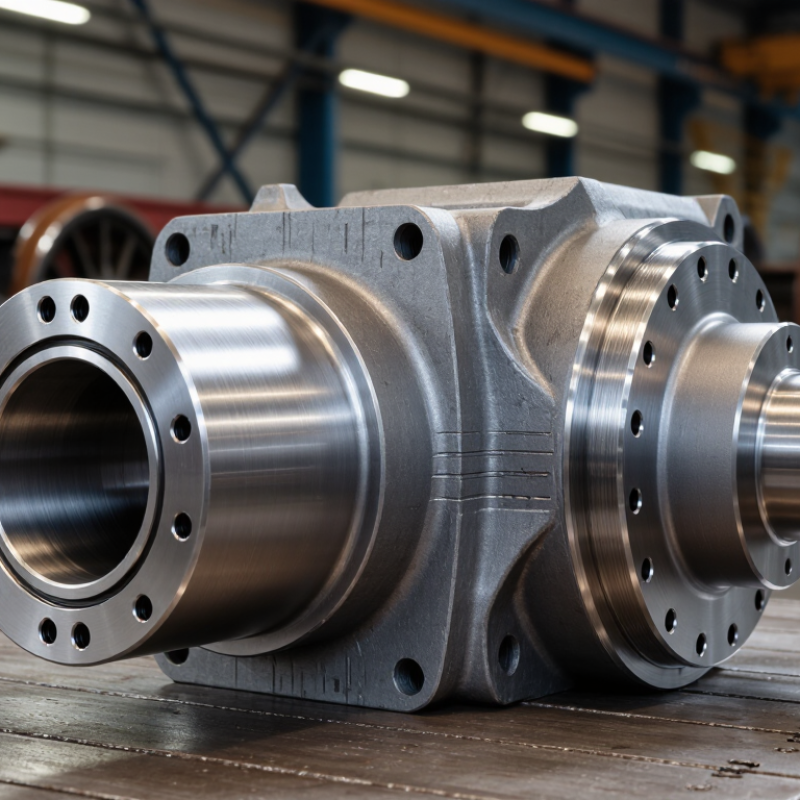
An FR209E-type coupler body is the main structural housing of a railway vehicle coupler. It transfers pulling and pushing forces between connected cars. Made from high-strength steel, it surrounds the working cavity for the knuckle, lock, and related parts. The body must resist impact, repeated loading, and alignment errors during service. Small dimensions matter. The designation should be checked against the purchaser’s drawing and applicable railway standard.
A reliable supplier should control material selection, casting or forging, heat treatment, and dimensional inspection. Ultrasonic testing can help identify internal flaws, while surface checks reveal cracks, sharp transitions, or poor finishing.
Critical areas include the coupler head, shank connection, draft gear seat, and mounting surfaces. Each area needs suitable measuring tools. A supplier with traceable inspection records can explain the steel grade, heat-treatment results, and test methods clearly.
The term FR209E may not describe every detail of one production drawing. That point is easy to overlook. Before ordering, compare the body profile, mounting geometry, tolerances, and inspection requirements. A visually similar body may still fit poorly or experience uneven loading. Practical experience also shows that packaging deserves attention, because exposed machined surfaces can corrode during transport. The best purchasing decision comes from technical documents, sample verification, and open communication with the manufacturer.

A reliable FR209E type coupler body suppliermust understand railway load conditions. The body carries repeated impact, tension, and compression forces. Its material should provide strength, toughness, and stable performance during temperature changes. Certified steel grades may be selected according to approved drawings and applicable rail standards. Material certificates should identify heat numbers and chemical composition.Traceability matters.
Dimensional accuracy is a core functional requirement. The supplier should control coupler pockets, pin holes, draft gear seats, and mounting surfaces. Poor alignment can increase wear and create difficult assembly conditions. CNC machining supports consistent tolerances after casting or forging. Each body also needs visual inspection, dimensional testing, and suitable non-destructive examination. Critical areas deserve closer attention. They often carry hidden stress.
Surface quality affects service life. The supplier should remove sharp edges, casting defects, sand inclusions, and machining burrs. Heat treatment records should be available when required by the design. Protective coatings must match storage and operating conditions. Packaging should prevent moisture, impact, and deformation during transport. Clear inspection reports improve purchasing decisions.
Experience still has limits. A supplier may meet drawings yet miss a practical assembly issue. Trial fitting with related coupler parts can reveal this weakness early. Ask for sample measurements, process controls, and production photos. Review communication speed, corrective action, and batch consistency. The best choice is not simply the lowest quotation. It is the supplier that can repeatedly deliver a safe, compatible, and traceable coupler body.
Manufacturing an FR209E coupler body begins with approved steel grades and controlled pattern design. Engineers review load areas, wall thickness, and machining allowances before mold preparation. The pattern must reproduce each contour accurately. Small errors can affect assembly later.
Foundries usually create sand molds with carefully positioned cores, gates, and risers. Molten steel enters the mold at a controlled temperature. Technicians check its chemical composition with a spectrometer before pouring. After cooling, the casting is removed, cleaned, and heat treated. Shot blasting exposes surface flaws more clearly. Non-destructive testing may include magnetic particle or ultrasonic inspection.
Machining follows the casting stage. CNC equipment processes mounting faces, holes, and contact surfaces within specified tolerances. Inspectors use coordinate measuring machines, gauges, and calibrated tools. Each body should carry traceable records for material, heat treatment, inspection, and final dimensions. Reliable suppliers also protect machined areas during storage and transport.
Factory experience shows that defects often come from simple causes. Poor mold ventilation can create porosity. Rushed cooling may increase distortion. These lessons deserve regular review. No production line is perfect. A responsible supplier records deviations, investigates them, and improves the process instead of hiding uncomfortable results. Clear inspection reports and sample approval help buyers judge manufacturing reliability before placing larger orders.
China Best FR209E Type Coupler Body Supplier?
How to Evaluate Chinese Coupler Body Suppliers
Selecting an FR209E type coupler body supplier requires more than comparing unit prices. Review the supplier’s drawings, material standards, and production controls before requesting a quotation. The body should show consistent dimensions around the coupling area, clean cast surfaces, and no visible cracks or deep porosity. Ask for material certificates and recent inspection records. These documents should match the actual production batch.
A capable supplier should explain its casting, heat treatment, machining, and final inspection processes in plain language. Request a sample report with dimensional data, hardness results, and non-destructive testing records where applicable. Check whether measuring tools are calibrated and traceable. Measure twice. Also inspect how the supplier handles drawing revisions, packaging, and rejected parts. Small gaps in these procedures can create expensive assembly problems later.
During supplier evaluation, communicate the operating load, environmental conditions, and expected service life. A professional factory will ask technical questions instead of accepting every specification without review. Visit the workshop if possible, or request dated production videos and third-party inspection support. I have found that polished presentations can hide weak process control. That remains an uncomfortable lesson. Price alone is not evidence of value; stable quality, documented control, and responsive engineering support matter more. Performance should be verified through samples and repeat inspections before larger orders.
| Evaluation Dimension | What to Verify | Reliable Evaluation Benchmark | Required Evidence | Suggested Weight |
|---|---|---|---|---|
| Technical Compliance | FR209E drawing and specification control | The supplier should manufacture strictly to the latest approved drawing, including material grade, machining datum, interface dimensions, tolerances and inspection requirements. | Controlled drawing revision, technical deviation list, signed specification review and first-article inspection report. | 20% |
| Material Quality | Steel grade and heat-lot traceability | Every casting or forged component should be traceable to a heat or batch number. Chemical composition and mechanical properties must meet the approved material specification. | Material test certificate, heat number records, chemical analysis and tensile, yield and elongation results where required. | 15% |
| Casting or Forging Process | Process capability for coupler body production | The production route should be appropriate for the approved FR209E coupler body design, with documented controls for melting, molding or forging, heat treatment, cleaning and straightening. | Process flow chart, furnace records, work instructions, process-control plan and nonconformance procedure. | 12% |
| Heat Treatment | Mechanical properties and hardness consistency | Heat-treatment parameters must be controlled and recorded. Hardness and mechanical-property results should comply with the approved specification rather than an informal supplier target. | Time-temperature charts, furnace calibration records, hardness map and mechanical-test reports linked to the heat number. | 10% |
| Non-Destructive Testing | Detection of internal and surface discontinuities | Inspection methods should be selected according to the drawing and risk level. Common methods include visual testing, magnetic-particle testing, ultrasonic testing and radiographic testing where specified. | NDT procedures, operator qualification records, equipment calibration certificates and complete inspection reports with acceptance criteria. | 12% |
| Dimensional Control | Critical interfaces and machining accuracy | Critical coupler interfaces, mounting areas, draft-gear contact surfaces and datum-related dimensions should be measured with calibrated equipment and controlled inspection plans. | Inspection plan, coordinate-measuring-machine report or equivalent, gauge calibration records and capability data for critical dimensions. | 10% |
| Quality Management | Production and corrective-action system | A documented quality management system should control purchasing, incoming inspection, production, final inspection, nonconforming product and corrective action. ISO 9001 certification is useful evidence but should not replace product inspection. | Valid certificate from an accredited certification body, internal audit records, corrective-action examples and quality-performance history. | 8% |
| Prototype Validation | Sample approval before mass production | A pre-production sample should be inspected and approved before volume manufacturing. Functional or load testing should follow the purchaser's specification and applicable railway requirements. | Approved sample, dimensional report, material records, NDT results, test plan and signed first-article approval. | 6% |
| Supply Reliability | Capacity, lead time and delivery consistency | The supplier should demonstrate stable capacity for the required annual quantity and provide a realistic lead time covering tooling, production, inspection and export preparation. | Capacity statement, production schedule, historical on-time-delivery data, bottleneck analysis and contingency plan. | 4% |
| Commercial Control | Total cost and quotation clarity | The quotation should separate tooling, sample, unit, inspection, packaging and logistics costs. The lowest unit price should not be selected without considering quality risk and rework exposure. | Itemized quotation, payment terms, tooling ownership clause, warranty terms and clearly stated delivery basis. | 2% |
| Packaging and Export | Protection during domestic and international transport | Heavy steel coupler bodies should be securely supported, protected from impact and corrosion, and packaged with clear part, batch and quantity identification. | Packaging specification, loading photographs, corrosion-protection method, packing list and traceability labels. | 1% |
China Best FR209E Type Coupler Body Supplier?
Purchasing an FR209E type coupler body requires more than comparing unit prices. A capable Chinese supplier should provide traceable production records, material certificates, inspection reports, and clear delivery terms. Ask for the approved drawing before placing an order. Confirm critical dimensions, casting quality, heat treatment, and compatibility with your existing coupling system. Practical experience shows that small dimensional differences can create installation delays.
Customization should begin with engineering data, not verbal promises. Share drawings, operating conditions, loading requirements, and surface treatment expectations. The supplier should explain tooling costs, sample approval, revision control, and minimum order quantities. Request a first-article sample and measure it independently. A polished sample may still hide internal defects. No checklist is perfect. We sometimes overlook packaging strength, especially during long-distance transport.
Tips: Compare at least three suppliers, but do not choose by price alone. Request photos of machining, marking, and final inspection stages. Verify whether each report matches the actual batch number. Use hardness testing, dimensional checks, and non-destructive inspection when suitable. Keep written records of every approved change. If a supplier avoids technical questions, treat that as a warning. Factory visits or third-party inspections can improve confidence, although they cannot replace consistent process control. Reliability is built through repeated evidence, not attractive claims.
This weighted procurement framework prioritizes safety and conformity first, followed by material traceability, dimensional control, non-destructive testing, and customization capability. The 100-point structure is intended for comparing suppliers consistently without using company or brand data.


For those larger-sized parts, or smaller quantity runs, we have 2 independent powder coat booths and ovens. The quality, durability and affordability of today’s powder coating finishes make this the process of choice for world-class companies.
Powder coating advantages over other forms of coating are many. Materials used in the Powder coating process can be metals and non-metals that come in a multitude of thicknesses, textures, colors, etc. Another of Powder coating’s biggest advantages over conventional coatings is its ability to create finishes in many different textures. Powder Coating Booths allow us the ability to apply these advantages to large products.
Tri-State Fabricators runs a full-service conveyor line for painting. Wet painting can provide protection or decoration to many different part styles. From start to finish, every project is easier to undergo random and point-based inspection by our skilled painting team.
Advantages to our Wet Paint Line are these lines start with product prep and ends with a thorough inspection of a high quality finished product. Our ability to complete large and small projects with a superior finish and doing so in a timely and economical fashion. This passes along the savings in production to our customers. When powder coating ins not an option, our Wet Paint Line gets the job done right the first time.
When the parts get big and heavy we roll-out our custom paint racks and oversize booth. By utilizing our partnerships with all the major paint brands, we can match virtually any color with wet paint.
The advantages of having access to a Wet Paint Booth are many. Large projects of many different shapes can be loaded into the booth. The Wet Paint Booth offers an environment that is much more controlled than a typical parts painting operation.
Not only are they used because of their controlled environment, but they’re are also advantageous when it comes to applying paint to parts that are needed in industries that require specialty coatings such as medical, aerospace, etc.
Our military forces have some very high standards when it comes to the finish of their vehicles and equipment. From the first pre-treatment step to final coat, it takes a great deal of knowledge and experience to protect the men and women of our armed forces. They deserve only the best, and Tri-State Fabricators provides it.
All of our processes are closely monitored by our staff and management teams. Both of which are highly trained in the processes of metal fabrication and finishing. Tri-State Fabricators’ goal is to always fully satisfy each and every customer, including the military. We will always put a 110% into what we do.
Abrasive media blasting is an excellent way to remove old paint, rust, and increase the paint/powder adhesion. Glass beads produce a much smoother and brighter finish than angular abrasives; leaving the part clean yet without any dimensional change. Chemically inert and environmentally friendly, we can recycle our beads approximately 30 times; making them a more preferred method of metal cleaning or surface finishing.
Advantages to Glass Bead Blasting are many. Glass bead blast media is used when a project is needing rough surfaces need to become smooth for applications of coatings such as paint. It is typically used to clean paint and rust from a product surface without deforming the surface it is being used on. Overall, compared to many other blasting media, Glass Bead Blasting is a very economical choice and those savings are always passed on to our customers.
Tri-State Fabricators utilize a zinc phosphate wash to clean and etch the material to ensure the best paint adhesion possible. The unique design of our 3-stage wash system does the work like a 5-stage. From Cleaning and rinsing to conversion coating and post-treatment, Our Part Washing process is a complete service and works throughout the fabrication service and the finishing service.
Along with the previously mentioned benefits, Curing is a vital chemical reaction that leaves the product finish hard and relatively safe from mild abrasion and aggressive corrosion. This process can be done in more than one way; ambient air-dry or in curing ovens at temps that exceed 240°.
From fixing paint mistakes (someone else’s of course) to simply cleaning our paint line hooks, our burn-off oven is put to good use. After a quick burn-off, a little clean up, and a fresh coat of paint, your parts will look better than new.
Why does our Burn-Off Oven work so well? Because super heating the air around parts turns the materials into ashes. From paint and powder coatings to rubber and machining oils, high temps do the job without degrading the integrity of the part.
Masking is a vital part of producing high quality products. We have die-cut masking patterns to protect machined surfaces as well as a wide range of plugs and caps to protect threaded holes and bolts. We provide permanent and temporary masking.
Masking allows the selected sections of a product to be protected from a fabrication or finishing service. This can be with both chemicals when etching and tapes, paints when only finishing just a section of the product. Masking is great in aiding the customization process of a project.
Screen printing is a photographic process that transfers artwork onto a porous nylon screen which allows colored ink to flow through the screen and be deposited on an aluminum or plastic component. We can generally have just about any design created onto a screen for your parts.
Some of the advantages of Screen Printing are, brand recognition for your business displaying on your products, assembly instructions, product warnings/hazards, etc. Tri-State Fabricators produces Screen Printing of the highest quality so you know it’s durable.
Metal Finishing is the art of treating the exterior portion of product, often metal but can also be made of other materials, so that the surface is clean and free of any debris. Then the process of applying coats or either paint of powder coat takes place. This coating process improves the quality of the product in both appearance and resistance to wear and corrosion.
Tri-State Fabricators, Inc., understands that a project typically isn’t complete until a high-quality finish has been added to your product. This is why our painting and powder coating teams continuously inspect the products throughout the Metal Finishing process.

