


What Is the Best China EPS Casting Pattern Mould Supplier?

Choosing the best China Eps Casting Pattern Mould supplier requires more than comparing prices. The supplier must understand foam density, dimensional stability, machining accuracy, and casting conditions. These factors directly influence pattern collapse, metal filling, surface finish, and production waste.

Industry data supports this careful approach. The World Foundry Organization’s recent production reports identify China as the world’s leading casting producer, supported by extensive automotive, machinery, and industrial manufacturing capacity. This scale creates strong supplier experience, but it also creates wide quality differences. A factory making thousands of patterns monthly may still lack consistent inspection discipline. That possibility deserves attention.

MarketsandMarkets’ metal casting research highlights automation, digital process control, and lightweight manufacturing as important industry trends. These trends increase demand for accurate Eps Casting Pattern Mould solutions, especially for complex housings, pump bodies, and large machine components. A capable supplier should provide CAD review, CNC or hot-wire processing, density control, trial verification, and traceable dimensional inspection. Ask for measurable evidence.

Check the workshop, not only the catalogue. Look for stable foam storage, clean cutting areas, calibrated gauges, and finished patterns protected from impact. A supplier should explain tolerance limits in practical terms. For example, a 1-millimeter error on a mating surface can create costly downstream correction.

No single supplier is best for every project. Some excel at large patterns, while others perform better with intricate geometries or short production runs. This guide examines technical capability, quality systems, export experience, communication, and total cost. The final judgment should remain evidence-based, because published claims can be incomplete.
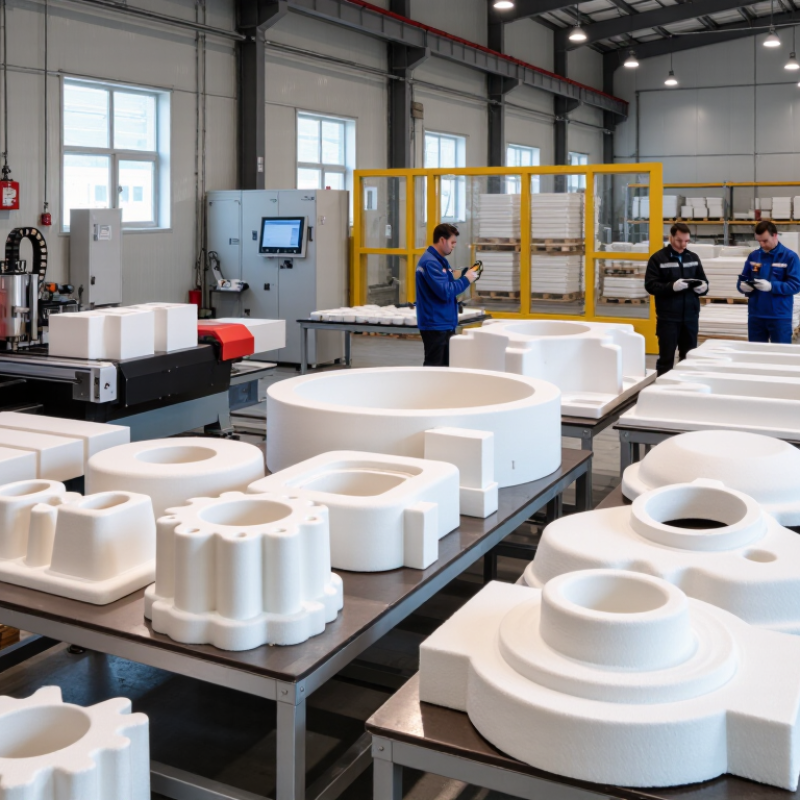
What Is the Best China EPS Casting Pattern Mould Supplier?

What Is an EPS Casting Pattern Mould and How Does It Work?

An EPS casting pattern mould is tooling used to shape expanded polystyrene into a precise casting pattern. It is not the final metal mould. The foam pattern copies the required part, including ribs, holes, and curved surfaces.

During lost foam casting, workers place the EPS pattern inside dry, unbonded sand. The sand supports the pattern from every direction. Molten metal then enters through a controlled gating system. Heat vaporizes the foam, while the metal occupies its former space. It looks simple. Small errors matter. Uneven foam density can create weak corners, rough surfaces, or dimensional variation. A reliable mould must fill evenly and release the pattern without tearing delicate details.

When assessing a China-based EPS pattern mould supplier, examine more than price. Ask for evidence of dimensional inspection, foam density control, mould material data, and trial-pattern records. Aluminum tooling often provides stable heat transfer and repeated accuracy, but the design still needs suitable vents and drainage features. Check how the supplier handles parting lines, shrinkage allowances, and difficult undercuts. Practical experience shows that a clean pattern surface improves coating quality and casting consistency. However, no tooling system is perfect. Complex shapes may require manual finishing, and first-trial corrections are sometimes unavoidable. A trustworthy supplier should document those changes, communicate tolerances clearly, and provide measurable inspection results rather than vague promises.

What Is the Best China EPS Casting Pattern Mould Supplier? - What Is an EPS Casting Pattern Mould and How Does It Work?

Evaluation Dimension Typical Technical Data or Requirement Why It Matters Recommended Supplier Evidence
Pattern Material Expanded polystyrene (EPS) beads are commonly used; the pattern is consumed during metal pouring. EPS enables complex one-piece patterns without permanent cores or conventional parting lines. Material specification, bead grade, safety data, and sample pattern.
Pattern Density Typical molded EPS pattern density is approximately 18–30 kg/m³, depending on the casting application. Density affects dimensional stability, vapor generation, coating performance, and casting surface quality. Measured density report from production samples and defined acceptance limits.
Mould Construction Common mould materials include aluminum, aluminum alloys, and other rigid tooling materials suitable for steam molding. Rigid, thermally stable tooling supports repeatable pattern dimensions and longer service life. Mould material grade, wall-thickness design, surface finish, and tooling-life estimate.
Manufacturing Method The mould is produced from approved 3D data using CNC machining, coordinated machining, or comparable precision processes. Accurate tooling reduces pattern mismatch, flash, machining allowance variation, and casting defects. CAD/CAM workflow, inspection records, machine capability, and first-article report.
Dimensional Accuracy A practical target for many EPS tooling projects is approximately ±0.10–0.30 mm on controlled mould dimensions, subject to size and geometry. Tooling accuracy directly influences pattern repeatability and final casting dimensional consistency. CMM or equivalent inspection report with datum structure and tolerance results.
Steam Venting Steam channels, vents, and vacuum or air evacuation paths should be designed according to pattern size and geometry. Adequate venting promotes uniform bead expansion, complete filling, and fewer weld lines or density differences. Venting layout, steam-pressure range, cycle data, and trial-pattern results.
Pattern Assembly Complex patterns may be molded as multiple sections and bonded with compatible adhesive or thermal joining methods. Accurate joints prevent visible seams, leakage of refractory coating, and local casting dimensional errors. Assembly procedure, joint-tolerance criteria, adhesive specification, and sample inspection.
Refractory Coating Compatibility Coatings are generally applied to create a permeable barrier between the EPS pattern and molten metal; coating thickness is application-specific. The coating controls metal penetration, surface finish, gas flow, and pattern handling strength. Coating compatibility test, drying procedure, permeability data, and surface-finish samples.
Casting Process In lost foam casting, the coated EPS pattern is placed in unbonded sand; molten metal replaces and decomposes the pattern during pouring. Correct mould design must support the complete pattern, gating, risers, coating, and sand-compaction process. Process simulation, filling plan, trial-casting record, and defect-analysis report.
Surface Finish A smooth mould surface generally supports better EPS pattern release and more consistent casting surface quality. Surface defects on the mould can be transferred to the pattern and then to the casting. Surface-finish measurement, visual standards, polished-area specification, and sample approval.
Cooling and Ejection Cooling channels, ejector arrangements, and draft angles should be adapted to the mould geometry and EPS release requirements. Proper cooling and ejection reduce sticking, warpage, cracking, and cycle-time variation. Cycle-time data, ejection drawings, cooling layout, and release-test results.
Quality Control Key controls include incoming material verification, in-process inspection, final dimensional inspection, and traceable corrective actions. Documented quality control lowers the risk of repeated tooling defects and unstable production results. Inspection plan, calibration records, nonconformance procedure, and batch traceability.
Prototype and Trial Support A capable supplier should support prototype patterns, trial moulding, sample casting, dimensional feedback, and design revisions. Early testing identifies shrinkage, filling, venting, coating, and assembly issues before volume production. Trial schedule, revision-control process, sample approval procedure, and technical support response time.
Best-Supplier Selection Criteria The strongest supplier combines accurate tooling, suitable EPS processing, reliable inspection, practical casting knowledge, clear documentation, and responsive engineering support. Supplier capability should be judged by verified technical performance rather than price alone. Compare quotations using the same drawings, tolerances, material requirements, inspection scope, delivery terms, and warranty conditions.

Note: The technical ranges shown are typical reference values for EPS lost-foam pattern tooling. Final requirements should be confirmed through the approved drawing, casting alloy, pattern geometry, moulding equipment, and trial-production results.


Which Factors Define the Best China EPS Casting Pattern Mould Supplier?

What Is the Best China EPS Casting Pattern Mould Supplier?

Which Factors Define the Best China EPS Casting Pattern Mould Supplier?

The best supplier combines practical experience with controlled mould engineering. Check whether its team understands EPS bead density, shrinkage allowance, venting, and pattern release. A reliable supplier should review your CAD files before quoting. It should also explain tolerances in clear language. Ask for trial samples, dimensional reports, and surface-finish records. Photos alone are not enough.

Tips: Compare technical evidence, not only prices. Request a sample mould or a small validation order. Confirm machining equipment, inspection tools, and production capacity. A supplier with strong communication can identify design risks early. Still, experienced teams can make mistakes with unusual cavities or thin walls. Allow time for revisions.

Look for stable quality control from design approval to final packing. The supplier should record material changes, inspection results, and corrective actions. Clear lead-time commitments also matter, especially when your casting line depends on accurate patterns. Ask how the team handles damaged moulds or unexpected dimensional errors. The cheapest offer may hide repeated adjustments. I have found that transparent limitations often indicate greater reliability than confident promises. Supplier selection needs evidence, patience, and technical questions.

Which Factors Define the Best China EPS Casting Pattern Mould Supplier?

Reference evaluation weights for comparing EPS casting pattern mould suppliers

Dimensional accuracy and surface finish receive the highest weighting because they directly affect casting quality and downstream machining. Mould durability, delivery reliability, engineering support, and total cost are also important when selecting a long-term supplier. The percentages are a practical buyer-side benchmark and total 100%.

How to Evaluate Supplier Materials, Manufacturing, and Quality Control

Choosing the best China EPS casting pattern mould supplier requires more than comparing prices. Material control comes first. Ask for EPS density records, bead-size specifications, aging time, and dimensional shrinkage data. Stable beads should produce clean surfaces and predictable expansion during steam molding. A supplier using certified raw materials should provide batch numbers and test results. This matters in large-scale foundry work.

The 2023 World Foundry Statistics report recorded global casting production at roughly 109 million tonnes in 2022, increasing pressure on pattern accuracy and repeatability.

Manufacturing ability should be checked on the shop floor. Review CNC cutting records, hot-wire settings, fixture design, and repair procedures. Request a first-article report with measured dimensions, not only photographs. Quality teams should use calibrated gauges or coordinate measuring machines for critical areas.

They should also inspect density, moisture, surface damage, and bonding strength before shipment. The ISO Survey 2022 reported more than 1.2 million ISO 9001 certificates worldwide, but certification alone proves little. Audit the actual inspection process.

Ask how failed patterns are isolated and corrected. A supplier may still miss a thin rib or uneven corner. That is where practical experience becomes visible.

What Customization and Technical Services Should Buyers Expect?

Choosing the best China EPS casting pattern mould supplier requires more than comparing prices. Buyers should expect clear customization and technical support from the first drawing review. An experienced supplier should study the casting size, foam density, draft angles, shrinkage allowance, and production volume. They should also ask about the casting material and cooling conditions. These details affect pattern accuracy and service life. Small gaps matter.

Customization should include 2D drawing checks, 3D CAD development, CNC machining, vent design, and practical mold structure advice. The supplier should explain why a certain aluminum grade, wall thickness, or cooling layout is recommended. For complex patterns, buyers should request a trial sample before mass production. Dimensional inspection reports are useful, especially for joint surfaces and locating points. A tolerance table makes communication clearer. Still, not every design can be improved without compromise. Lower weight may reduce strength, while tighter tolerances can increase machining time.

Technical service should continue after delivery. Reliable support includes installation guidance, operating instructions, maintenance advice, and replacement-part recommendations. Ask whether the supplier can respond with marked-up drawings, photos, or short videos when problems occur. Documentation should identify materials, inspection tools, and approved revisions. In real projects, misunderstandings sometimes come from one missing dimension or an outdated file. That is easy to overlook. A responsible supplier admits such risks and corrects them quickly, instead of hiding behind general promises.

How to Compare Pricing, Delivery, Certifications, and After-Sales Support

What Is the Best China EPS Casting Pattern Mould Supplier?

Price is only the opening check when comparing EPS casting pattern mould suppliers in China. Request a detailed quotation, not a single total. It should list mould material, machining hours, surface treatment, packaging, and shipping terms. Ask whether design changes are included. A low price may exclude trial fitting or later corrections. That detail can become expensive.

Delivery needs evidence, not promises. Share the drawing revision, required tolerances, and production quantity before accepting a lead time. An experienced supplier should explain approval stages, machining capacity, inspection timing, and possible delays. Request a sample inspection report with actual measurements. Check critical areas such as cavity dimensions, vent locations, and surface finish. Delivery dates still move sometimes. Good suppliers report changes early and provide a workable recovery plan.

Certifications and after-sales support deserve equal attention. Verify the certificate number, issuing body, and covered production site. ISO 9001 may indicate controlled processes, but it does not guarantee mould accuracy. Ask for material certificates, dimensional records, and calibration evidence where relevant. After delivery, confirm response times for fitting issues, replacement parts, and drawing revisions. A useful support team can review photos, compare measurements, and suggest practical adjustments. Some suppliers sound responsive during quotation but become slow after payment. Test this by sending technical questions before placing an order. Their answers reveal more than polished sales language.

Powder Coat Booths

For those larger-sized parts, or smaller quantity runs, we have 2 independent powder coat booths and ovens. The quality, durability and affordability of today’s powder coating finishes make this the process of choice for world-class companies.

Powder coating advantages over other forms of coating are many. Materials used in the Powder coating process can be metals and non-metals that come in a multitude of thicknesses, textures, colors, etc. Another of Powder coating’s biggest advantages over conventional coatings is its ability to create finishes in many different textures. Powder Coating Booths allow us the ability to apply these advantages to large products.

Wet Paint Line

Tri-State Fabricators runs a full-service conveyor line for painting. Wet painting can provide protection or decoration to many different part styles. From start to finish, every project is easier to undergo random and point-based inspection by our skilled painting team.

Advantages to our Wet Paint Line are these lines start with product prep and ends with a thorough inspection of a high quality finished product. Our ability to complete large and small projects with a superior finish and doing so in a timely and economical fashion. This passes along the savings in production to our customers. When powder coating ins not an option, our Wet Paint Line gets the job done right the first time.

Wet Paint Booths

When the parts get big and heavy we roll-out our custom paint racks and oversize booth. By utilizing our partnerships with all the major paint brands, we can match virtually any color with wet paint.

The advantages of having access to a Wet Paint Booth are many. Large projects of many different shapes can be loaded into the booth. The Wet Paint Booth offers an environment that is much more controlled than a typical parts painting operation.

Not only are they used because of their controlled environment, but they’re are also advantageous when it comes to applying paint to parts that are needed in industries that require specialty coatings such as medical, aerospace, etc.

Military CARC

Our military forces have some very high standards when it comes to the finish of their vehicles and equipment. From the first pre-treatment step to final coat, it takes a great deal of knowledge and experience to protect the men and women of our armed forces. They deserve only the best, and Tri-State Fabricators provides it.

All of our processes are closely monitored by our staff and management teams. Both of which are highly trained in the processes of metal fabrication and finishing. Tri-State Fabricators’ goal is to always fully satisfy each and every customer, including the military. We will always put a 110% into what we do.

Glass-Bead Blasting

Abrasive media blasting is an excellent way to remove old paint, rust, and increase the paint/powder adhesion. Glass beads produce a much smoother and brighter finish than angular abrasives; leaving the part clean yet without any dimensional change. Chemically inert and environmentally friendly, we can recycle our beads approximately 30 times; making them a more preferred method of metal cleaning or surface finishing.

Advantages to Glass Bead Blasting are many. Glass bead blast media is used when a project is needing rough surfaces need to become smooth for applications of coatings such as paint. It is typically used to clean paint and rust from a product surface without deforming the surface it is being used on. Overall, compared to many other blasting media, Glass Bead Blasting is a very economical choice and those savings are always passed on to our customers.

Part Washing

Tri-State Fabricators utilize a zinc phosphate wash to clean and etch the material to ensure the best paint adhesion possible. The unique design of our 3-stage wash system does the work like a 5-stage. From Cleaning and rinsing to conversion coating and post-treatment, Our Part Washing process is a complete service and works throughout the fabrication service and the finishing service.

Along with the previously mentioned benefits, Curing is a vital chemical reaction that leaves the product finish hard and relatively safe from mild abrasion and aggressive corrosion. This process can be done in more than one way; ambient air-dry or in curing ovens at temps that exceed 240°.

Burn-Off Oven

From fixing paint mistakes (someone else’s of course) to simply cleaning our paint line hooks, our burn-off oven is put to good use. After a quick burn-off, a little clean up, and a fresh coat of paint, your parts will look better than new.

Why does our Burn-Off Oven work so well? Because super heating the air around parts turns the materials into ashes. From paint and powder coatings to rubber and machining oils, high temps do the job without degrading the integrity of the part.

Masking

Masking is a vital part of producing high quality products. We have die-cut masking patterns to protect machined surfaces as well as a wide range of plugs and caps to protect threaded holes and bolts. We provide permanent and temporary masking.

Masking allows the selected sections of a product to be protected from a fabrication or finishing service. This can be with both chemicals when etching and tapes, paints when only finishing just a section of the product. Masking is great in aiding the customization process of a project.

Screen Printing

Screen printing is a photographic process that transfers artwork onto a porous nylon screen which allows colored ink to flow through the screen and be deposited on an aluminum or plastic component. We can generally have just about any design created onto a screen for your parts.

Some of the advantages of Screen Printing are, brand recognition for your business displaying on your products, assembly instructions, product warnings/hazards, etc. Tri-State Fabricators produces Screen Printing of the highest quality so you know it’s durable.

Metal Finishing

Metal Finishing is the art of treating the exterior portion of product, often metal but can also be made of other materials, so that the surface is clean and free of any debris. Then the process of applying coats or either paint of powder coat takes place. This coating process improves the quality of the product in both appearance and resistance to wear and corrosion.

Tri-State Fabricators, Inc., understands that a project typically isn’t complete until a high-quality finish has been added to your product. This is why our painting and powder coating teams continuously inspect the products throughout the Metal Finishing process.
