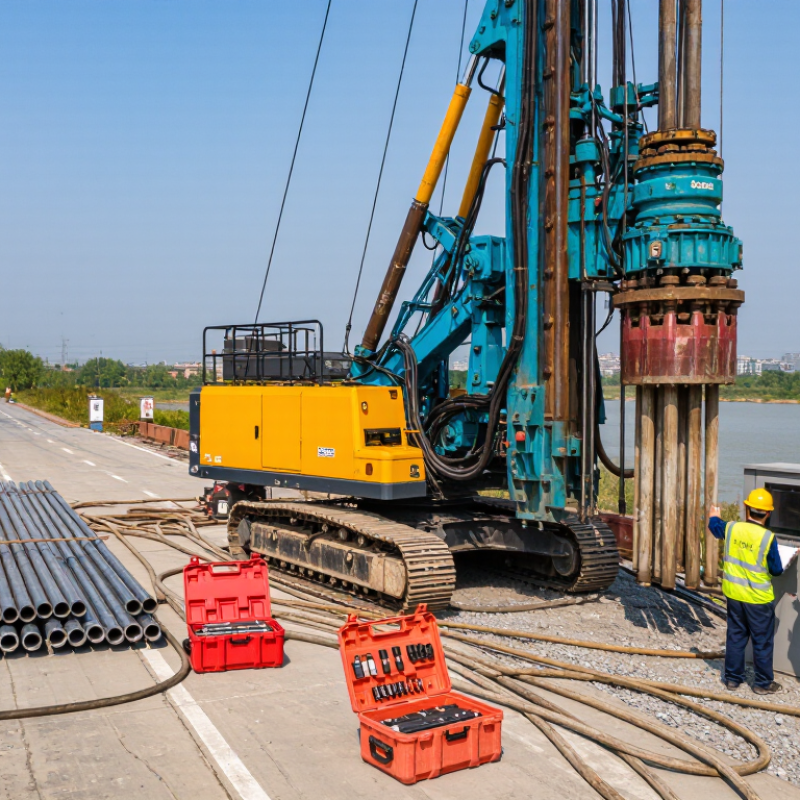
Choosing among China’s best Drill Hdd manufacturers requires more than comparing catalog prices. Buyers should examine engineering depth, field reliability, export experience, and after-sales support. A capable supplier should explain torque, pullback force, drilling-fluid systems, rod strength, and control accuracy in practical terms. These details matter when a machine works beside a busy road, through compact clay, or under a river crossing.
Industry data supports this growing focus. Grand View Research’s Horizontal Directional Drilling Market analysis identifies utility expansion, telecommunications installation, and underground infrastructure as major demand drivers. Global Market Insights also links market growth with trenchless construction and urban network upgrades. China’s strong machinery supply chain adds competitive advantages, including component availability, customization, and scalable production. However, manufacturing volume alone does not prove equipment quality. It remains an imperfect measure.
This guide will introduce leading Chinese manufacturers and compare their technical capabilities, product ranges, certifications, and customer support. Evidence should include factory audits, test records, warranty terms, and references from comparable projects. Buyers may also review ISO 9001 systems, CE documentation, and relevant equipment standards before signing contracts. A reliable manufacturer should provide clear answers, not only attractive brochures. Small details matter: spare rod delivery, remote troubleshooting, operator training, and hydraulic maintenance can determine project performance. No ranking is permanent. Market reputation changes, and published information may require independent verification. Therefore, this overview combines industry reports with practical evaluation criteria, helping contractors identify a China-based Drill Hdd partner with credible performance and realistic long-term value.
Horizontal directional drilling (HDD) installs underground utilities with limited surface disruption. A steerable drill creates a pilot bore, enlarges it, and pulls the product pipe through the prepared path. This method suits roads, railways, rivers, and developed areas where open excavation would cause costly damage. However, soil conditions change quickly. Clay, gravel, groundwater, and fractured rock can affect drilling accuracy and pullback force.
Manufacturer selection matters because machine quality directly influences control, safety, and project efficiency. Experienced manufacturers should provide clear torque ratings, thrust data, drilling fluid guidance, and maintenance documentation. These details help contractors match equipment with pipe diameter and ground conditions. Factory quality systems also deserve attention. Buyers should request inspection records, component origins, testing procedures, and practical references from similar projects. A polished brochure is not enough.
Look closely at after-sales support. Spare parts availability, remote troubleshooting, operator training, and response times can prevent long site delays. I would also inspect weld quality, hydraulic connections, control interfaces, and frame strength before purchase. Small defects become expensive underground. Not every advertised capacity is realistic in difficult soil. That point is often overlooked. Independent testing or an on-site demonstration can reveal limitations earlier. Reliable China HDD manufacturers should communicate those limitations openly, even when the answer may slow a sale. In my experience, honest technical discussion is more valuable than impressive specifications. There is still room for careful review.
HDD manufacturer selection should match the machine’s pullback force and rotary torque to the planned pipe diameter, ground conditions, drilling length, and tooling requirements. The chart presents representative capability levels commonly used to distinguish mini, standard, heavy-duty, and maxi HDD equipment. Actual specifications vary by model and project configuration.
A reliable China HDD manufacturer should prove performance beyond a polished catalog. Grand View Research estimated the global horizontal directional drilling market at about USD 8.1 billion in 2023. It also projects steady growth through 2030. This demand raises the standard for equipment quality.
Look for precise thrust, pullback, and torque ratings. These figures must match tested operating conditions. Ask for rod fatigue data, drilling-fluid capacity, and control-system accuracy. A durable frame, sealed hydraulic lines, and accessible maintenance points matter on muddy sites. ISO 9001 certification supports process control, but it does not replace factory inspections. Request load-test records, component traceability, and videos from working projects. The best manufacturers also provide operator training, spare parts, and responsive technical support. Service quality is often less visible. It can decide whether a project stops for two days or two weeks.
Tips: Compare identical specifications, not headline power. Visit the production line when possible. Check weld consistency, hose routing, and assembly cleanliness. Ask how rejected parts are recorded. I would also request customer references from similar soil conditions. A manufacturer may perform well in clay but struggle in gravel. No supplier is perfect, and marketing materials rarely show that gap. A small independent field test can reveal more than a long brochure.
China’s leading horizontal directional drilling (HDD) manufacturers differ more in engineering depth than in headline torque. Grand View Research’s 2024 market assessment estimates steady global HDD expansion through 2030, driven by utility upgrades, fiber deployment, and trenchless water projects. This demand favors manufacturers that can support varied ground conditions, not only produce large machines.
In practical comparisons, the strongest Chinese suppliers usually separate themselves through four measurable areas: pullback accuracy, mud-pump reliability, remote diagnostics, and parts availability. A compact rig may suit urban fiber work, while a higher-torque model needs stronger rod connections and better cooling for long crossings. Reports from the China Construction Machinery Industry Association show continued pressure on machinery makers to improve intelligent controls and service efficiency. Buyers should therefore examine factory test records, weld inspection procedures, and real project references.
Service capacity remains decisive. A machine stopped beside a highway can lose more money than its original price advantage saves. Leading manufacturers often provide regional technicians, digital fault records, and common replacement parts. However, published performance figures deserve careful checking. Some tests use clean soil, short pilot bores, and ideal operator settings. That is not the field. Independent trials, maintenance logs, and customer interviews offer better evidence than brochures. TÜV or ISO certification can strengthen credibility, but certification alone does not prove drilling productivity. The comparison is still imperfect. Soil varies too much.
When comparing China-based HDD manufacturers, buyers should verify quality beyond brochures and factory photographs. ISO’s 2022 Survey recorded 1,265,216 valid ISO 9001 certificates worldwide, but certification alone does not prove machine reliability. Request traceable material records, weld inspection results, hydraulic pressure tests, and a witnessed factory acceptance test. Check whether thrust, torque, rotation speed, and fluid systems match published specifications under load.
Safety deserves equal attention. The Common Ground Alliance’s 2023 DIRT Report recorded more than 200,000 utility-damage events in the United States, showing how costly poor planning can become. Manufacturers should provide accurate locating guidance, emergency-stop tests, guarding details, operator manuals, and training records. Ask whether the control system follows risk-assessment principles from ISO 12100. Confirm that electrical and hydraulic components have suitable protection for muddy, wet jobsites. Small omissions matter.
Service standards often reveal the real supplier. Ask for spare-parts lists, response targets, remote diagnostics, commissioning procedures, and technician qualifications. A dependable supplier should explain failure reporting, warranty exclusions, and software updates in plain language. I would request references from comparable ground conditions, not only large city projects. A polished factory tour can mislead. The uncomfortable question is whether support remains responsive after payment. No audit replaces a witnessed machine test, and buyers should document every unresolved defect before shipment.
| Evaluation Dimension | Practical Buyer Benchmark | Documents or Test Evidence to Request | Questions for the Manufacturer | Importance |
|---|---|---|---|---|
| Quality Management | A documented quality-management system based on ISO 9001:2015, with controlled procedures for design, purchasing, production, inspection, and corrective action. | Valid ISO 9001 certificate, certification-scope statement, recent surveillance-audit record, inspection and nonconformity reports. | Does the certificate cover the actual manufacturing site and the relevant drilling-rig product scope? | Critical |
| Product Design | The rig should have documented design calculations and operating limits for rated pullback, rotary torque, hydraulic pressure, drilling-fluid flow, and maximum recommended bore size. | Technical datasheet, general arrangement drawing, hydraulic schematic, load charts, design-risk assessment, and operating manual. | Are rated values clearly separated from peak or short-duration values, and are they supported by test data? | Critical |
| Factory Acceptance Testing | Each completed unit should undergo documented functional testing before shipment, including engine performance, hydraulic functions, travel, rotation, pullback, emergency stop, alarms, and control-system operation. | Unit-specific factory acceptance test report containing serial number, test date, measured values, calibration references, defects, and approval signatures. | Will the supplier provide the complete test record for the exact machine being purchased rather than a generic sample? | Critical |
| Traceability | Major safety- and performance-related parts should be traceable by batch or serial number, including the engine, hydraulic pumps, hoses, control valves, gearbox, drill pipe, and structural components. | Bill of materials, incoming-inspection records, material certificates where applicable, component serial-number list, and production traceability procedure. | Can failed components be traced back to the supplier, production batch, inspection result, and installation date? | High |
| Safety Engineering | The machine should include guarded moving parts, accessible emergency stops, clear operating controls, warning labels, safe maintenance access, pressure-relief protection, and documented lockout or isolation procedures. | Risk assessment, safety-circuit diagram, emergency-stop test record, operator manual, maintenance manual, and machine photographs showing guards and access points. | Can the supplier demonstrate emergency-stop performance and explain how stored hydraulic or mechanical energy is safely isolated? | Critical |
| Regulatory Compliance | Compliance documentation should match the destination market. For European delivery, verify applicable machinery, electromagnetic-compatibility, and electrical-safety requirements; for other markets, confirm local regulations before order placement. | Declaration of Conformity where applicable, technical file index, risk assessment, applicable test reports, user instructions, and conformity markings. | Is the conformity documentation issued for the supplied configuration, engine, control system, and destination country? | Critical |
| Welding and Structural Quality | Load-bearing frames and critical welded joints should follow documented welding procedures, qualified personnel requirements, dimensional checks, and non-destructive testing appropriate to the risk and design. | Welding procedure specifications, welder qualification records, dimensional inspection reports, coating records, and applicable visual, magnetic-particle, dye-penetrant, or ultrasonic test reports. | Which critical welds are inspected, what acceptance criteria are used, and who approves repairs or deviations? | High |
| Hydraulic System Reliability | Hydraulic hoses, fittings, valves, and pumps should be correctly rated for system pressure, protected from abrasion and heat, routed to avoid excessive bending, and checked for leakage during testing. | Hydraulic schematic, component pressure ratings, hose identification records, pressure-test results, leakage inspection report, and recommended-fluid specification. | What are the continuous and maximum hydraulic pressures, and what inspection interval is recommended for hoses and fittings? | Critical |
| Drill Pipe and Tooling | Drill pipe size, thread type, material, joint strength, allowable curvature, and recommended operating torque should match the rig’s rated performance and the planned ground conditions. | Drill-pipe specification, material or batch certificate, thread inspection record, torque guidance, bending-radius limits, and compatibility list for tooling. | Are the supplied pipes suitable for the maximum stated torque and pullback, and how are damaged threads identified and rejected? | High |
| Environmental Management | Prefer a documented environmental-management system based on ISO 14001:2015, together with controls for hydraulic-oil spills, drilling-fluid handling, noise, waste, and end-of-life parts. | ISO 14001 certificate where available, environmental procedures, spill-response plan, waste-transfer records, and noise or emissions information. | What provisions are supplied for spill containment, fluid recycling or disposal, and environmentally responsible maintenance? | Medium |
| Worker Health and Safety | A manufacturer operating an ISO 45001:2018-based occupational-health-and-safety system demonstrates formal hazard identification, training, incident reporting, and corrective-action processes. | ISO 45001 certificate where available, safety-training records, incident statistics or summaries, risk assessments, and site-audit evidence. | How are production hazards, contractor safety, and corrective actions monitored at the manufacturing site? | High |
| Service and Spare Parts | The supplier should provide parts manuals, exploded drawings, fault codes, maintenance schedules, recommended consumables, and a defined process for technical support and urgent parts requests. | Sample parts catalogue, service manual, spare-parts price list, parts-identification procedure, service-contact details, and inventory or lead-time statement. | Can parts be identified from the machine serial number, and are commonly replaced filters, seals, hoses, sensors, and wear parts stocked? | Critical |
| Warranty and Claims | The purchase contract should state the warranty period, start date, covered components, exclusions, response time, labor responsibility, freight responsibility, and procedure for documenting defects. | Signed warranty terms, sample claim form, escalation process, service-response commitment, and records of corrective-action closure. | Is the warranty tied to delivery, commissioning, or operating hours, and what happens if a defect repeatedly reappears? | Critical |
| Operator Training | Delivery should include practical commissioning and operator training covering setup, drilling-fluid control, torque and pullback limits, emergency procedures, daily inspection, and safe maintenance. | Training agenda, attendance record, competency checklist, commissioning report, multilingual manuals, and training-video or remote-support plan. | Is training performed on the customer’s exact configuration, and are competency records supplied after completion? | High |
| Delivery and Acceptance | The contract should define configuration, accessories, documentation, packaging, preservation, shipping condition, installation responsibilities, commissioning criteria, and final acceptance tests. | Signed technical specification, packing list, pre-shipment inspection report, photographs, commissioning checklist, and final acceptance certificate. | Which measured results allow the buyer to accept, reject, or require correction of the delivered machine? | Critical |

Choosing a China HDD manufacturer starts with matching equipment to the actual drilling site. Soil conditions matter. Clay, gravel, rock, and mixed ground require different drilling capabilities. Ask for verified torque, pullback force, drilling depth, fluid capacity, and rod specifications. A machine that looks powerful on paper may perform poorly in unstable soil.
Experienced buyers should inspect the manufacturer’s engineering process and quality controls. Request material certificates, load-test records, electrical safety documents, and clear production photos. A factory visit can reveal practical details, such as assembly accuracy, welding quality, and spare-parts storage. Independent inspection is also useful before shipment. It costs more, but it may prevent expensive downtime.
After-sales support deserves equal attention. Confirm response times, remote troubleshooting methods, training availability, warranty limits, and parts delivery schedules. Ask for references from contractors using similar machines in comparable conditions. Do not judge by price alone. A low initial quote may exclude pumps, tools, software, or operator training. That happened to one buyer I advised, and the final cost changed significantly. No manufacturer is perfect. Buyers should record weaknesses, test communication, and leave room for unexpected ground conditions.


For those larger-sized parts, or smaller quantity runs, we have 2 independent powder coat booths and ovens. The quality, durability and affordability of today’s powder coating finishes make this the process of choice for world-class companies.
Powder coating advantages over other forms of coating are many. Materials used in the Powder coating process can be metals and non-metals that come in a multitude of thicknesses, textures, colors, etc. Another of Powder coating’s biggest advantages over conventional coatings is its ability to create finishes in many different textures. Powder Coating Booths allow us the ability to apply these advantages to large products.
Tri-State Fabricators runs a full-service conveyor line for painting. Wet painting can provide protection or decoration to many different part styles. From start to finish, every project is easier to undergo random and point-based inspection by our skilled painting team.
Advantages to our Wet Paint Line are these lines start with product prep and ends with a thorough inspection of a high quality finished product. Our ability to complete large and small projects with a superior finish and doing so in a timely and economical fashion. This passes along the savings in production to our customers. When powder coating ins not an option, our Wet Paint Line gets the job done right the first time.
When the parts get big and heavy we roll-out our custom paint racks and oversize booth. By utilizing our partnerships with all the major paint brands, we can match virtually any color with wet paint.
The advantages of having access to a Wet Paint Booth are many. Large projects of many different shapes can be loaded into the booth. The Wet Paint Booth offers an environment that is much more controlled than a typical parts painting operation.
Not only are they used because of their controlled environment, but they’re are also advantageous when it comes to applying paint to parts that are needed in industries that require specialty coatings such as medical, aerospace, etc.
Our military forces have some very high standards when it comes to the finish of their vehicles and equipment. From the first pre-treatment step to final coat, it takes a great deal of knowledge and experience to protect the men and women of our armed forces. They deserve only the best, and Tri-State Fabricators provides it.
All of our processes are closely monitored by our staff and management teams. Both of which are highly trained in the processes of metal fabrication and finishing. Tri-State Fabricators’ goal is to always fully satisfy each and every customer, including the military. We will always put a 110% into what we do.
Abrasive media blasting is an excellent way to remove old paint, rust, and increase the paint/powder adhesion. Glass beads produce a much smoother and brighter finish than angular abrasives; leaving the part clean yet without any dimensional change. Chemically inert and environmentally friendly, we can recycle our beads approximately 30 times; making them a more preferred method of metal cleaning or surface finishing.
Advantages to Glass Bead Blasting are many. Glass bead blast media is used when a project is needing rough surfaces need to become smooth for applications of coatings such as paint. It is typically used to clean paint and rust from a product surface without deforming the surface it is being used on. Overall, compared to many other blasting media, Glass Bead Blasting is a very economical choice and those savings are always passed on to our customers.
Tri-State Fabricators utilize a zinc phosphate wash to clean and etch the material to ensure the best paint adhesion possible. The unique design of our 3-stage wash system does the work like a 5-stage. From Cleaning and rinsing to conversion coating and post-treatment, Our Part Washing process is a complete service and works throughout the fabrication service and the finishing service.
Along with the previously mentioned benefits, Curing is a vital chemical reaction that leaves the product finish hard and relatively safe from mild abrasion and aggressive corrosion. This process can be done in more than one way; ambient air-dry or in curing ovens at temps that exceed 240°.
From fixing paint mistakes (someone else’s of course) to simply cleaning our paint line hooks, our burn-off oven is put to good use. After a quick burn-off, a little clean up, and a fresh coat of paint, your parts will look better than new.
Why does our Burn-Off Oven work so well? Because super heating the air around parts turns the materials into ashes. From paint and powder coatings to rubber and machining oils, high temps do the job without degrading the integrity of the part.
Masking is a vital part of producing high quality products. We have die-cut masking patterns to protect machined surfaces as well as a wide range of plugs and caps to protect threaded holes and bolts. We provide permanent and temporary masking.
Masking allows the selected sections of a product to be protected from a fabrication or finishing service. This can be with both chemicals when etching and tapes, paints when only finishing just a section of the product. Masking is great in aiding the customization process of a project.
Screen printing is a photographic process that transfers artwork onto a porous nylon screen which allows colored ink to flow through the screen and be deposited on an aluminum or plastic component. We can generally have just about any design created onto a screen for your parts.
Some of the advantages of Screen Printing are, brand recognition for your business displaying on your products, assembly instructions, product warnings/hazards, etc. Tri-State Fabricators produces Screen Printing of the highest quality so you know it’s durable.
Metal Finishing is the art of treating the exterior portion of product, often metal but can also be made of other materials, so that the surface is clean and free of any debris. Then the process of applying coats or either paint of powder coat takes place. This coating process improves the quality of the product in both appearance and resistance to wear and corrosion.
Tri-State Fabricators, Inc., understands that a project typically isn’t complete until a high-quality finish has been added to your product. This is why our painting and powder coating teams continuously inspect the products throughout the Metal Finishing process.