Best Artificial Graphite Manufacturers in China for Global Buyers
For global buyers, choosing an Artificial Graphite manufacturer in China requires more than comparing prices. Product consistency, technical support, and export reliability can directly affect production costs. A reliable supplier should provide clear specifications, stable batch performance, and traceable quality records. These details matter in graphite electrodes, battery materials, refractories, and other industrial applications.
This guide examines leading Chinese manufacturers through practical purchasing criteria. It considers production capacity, raw material control, graphitization temperature, particle size, ash content, sulfur level, and packaging quality. Documentation also matters. Buyers should request recent certificates of analysis, safety data sheets, sample reports, and evidence of quality management systems. Where possible, factory audits and third-party inspections can confirm what brochures cannot.
Real experience often reveals small weaknesses. A supplier may offer excellent material but respond slowly to technical questions. Another may meet specifications but struggle with urgent shipping schedules. These differences deserve attention. Pricing alone is not enough. Minimum order quantities, lead times, loading methods, and after-sales communication should also enter the comparison. This overview aims to support informed decisions with practical, verifiable information. It does not claim that one manufacturer suits every application. Requirements vary by grade, furnace design, climate, and destination regulations. Buyers should validate test results before signing long-term contracts. That step may feel slow. It can prevent expensive surprises later.
What Artificial Graphite Is and Why China Matters
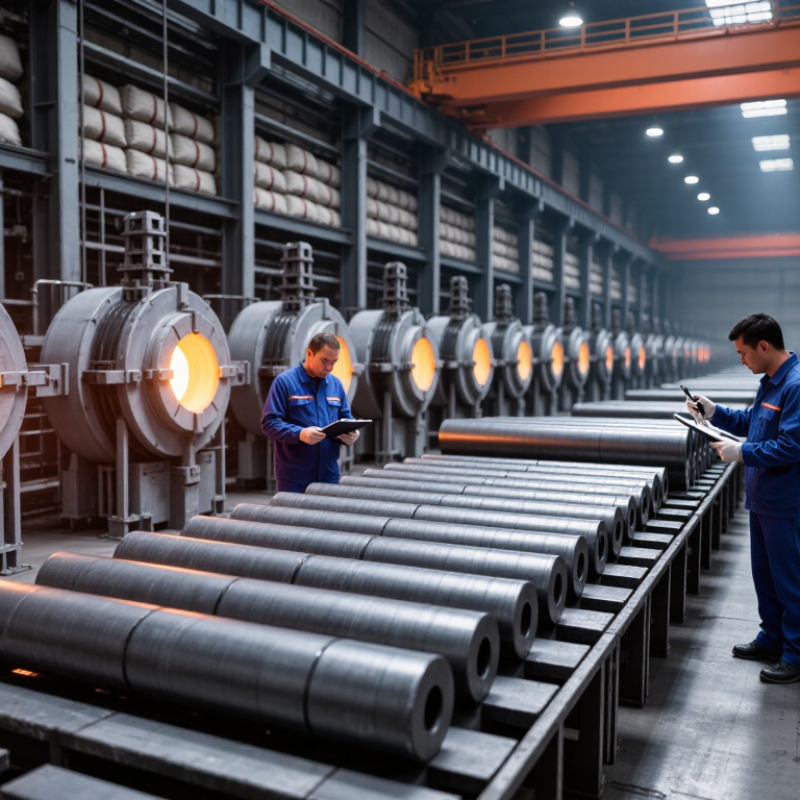
Artificial graphite is a manufactured carbon material, not a mined mineral. Producers usually heat petroleum coke or needle coke above 2,500°C, then shape and purify it for batteries, furnaces, seals, and electrical components. This process creates controlled crystal structure, low impurity levels, and stable conductivity. However, performance depends heavily on particle size, bulk density, sulfur content, ash, and final heat-treatment conditions.
China matters because its industrial base connects raw materials, graphitization, machining, and export logistics. The International Energy Agency reported in 2024 that China controlled more than 90% of global battery-grade graphite processing capacity. The U.S. Geological Survey also recorded China as the leading natural graphite producer, with about 1.23 million metric tons in 2023. These figures do not equal artificial graphite output, but they show China’s wider processing advantage. Scale matters here.
Global buyers should request production data, not only attractive specifications. A reliable supplier should provide testing for fixed carbon, ash, moisture, tap density, and particle distribution. Factory audits can reveal practical details, such as sealed packaging, dust control, and batch traceability. The market is not perfectly transparent. Some published capacity numbers overlap or use different definitions. That deserves careful review. A low price may also reflect weaker purity control, inconsistent sizing, or higher transport risk. Specification sheets are useful, but real samples often tell the harder truth.
How to Assess Artificial Graphite Manufacturer Capabilities
For global buyers, assessing an artificial graphite manufacturer requires more than checking catalog specifications. The USGS Mineral Commodity Summaries 2024 reported about 1.6 million metric tons of global natural graphite mine production in 2023, with China supplying roughly 1.2 million tons. This scale shows strong industrial depth, but natural graphite data does not prove synthetic graphite capability.
Ask for audited production records, not impressive brochures. A capable factory should explain its calcination temperature, graphitization process, particle shaping, coating, and screening controls. Request batch-level data for fixed carbon, moisture, particle-size distribution, tap density, and ash content. Compare at least three consecutive batches. One good sample means little.
Battery customers should inspect pilot-line evidence and mass-production yield. The International Energy Agency’s Global Critical Minerals Outlook 2024 identifies China as the dominant center for graphite refining and anode-material processing. Buyers should therefore verify furnace capacity, electricity stability, equipment maintenance, and backup production plans. A factory claiming 10,000 tonnes annually should show installed capacity, operating shifts, warehouse records, and recent shipment evidence.
Look closely at quality systems. ISO certification helps, but it cannot replace laboratory results or customer audits. Request independent testing, traceability codes, corrective-action records, and safety documentation. Visit the plant if possible. Check whether powder appears evenly packed, whether dust controls work, and whether operators measure moisture during packaging. Some suppliers may provide excellent technical answers yet struggle with consistency. That weakness deserves written controls, not polite assumptions.
Leading Chinese Manufacturers and Their Product Strengths
China’s leading artificial graphite manufacturers compete through process control, scale, and customization.
The IEA’s Global Critical Minerals Outlook 2024 reports that China produces over 90% of global battery anode active materials. This capacity supports mature graphitization, coating, crushing, and screening systems.
Strong suppliers offer high-purity powders, dense graphite blocks, electrodes, and thermal materials. Their product strengths include stable particle size, low ash content, controlled expansion, and consistent electrical conductivity.
Quality differences remain significant. Reliable factories normally provide batch-level traceability, laboratory certificates, and test data for resistivity, bulk density, sulfur, and moisture. Some operate ISO 9001 or ISO 14001 systems, but certification alone proves little. The real test is repeatability across several shipments.
The USGS Mineral Commodity Summaries 2025 also identifies China as the largest graphite producer, confirming its deep raw-material and processing base. Still, artificial graphite depends on energy-intensive graphitization. Buyers should examine energy sources, capacity utilization, and environmental documentation. A cheaper quotation may hide unstable specifications. That deserves reflection.
Tips: Request three recent batch reports, not one sample. Compare particle-size curves, not only average values. Ask for a pilot order before signing a long contract. Confirm packaging, moisture protection, inspection rights, and delivery terms in writing. Practical audits often reveal small issues, such as powder settling or damaged inner bags. Those details can affect production more than a polished factory presentation.
Quality Standards, Applications, and Export Performance
China’s artificial graphite manufacturers serve steelmaking, lithium-ion anodes, refractories, and electrical applications. The International Energy Agency’s Global Critical Minerals Outlook 2024 reports that China controls over 90% of global graphite refining capacity. This concentration supports competitive pricing, but it also increases supply-chain dependence for global buyers.
Reliable manufacturers usually provide ISO 9001 quality systems and batch-level inspection records. Buyers should verify ash, sulfur, fixed carbon, particle size, bulk density, and electrical resistivity. ASTM and IEC test methods can improve comparison between suppliers. For anode-grade graphite, particle shape and coating consistency matter greatly. For electric arc furnaces, low ash and stable sizing often matter more. Small details matter here.
Export performance depends on more than production volume. The UN Comtrade database tracks artificial graphite under HS 3801, helping buyers review shipment trends and destination markets. Experienced exporters normally provide safety data sheets, certificates of analysis, moisture-proof bags, pallet standards, and clear container-loading photographs. Lead times should be measured against port congestion and seasonal power restrictions. A low quoted price can hide weak packaging or inconsistent batches. That risk is easy to underestimate. Some suppliers also overstate capacity, so an independent factory audit remains worthwhile before a long-term contract.
How Global Buyers Can Choose the Right Supplier
Choosing among artificial graphite manufacturers in China requires more than comparing quoted prices. The International Energy Agency’s Global Critical Minerals Outlook 2024 reports that China supplies over 90% of global battery anode active materials. This concentration offers strong processing capacity, but it does not guarantee consistent quality. Global buyers should request recent batch records, not only a polished product brochure.
Begin with the technical specification. Check fixed carbon, ash, moisture, sulfur, particle-size distribution, tap density, and electrical resistivity. For electrode applications, even a small shift in particle size can change compaction and conductivity. Ask for three consecutive batch samples, sealed and clearly labeled. Compare laboratory results with the supplier’s certificate of analysis. Independent testing is worth the cost. A low quotation can become expensive after rejected shipments, rework, or unstable production.
Supplier verification should include an on-site audit, traceable raw-material records, calibrated testing equipment, and documented corrective actions. ISO 9001 certification helps, but it is not proof of product consistency. The U.S. Geological Survey’s Mineral Commodity Summaries 2025 highlights graphite’s importance in energy technologies and ongoing supply-chain concentration. Buyers should therefore examine backup production lines, export experience, packaging strength, and realistic lead times. Some suppliers promise too much. That deserves careful reflection. A transparent manufacturer will explain limitations, trial quantities, inspection rights, and how quality claims are measured.
Key Specification Benchmarks for Artificial Graphite Procurement
Global buyers commonly compare artificial graphite suppliers using fixed carbon, ash, sulfur, and moisture specifications. The values below represent typical procurement thresholds used for high-purity artificial graphite products; exact limits vary by application, grade, and agreed technical specification.





