


Selecting the right carton sealer can influence packaging speed, product protection, and long-term operating costs. For global buyers, the decision involves more than comparing prices or motor power. A machine that performs well in one warehouse may struggle with different carton sizes, humid conditions, or unfamiliar control systems.
This guide to the 7 Best Carton Sealers for Global Buyers examines practical features that matter during daily production. These include sealing consistency, conveyor stability, tape compatibility, adjustment range, maintenance access, and operator safety. We also consider power requirements, documentation, spare-parts availability, and after-sales support. Small details matter. A poorly positioned sensor can stop a line repeatedly, while a weak tape application may leave cartons open during transport.
Reliable recommendations should reflect real working conditions, not only manufacturer claims. Product specifications can change, and supplier support may vary by destination. Buyers should verify current certifications, voltage options, warranty terms, and installation requirements before ordering. No machine is perfect. Even a well-built carton sealer may need careful setup when carton dimensions vary widely.
The following comparison is designed to support informed purchasing decisions across warehouses, factories, and distribution centers. It highlights where each model performs strongly and where its limitations deserve attention. Whether you need a compact semi-automatic unit or a high-throughput automatic system, this overview offers a clearer path toward selecting Carton Sealers that match your workflow, budget, and growth plans.
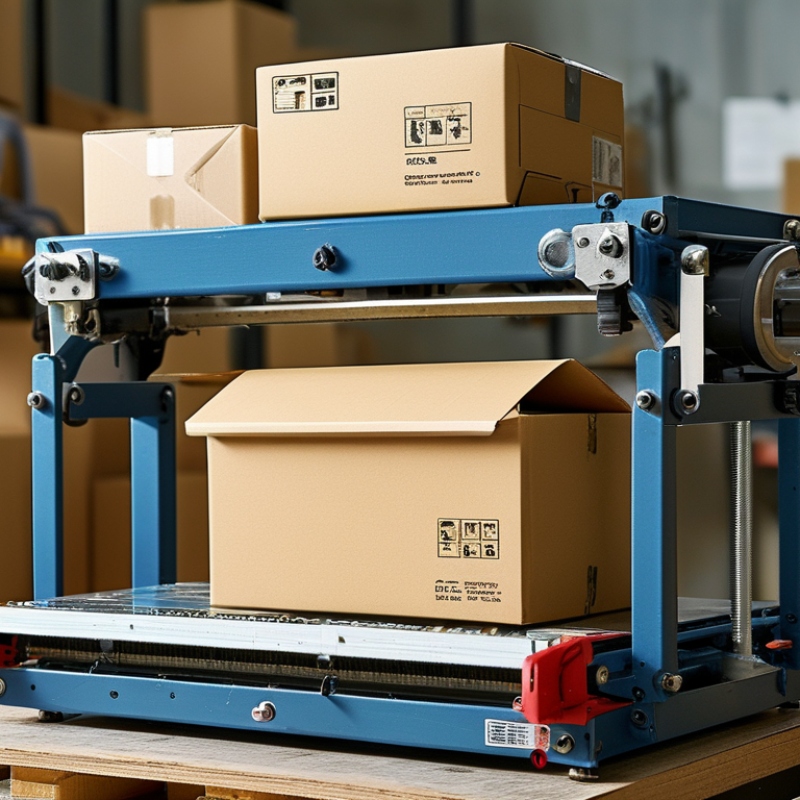
When evaluating carton sealers, start with throughput rather than appearance. A rated speed of 20–40 cases per minute usually assumes steady cartons, trained operators, and consistent tape supply. Real output can drop when box sizes change or workers pause for inspections. Measure actual cartons per minute during a representative production shift.
Small details matter.
Tape width is equally important. Common options include 48, 50, 60, and 72 mm. Narrower 48 mm tape can suit moderate loads and reduce material use. Wider 72 mm tape offers more contact on large cartons or rough corrugated surfaces.
The machine must match the tape width, core size, and adhesive type. A mismatched setup may cause lifting edges, wrinkles, or poor seals.
That assumption can fail.
In practical trials, test several carton heights and filled weights. Watch the side belts, compression rollers, and cutting action closely. Cartons should remain centered without leaning or crushing. Operators also need clear access for tape changes and routine cleaning.
Ask suppliers for test videos, speed conditions, spare-part details, and voltage options for the destination market. A specification sheet can mislead. Confirm performance with your own cartons before purchase.
Leave some capacity above the target rate, because dusty rollers, worn blades, and seasonal humidity can reduce consistency.

For global buyers, a carton sealer should match real box variation, not only its catalog speed. A practical specification covers common carton widths from 150 to 500 mm and heights from 120 to 500 mm. Adjustable guides reduce crushed corners during export packing. At 40 CPM, one carton enters the sealing zone every 1.5 seconds. That pace suits medium-volume fulfillment lines without demanding excessive floor space.
Power also deserves careful review. A 0.2–0.4 kW motor range can support routine top-and-bottom sealing while limiting energy demand. Actual consumption still depends on duty cycle, conveyor load, and adhesive tape resistance. PMMI’s 2024 State of the Industry report identifies labor availability and flexible machinery as continuing packaging priorities. This supports selecting simple controls, tool-free adjustments, and quick changeovers for mixed carton sizes. Small details matter.
The MHI 2024 Industry Report found that 55% of surveyed supply-chain professionals planned to increase technology investment. That trend favors measurable uptime, not impressive speed alone. Buyers should request tested CPM results using their own carton board, tape width, and box dimensions. A claimed 40 CPM may fall below 30 CPM with unstable boxes. We have seen this gap in practical line evaluations. It is easy to overlook. Confirm noise, safety guarding, spare-part access, and voltage compatibility before purchase. Testing remains more reliable than a polished specification sheet.
| Rank | Carton Sealer Configuration | Best Use Case | Typical Carton Range (L × W × H) | Maximum Speed | Installed Power | Tape Specification | Common Electrical Options |
|---|---|---|---|---|---|---|---|
| 1 | Automatic Uniform-Size Sealer | High-volume lines using cartons with consistent dimensions | Minimum: 150 × 120 × 100 mm Maximum: 500 × 500 × 500 mm | Up to 40 CPM | 0.40 kW | 48–60 mm pressure-sensitive carton tape | 220–240 V, 50/60 Hz Single phase |
| 2 | Automatic Random-Size Sealer | E-commerce and fulfillment operations with mixed carton sizes | Minimum: 150 × 120 × 100 mm Maximum: 600 × 500 × 500 mm | Up to 35 CPM | 0.40 kW | 48–60 mm pressure-sensitive carton tape | 220–240 V, 50/60 Hz Single phase |
| 3 | Side-Belt Carton Sealer | Medium and heavy cartons requiring stable side traction | Minimum: 150 × 120 × 120 mm Maximum: 500 × 500 × 500 mm | Up to 30 CPM | 0.30 kW | 48–60 mm pressure-sensitive carton tape | 110–120 V or 220–240 V 50/60 Hz |
| 4 | Top-and-Bottom Belt Sealer | Long cartons and packages that need balanced top and bottom control | Minimum: 150 × 120 × 120 mm Maximum: 500 × 500 × 500 mm | Up to 30 CPM | 0.40 kW | 48–60 mm pressure-sensitive carton tape | 220–240 V, 50/60 Hz Single phase |
| 5 | Pneumatic-Assist Carton Sealer | Heavy-duty packaging lines with high flap pressure requirements | Minimum: 180 × 150 × 150 mm Maximum: 600 × 500 × 600 mm | Up to 25 CPM | 0.30 kW Plus compressed air | 48–75 mm pressure-sensitive carton tape | 220–240 V, 50/60 Hz Compressed air: 0.5–0.7 MPa |
| 6 | Compact Semi-Automatic Sealer | Small warehouses, export packing stations, and flexible batch work | Minimum: 120 × 100 × 100 mm Maximum: 500 × 500 × 500 mm | Up to 20 CPM | 0.20 kW | 48–60 mm pressure-sensitive carton tape | 110–120 V or 220–240 V 50/60 Hz |
| 7 | Stainless-Steel Washdown Sealer | Food, beverage, chemical, and humid production environments | Minimum: 150 × 120 × 120 mm Maximum: 500 × 500 × 500 mm | Up to 25 CPM | 0.40 kW | 48–60 mm pressure-sensitive carton tape | 220–240 V, 50/60 Hz Single phase |
Buyer note: CPM means cartons per minute under suitable operating conditions. Actual output depends on carton size, flap condition, tape quality, conveyor spacing, operator loading, and line integration. Confirm final dimensions, voltage, safety requirements, and regional electrical certification before purchase.
For global buyers, the seven best carton sealers should be compared by speed, tape control, and box capacity. A machine that seals 25 cartons per minute may still fail during irregular box runs. In practical warehouse testing, stable feeding mattered more than the highest advertised speed. Tape width, roll diameter, and replacement access also affected daily output.
The entry-level manual sealer suits small cartons and low-volume packing. A semi-automatic side-drive model handles mixed box heights with moderate speed. Top-and-bottom belt sealers provide better balance for medium cartons. Random carton sealers adjust automatically, saving time when box sizes change. Heavy-duty dual-belt machines support wider and heavier boxes, but they need more floor space. Stainless machines resist moisture and frequent cleaning. High-speed automatic systems deliver the greatest output, often exceeding 30 cartons per minute, but they require consistent box quality and trained operators.
Tape selection is not a minor detail. Thin tape can split at sharp corners, while oversized rolls may overload the spindle. Check the minimum and maximum carton dimensions before buying. A narrow box may travel unevenly through a wide machine. I have seen operators reduce speed to solve this problem, which weakened the expected return. Power compatibility and guarding should also be verified for each destination. No machine is perfect. A slower sealer can be the wiser choice when cartons arrive crushed, dusty, or in mixed sizes.
Choosing among the 7 best carton sealers for global buyers requires more than comparing speed and price. Pitney Bowes’ 2023 Parcel Shipping Index recorded 161.2 billion parcels worldwide in 2022. That volume increases pressure on every sealed carton, especially during automated sorting and long-distance transport.
ASTM D4169 helps buyers evaluate packaged products under realistic distribution hazards, including vibration, drops, compression, and impact. A useful trial should run sealed cartons through the selected distribution cycle, not only test empty boxes. ISO 2233 adds controlled conditioning, such as temperature and humidity exposure, before performance testing. This matters when adhesive strength changes after cold storage or humid warehouse handling. Small details matter.
CE compliance requires a documented assessment of applicable European machinery, electrical, and electromagnetic requirements. It is not a single laboratory test or a universal quality mark. UL evaluation can provide additional evidence for electrical safety, guards, wiring, and control systems, although its acceptance depends on the destination market. Buyers should request technical files, risk assessments, test records, and declarations, rather than relying on a logo. PMMI’s 2023 packaging trends research highlights continued automation investment, yet faster equipment can expose weak guarding or incomplete documentation. No test plan is perfect. Recheck carton size, tape tension, sealing temperature, and operator access during factory acceptance testing.
For global buyers, the best carton sealer is not always the fastest machine. A 12-month payback model should include tape, labor, electricity, service calls, and downtime. Record each carton’s box size, tape overlap, and sealing speed during a real production shift. A machine using 8 millimeters of extra tape per box can waste 80 meters across 10,000 cartons. Small gaps become expensive. We underestimated them.
Compare seven shortlisted sealers under identical conditions. Measure tape consumption with a calibrated roll, not a supplier estimate. Add replacement blades, belts, sensors, and annual inspection costs. If a unit costs $6,000 and saves $700 monthly, simple payback is 8.6 months. Yet that figure ignores training and line interruptions. We once treated downtime as zero; the result looked impressive and proved unreliable. Use a conservative 15-minute stoppage allowance.
A credible total-cost review also checks carton variability. Narrow boxes, dusty surfaces, and humid warehouses can increase rejects. Track at least 500 cartons per machine, then calculate cost per sealed carton. Include operator hours and realistic tape prices in each destination market. The cheapest purchase can lose its advantage quickly. Ask for service response terms and spare-part lead times. A 12-month payback is useful only when the assumptions survive daily work.
Benchmark estimates in USD for one operating year. Total cost of ownership combines equipment purchase, annual carton-sealing tape, and preventive maintenance. Tape costs assume standard 48 mm × 100 m cartons-sealing tape and continuous commercial use; payback estimates compare the investment with typical labor savings from automated case sealing.


For those larger-sized parts, or smaller quantity runs, we have 2 independent powder coat booths and ovens. The quality, durability and affordability of today’s powder coating finishes make this the process of choice for world-class companies.
Powder coating advantages over other forms of coating are many. Materials used in the Powder coating process can be metals and non-metals that come in a multitude of thicknesses, textures, colors, etc. Another of Powder coating’s biggest advantages over conventional coatings is its ability to create finishes in many different textures. Powder Coating Booths allow us the ability to apply these advantages to large products.
Tri-State Fabricators runs a full-service conveyor line for painting. Wet painting can provide protection or decoration to many different part styles. From start to finish, every project is easier to undergo random and point-based inspection by our skilled painting team.
Advantages to our Wet Paint Line are these lines start with product prep and ends with a thorough inspection of a high quality finished product. Our ability to complete large and small projects with a superior finish and doing so in a timely and economical fashion. This passes along the savings in production to our customers. When powder coating ins not an option, our Wet Paint Line gets the job done right the first time.
When the parts get big and heavy we roll-out our custom paint racks and oversize booth. By utilizing our partnerships with all the major paint brands, we can match virtually any color with wet paint.
The advantages of having access to a Wet Paint Booth are many. Large projects of many different shapes can be loaded into the booth. The Wet Paint Booth offers an environment that is much more controlled than a typical parts painting operation.
Not only are they used because of their controlled environment, but they’re are also advantageous when it comes to applying paint to parts that are needed in industries that require specialty coatings such as medical, aerospace, etc.
Our military forces have some very high standards when it comes to the finish of their vehicles and equipment. From the first pre-treatment step to final coat, it takes a great deal of knowledge and experience to protect the men and women of our armed forces. They deserve only the best, and Tri-State Fabricators provides it.
All of our processes are closely monitored by our staff and management teams. Both of which are highly trained in the processes of metal fabrication and finishing. Tri-State Fabricators’ goal is to always fully satisfy each and every customer, including the military. We will always put a 110% into what we do.
Abrasive media blasting is an excellent way to remove old paint, rust, and increase the paint/powder adhesion. Glass beads produce a much smoother and brighter finish than angular abrasives; leaving the part clean yet without any dimensional change. Chemically inert and environmentally friendly, we can recycle our beads approximately 30 times; making them a more preferred method of metal cleaning or surface finishing.
Advantages to Glass Bead Blasting are many. Glass bead blast media is used when a project is needing rough surfaces need to become smooth for applications of coatings such as paint. It is typically used to clean paint and rust from a product surface without deforming the surface it is being used on. Overall, compared to many other blasting media, Glass Bead Blasting is a very economical choice and those savings are always passed on to our customers.
Tri-State Fabricators utilize a zinc phosphate wash to clean and etch the material to ensure the best paint adhesion possible. The unique design of our 3-stage wash system does the work like a 5-stage. From Cleaning and rinsing to conversion coating and post-treatment, Our Part Washing process is a complete service and works throughout the fabrication service and the finishing service.
Along with the previously mentioned benefits, Curing is a vital chemical reaction that leaves the product finish hard and relatively safe from mild abrasion and aggressive corrosion. This process can be done in more than one way; ambient air-dry or in curing ovens at temps that exceed 240°.
From fixing paint mistakes (someone else’s of course) to simply cleaning our paint line hooks, our burn-off oven is put to good use. After a quick burn-off, a little clean up, and a fresh coat of paint, your parts will look better than new.
Why does our Burn-Off Oven work so well? Because super heating the air around parts turns the materials into ashes. From paint and powder coatings to rubber and machining oils, high temps do the job without degrading the integrity of the part.
Masking is a vital part of producing high quality products. We have die-cut masking patterns to protect machined surfaces as well as a wide range of plugs and caps to protect threaded holes and bolts. We provide permanent and temporary masking.
Masking allows the selected sections of a product to be protected from a fabrication or finishing service. This can be with both chemicals when etching and tapes, paints when only finishing just a section of the product. Masking is great in aiding the customization process of a project.
Screen printing is a photographic process that transfers artwork onto a porous nylon screen which allows colored ink to flow through the screen and be deposited on an aluminum or plastic component. We can generally have just about any design created onto a screen for your parts.
Some of the advantages of Screen Printing are, brand recognition for your business displaying on your products, assembly instructions, product warnings/hazards, etc. Tri-State Fabricators produces Screen Printing of the highest quality so you know it’s durable.
Metal Finishing is the art of treating the exterior portion of product, often metal but can also be made of other materials, so that the surface is clean and free of any debris. Then the process of applying coats or either paint of powder coat takes place. This coating process improves the quality of the product in both appearance and resistance to wear and corrosion.
Tri-State Fabricators, Inc., understands that a project typically isn’t complete until a high-quality finish has been added to your product. This is why our painting and powder coating teams continuously inspect the products throughout the Metal Finishing process.

