How to Choose the Best Carpet Cutter for Your Business
Choosing the best Carpet Cutter for your business means matching the tool to the work, not simply choosing the lowest price. A small flooring crew cutting occasional room-sized pieces has different needs from a warehouse processing rolls every day. Consider the materials you handle, including thick pile, looped carpet, backing, and specialty flooring. A cutter that moves cleanly through one sample may snag or wander on another.
Start with cut quality, grip, blade changes, and visibility along the cutting line. Check whether the handle feels steady when you apply pressure, and whether replacement blades are easy to source. If possible, test the cutter on offcuts from your regular jobs. Look closely at the edge: uneven fibers can create extra trimming and slow installation. Small details matter. They add up.
Workload matters, too. A manual cutter may be simple and portable, while a powered model could help with repetitive cuts but require more setup and maintenance. Compare the total cost, including blades, service, and time spent on upkeep. Keep safe handling and storage in the assessment; a sharp tool needs a dependable routine. Specifications are useful, but they cannot tell you everything. A handle that seems comfortable for five minutes may feel tiring after an hour. I would not treat one successful test cut as proof of long-term performance. The best choice is the one your team can use consistently, maintain properly, and trust across the jobs you actually take.
Identify Carpet Formats: 12-Foot Rolls and Common 18- or 24-Inch Tiles
Carpet may arrive as broadloom rolls or modular tiles, and the format changes how you plan cuts. A 12-foot roll is a common broadloom format. At that width, one linear yard covers 36 square feet before trimming, seams, or pattern matching. The Carpet and Rug Institute’s CRI 104 commercial installation standard distinguishes broadloom and modular installation practices. Use it as a technical reference, then verify the roll’s actual width and pattern repeat on its specification sheet. A tidy floor plan can still hide costly offcuts.
Modular carpet commonly comes in 18-by-18-inch or 24-by-24-inch tiles, though dimensions vary. An 18-inch tile covers 2.25 square feet; a 24-inch tile covers 4 square feet. Tile sizes make replacement and small-area cutting more manageable, but frequent edges can slow installation. Rolls can cover large open spaces with fewer joins, yet doorway cuts and pattern alignment demand careful measuring. Before choosing a cutter, check the longest cut, material thickness, and how much stock must be handled each day. Keep spare tiles from the same dye lot when possible. I’d still remeasure the layout; neat sketches sometimes conceal awkward cuts.
How to Choose the Best Carpet Cutter for Your Business - Identify Carpet Formats: 12-Foot Rolls and Common 18- or 24-Inch Tiles | Carpet Format | Typical Dimensions | Area per Piece | Cutting Work | Cutter Features to Consider | Business Fit |
| Broadloom roll | Commonly 12 ft wide (144 in); roll length varies by product and order. | At 12 ft wide, each linear foot of roll covers 12 sq ft before trimming and waste. | Long straight cuts across wide material, plus length cuts and fitting cuts around room edges or obstacles. | Look for a stable cutting surface, a long straightedge or guide, and a cutter suited to the carpet backing and pile. A separate seam-edge cutter may help with professional seaming work. | Useful for rooms and installations where broadloom is specified. Plan for adequate handling and storage space for wide, heavy rolls. |
| 18 × 18 in carpet tile | 18 in × 18 in (1.5 ft × 1.5 ft). | 2.25 sq ft per tile; about 45 tiles cover 100 sq ft before waste. | Repeated cuts to fit borders, columns, doorways, and irregular room edges; many interior areas can be covered with whole tiles. | A sharp utility-style carpet knife, a firm cutting board, and a square or straightedge are practical for accurate individual cuts. Check that the blade is appropriate for the tile backing. | Well suited to modular layouts and localized replacement. Keep the tile pattern and pile direction consistent where the product requires it. |
| 24 × 24 in carpet tile | 24 in × 24 in (2 ft × 2 ft). | 4 sq ft per tile; 25 tiles cover 100 sq ft before waste. | Fewer pieces are needed than with smaller tiles, though perimeter and obstacle cuts are still required. | Use a stable surface and a straightedge long enough to span the tile. Choose a cutter that can make controlled, clean cuts through the tile’s backing without shifting the material. | Suitable for modular flooring projects where the selected tile size and installation layout fit the space. |
| Selection note: Tile quantities shown are area calculations and do not include waste. Actual requirements depend on room layout, product dimensions, pattern matching, and installation instructions. Verify the carpet manufacturer’s cutting guidance before choosing blades or equipment. |
Match Cutter Type to Daily Workload and Material Thickness
Choosing a carpet cutter starts with the work you repeat every day. For a few room-sized jobs, a sturdy hand cutter with replaceable blades is often easier to control and maintain. If crews make long cuts across broad rolls throughout the week, a powered cutter can reduce hand fatigue and keep pace. It also needs charging, cleaning, and trained handling. That trade-off matters.
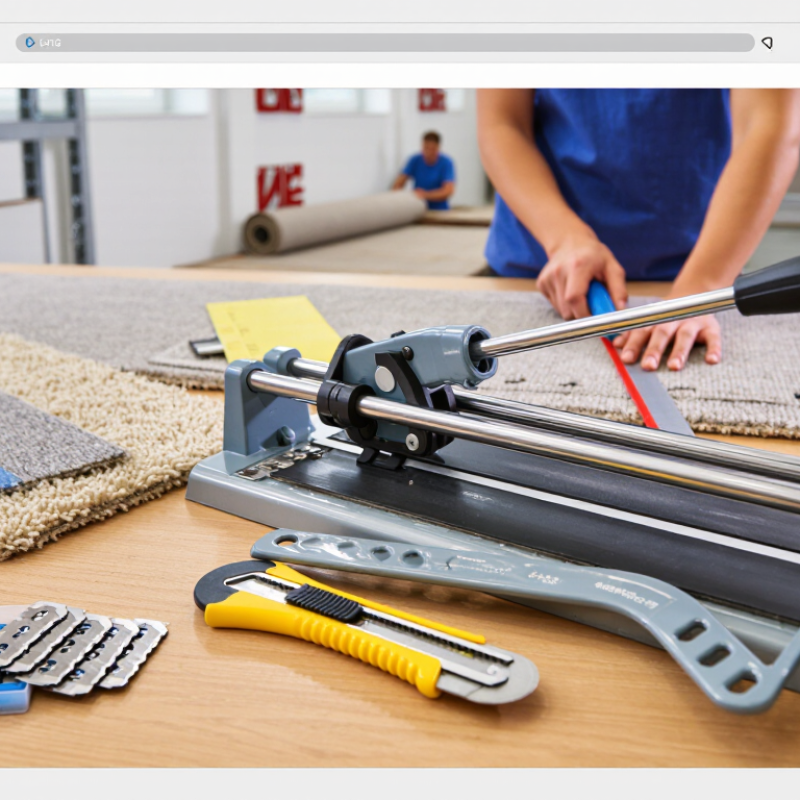
Material thickness changes the choice. Low-pile carpet with a flexible backing may cut cleanly with a standard straight blade. Dense pile, thick backing, or attached cushion can require a hooked blade or a cutter designed for deeper passes. Check the blade’s cutting depth against the full material stack, including underlay. A blade that reaches the carpet but catches the backing can pull fibers or leave a ragged edge.
Test the tool on an offcut before committing to a full installation. Notice whether it tracks along a straightedge, clears fibers, and stays comfortable after several cuts. Replace dull blades promptly; extra pressure can reduce control. We once assumed the thickest carpet always needed the heaviest cutter. Not quite. Backing stiffness and cut length can matter just as much, so match the tool to your actual daily mix, not one unusual job.
Compare Blade Types, Cutting Depth, and Replacement Costs
A carpet cutter’s blade should match the material, not just feel sharp in the hand. Straight blades offer control for trimming edges and making short, visible cuts. Hook blades can help lift and slice pile without digging as readily into the backing. They are not foolproof; the wrong angle can still snag fibers. Test the cutter on an offcut first. A clean edge matters.
Cutting depth is just as important. For thin carpet, a shallow setting can reduce the chance of scoring the floor beneath it. Dense pile or thicker backing may need more blade exposed, but forcing a deep cut in one pass can wander. Check the depth against a sample, then watch the blade as it travels. Keep your free hand clear. Small adjustments often beat extra pressure.
Replacement cost includes more than the price of a blade. Compare how many usable cuts a blade typically provides, how quickly it dulls on dense backing, and how easy it is to replace during a workday. A cheap blade that needs frequent changes may cost more in interruptions. Track blade use for a few jobs; the results may surprise you. Still, wear varies with carpet type and cutting habits, so treat any estimate as a starting point, not a promise.
Assess Grip, Handling, and OSHA Hand-Tool Safety Guidance
A carpet cutter should feel stable before it feels fast. Hold it with a relaxed wrist and test the handle with the gloves used on site. A textured, non-slip grip helps when hands are dusty or slightly damp. Check that the blade advances and retracts without forcing your thumb. Small details matter.
OSHA’s hand-tool rule, 29 CFR 1910.242(a), places responsibility on employers to keep tools in safe condition. It does not prescribe one handle shape, so assess the actual task: long cuts, tight corners, and repeated trimming can demand different handling. Look for a cutter that stays controlled under steady pressure and lets the free hand remain clear of the blade path. Keep blades sharp and replace damaged handles; a dull edge can tempt workers to push harder. That habit deserves a second look.
The Bureau of Labor Statistics reported a 2.4 total recordable case rate per 100 full-time-equivalent workers in private industry for 2023. The figure covers many injury types, not carpet-cutter incidents alone, but it underscores why routine tool checks matter. Before work begins, inspect the blade lock, handle, and return action. Try a short cut on scrap carpet, then note any slipping, wrist strain, or awkward reach. Fit is personal. Recheck it.
Test Cut Accuracy, Work Rate, and Total Cost Before Purchase
A carpet cutter can look precise on a showroom sample and behave differently on dense pile or stiff backing. Test it on the materials your team handles most. Mark a straight line, make several cuts, then check the edges for fraying, wandering, or uneven pile. Use the same operator and cutting method for each machine. Small differences matter.
Check accuracy first.
Then measure work rate during a realistic shift task, not one quick demonstration. Record how long setup, repeated cuts, blade changes, and cleanup take. Note whether the operator must reposition the carpet or apply extra pressure. A cutter that moves quickly but needs frequent corrections may slow the whole job. One test is not enough, though; fatigue and awkward room layouts can change the result.
Compare total cost over the expected service period. Include replacement blades, routine maintenance, training time, and material lost to poor cuts. Ask how easily common parts can be serviced, and keep the assumptions consistent across options. A cheaper tool may cost more when downtime adds up. Conversely, a higher purchase price is not automatically justified. Write down the test conditions, even if the results feel a little messy. Those notes make the decision more dependable than a polished sales demonstration.
How to Choose a Carpet Cutter: Accuracy, Work Rate & Cost
Illustrative shop-floor comparison of three generic cutter setups. Higher index scores are better; the sample readings below are not manufacturer specifications or market averages.
Sample readings: Rotary cutter — 1.8 mm cut deviation, 18 m²/hour, $0.42/m²; powered straight cutter — 0.9 mm, 32 m²/hour, $0.68/m²; track-guided electric cutter — 0.5 mm, 28 m²/hour, $0.95/m².
Scores are normalized within this example: lower deviation and cost score higher, while higher work rate scores higher. Before buying, repeat the same test on your carpet types, record setup and blade costs, and compare total cost per square metre using your own purchase and maintenance figures.





