


What Is the Best Block Forming Machine from China?

Choosing the best Block Forming Machine from China requires more than comparing prices or polished factory photographs. The right choice depends on block size, production volume, raw materials, automation level, and local working conditions. A small contractor may need a compact hydraulic machine, while a large plant may require an automated line with pallet feeding, curing support, and quality monitoring.

In this guide, we examine practical factors from a buyer’s perspective. These include machine structure, vibration strength, hydraulic stability, mould accuracy, energy use, and after-sales service. A reliable supplier should provide clear technical drawings, machine videos, spare-parts information, and installation guidance. Factory audits and sample production can reveal details that brochures often hide.

Look closely at the finished blocks.

Edges should remain sharp, surfaces should look even, and product dimensions should stay consistent after curing. A useful supplier will explain production limits honestly instead of promising unrealistic output. This matters because actual capacity can change with material moisture, operator skill, mould replacement, and curing time.

There is no universal winner.

Some buyers may prefer lower investment and simpler maintenance. Others may value automation, faster cycle times, and long-term production stability. We also need to admit that comparing Chinese machines is not always simple. Supplier data may use different testing conditions, and advertised capacity may not match daily output.

The following sections compare machine types, manufacturers, technical specifications, costs, certifications, and service quality. They are designed to help buyers make a careful decision based on evidence, not attractive claims.
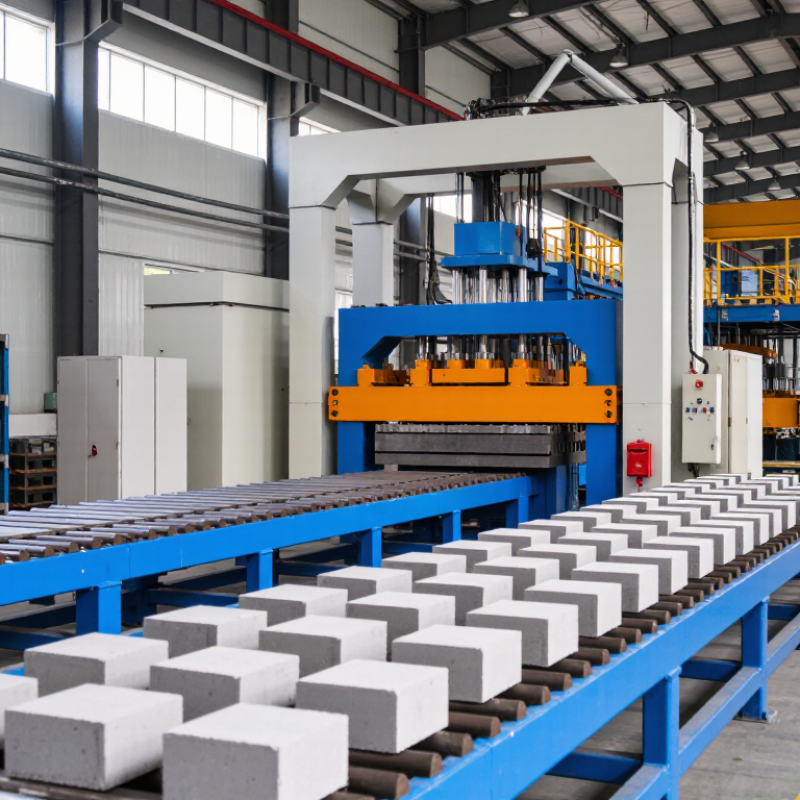
What Is the Best Block Forming Machine from China?

What Defines the Best Chinese Block Forming Machine?

The best Chinese block forming machine is not defined by output alone. It is defined by repeatable blocks, controlled energy use, and serviceable design. UNEP’s 2024 Global Status Report states that buildings and construction consumed 32% of global energy in 2022. That figure makes efficiency a production requirement, not a marketing phrase. Buyers should inspect motor ratings, hydraulic losses, curing compatibility, and power consumption per finished block. Numbers need site testing.

A reliable machine begins with documented engineering controls. The ISO Survey 2022 recorded more than 1.2 million ISO 9001 certificates worldwide. Certification does not guarantee a good machine. It does show whether a manufacturer maintains traceable processes, corrective actions, and inspection records. Ask for mold-life data, dimensional tolerance results, cycle-time logs, and spare-part lead times. Request samples from several production batches. One perfect sample proves little. Real performance appears after dust, vibration, and repeated shifts.

The strongest equipment also fits local reality. Check aggregate moisture, cement variation, pallet quality, climate, operator skill, and grid stability. The International Energy Agency estimates cement production causes about 7% of global CO2 emissions. Material efficiency therefore matters alongside electricity use. Good machines reduce rejects through stable feeding and pressure control. They should also allow safe cleaning and quick mold changes. Yet compromises remain. Higher automation may require stronger maintenance skills. A cheaper purchase can become expensive through downtime. The best choice is the machine that survives measured use, not the one with the largest brochure number.

What Is the Best Block Forming Machine from China? - What Defines the Best Chinese Block Forming Machine?

Machine Profile Primary Block Applications Typical Production Capacity Forming Method Typical Hydraulic Pressure Typical Motor Power Cycle Time Automation Level Expected Block Quality Mould Change Convenience Best-Fit Project Overall Evaluation
Semi-Automatic Compact Machine Concrete hollow blocks, solid blocks, paving blocks and small masonry units Approximately 2,000–4,000 standard hollow blocks per 8-hour shift, depending on block size and operating conditions Mechanical vibration with hydraulic or mechanical compaction Approximately 8–16 MPa Approximately 15–25 kW 25–40 seconds Manual feeding with semi-automatic demoulding and pallet handling Consistent when aggregate grading, moisture and vibration are properly controlled Generally simple; mould replacement commonly requires several hours Small construction-material businesses, local contractors and moderate-volume projects ★★★★☆
Automatic Hydraulic Block Machine Hollow blocks, solid blocks, curbstones, paving blocks and interlocking pavers Approximately 5,000–12,000 standard blocks per 8-hour shift, depending on mould configuration Hydraulic compression combined with controlled vibration Approximately 16–25 MPa Approximately 25–45 kW 15–25 seconds Automatic material feeding, forming, demoulding and pallet transfer High density and good dimensional consistency with stable raw-material control Usually designed for relatively fast mould replacement and adjustment Commercial block plants requiring balanced productivity, quality and operating cost ★★★★★
High-Pressure Paver Block Machine Interlocking pavers, decorative paving units, kerbstones and high-density landscape products Approximately 500–1,200 square metres of paving products per 8-hour shift, depending on product size High-pressure hydraulic compression with controlled vibration Approximately 20–35 MPa Approximately 35–60 kW 15–30 seconds Automatic forming with optional face-mix feeding and pallet circulation High density, sharp edges and suitable surface quality for demanding paving applications Moderate; additional face-mix and mould components may increase changeover time Municipal paving, landscaping, road projects and decorative concrete production ★★★★★
Multi-Product Automatic Production Line Hollow blocks, solid blocks, pavers, curbstones and special-shaped concrete products Approximately 8,000–20,000 standard blocks per 8-hour shift, depending on product mix and line layout Hydraulic pressing and vibration with automated batching and material handling Approximately 18–30 MPa Approximately 45–90 kW for the complete production line 12–25 seconds High automation with programmable controls, conveyors, pallet circulation and optional curing systems Very consistent when the batching, mould and curing systems are correctly calibrated Moderate to advanced; mould storage and quick-change tooling are important selection factors Large plants serving several product markets and requiring flexible production planning ★★★★★
Low-Consumption Entry-Level Machine Standard hollow blocks, solid blocks and basic paving units Approximately 1,500–3,000 standard hollow blocks per 8-hour shift Vibration compaction with mechanical or limited hydraulic assistance Approximately 6–12 MPa Approximately 10–20 kW 30–50 seconds Manual or semi-automatic operation with basic control functions Suitable for general-purpose blocks when production parameters are carefully managed Simple design, but manual alignment may be required after mould changes Start-up operations, rural projects and markets with limited initial investment ★★★☆☆

Note: The figures shown are typical industry ranges for concrete block-forming equipment. Actual output, power consumption, cycle time and product quality vary according to block dimensions, concrete mix design, aggregate moisture, mould configuration, curing conditions, operator skill and local electrical standards.


Which Machine Types Deliver 8–20-Second Forming Cycles?

Choosing the best block forming machine from China starts with cycle time, not catalogue speed. For 8–20-second forming cycles, hydraulic vibration presses usually offer the strongest balance between pressure, compaction, and repeatability. A 2024 report from MarketsandMarkets identifies automation and higher production efficiency as major drivers in concrete equipment demand.

The number is conditional.
A 10-second cycle can produce dense hollow blocks when the mold is small, the mix is consistent, and pallet changing is automatic. Larger solid blocks often require 15–20 seconds because they need longer vibration and stronger pressure.

A pallet-circulation machine can maintain this rhythm by moving fresh pallets continuously, while a stationary press may lose time during manual handling. That distinction matters.

The best specification should include vibration frequency, hydraulic pressure, mold-change time, and hourly output under real conditions. The American Concrete Institute emphasizes consistent batching, curing, and compaction for reliable concrete performance. Similarly, the International Energy Agency’s 2024 cement analysis highlights efficiency as a key industry priority, especially where energy use affects production cost.

In practice, a machine advertised at eight seconds may deliver twelve seconds after material loading, pallet alignment, and operator checks. This is not failure. It is a measurement gap worth investigating. Ask for a recorded factory test using your aggregate, moisture level, block size, and pallet format before selecting the equipment.

How Do Output Rates Compare at 1,000–2,500 Blocks per Shift?

Choosing the best block forming machine from China starts with its real output, not its advertised cycle time. At 1,000 blocks per shift, a basic semi-automatic machine may suit small construction yards. It usually needs manual material feeding, pallet placement, and block removal. Production often slows when workers change molds or clear uneven mixtures.

Machines rated near 1,500 to 2,000 blocks per shift usually provide steadier performance. They may include automatic feeding, hydraulic pressing, and faster pallet circulation. A trained crew can keep the line moving with fewer pauses. At 2,500 blocks per shift, production normally requires stronger automation and disciplined material control. A short delay can reduce the daily count quickly. Numbers vary.

Output depends on block size, mix moisture, curing arrangements, and shift length. A machine making hollow blocks may reach a different rate than one producing dense paving units. During evaluation, request a timed production test using your preferred mold and concrete mix. Record usable blocks, rejected pieces, loading time, and unplanned stops. A clean spreadsheet can still mislead if damaged blocks are included. In practical inspections, operators often underestimate cleaning and mold-change time. The higher figure is attractive, but it may demand more labor, spare parts, and floor space. A slower machine can sometimes deliver better consistency and easier maintenance. That trade-off deserves a careful review.

Which Technical Standards Ensure Block Strength of 10–20 MPa?

The best block forming machine from China is not defined by output alone. For 10–20 MPa blocks, the machine must support stable compaction, accurate feeding, and controlled vibration. EN 771-3 classifies aggregate concrete masonry units by declared compressive strength, while EN 772-1 specifies the testing method. Strength is normally verified at 28 days.

ASTM C90-22 requires loadbearing concrete masonry units to reach an average net-area compressive strength of 13.1 MPa, with individual results not falling below 11.7 MPa. ASTM C140/C140M provides sampling and testing procedures.

These figures make 10 MPa achievable, but 20 MPa demands better grading, moisture control, and curing. A strong press cannot repair weak mix design.

Factory evaluations should record vibration frequency, mould tolerance, filling accuracy, and hydraulic pressure. EN 12390-3 is also useful when testing concrete cube strength, although block results still need the correct masonry-unit method.

The Concrete Sustainability Council reported that cement production remains responsible for about 7% of global CO2 emissions in its industry guidance, so material efficiency matters too. In practice, small moisture changes can create large strength differences. That is easy to underestimate.

Test certificates should include batch numbers, curing conditions, specimen dimensions, and failure loads. Independent retesting is wiser than trusting one impressive sample.

How Should Buyers Compare Automation, Energy Use, and Total Cost?

What Is the Best Block Forming Machine from China?

How Should Buyers Compare Automation, Energy Use, and Total Cost?

The best block forming machine is not always the fastest one. Buyers should compare output, energy use, labor requirements, and service access together. The International Energy Agency reports that electric motor systems use about 53% of global electricity. This makes motor efficiency a serious purchasing factor. Ask for measured energy consumption per thousand blocks, not only installed motor power.

Automation should reduce repetitive work without creating difficult maintenance. A practical line may include automatic material feeding, mold changing, pallet handling, and fault alerts. The International Federation of Robotics recorded 541,302 industrial robot installations worldwide in 2023. Yet a block factory may not need full robotic integration. Over-automation can increase training time and spare-part costs. Simpler is sometimes better.

Look closely at total cost over five years.

Include molds, vibration components, lubricants, electricity, labor, rejected blocks, and planned downtime. A low purchase price can become expensive when mold wear is fast. During factory evaluations, buyers should request a continuous production test using their own mix design. Check block dimensions, edge quality, noise, dust control, and cycle stability.

The U.S. Department of Energy notes that compressed-air systems can lose 20–30% of their output through leaks and poor maintenance. Small leaks matter.

One uncomfortable truth remains: supplier promises are not operating data. Independent testing and written performance conditions deserve more weight than impressive brochures.

Powder Coat Booths

For those larger-sized parts, or smaller quantity runs, we have 2 independent powder coat booths and ovens. The quality, durability and affordability of today’s powder coating finishes make this the process of choice for world-class companies.

Powder coating advantages over other forms of coating are many. Materials used in the Powder coating process can be metals and non-metals that come in a multitude of thicknesses, textures, colors, etc. Another of Powder coating’s biggest advantages over conventional coatings is its ability to create finishes in many different textures. Powder Coating Booths allow us the ability to apply these advantages to large products.

Wet Paint Line

Tri-State Fabricators runs a full-service conveyor line for painting. Wet painting can provide protection or decoration to many different part styles. From start to finish, every project is easier to undergo random and point-based inspection by our skilled painting team.

Advantages to our Wet Paint Line are these lines start with product prep and ends with a thorough inspection of a high quality finished product. Our ability to complete large and small projects with a superior finish and doing so in a timely and economical fashion. This passes along the savings in production to our customers. When powder coating ins not an option, our Wet Paint Line gets the job done right the first time.

Wet Paint Booths

When the parts get big and heavy we roll-out our custom paint racks and oversize booth. By utilizing our partnerships with all the major paint brands, we can match virtually any color with wet paint.

The advantages of having access to a Wet Paint Booth are many. Large projects of many different shapes can be loaded into the booth. The Wet Paint Booth offers an environment that is much more controlled than a typical parts painting operation.

Not only are they used because of their controlled environment, but they’re are also advantageous when it comes to applying paint to parts that are needed in industries that require specialty coatings such as medical, aerospace, etc.

Military CARC

Our military forces have some very high standards when it comes to the finish of their vehicles and equipment. From the first pre-treatment step to final coat, it takes a great deal of knowledge and experience to protect the men and women of our armed forces. They deserve only the best, and Tri-State Fabricators provides it.

All of our processes are closely monitored by our staff and management teams. Both of which are highly trained in the processes of metal fabrication and finishing. Tri-State Fabricators’ goal is to always fully satisfy each and every customer, including the military. We will always put a 110% into what we do.

Glass-Bead Blasting

Abrasive media blasting is an excellent way to remove old paint, rust, and increase the paint/powder adhesion. Glass beads produce a much smoother and brighter finish than angular abrasives; leaving the part clean yet without any dimensional change. Chemically inert and environmentally friendly, we can recycle our beads approximately 30 times; making them a more preferred method of metal cleaning or surface finishing.

Advantages to Glass Bead Blasting are many. Glass bead blast media is used when a project is needing rough surfaces need to become smooth for applications of coatings such as paint. It is typically used to clean paint and rust from a product surface without deforming the surface it is being used on. Overall, compared to many other blasting media, Glass Bead Blasting is a very economical choice and those savings are always passed on to our customers.

Part Washing

Tri-State Fabricators utilize a zinc phosphate wash to clean and etch the material to ensure the best paint adhesion possible. The unique design of our 3-stage wash system does the work like a 5-stage. From Cleaning and rinsing to conversion coating and post-treatment, Our Part Washing process is a complete service and works throughout the fabrication service and the finishing service.

Along with the previously mentioned benefits, Curing is a vital chemical reaction that leaves the product finish hard and relatively safe from mild abrasion and aggressive corrosion. This process can be done in more than one way; ambient air-dry or in curing ovens at temps that exceed 240°.

Burn-Off Oven

From fixing paint mistakes (someone else’s of course) to simply cleaning our paint line hooks, our burn-off oven is put to good use. After a quick burn-off, a little clean up, and a fresh coat of paint, your parts will look better than new.

Why does our Burn-Off Oven work so well? Because super heating the air around parts turns the materials into ashes. From paint and powder coatings to rubber and machining oils, high temps do the job without degrading the integrity of the part.

Masking

Masking is a vital part of producing high quality products. We have die-cut masking patterns to protect machined surfaces as well as a wide range of plugs and caps to protect threaded holes and bolts. We provide permanent and temporary masking.

Masking allows the selected sections of a product to be protected from a fabrication or finishing service. This can be with both chemicals when etching and tapes, paints when only finishing just a section of the product. Masking is great in aiding the customization process of a project.

Screen Printing

Screen printing is a photographic process that transfers artwork onto a porous nylon screen which allows colored ink to flow through the screen and be deposited on an aluminum or plastic component. We can generally have just about any design created onto a screen for your parts.

Some of the advantages of Screen Printing are, brand recognition for your business displaying on your products, assembly instructions, product warnings/hazards, etc. Tri-State Fabricators produces Screen Printing of the highest quality so you know it’s durable.

Metal Finishing

Metal Finishing is the art of treating the exterior portion of product, often metal but can also be made of other materials, so that the surface is clean and free of any debris. Then the process of applying coats or either paint of powder coat takes place. This coating process improves the quality of the product in both appearance and resistance to wear and corrosion.

Tri-State Fabricators, Inc., understands that a project typically isn’t complete until a high-quality finish has been added to your product. This is why our painting and powder coating teams continuously inspect the products throughout the Metal Finishing process.
