What Is the Best Anti Mosquito Spray for 2026? The answer depends on where you go, how long you stay outdoors, and which ingredients suit your needs. Anti-Mosquito Spray is not a one-size-fits-all choice. A product that works for an evening on the patio may not be the right pick for a long hike or travel in a mosquito-heavy area. Check the active ingredient, protection time, and age guidance on the label before buying. Small details matter.
This guide compares common repellent ingredients, application formats, and practical features, including scent, skin feel, and reapplication needs. It also considers guidance from public health authorities, rather than relying only on marketing claims or star ratings. No spray is perfect. Some formulas feel sticky, and protection can fade sooner than expected with sweat, swimming, or time outdoors. That is worth remembering.
The “best” option should offer suitable protection while fitting your routine and comfort preferences. Read and follow the product directions, avoid applying repellent to irritated skin, and use extra care around children. Individual reactions can vary, so a patch test may be sensible when trying a new formula. This comparison aims to make the trade-offs clearer—not promise that one bottle will keep every mosquito away.
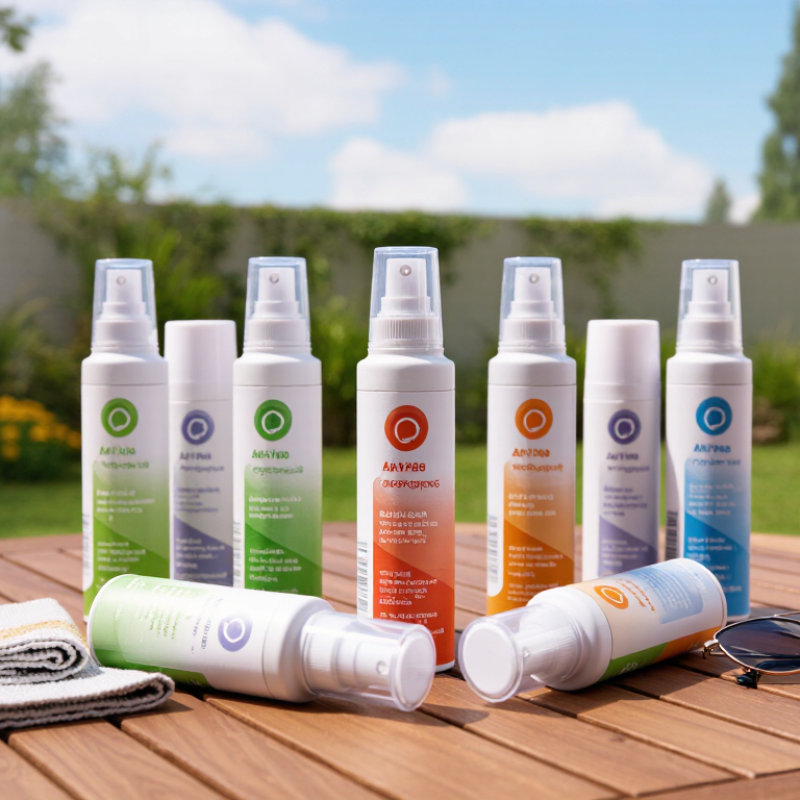
Mosquito sprays work by making a person harder for mosquitoes to detect or land on. Mosquitoes follow cues such as carbon dioxide, body heat, and skin odors. Repellent ingredients interfere with some of these signals; they do not usually kill mosquitoes. That distinction matters.
Common active ingredients include DEET, picaridin, IR3535, and PMD, a component of oil of lemon eucalyptus. Their formulas and protection times differ. The percentage of an ingredient can affect how long protection lasts, but a higher concentration does not automatically mean a better choice for every situation. Read the product label. Apply only to exposed skin or clothing as directed, and avoid eyes, mouth, cuts, and irritated skin. Sprays should not be inhaled.
Coverage matters, too. A missed patch near an ankle can still invite bites. Sweat, swimming, and time outdoors may reduce protection, so follow label directions for reapplication. Some sprays are designed for skin, while others are intended for fabric; they are not interchangeable. Not magic. It is easy to assume a pleasant scent means a spray is mild or effective, but smell alone cannot tell you either. Check the active ingredient and directions instead.
For 2026, the strongest practical choices remain DEET and picaridin. The CDC Yellow Book 2026 identifies 20–50% DEET and 20% picaridin as effective options for travelers. Higher concentration generally extends protection time; it does not mean every user needs the strongest formula. The US Environmental Protection Agency evaluates registered repellents for effectiveness, while protection varies with sweating, swimming, and mosquito activity. Check the product label for reapplication timing.
IR3535 and oil of lemon eucalyptus products containing PMD are also recognized options in CDC guidance. PMD can work well, but CDC advises against using it on children under three. At dusk near standing water, exposed ankles and wrists deserve attention; even a suitable repellent cannot cover clothing or every gap. Apply only as directed, and avoid eyes and mouth. No ingredient is perfect. I would not assume a spray lasts all evening just because its label sounds reassuring; heat and activity can shorten protection.
Sources: CDC Yellow Book 2026 and US EPA guidance on insect repellents.
To compare mosquito sprays, look beyond the largest number on the label. Check which active ingredient and concentration the product uses, and whether its directions cover the mosquitoes and conditions you expect. A higher concentration may extend protection time, but it does not automatically mean stronger bite prevention. Read the stated wear time closely. Claims can vary with formulation, heat, sweat, and how evenly the spray is applied. Small print matters.
Coverage matters just as much. Apply a light, even layer to exposed skin, following the label; a missed ankle or strip of wrist can leave an easy opening. Avoid spraying near the eyes or breathing in the mist, and wash treated skin when protection is no longer needed. Reapply only as directed, especially after heavy sweating or swimming. A long wear-time claim is not a promise in every setting. That’s easy to forget. I’d compare sprays under similar conditions, such as an evening walk in warm weather, rather than relying on one number. Even then, personal results can differ.
Compare approximate protection time for common active ingredients at the stated concentrations. Longer wear time can mean fewer reapplications, but it does not guarantee better protection in every situation.
How to read this chart: These are approximate maximum wear-time examples for commonly sold concentrations, not a guarantee for every product. Actual duration depends on the product label, conditions, and activity. Apply evenly to exposed skin and follow label directions; coverage is about complete, correct application rather than a single comparable number. Check the label for the pests covered and reapplication instructions.
The best mosquito spray depends on who will use it and where. For adults spending several hours outdoors, products with DEET or picaridin can offer practical protection when used exactly as directed. Choose a concentration suited to the outing’s length, rather than assuming stronger is always better. Read the label. It gives the reapplication interval and any age limits.
For children, check the age guidance before buying or applying a product. An adult can apply it to their own hands, then spread it carefully over a child’s exposed skin, avoiding the eyes, mouth, and cuts. Keep spray off children’s hands. For sensitive skin, test a small area first and stop if irritation appears. That detail counts. If you are pregnant, have a medical concern, or are unsure about a child’s age, ask a healthcare professional.
Match the formula to the setting. A short garden visit may call for a different application schedule than a humid hike beside standing water. Sweat, rain, and long sleeves can change how much skin remains protected, so follow the label rather than guessing. Apply sprays outdoors, away from food, and never inhale the mist. I still find reapplication easy to forget during a relaxed picnic; setting a phone reminder is not glamorous, but it helps.
What Is the Best Anti Mosquito Spray for 2026?
A dependable mosquito spray works best when it is applied exactly as its label directs. Check the instructions before opening the bottle; active ingredients and age guidance can differ. Apply only to exposed skin or clothing if the label permits, never beneath clothing. For your face, spray into your hands first, then spread a thin layer carefully. Keep it away from eyes, mouth, cuts, and irritated skin. Do not breathe in the mist. For children, an adult should apply the product and avoid the child’s hands. Small details matter. Apply sunscreen first, then repellent, unless the product label says otherwise. Reapply only at the listed intervals, not whenever the scent fades. It is easy to miss the backs of ankles or wrists, so check those areas before heading outdoors.
Store the spray in its original, tightly closed container, in a cool, dry place away from direct sun and heat. A shelf near a sunny window or a hot car can expose it to damaging temperatures. Keep it out of reach of children and pets, and away from food and flames. Do not pour leftover repellent into another bottle; that can invite spills or confusion. If the container leaks, smells unusual, or has passed its expiry date, follow the label’s disposal advice rather than guessing. After coming indoors, wash treated skin with soap and water when protection is no longer needed, and launder treated clothing before wearing it again. These small steps are easy to forget. I sometimes overlook them, especially after a long evening outside.



For those larger-sized parts, or smaller quantity runs, we have 2 independent powder coat booths and ovens. The quality, durability and affordability of today’s powder coating finishes make this the process of choice for world-class companies.
Powder coating advantages over other forms of coating are many. Materials used in the Powder coating process can be metals and non-metals that come in a multitude of thicknesses, textures, colors, etc. Another of Powder coating’s biggest advantages over conventional coatings is its ability to create finishes in many different textures. Powder Coating Booths allow us the ability to apply these advantages to large products.
Tri-State Fabricators runs a full-service conveyor line for painting. Wet painting can provide protection or decoration to many different part styles. From start to finish, every project is easier to undergo random and point-based inspection by our skilled painting team.
Advantages to our Wet Paint Line are these lines start with product prep and ends with a thorough inspection of a high quality finished product. Our ability to complete large and small projects with a superior finish and doing so in a timely and economical fashion. This passes along the savings in production to our customers. When powder coating ins not an option, our Wet Paint Line gets the job done right the first time.
When the parts get big and heavy we roll-out our custom paint racks and oversize booth. By utilizing our partnerships with all the major paint brands, we can match virtually any color with wet paint.
The advantages of having access to a Wet Paint Booth are many. Large projects of many different shapes can be loaded into the booth. The Wet Paint Booth offers an environment that is much more controlled than a typical parts painting operation.
Not only are they used because of their controlled environment, but they’re are also advantageous when it comes to applying paint to parts that are needed in industries that require specialty coatings such as medical, aerospace, etc.
Our military forces have some very high standards when it comes to the finish of their vehicles and equipment. From the first pre-treatment step to final coat, it takes a great deal of knowledge and experience to protect the men and women of our armed forces. They deserve only the best, and Tri-State Fabricators provides it.
All of our processes are closely monitored by our staff and management teams. Both of which are highly trained in the processes of metal fabrication and finishing. Tri-State Fabricators’ goal is to always fully satisfy each and every customer, including the military. We will always put a 110% into what we do.
Abrasive media blasting is an excellent way to remove old paint, rust, and increase the paint/powder adhesion. Glass beads produce a much smoother and brighter finish than angular abrasives; leaving the part clean yet without any dimensional change. Chemically inert and environmentally friendly, we can recycle our beads approximately 30 times; making them a more preferred method of metal cleaning or surface finishing.
Advantages to Glass Bead Blasting are many. Glass bead blast media is used when a project is needing rough surfaces need to become smooth for applications of coatings such as paint. It is typically used to clean paint and rust from a product surface without deforming the surface it is being used on. Overall, compared to many other blasting media, Glass Bead Blasting is a very economical choice and those savings are always passed on to our customers.
Tri-State Fabricators utilize a zinc phosphate wash to clean and etch the material to ensure the best paint adhesion possible. The unique design of our 3-stage wash system does the work like a 5-stage. From Cleaning and rinsing to conversion coating and post-treatment, Our Part Washing process is a complete service and works throughout the fabrication service and the finishing service.
Along with the previously mentioned benefits, Curing is a vital chemical reaction that leaves the product finish hard and relatively safe from mild abrasion and aggressive corrosion. This process can be done in more than one way; ambient air-dry or in curing ovens at temps that exceed 240°.
From fixing paint mistakes (someone else’s of course) to simply cleaning our paint line hooks, our burn-off oven is put to good use. After a quick burn-off, a little clean up, and a fresh coat of paint, your parts will look better than new.
Why does our Burn-Off Oven work so well? Because super heating the air around parts turns the materials into ashes. From paint and powder coatings to rubber and machining oils, high temps do the job without degrading the integrity of the part.
Masking is a vital part of producing high quality products. We have die-cut masking patterns to protect machined surfaces as well as a wide range of plugs and caps to protect threaded holes and bolts. We provide permanent and temporary masking.
Masking allows the selected sections of a product to be protected from a fabrication or finishing service. This can be with both chemicals when etching and tapes, paints when only finishing just a section of the product. Masking is great in aiding the customization process of a project.
Screen printing is a photographic process that transfers artwork onto a porous nylon screen which allows colored ink to flow through the screen and be deposited on an aluminum or plastic component. We can generally have just about any design created onto a screen for your parts.
Some of the advantages of Screen Printing are, brand recognition for your business displaying on your products, assembly instructions, product warnings/hazards, etc. Tri-State Fabricators produces Screen Printing of the highest quality so you know it’s durable.
Metal Finishing is the art of treating the exterior portion of product, often metal but can also be made of other materials, so that the surface is clean and free of any debris. Then the process of applying coats or either paint of powder coat takes place. This coating process improves the quality of the product in both appearance and resistance to wear and corrosion.
Tri-State Fabricators, Inc., understands that a project typically isn’t complete until a high-quality finish has been added to your product. This is why our painting and powder coating teams continuously inspect the products throughout the Metal Finishing process.


