Top 10 Benefits of Waterjet Cutting Machinery for Industries?
waterjet cutting machinery has revolutionized various industries. It offers increased precision and versatility for cutting materials. John Smith, an expert in the field, once stated, "Waterjet cutting technology allows for unparalleled accuracy."
This innovative machinery can cut through different materials, including metal, stone, and glass, with ease. Companies are adopting waterjet cutting for its efficiency and effectiveness. The use of this technology reduces waste and saves time. However, some industries still hesitate to embrace waterjet cutting machinery fully due to its initial investment costs.
Even with its challenges, the advantages are compelling. For example, waterjet cutting produces smooth edges that often require no additional finishing. It minimizes thermal distortion, preserving the integrity of sensitive materials. As industries evolve, the demand for waterjet cutting machinery continues to grow, highlighting its essential role in modern manufacturing processes.
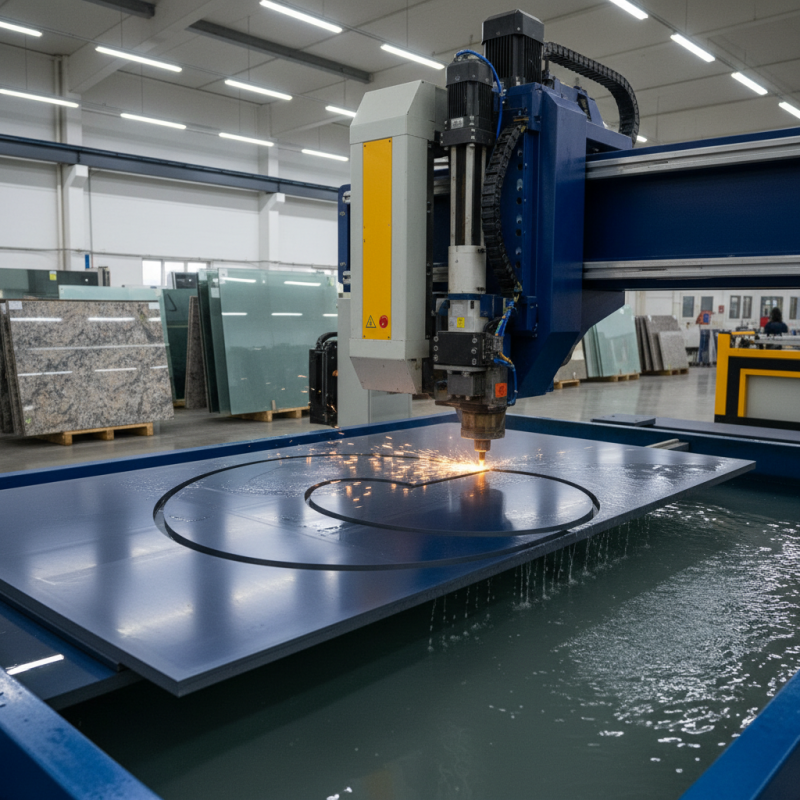
Understanding Waterjet Cutting Technology in Industrial Applications
Waterjet cutting technology has transformed how industries approach precision machining. This method utilizes high-pressure water mixed with abrasives to cut through various materials. It can seamlessly slice metals, composites, and ceramics without altering their fundamental properties. The broad applicability makes it a cornerstone in sectors like aerospace, automotive, and architecture.
One notable aspect is the minimal heat affected zone. Unlike traditional cutting methods, waterjet cutting does not introduce significant heat. This aspect is crucial, as excessive heat can weaken materials and impair structural integrity. However, maintaining the correct pressure and flow is essential. An incorrect setup can lead to inefficiency, resulting in wasted materials.
Precision is another key benefit. Waterjet cuts are incredibly accurate, often reaching tolerances of ±0.005 inches. It’s impressive but also challenging. Operators must carefully calibrate machines to achieve the desired quality. Oversights can lead to costly errors, which is a concern for many manufacturers. Understanding the technology's nuances involves ongoing learning and adaptation.
Enhanced Precision and Accuracy in Material Cutting Processes
Waterjet cutting machinery is revolutionizing industries by enhancing precision and accuracy in material cutting processes. This technology uses high-pressure water mixed with abrasives to create a focused cutting stream. As a result, manufacturers can achieve intricate shapes and designs with remarkable accuracy. The fine cutting capability minimizes material waste, making it more efficient. However, maintaining such precise settings can be challenging. Misalignments or pressure inconsistencies can lead to less effective cuts.
Moreover, waterjet cutting provides versatility across various materials, including metals, plastics, and glass. The precision achieved means that even the most complex patterns are executed with ease. Detailed designs can be cut without compromising the integrity of the materials involved. Yet, it's essential to recognize that operator skill plays a significant role. Inexperienced users might struggle with setup and adjustments, leading to potential inaccuracies.
Experimentation is key in mastering this technology. Each cut presents a learning opportunity. Operators must continually refine their techniques to maximize the benefits of waterjet cutting. The pursuit of perfection in precision cutting is ongoing, with room for improvement always present. Embracing this challenge is what drives innovation and excellence in the industry.
Versatility of Waterjet Cutting Across Various Materials
Waterjet cutting machinery stands out for its versatility across different materials. This technology can cut metals, stone, glass, and even rubber. The precision of waterjet cutting ensures clean edges and minimal waste. It is ideal for intricate designs and detailed work. Factories have seen increased efficiency due to this method. User feedback often reflects satisfaction with its adaptability.
Tips: Always consider the thickness of the material. Some materials may require specific adjustments. Experimenting with pressure can yield better results. User experiences highlight the need for constant learning in waterjet technology.
Different industries benefit greatly from waterjet cutting. For instance, the automotive sector utilizes it for complex part designs. The aerospace industry relies on its ability to handle tough materials like titanium. However, not all materials are easy to cut. Some users report difficulties with thicker or denser substances. It’s crucial to refine techniques when faced with challenges.
Top 10 Benefits of Waterjet Cutting Machinery for Industries
Environmental Benefits of Waterjet Cutting Compared to Traditional Methods
Waterjet cutting stands out as an eco-friendly alternative to traditional machining methods. Unlike processes that rely on abrasive materials or fossil fuels, waterjet technology primarily uses high-pressure water to cut materials. A study by the Lawrence Livermore National Laboratory indicates that 50% less energy is consumed compared to traditional cutting methods. This significant reduction in energy consumption translates to lower greenhouse gas emissions.
Additionally, waterjet cutting produces minimal waste. Traditional methods often result in scrap production, leading to unnecessary pollutant generation. Waterjet cutting, on the other hand, retains about 90% of material usage. Consequently, manufacturers can minimize their environmental footprint. This technology also requires no hazardous chemicals or generating fine particulate matter, making the workplace safer for employees.
Waterjet systems can process various materials without altering their physical characteristics. Preserving material integrity can result in fewer replacements and waste over time. However, while waterjet cutting is cleaner, the initial setup costs can deter some industries. Not every company can afford the transition right away. This creates a paradox: despite clear benefits, adoption isn’t uniform across all sectors.
Cost-Effectiveness and Efficiency in Industrial Operations with Waterjet Cutting
Waterjet cutting machinery significantly enhances cost-effectiveness in industrial operations. This technology utilizes high-pressure water mixed with abrasives to cut through various materials. Industries can reduce waste and lower costs, as the process minimizes material loss. The setup is straightforward, yet it invites reflection on the efficiency of existing methods. Is traditional cutting still necessary in many scenarios?
Efficiency is another major benefit. Waterjet cutting can handle complex designs with precision. This means less time spent on rework or adjustments. Projects can be completed faster, which can be a double-edged sword. Rapid completion might lead to oversights or rushed decisions, ultimately affecting quality. How often do we evaluate the balance between speed and accuracy in this industry?
The versatility of waterjet cutting also contributes to its appeal. It can cut metal, glass, and composites with ease. However, some users report learning curves when adapting to this technology. Training is vital for optimal performance. It's essential to critically examine how well operators understand the machinery. Investing time in education can lead to better outcomes and minimize operational hiccups.





