


Why Choose a Copper Busbar Extrusion Machine?

Why choose a Copper Busbar Extrusion Machine? The answer begins with rising demand for reliable electrical conductors. The International Energy Agency’s Global EV Outlook 2024 reported more than 14 million electric car sales in 2023. It also projected sales above 17 million in 2024. Renewable infrastructure is expanding too. IRENA’s Renewable Capacity Statistics 2024 recorded 473 gigawatts of new renewable capacity installed worldwide during 2023. These systems need compact, low-resistance conductors. Copper busbars often connect switchgear, inverters, transformers, batteries, and industrial distribution panels.

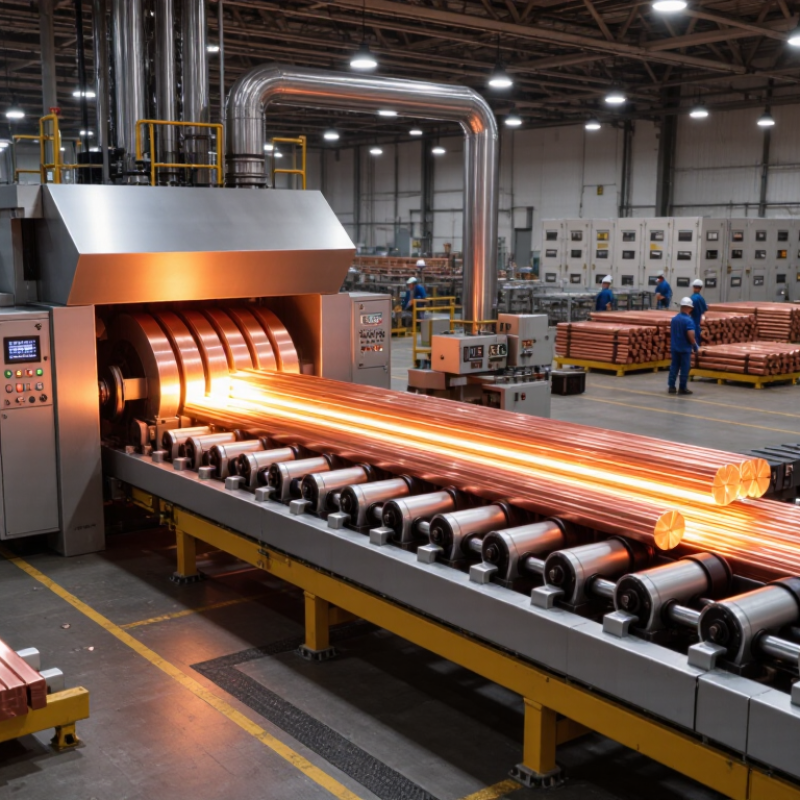
A Copper Busbar Extrusion Machine can produce continuous profiles with controlled dimensions and stable surface quality. Continuous extrusion may reduce handling steps, material waste, and joint-related inconsistencies. It can also support repeatable production of complex cross-sections. That matters when a busbar must fit a narrow cabinet channel or maintain a precise contact area. Less scrap helps. Better consistency helps more.

However, the machine is not a complete solution. Die design, copper cleanliness, temperature control, cooling speed, and inline measurement directly affect performance. A poorly specified line can create distortion, uneven conductivity, or costly rework. Engineers should compare output rate, maximum profile size, automation features, energy consumption, maintenance access, and testing capability. Independent industry data supports the market need, but factory results still require verification. Pilot trials, dimensional records, and electrical-resistance testing provide stronger evidence than brochures alone. The right decision depends on product mix, not fashion. That detail is easy to overlook.
Why Choose a Copper Busbar Extrusion Machine?

Copper’s 100% IACS Conductivity and Its Busbar Performance

Why Choose a Copper Busbar Extrusion Machine?

Copper’s 100% IACS Conductivity and Its Busbar Performance

Copper’s 100% IACS rating is a reference point, not a vague sales claim. The International Annealed Copper Standard defines this value at about 58 MS/m and 20°C. Its reference resistivity is approximately 0.01724 Ω·mm²/m. For busbars, that low resistance reduces I²R losses during continuous current flow. It also limits unnecessary heat inside switchboards and power distribution equipment.

The International Copper Association reports that copper maintains strong electrical performance while offering excellent thermal conductivity and mechanical reliability. In a real panel, a properly extruded busbar can carry current through clean edges and stable dimensions. A smooth 10 mm contact face matters when bolted joints must remain flat. Small defects can increase local heating. They are easy to underestimate.

An extrusion machine supports repeatable width, thickness, length, and surface quality. Controlled die pressure and cooling help reduce warping after the hot profile exits the die. IEC 61439 requires verification of assemblies, including temperature-rise performance, so dimensional consistency supports safer engineering decisions. Still, 100% IACS does not guarantee perfect performance. Alloy content, joint pressure, oxidation, and operating temperature can change results. This is where production experience matters. A better machine cannot correct poor material selection or careless inspection.


Why Choose a Copper Busbar Extrusion Machine?

Copper is the reference material for electrical conductivity at 20°C, defined as 100% IACS. Its high conductivity enables efficient current transfer and supports compact, reliable busbar designs.

Relative electrical conductivity values are nominal values at 20°C based on the International Annealed Copper Standard (IACS). Pure copper provides substantially higher conductivity than aluminum and common brass, helping reduce resistive losses for equivalent busbar dimensions.

How 8.96 g/cm³ Copper Density Affects Extrusion Design

Why Choose a Copper Busbar Extrusion Machine?

Copper’s density, approximately 8.96 g/cm³ at room temperature, strongly influences extrusion equipment design. The National Institute of Standards and Technology lists copper among the heaviest common engineering metals. A one-metre busbar measuring 100 × 10 mm weighs nearly 8.96 kilograms before machining.

That weight affects billet handling, die support, and take-off stability. The extrusion press must control high material loads without creating surface distortion. Reinforced guides help prevent sagging after the profile exits the die. This matters because even slight bending can increase cutting waste and complicate electrical installation.

Density also affects acceleration and cooling. Heavier profiles require steadier puller control, especially when producing long, thin busbars. The International Annealed Copper Standard assigns high-conductivity copper a reference conductivity of 100% IACS, but conductivity depends on alloy, temperature, and processing history. The International Copper Study Group continues to report strong copper demand from power networks and electrification projects, increasing pressure for consistent production.

The calculation is not perfect. Density alone does not determine press capacity. Flow stress, billet temperature, friction, and profile geometry can matter more. In practice, I would validate the design with load records and trial billets. A machine that handles the weight smoothly can reduce vibration, dimensional variation, and operator adjustments. That practical detail is easy to underestimate.

Why ASTM B187 Matters for Copper Busbar Quality

Why Choose a Copper Busbar Extrusion Machine?

ASTM B187 matters because busbar quality affects heat, current flow, and long-term safety. The standard covers copper bus bars, rods, shapes, and sections for electrical applications. It defines requirements for chemical composition, dimensions, mechanical performance, and electrical properties. A professional extrusion machine helps manufacturers control these variables continuously. Stable billet heating, accurate die alignment, and controlled cooling reduce cracks, distortion, and uneven conductivity. Small deviations can create installation problems later.

The International Energy Agency’s Global Critical Minerals Outlook 2024 identifies copper as essential for power networks and clean-energy systems. Its analysis shows copper demand from clean-energy technologies rising significantly by 2030. The U.S. Geological Survey also reported global refined copper production above 26 million metric tons in 2024. Higher demand makes consistent ASTM B187 verification more important. However, a smooth surface does not prove full compliance. Internal defects may remain hidden. This is where conductivity testing, dimensional inspection, tensile testing, and traceable records become valuable.

Tips: Match the extrusion die to the required busbar profile. Keep furnace temperature records for every batch. Check conductivity after cooling, not only before processing. Review ASTM B187 requirements with an accredited testing laboratory. In practice, operators sometimes trust appearance too much. That habit needs reconsideration. A slightly imperfect process record can reveal a serious quality risk.

Why Choose a Copper Busbar Extrusion Machine? - Why ASTM B187 Matters for Copper Busbar Quality

Evaluation Dimension Relevant ASTM B187 Consideration Verified Data or Criterion Why Extrusion Machine Quality Matters
Applicable product scope ASTM B187/B187M covers copper bar, bus bar, rod, and shapes for electrical applications. The applicable material grade, temper, dimensions, and test requirements must be specified in the purchase or production standard. A controlled extrusion process helps produce repeatable cross-sections for rectangular, square, and other custom copper profiles.
Electrical conductivity Electrical requirements depend on the copper grade and temper specified under the applicable standard. 100% IACS at 20°C corresponds approximately to 58 MS/m conductivity or 0.017241 Ω·mm²/m resistivity. Stable billet temperature, extrusion speed, and cooling control help minimize process variation that could affect electrical performance.
Dimensional accuracy Dimensional tolerances are determined by the specified product dimensions, temper, and applicable ASTM requirements or agreed order conditions. Width, thickness, corner geometry, straightness, and length should be measured against the approved drawing or specification. A rigid die system and synchronized puller reduce dimensional drift along the extruded length.
Cross-sectional consistency The finished bus bar must maintain the specified shape and dimensions throughout the product length. Measure the cross-section at the front, middle, and rear of each production length, with results recorded in a quality report. Accurate billet alignment and consistent metal flow help prevent thickness fluctuation, edge distortion, and twist.
Surface quality The product should be free from defects that impair its intended electrical or mechanical use, subject to the applicable specification. Inspection should check for cracks, laps, seams, scratches, die lines, inclusions, and excessive oxidation. Proper die condition, lubrication practice, billet cleanliness, and handling reduce surface defects and rework.
Mechanical properties Tensile strength, elongation, and hardness are dependent on the copper grade and temper selected. Mechanical test results should be compared with the exact ASTM B187/B187M grade-and-temper requirement rather than a generic copper value. Controlled deformation and cooling support consistent mechanical properties from batch to batch.
Thermal and current-carrying design ASTM B187 establishes material and product requirements; system current rating also depends on installation and thermal conditions. Copper melting point: approximately 1,084.62°C. Actual operating temperature and allowable current require an electrical and thermal design calculation. Uniform dimensions provide predictable cross-sectional area, contact fit, resistance, and heat dissipation.
Material traceability Compliance should be supported by identification of grade, temper, heat or lot, dimensions, and applicable test results. A complete inspection record normally includes chemical composition, conductivity or resistivity, dimensions, visual inspection, and mechanical test data where required. Digital process records and inline measurement systems make it easier to link finished lengths with production conditions and test results.
Production efficiency ASTM compliance does not prescribe a specific machine configuration; the process must consistently produce conforming material. Key productivity indicators include usable yield, setup time, scrap rate, dimensional capability, and inspection frequency. A suitable extrusion line can reduce machining allowance, support near-net-shape profiles, and improve repeatability for recurring sections.

Note: ASTM B187/B187M requirements vary according to copper grade, temper, product form, dimensions, and edition of the standard. Final acceptance should always be based on the specific purchase specification and applicable ASTM edition.

How Continuous Extrusion Improves Dimensional Accuracy and Throughput

Why Choose a Copper Busbar Extrusion Machine?

A copper busbar extrusion machine forms and sizes conductor profiles in one continuous process. Copper feedstock enters a chamber, passes through a shaped die, and exits as a steady strip. This arrangement reduces repeated handling, which can cause scratches, twists, and inconsistent dimensions. In production, that difference becomes visible at the cutting station. Clean edges matter.

Continuous extrusion supports tighter control because material flow remains more stable than separate forming stages. Operators can monitor die temperature, pressure, line speed, and cooling conditions while the profile moves forward. Inline gauges can check width and thickness near the exit. Adjustments can then happen before an entire coil drifts outside tolerance. A stable process also raises throughput. Less stopping means fewer scrap ends and more usable copper per shift.

However, accuracy is not automatic. Poor feedstock preparation, worn tooling, or a misaligned puller can still distort the bar. Small errors grow quickly. Experienced technicians record measurements from each run and compare them with electrical and mechanical requirements. They inspect surface quality, corner radii, and burr formation, not only width. These checks support reliable busbars for switchgear and industrial assemblies. Yet even a well-tuned line needs review after material changes or seasonal temperature shifts. A setup that worked yesterday may need correction today. That limitation is easy to overlook.

How IEC 61439 Guides Busbar Safety in Low-Voltage Assemblies

Why Choose a Copper Busbar Extrusion Machine?

As electricity demand rises, low-voltage assemblies face tighter space and higher thermal stress. The International Energy Agency’s Electricity 2024 report forecasts global electricity demand growth of about 3.4% annually through 2026. This growth increases pressure on safer, more consistent distribution equipment.

IEC 61439-1:2020 defines 13 design verification characteristics for low-voltage assemblies. These include temperature rise, dielectric properties, short-circuit withstand, clearances, creepage distances, and mechanical operation. A copper busbar extrusion machine supports these requirements through stable dimensions, controlled profiles, and repeatable surface quality. In practical production, accurate extrusion helps maintain reliable contact areas inside compact switchboards. Small dimensional errors can affect spacing and heat dissipation.

The machine is only one part of compliance. Engineers still need design calculations, temperature-rise testing, and verification under the final assembly conditions. IEC 61439-2:2020 also requires attention to functional units, protective circuits, and internal connections. Copper conducts heat and current well, but poor tooling alignment can create uneven thickness. That detail is easy to overlook. Production teams should record extrusion speed, cooling conditions, and dimensional results for each batch. I have seen manufacturing plans focus heavily on output speed, while inspection records remain too general. That approach needs reconsideration. Reliable safety depends on controlled manufacturing and documented verification, not equipment selection alone.

Powder Coat Booths

For those larger-sized parts, or smaller quantity runs, we have 2 independent powder coat booths and ovens. The quality, durability and affordability of today’s powder coating finishes make this the process of choice for world-class companies.

Powder coating advantages over other forms of coating are many. Materials used in the Powder coating process can be metals and non-metals that come in a multitude of thicknesses, textures, colors, etc. Another of Powder coating’s biggest advantages over conventional coatings is its ability to create finishes in many different textures. Powder Coating Booths allow us the ability to apply these advantages to large products.

Wet Paint Line

Tri-State Fabricators runs a full-service conveyor line for painting. Wet painting can provide protection or decoration to many different part styles. From start to finish, every project is easier to undergo random and point-based inspection by our skilled painting team.

Advantages to our Wet Paint Line are these lines start with product prep and ends with a thorough inspection of a high quality finished product. Our ability to complete large and small projects with a superior finish and doing so in a timely and economical fashion. This passes along the savings in production to our customers. When powder coating ins not an option, our Wet Paint Line gets the job done right the first time.

Wet Paint Booths

When the parts get big and heavy we roll-out our custom paint racks and oversize booth. By utilizing our partnerships with all the major paint brands, we can match virtually any color with wet paint.

The advantages of having access to a Wet Paint Booth are many. Large projects of many different shapes can be loaded into the booth. The Wet Paint Booth offers an environment that is much more controlled than a typical parts painting operation.

Not only are they used because of their controlled environment, but they’re are also advantageous when it comes to applying paint to parts that are needed in industries that require specialty coatings such as medical, aerospace, etc.

Military CARC

Our military forces have some very high standards when it comes to the finish of their vehicles and equipment. From the first pre-treatment step to final coat, it takes a great deal of knowledge and experience to protect the men and women of our armed forces. They deserve only the best, and Tri-State Fabricators provides it.

All of our processes are closely monitored by our staff and management teams. Both of which are highly trained in the processes of metal fabrication and finishing. Tri-State Fabricators’ goal is to always fully satisfy each and every customer, including the military. We will always put a 110% into what we do.

Glass-Bead Blasting

Abrasive media blasting is an excellent way to remove old paint, rust, and increase the paint/powder adhesion. Glass beads produce a much smoother and brighter finish than angular abrasives; leaving the part clean yet without any dimensional change. Chemically inert and environmentally friendly, we can recycle our beads approximately 30 times; making them a more preferred method of metal cleaning or surface finishing.

Advantages to Glass Bead Blasting are many. Glass bead blast media is used when a project is needing rough surfaces need to become smooth for applications of coatings such as paint. It is typically used to clean paint and rust from a product surface without deforming the surface it is being used on. Overall, compared to many other blasting media, Glass Bead Blasting is a very economical choice and those savings are always passed on to our customers.

Part Washing

Tri-State Fabricators utilize a zinc phosphate wash to clean and etch the material to ensure the best paint adhesion possible. The unique design of our 3-stage wash system does the work like a 5-stage. From Cleaning and rinsing to conversion coating and post-treatment, Our Part Washing process is a complete service and works throughout the fabrication service and the finishing service.

Along with the previously mentioned benefits, Curing is a vital chemical reaction that leaves the product finish hard and relatively safe from mild abrasion and aggressive corrosion. This process can be done in more than one way; ambient air-dry or in curing ovens at temps that exceed 240°.

Burn-Off Oven

From fixing paint mistakes (someone else’s of course) to simply cleaning our paint line hooks, our burn-off oven is put to good use. After a quick burn-off, a little clean up, and a fresh coat of paint, your parts will look better than new.

Why does our Burn-Off Oven work so well? Because super heating the air around parts turns the materials into ashes. From paint and powder coatings to rubber and machining oils, high temps do the job without degrading the integrity of the part.

Masking

Masking is a vital part of producing high quality products. We have die-cut masking patterns to protect machined surfaces as well as a wide range of plugs and caps to protect threaded holes and bolts. We provide permanent and temporary masking.

Masking allows the selected sections of a product to be protected from a fabrication or finishing service. This can be with both chemicals when etching and tapes, paints when only finishing just a section of the product. Masking is great in aiding the customization process of a project.

Screen Printing

Screen printing is a photographic process that transfers artwork onto a porous nylon screen which allows colored ink to flow through the screen and be deposited on an aluminum or plastic component. We can generally have just about any design created onto a screen for your parts.

Some of the advantages of Screen Printing are, brand recognition for your business displaying on your products, assembly instructions, product warnings/hazards, etc. Tri-State Fabricators produces Screen Printing of the highest quality so you know it’s durable.

Metal Finishing

Metal Finishing is the art of treating the exterior portion of product, often metal but can also be made of other materials, so that the surface is clean and free of any debris. Then the process of applying coats or either paint of powder coat takes place. This coating process improves the quality of the product in both appearance and resistance to wear and corrosion.

Tri-State Fabricators, Inc., understands that a project typically isn’t complete until a high-quality finish has been added to your product. This is why our painting and powder coating teams continuously inspect the products throughout the Metal Finishing process.
