Why Choose a Pneumatic Butterfly Valve?
A Pneumatic Butterfly Valve can turn a compact quarter-turn motion into fast, controlled flow isolation. Its disc rotates inside the pipe, while a pneumatic actuator supplies the force. On a plant floor, that can mean fewer manual turns, remote operation, and a clear response to an air signal. The arrangement is common in water systems, HVAC, and many process lines. Still, compact does not mean suitable for every duty.
A practical engineering principle captures the decision: “Match the valve, actuator, and process conditions before selecting the package.” This is an editorial summary, not a quotation attributed to a named expert. For a real installation, check the medium, pressure, temperature, pipe size, required shutoff, and available instrument air. Also consider whether the actuator needs spring return or double-acting control. These details shape performance more than a product label does.
The benefits are tangible. A properly sized unit can open or close quickly, fit between flanges, and reduce operator effort. Maintenance teams may also value its relatively simple motion. But there are trade-offs. Disc position affects flow, elastomer seats can limit temperature or chemical compatibility, and poor sizing can create sluggish or unstable control. I would not choose one from catalog dimensions alone. A small mismatch in air pressure or torque can matter. This guide explains where a Pneumatic Butterfly Valve makes sense, what to verify, and which assumptions deserve a second look before purchase.
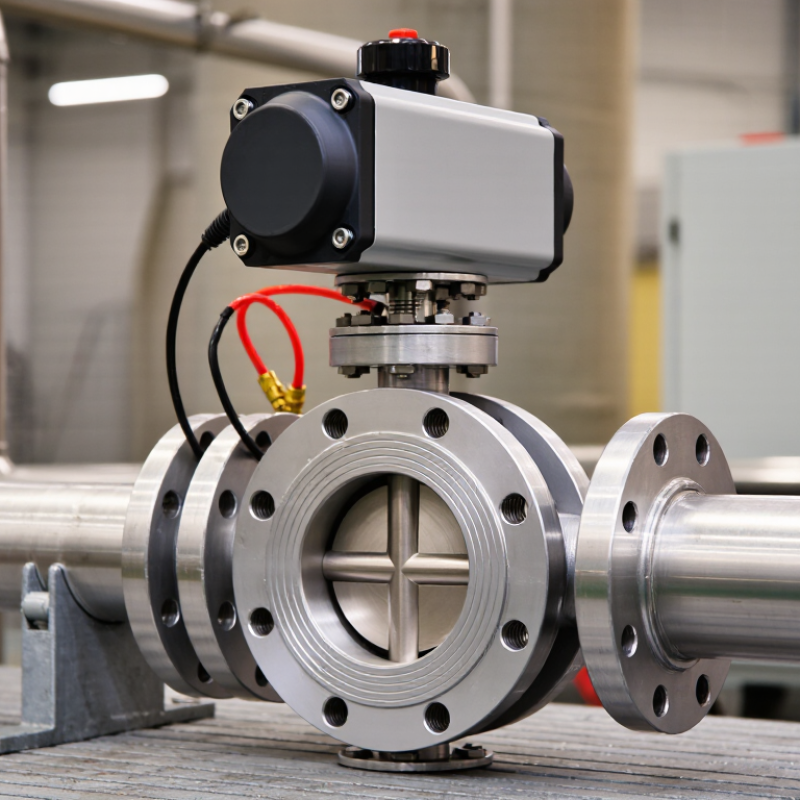
What Is a Pneumatic Butterfly Valve?
A pneumatic butterfly valve uses compressed air to turn a disc inside a pipe. The disc rotates about a quarter turn to open or close the flow. Its main parts are the valve body, disc, stem, seat, and pneumatic actuator. The actuator may use air to open, close, or position the valve, depending on its design. A solenoid valve or control system can direct the air signal. This makes remote operation practical where manual access is difficult.
These valves are used in water, air, and other compatible services. Material choice matters: the disc and seat must suit the fluid, temperature, and pressure. A butterfly valve can regulate flow in some applications, but it is not always the best choice for precise control. I have seen selection focus too heavily on pipe size. Operating pressure, required flow range, cycle frequency, and the actuator’s fail position also deserve attention. The wrong seat material can wear early or leak. Small details matter.
Tips: Confirm the fluid and operating conditions before choosing materials. Check air pressure and actuator torque against the valve requirements. Test the full open-and-close sequence after installation. It sounds simple. Still, it is easy to overlook.
Why Choose a Pneumatic Butterfly Valve? — What Is a Pneumatic Butterfly Valve?
A pneumatic butterfly valve uses compressed air to rotate a disc through a quarter-turn, opening or closing the flow path. Pneumatic actuators commonly operate within an air-supply range of about 3–8 bar, although the required pressure depends on the actuator and valve design. Pneumatic actuation is often chosen when rapid, remote, or automated operation is needed.
How Does a Pneumatic Butterfly Valve Work?
A pneumatic butterfly valve controls flow with a circular disc mounted inside a pipe. The disc connects to a stem, which links it to a pneumatic actuator. Compressed air moves a piston or vane inside the actuator, turning the stem and disc. The movement is usually a quarter turn. In the open position, the disc sits mostly parallel to the flow; when closed, it turns across the pipe and presses against a seat. Simple motion, but sealing depends on correct sizing and installation.
An actuator may use air to open and close the valve, or a spring to return it when air is lost. A solenoid valve can direct the air, while a positioner may adjust disc angle in response to a control signal. This allows more than simple on-off operation, though not every butterfly valve suits precise throttling. Picture a valve on a water line: a small disc movement can noticeably change flow, especially near the closed position. Check the required air pressure, media, temperature, and fail position before selection. A compact valve is not automatically the right one; real piping conditions can be less tidy than a specification sheet.
Why Choose a Pneumatic Butterfly Valve? — How Does It Work?
| Aspect | How It Works | Practical Benefit or Consideration |
| Basic valve operation | A circular disc sits in the flow path and rotates, typically through a quarter turn (90 degrees), between open and closed positions. | The short rotational movement enables quick operation and requires relatively little installation space compared with many multi-turn valve designs. |
| Pneumatic actuator | Compressed air moves a piston or diaphragm inside an actuator. The actuator’s output turns the valve stem and disc. | Actuation can be integrated into automated control systems. The required air pressure and actuator size depend on valve size, pressure conditions, and operating torque. |
| Double-acting configuration | Air pressure is applied to drive the actuator in both directions: one air signal moves the valve one way, and another moves it back. | Provides powered movement in both directions. A suitable air supply is needed for both opening and closing. |
| Spring-return configuration | Air pressure moves the actuator in one direction; springs return it when air pressure is removed. | Can be selected to move the valve to a defined fail-open or fail-closed position, depending on actuator and valve setup. The required safety response should be specified during selection. |
| Flow control | When the disc is fully open, flow passes around the disc. At intermediate positions, the disc restricts the flow; when closed, the disc is positioned across the passage. | Suitable for on/off service and, with an appropriate valve, actuator, and control system, some throttling applications. Control performance depends on the valve design and operating conditions. |
| Seat and sealing | A resilient or metal seat contacts the disc to limit leakage when the valve is closed. Seat and disc materials are selected for the process conditions. | Material compatibility, temperature, pressure, fluid properties, and required leakage class should all be checked before choosing a valve. |
| Automation and feedback | Solenoid valves can direct air to the actuator, while limit switches or positioners can provide position indication or modulate valve position. | Options support remote operation and process integration. Electrical accessories and control signals must match the system requirements. |
| Common advantages | The design uses a rotating disc and typically has a compact face-to-face profile. Pneumatic actuation provides powered operation without an electric motor at the actuator. | Often considered where space, rapid operation, and automation are priorities. Actual operating speed and suitability depend on the selected equipment and air supply. |
| Selection checks | Selection involves the valve size and connection, pressure and temperature limits, body and trim materials, actuator type, and required control or fail position. | Confirm the complete assembly’s ratings and compatibility against the application. Do not assume every butterfly valve is suitable for every fluid or for tight shutoff. |
Note: Performance and suitability vary by valve design, materials, actuator configuration, and service conditions. Consult the applicable technical documentation when specifying equipment.
What Advantages Does Pneumatic Actuation Provide?
Why Choose a Pneumatic Butterfly Valve?
What Advantages Does Pneumatic Actuation Provide?
Pneumatic actuation turns compressed air into quick, repeatable valve movement. That makes it useful when a process needs frequent opening and closing, or when operators must control a valve from a nearby panel. A compact actuator can fit above a butterfly valve without taking much floor space. In a treatment line, for example, an operator can adjust flow without walking to a damp, noisy pipe rack. Response speed depends on actuator sizing, air pressure, and valve conditions.
Pneumatic systems can also support automatic process control. A positioner can adjust the valve in response to a control signal, while a spring-return actuator can move the valve to a chosen position if air pressure is lost. This behavior must be specified and tested; it is not guaranteed by every actuator. Pneumatic equipment can be practical where electrical actuation is less convenient, but it still depends on a reliable air supply. Moisture, leaks, or dirty air can cause sluggish movement. That detail is easy to overlook.
Tips: Confirm the required fail position, available air pressure, and cycling rate before choosing an actuator. Check the air filter and connections during routine maintenance. A valve that moves smoothly on a bench may behave differently in a hot, vibrating installation. Sizing deserves a second look.
Where Are Pneumatic Butterfly Valves Commonly Used?
Pneumatic butterfly valves are common in water and wastewater plants, where large pipes need quick, remote isolation. Their quarter-turn discs fit compact pipework, and compressed-air actuators can operate valves in damp galleries or hard-to-reach pump rooms. EPA’s 2022 Clean Watersheds Needs Survey estimated $630.1 billion in U.S. wastewater and stormwater infrastructure needs over 20 years. This is infrastructure spending, not a count of valve installations, but it shows the scale of systems requiring dependable flow control. Scale matters. In practice, operators still need to check actuator sizing against pressure and cycle frequency.
They also appear in commercial HVAC systems, especially chilled-water loops, cooling towers, and plant rooms. The U.S. Energy Information Administration’s 2018 Commercial Buildings Energy Consumption Survey counted 5.9 million commercial buildings, covering 97 billion square feet. That survey does not track valve types, but it illustrates the broad building stock served by hydronic systems. Pneumatic valves are also used in power generation and manufacturing lines handling compatible liquids or gases. Not everywhere. For precise throttling, solids-laden flow, or severe cavitation risk, a butterfly valve may be the wrong choice; disc design, materials, and control range need careful review.
What Factors Should Guide Valve Selection?
Why Choose a Pneumatic Butterfly Valve? What Factors Should Guide Valve Selection?
Choosing a pneumatic butterfly valve starts with the process, not the actuator. Check the medium, temperature, pressure, flow rate, and required shutoff leakage. A valve handling clean water may need different disc and seat materials from one exposed to abrasive slurry. Fit matters. Confirm the pipe size, available installation space, and whether the valve must throttle flow or provide on-off service.
For actuator sizing, use the valve’s torque requirements across the full operating range, then account for minimum air-supply pressure and cycle frequency. Specify the required fail position, too: spring-return actuators can move the valve on loss of air, but the correct action depends on the process risk.
Plant air has a cost. The U.S. Department of Energy’s Improving Compressed Air System Performance sourcebook reports that compressed air uses about 10% of U.S. industrial electricity, rising to as much as 30% in some facilities. That makes leakage, air pressure, and frequent cycling worth checking—not just purchase price.
For mechanical compatibility, ISO 5211 covers mounting interfaces for part-turn actuators, while API Standard 609 addresses butterfly valve design. Neither replaces application-specific checks. A sizing calculation can still miss sticky service, poor air quality, or a seat that wears faster than expected. That deserves a second look. Verify operating conditions with the system designer and review maintenance access before specifying the valve.





