


Choosing a Bedroom Door Lock is not merely a design decision. It affects privacy, sleep, and everyday confidence. A closed bedroom door should create a clear personal boundary, especially in shared homes, apartments, and family spaces.
A suitable lock can prevent casual entry without creating unnecessary fear. Privacy locks with interior buttons, turn pieces, or emergency release holes offer simple control. Keyed locks provide stronger access management, but they also require responsible key storage. The right choice depends on who uses the room, how often access is needed, and whether fire-safety guidance applies. Small details matter. A loose latch, shallow strike plate, or poorly aligned door can weaken an otherwise reliable product.
Locksmith educator Wayne Winton has offered a practical reminder: “Security works best when people use it consistently.” That principle applies here. A complicated Bedroom Door Lock may look impressive, yet frustrate children, older adults, or tired homeowners. A simple lock, installed correctly, may perform better every night. Still, no lock is perfect. It cannot replace careful habits, strong doors, or clear household communication.
This guide examines privacy functions, lock types, installation quality, and daily usability. It also considers what manufacturers often overlook: noise, emergency access, and the small gap beneath a door. Readers will gain practical criteria for comparing products, not just attractive features. The best decision may not be the most expensive one. It should be dependable, understandable, and appropriate for the room. That sounds obvious. It is often missed.
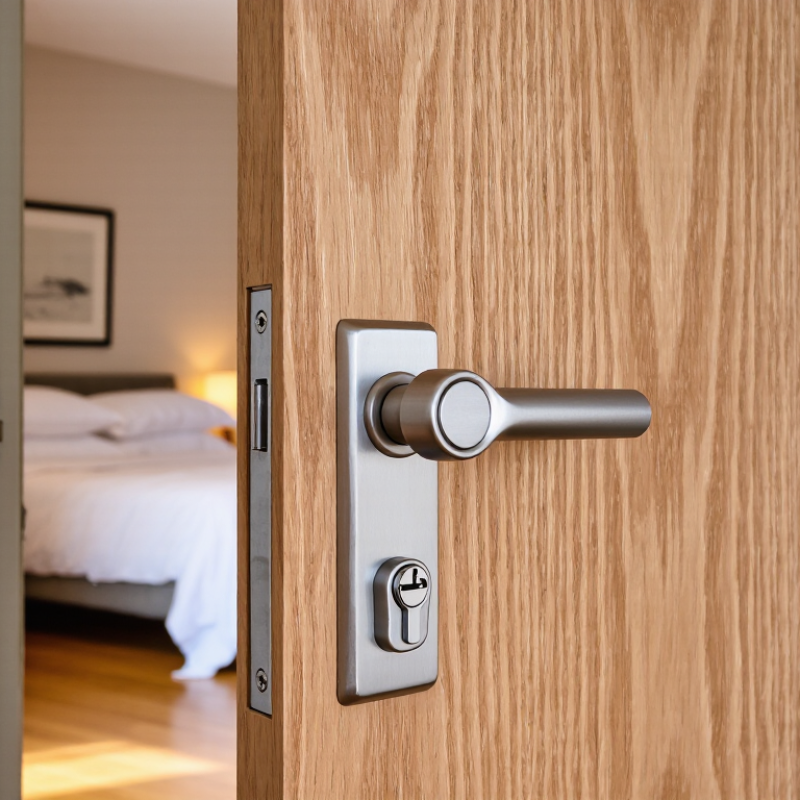
A bedroom door lock is a device that controls entry while protecting personal privacy. Unlike a front-door lock, it usually focuses on preventing accidental entry rather than resisting forced attacks. Common designs include privacy knobs, lever locks, and compact deadbolts. Each uses a latch or bolt that moves into a strike plate fixed to the door frame.
Here is how the mechanism works. Turning the handle retracts the spring latch, allowing the door to open. Pressing a button or turning a thumbturn extends the latch again. Some privacy locks include a small emergency release hole on the outside. A straight tool can release the lock during an urgent situation, such as a child becoming trapped inside. This feature should never be blocked.
Installation accuracy matters. The latch must align with the strike plate, or the handle may feel stiff. A practical check is simple: close the door gently and test the lock several times. If the door needs force, the frame may have shifted, or the hinges may be loose. A lock can provide privacy without offering strong security. That distinction is easy to miss. Electronic models may use codes or batteries, but forgotten batteries can create an inconvenient failure. Mechanical locks are less complex, though their internal springs can wear over time. Choose a design that matches the room, the user’s needs, and the door’s existing holes. Truthfully, no bedroom lock is perfect; careful fitting often matters as much as the lock itself.

A bedroom door lock creates a clear boundary inside the home. It helps protect sleep, private conversations, clothing, documents, and personal devices from unwanted access. The need is practical. The FBI Crime Data Explorer recorded more than 847,000 burglary offenses in the United States during 2022. A bedroom lock cannot stop every intrusion, but it can add another delay and visible barrier.
Privacy also matters when everyone has permission to enter the home. Children, guests, roommates, and maintenance workers may not understand personal boundaries. A privacy lock with an interior thumb turn allows fast exit during an emergency. A keyed lock can offer stronger control, but the key must remain accessible to trusted users. The Bureau of Justice Statistics’ National Crime Victimization Survey separates attempted and completed household burglaries, showing why layered protection remains useful.
Small details matter. The strike plate should sit firmly in the door frame, with long screws secured into solid framing. A loose latch may feel secure but fail under pressure. Sound still travels through thin doors, so a lock cannot replace respectful household rules. It also should not be used to trap anyone. That limitation deserves honest attention. A simple test helps: close the door, engage the lock, and check whether the latch fully seats without forcing the handle. Sources: FBI Crime Data Explorer, 2022; Bureau of Justice Statistics, National Crime Victimization Survey.
Bedroom door locks add practical protection by combining a closing latch, controlled access, and an emergency-entry feature. Privacy locks are designed to prevent casual entry, while keyed and keypad locks provide stronger access control. The scores represent the number of common privacy and security functions typically provided by each lock type, not laboratory test results.
A bedroom door lock can strengthen home security by controlling access to a private space. It helps protect personal documents, electronics, medication, and valuables from casual entry. A solid latch also keeps the door closed when children or guests move around the home. Small detail. Better control.
In practical use, a lock works best when paired with a strong door, secure hinges, and a well-maintained frame. Privacy locks are convenient for daily use, while keyed locks offer stronger access control. However, a bedroom lock is not a complete security system. It cannot replace exterior door locks, window protection, or a reliable alarm. Fire safety also matters, so occupants should be able to exit quickly during an emergency. I once viewed an interior lock as a simple privacy feature. That assumption was incomplete. Its value depends on correct installation and sensible household routines.
Tips: Choose a lock that matches the door’s thickness and swing direction. Test it monthly for smooth operation. Keep an emergency access method available to trusted household members. Avoid storing a key in an obvious nearby location. Check that the door opens freely from inside. A lock that sticks is not dependable. Consider who needs access before selecting a keyed design, especially in shared homes. A short conversation can prevent confusion later.
| Lock Type | Primary Privacy Function | Security Contribution | Typical Operation | Emergency Access Feature | Best-Suited Use |
|---|---|---|---|---|---|
| Privacy Button Lock | Provides temporary privacy by locking from inside the bedroom. | Discourages casual entry but is not designed as a high-security barrier. | Push-button or turn-button inside the room; normally operated with a lever or knob outside. | Usually includes an exterior emergency-release slot or pinhole. | Bedrooms, guest rooms, and interior residential doors. |
| Turn-Button Privacy Lock | Allows occupants to lock the door without carrying a key. | Creates a clear privacy boundary and helps prevent unintentional entry. | Thumb turn on the interior side; lever or knob on the exterior side. | Commonly released from outside with a small tool or coin, depending on the design. | Family bedrooms and rooms where convenient daily use is important. |
| Keyed Entry Lock | Can provide privacy when the door is locked with a key. | Offers stronger resistance to unauthorized entry than a basic passage or privacy lock. | Key operation from the outside and a thumb turn or key operation from inside. | Interior thumb turns allow quick exit; local building and fire-safety requirements should be followed. | Bedrooms requiring additional control over access. |
| Deadbolt | Provides firm door locking but is less convenient for frequent bedroom privacy use. | Uses a solid bolt that generally provides greater resistance to forced movement than a spring latch alone. | Turned with a key or interior thumb turn. | Single-cylinder versions typically allow rapid operation from inside; installation must not obstruct emergency escape. | Bedroom doors that also open to an exterior area or require stronger access control. |
| Keypad Lock | Allows residents to lock the room without using a physical key. | Access codes can be changed or shared selectively, reducing the need for copied keys. | PIN code, touchpad, or mechanical push-button entry, depending on the model. | May include an interior thumb turn, mechanical override, or emergency power contact. | Homes needing key-free access and convenient code management. |
| Smart Lock | Supports remote or automatic locking features when properly configured. | May provide access logs, temporary permissions, and notifications; cybersecurity and battery management are important. | Mobile app, PIN, fingerprint, key, or automatic locking, depending on the product. | Should include a reliable interior exit method and a backup access option. | Connected homes and households that need controlled, trackable access. |
| Mortise Lock | Can combine a latch and locking mechanism within the door edge. | Its enclosed case and integrated construction can provide robust everyday door security when correctly installed. | Lever handle, key cylinder, thumb turn, or a combination of these controls. | Interior hardware should permit quick operation without a key where required for safe exit. | Solid interior doors and installations needing integrated hardware. |
Practical selection guidance: Choose a privacy lock for everyday bedroom use, a keyed lock or deadbolt when stronger access control is needed, and a keypad or smart lock when key-free entry is a priority. Always verify door thickness, backset, frame strength, emergency-release requirements, and applicable local building or fire-safety rules before installation.
Bedroom door locks come in several forms, and each suits a different privacy or security need. Privacy knobs and levers are common for bedrooms. They usually lock from inside and open with a small emergency release outside. This design prevents casual entry, but it does not resist forced entry well. It works best for shared homes, children’s rooms, and guest spaces.
Keyed entry locks provide stronger resistance when the door needs controlled access. They require a key outside and a turn button inside. A separate deadbolt can add protection, but bedroom doors still need a quick exit during emergencies. Keypad and electronic locks remove the need for physical keys. Some offer temporary codes, audit records, and automatic locking. However, batteries can fail. Keep a mechanical override or fresh batteries nearby.
Sliding bolts and surface bolts are simple, affordable choices for added privacy. They can feel secure, yet they may slow emergency access. Door thickness, frame strength, and strike-plate screws matter as much as the lock itself. A weak frame can defeat an expensive mechanism. Check that the door closes smoothly without forcing the latch. I would also avoid relying on one feature alone. People often choose a lock for its appearance, then discover that privacy matters more than maximum security. Local building and fire-safety rules should guide installation, especially in bedrooms used for sleeping.
Choosing the right bedroom door lock begins with the door itself. Measure its thickness, the backset, and the existing borehole before shopping. A lock that looks suitable may not fit the latch or strike plate. For everyday privacy, a turn-button lock often works well. A keyed lock offers stronger control, but keep an emergency key in an accessible, agreed location.
I once replaced a loose bedroom lock without checking the door frame. The latch missed the strike plate by a few millimeters, so the door never closed smoothly. Measure twice. Examine the hinges, frame, and wood for damage. Choose solid hardware with a firm latch, smooth operation, and clear installation instructions. Check local building and fire-safety requirements, especially when the room may need quick access during an emergency.
Installation requires a screwdriver, tape measure, pencil, and sometimes a drill. Remove the old lock carefully, then place the new latch with its bevel facing the closing direction. Mark the strike plate and test the alignment before tightening every screw. The door should close without force, and the handle should not wobble. Do not overtighten screws in soft wood. After installation, test the lock from both sides several times. A small mistake can become a daily annoyance. Recheck it after a week, because wood can shift with humidity.


For those larger-sized parts, or smaller quantity runs, we have 2 independent powder coat booths and ovens. The quality, durability and affordability of today’s powder coating finishes make this the process of choice for world-class companies.
Powder coating advantages over other forms of coating are many. Materials used in the Powder coating process can be metals and non-metals that come in a multitude of thicknesses, textures, colors, etc. Another of Powder coating’s biggest advantages over conventional coatings is its ability to create finishes in many different textures. Powder Coating Booths allow us the ability to apply these advantages to large products.
Tri-State Fabricators runs a full-service conveyor line for painting. Wet painting can provide protection or decoration to many different part styles. From start to finish, every project is easier to undergo random and point-based inspection by our skilled painting team.
Advantages to our Wet Paint Line are these lines start with product prep and ends with a thorough inspection of a high quality finished product. Our ability to complete large and small projects with a superior finish and doing so in a timely and economical fashion. This passes along the savings in production to our customers. When powder coating ins not an option, our Wet Paint Line gets the job done right the first time.
When the parts get big and heavy we roll-out our custom paint racks and oversize booth. By utilizing our partnerships with all the major paint brands, we can match virtually any color with wet paint.
The advantages of having access to a Wet Paint Booth are many. Large projects of many different shapes can be loaded into the booth. The Wet Paint Booth offers an environment that is much more controlled than a typical parts painting operation.
Not only are they used because of their controlled environment, but they’re are also advantageous when it comes to applying paint to parts that are needed in industries that require specialty coatings such as medical, aerospace, etc.
Our military forces have some very high standards when it comes to the finish of their vehicles and equipment. From the first pre-treatment step to final coat, it takes a great deal of knowledge and experience to protect the men and women of our armed forces. They deserve only the best, and Tri-State Fabricators provides it.
All of our processes are closely monitored by our staff and management teams. Both of which are highly trained in the processes of metal fabrication and finishing. Tri-State Fabricators’ goal is to always fully satisfy each and every customer, including the military. We will always put a 110% into what we do.
Abrasive media blasting is an excellent way to remove old paint, rust, and increase the paint/powder adhesion. Glass beads produce a much smoother and brighter finish than angular abrasives; leaving the part clean yet without any dimensional change. Chemically inert and environmentally friendly, we can recycle our beads approximately 30 times; making them a more preferred method of metal cleaning or surface finishing.
Advantages to Glass Bead Blasting are many. Glass bead blast media is used when a project is needing rough surfaces need to become smooth for applications of coatings such as paint. It is typically used to clean paint and rust from a product surface without deforming the surface it is being used on. Overall, compared to many other blasting media, Glass Bead Blasting is a very economical choice and those savings are always passed on to our customers.
Tri-State Fabricators utilize a zinc phosphate wash to clean and etch the material to ensure the best paint adhesion possible. The unique design of our 3-stage wash system does the work like a 5-stage. From Cleaning and rinsing to conversion coating and post-treatment, Our Part Washing process is a complete service and works throughout the fabrication service and the finishing service.
Along with the previously mentioned benefits, Curing is a vital chemical reaction that leaves the product finish hard and relatively safe from mild abrasion and aggressive corrosion. This process can be done in more than one way; ambient air-dry or in curing ovens at temps that exceed 240°.
From fixing paint mistakes (someone else’s of course) to simply cleaning our paint line hooks, our burn-off oven is put to good use. After a quick burn-off, a little clean up, and a fresh coat of paint, your parts will look better than new.
Why does our Burn-Off Oven work so well? Because super heating the air around parts turns the materials into ashes. From paint and powder coatings to rubber and machining oils, high temps do the job without degrading the integrity of the part.
Masking is a vital part of producing high quality products. We have die-cut masking patterns to protect machined surfaces as well as a wide range of plugs and caps to protect threaded holes and bolts. We provide permanent and temporary masking.
Masking allows the selected sections of a product to be protected from a fabrication or finishing service. This can be with both chemicals when etching and tapes, paints when only finishing just a section of the product. Masking is great in aiding the customization process of a project.
Screen printing is a photographic process that transfers artwork onto a porous nylon screen which allows colored ink to flow through the screen and be deposited on an aluminum or plastic component. We can generally have just about any design created onto a screen for your parts.
Some of the advantages of Screen Printing are, brand recognition for your business displaying on your products, assembly instructions, product warnings/hazards, etc. Tri-State Fabricators produces Screen Printing of the highest quality so you know it’s durable.
Metal Finishing is the art of treating the exterior portion of product, often metal but can also be made of other materials, so that the surface is clean and free of any debris. Then the process of applying coats or either paint of powder coat takes place. This coating process improves the quality of the product in both appearance and resistance to wear and corrosion.
Tri-State Fabricators, Inc., understands that a project typically isn’t complete until a high-quality finish has been added to your product. This is why our painting and powder coating teams continuously inspect the products throughout the Metal Finishing process.

