


When you press a door-lock button, a simple movement begins an electronic sequence. That small action can secure every door within seconds. The automotive door lock switch is the driver’s direct control for this process. In most modern vehicles, it sends a low-voltage signal to a body control module. The module interprets the request and activates the door-lock actuators. These small motors move mechanical rods inside each door. You may hear a soft click, followed by the latch engaging. That sound is useful, but it does not prove complete locking.
The exact design varies between vehicles. Some switches use separate lock and unlock circuits. Others communicate through a vehicle network, such as CAN communication. A technician may check fuse condition, wiring continuity, switch resistance, and actuator movement. A scan tool can also reveal stored body-control faults. Do not assume a silent switch has failed immediately. A weak battery, damaged wiring, or a defective actuator can create similar symptoms. The simple explanation is helpful, but incomplete. Real diagnosis needs evidence.
This guide explains how the switch works, where its signal travels, and why failures occur. It also connects the button’s behavior with practical inspection steps. For example, a loose connector may interrupt locking when the door vibrates over rough pavement. A worn switch may feel unusually soft or respond only after repeated presses. Manufacturer service information remains the most reliable reference for testing procedures. Personal experience helps identify patterns, but careful measurements prevent expensive guesses.
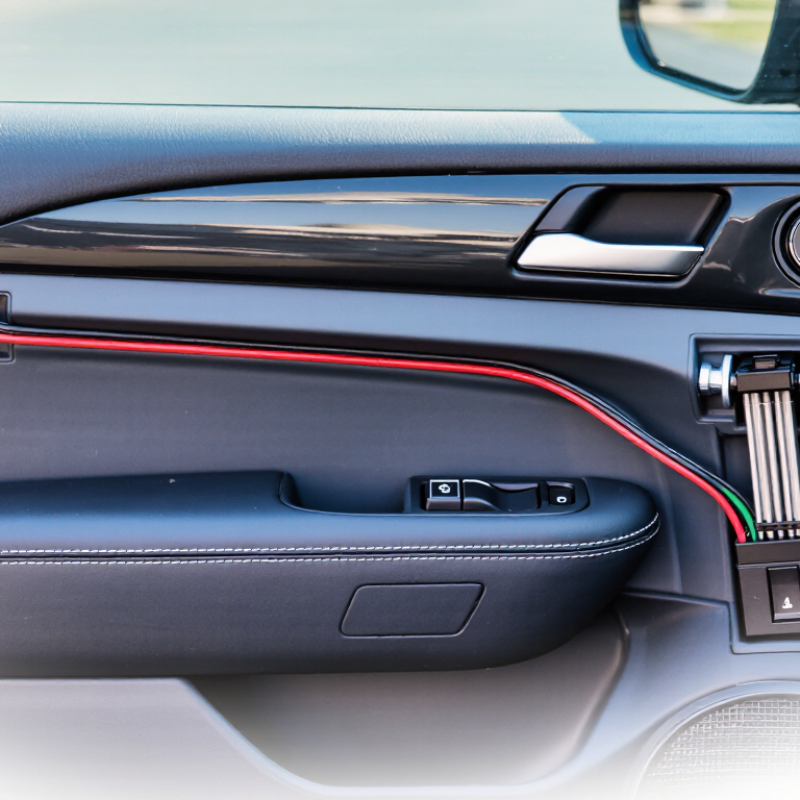
An automotive door lock switch is a driver- or passenger-operated electrical control that commands a vehicle door’s locking system.
It usually appears as a small push button on the door panel, near the armrest or handle. When pressed, the switch sends a low-voltage signal to the body control module or a dedicated relay. The system then powers a door-lock actuator, which moves the latch through a short mechanical linkage.
Its purpose is simple: lock or unlock several doors without using each exterior key cylinder. In daily use, the switch saves movement when a driver reaches a parking space, hears a firm “click,” or checks the small lock indicator beside the window. It can also support automatic locking, remote commands, and child-safety strategies.
However, the switch is only one part of the system. A damaged actuator, broken wire, weak fuse, or software fault can produce the same symptom.
The U.S. National Highway Traffic Safety Administration’s 2022 Traffic Safety Facts reported 42,514 traffic fatalities, highlighting why basic occupant protection systems deserve careful attention. Federal Motor Vehicle Safety Standard 206 also sets requirements for door locks and latches, including resistance to accidental opening.
These rules do not make every switch reliable forever. Real-world wear matters. Dust enters the trim. Contacts oxidize. A silent button may still be receiving power, while a noisy actuator may be failing.
Technicians therefore test voltage, ground, switch continuity, and actuator movement instead of replacing parts by guesswork. That approach is slower, but usually more trustworthy.

An automotive door lock switch is the small control a driver presses to secure or release a door. Inside its molded housing, a rocker or push button moves against a contact plate. The plate completes a low-voltage circuit. A return spring restores the button after each press. Small details matter. Worn contacts may create intermittent locking, even when the button still feels normal. The housing protects these parts from dust, vibration, and accidental moisture. A wiring connector links the switch to the vehicle’s control circuit. In older designs, the switch may send power directly to the lock actuator.
Modern systems usually add a body control module, fuse, relay, and door lock actuator. The module interprets the switch signal, then controls the actuator motor. Inside the actuator, plastic gears convert motor rotation into movement. That movement pulls a rod or cable connected to the latch. Some systems also use position sensors to confirm whether the door is locked or unlocked. A loose connector can imitate a failed switch. So can a weak actuator.
During inspection, technicians often test the switch signal before replacing parts. They check voltage, continuity, connector tension, and ground quality. I have found that a silent actuator does not always prove the switch is defective. The control module may be limiting operation because it detects another fault. Diagnosis is not always neat. A careful test prevents guesswork and unnecessary replacement.
An automotive door lock switch is the button or rocker that commands the vehicle’s locking system. When pressed, it sends a low-voltage signal through the door wiring. A control module or relay interprets that signal and supplies power to the door-lock actuator. The actuator then moves a small motor or solenoid, shifting the latch between locked and unlocked positions. In many vehicles, the driver’s switch can control every door, while individual switches operate one door. The process feels instant, but several components must cooperate.
A working system usually includes fuses, wiring, connectors, switches, actuators, and latch mechanisms. If one door stays locked, the switch may still be healthy. The fault could involve a broken wire near the hinge, a weak actuator, or a dirty connector. I have found that diagnosis is rarely as simple as replacing the visible button. Listen for a faint click, check whether other doors respond, and compare lock behavior with the key or remote control. These details help separate an electrical problem from a mechanical one.
Tips: Avoid forcing a stiff lock switch. Check the vehicle’s service information before testing wires. Use a multimeter carefully, and inspect connectors for moisture or looseness. A temporary improvement after tapping the door can mislead you. The actuator may be failing intermittently. Record when the problem occurs, especially in cold or damp conditions.
What Is an Automotive Door Lock Switch and How Does It Work?
Common automotive door lock switches include mechanical rocker switches, push-button switches, membrane switches, and touch-sensitive controls. A mechanical rocker switch changes position when pressed, sending a signal through the vehicle’s low-voltage circuit. Push-button designs use a short electrical contact, while membrane switches place printed conductive layers beneath a flexible surface. Touch-sensitive types detect a change in capacitance, but they can respond poorly to water, gloves, or dirt.
The switch usually communicates with a body control module, which activates door-lock actuators. These small motors move a linkage inside each door, creating the familiar locking sound. OICA reported approximately 93.5 million motor vehicles produced worldwide in 2023, showing the enormous scale of this simple control system. Yet design quality still varies. In workshop testing, worn contacts may cause intermittent locking, especially after repeated presses or moisture exposure. I would not blame the switch immediately. A weak fuse, damaged wiring, or failing actuator can create similar symptoms. NHTSA’s Federal Motor Vehicle Safety Standard 206 also emphasizes secure door-latching performance, although the switch itself is only one part of that safety chain. A useful detail is tactile feedback: a clear click helps drivers confirm operation without looking away from the road. Not every modern surface improves usability. Sometimes, a plain switch works better.
| Switch Type | Typical Location | How It Works | Electrical Signal or Circuit | Typical Function | Important Characteristics |
|---|---|---|---|---|---|
| Central Master Door-Lock Switch | Driver-side door panel, usually near the interior handle | Pressing the lock or unlock side changes the switch contacts. The body control module or door control module interprets the input and commands the applicable door-lock actuators. | Usually a low-current switch input using discrete circuits, resistor-coded signals, or a communication network connection through a door module. | Locks or unlocks several vehicle doors from one location. | Often includes separate lock and unlock positions. Some vehicles prevent or limit certain unlocking actions according to the programmed security logic. |
| Individual Passenger-Door Lock Switch | Passenger-side door trim panel | The switch sends a lock or unlock request to the vehicle control system. Depending on the vehicle design, the request may control only that door or all doors. | Low-voltage input circuit, door-module input, or network message generated by the local door electronics. | Provides convenient locking and unlocking for passengers. | Operation varies by vehicle. Some systems allow passenger control of all doors, while others restrict the switch to the local door or selected doors. |
| Rocker-Style Lock/Unlock Switch | Door armrest or center-console area | A spring-centered or two-position rocker moves internal contacts when the user presses one side. Releasing it returns the switch to its neutral position. | Momentary contact signal; the control module supplies the logic needed to operate the lock actuators. | Offers a simple push-button or rocker control for electric door locks. | Commonly marked with padlock symbols. It normally controls an electronic command rather than mechanically moving the lock mechanism itself. |
| Push-Button Lock/Unlock Switch | Door panel, dashboard, or center console | Pressing the button closes a momentary electrical contact or sends a digital command. The control module then energizes the lock or unlock circuit. | Momentary switch input; the exact voltage and signal method depend on the vehicle electrical architecture. | Provides electronic control in a compact format. | May use separate buttons for locking and unlocking, or one button with software-controlled behavior. |
| Mechanical-Latch-Integrated Lock Switch | Inside the door latch assembly | A small internal switch or position sensor changes state as the latch reaches locked, unlocked, or door-ajar positions. It reports the actual latch condition to the control system. | Discrete switch circuit or position-sensor signal routed to a door or body control module. | Confirms lock status, supports alarm functions, and helps manage interior-light or warning logic. | It is primarily a status sensor rather than a user-operated switch. A faulty unit can cause incorrect lock-status indications or alarm-related symptoms. |
| Child-Safety Lock Control | Rear-door edge, usually accessible only when the door is open | A manual lever or rotary control changes the rear inside-handle linkage so that the door cannot be opened from the interior. | Usually mechanical rather than electrical, although some vehicles use an electrically controlled child-safety system. | Prevents rear passengers from opening a rear door from inside the vehicle. | It normally does not replace the regular power door-lock switch and may remain active regardless of the normal lock/unlock command. |
| Keyed Door-Lock Electrical Switch | Within or attached to an exterior door-handle lock cylinder | Turning the key moves a mechanical linkage and may also operate an electrical switch that sends a lock or unlock request to the vehicle control module. | Momentary lock/unlock contacts or a position signal connected to the body control system. | Allows the mechanical key cylinder to command power locking. | The switch can continue to provide a lock command even if the vehicle battery is low, while the mechanical key may still operate the latch directly when designed to do so. |
| Capacitive or Touch-Based Door-Lock Control | Exterior door handle or nearby trim on vehicles equipped with passive-entry systems | A touch sensor detects contact or a designated touch area. The vehicle verifies the authorized key fob before locking or unlocking the doors. | Low-current sensor signal processed by an access or body control module. | Enables hands-free locking or unlocking without pressing a conventional switch. | Operation can be affected by moisture, gloves, contamination, sensor damage, or an authorization key that is not detected. |
| Power Door-Lock Actuator Interface | Inside each door, connected to the latch or lock mechanism | The door-lock switch provides the request, while the control module drives the actuator motor or reversible actuator to move the lock mechanism. | Typically a brief polarity-reversing motor circuit or a module-controlled actuator output. | Converts the electrical command into mechanical locking or unlocking movement. | The actuator is not the user-operated switch. A failure may cause one door to remain locked or unlocked while the other doors operate normally. |
| Control-Module-Based Door-Lock System | Switches and door modules distributed throughout the vehicle | The switch sends an input to a body, door, or access-control module. Software evaluates safety conditions and then commands the appropriate locks. | May use discrete wiring, a local door module, or a vehicle communication network such as a controller-area network. | Coordinates interior switches, remote commands, alarm functions, automatic locking, and status feedback. | Diagnostic testing may require checking switch input data, wiring, module communication, fuses, and actuator operation rather than testing the switch alone. |
An automotive door lock switch sends a low-voltage signal to the vehicle’s locking control circuit. Pressing it requests the doors to lock or unlock. The switch itself usually contains small electrical contacts, mounted behind the interior trim.
Small part. Big clue.
In practical diagnosis, a worn contact may work intermittently before failing completely. Dirt, moisture, loose connectors, and damaged wiring can create similar symptoms.
Typical faults include one door refusing to respond, delayed operation, or locks moving only when the switch is pressed repeatedly. You may hear a faint click without movement. Sometimes the interior switch works, but the remote control does not.
That difference matters. A blown fuse, weak actuator, poor ground, or broken wire inside the door hinge area may imitate a bad switch.
Do not assume the switch is guilty too early.
Basic testing starts with the vehicle’s wiring diagram and a visual inspection. Look for loose terminals, green corrosion, pinched wires, or liquid marks. With the battery disconnected, check switch continuity while pressing and releasing the button. The reading should change consistently, not flicker randomly.
Reconnect the battery only when the circuit is secure, then measure voltage at the connector using a multimeter. Keep test probes away from airbag wiring. A test lamp can help, but it may load a sensitive circuit incorrectly.
One imperfect shortcut is guessing from sound alone; a quiet actuator is useful evidence, not proof.


For those larger-sized parts, or smaller quantity runs, we have 2 independent powder coat booths and ovens. The quality, durability and affordability of today’s powder coating finishes make this the process of choice for world-class companies.
Powder coating advantages over other forms of coating are many. Materials used in the Powder coating process can be metals and non-metals that come in a multitude of thicknesses, textures, colors, etc. Another of Powder coating’s biggest advantages over conventional coatings is its ability to create finishes in many different textures. Powder Coating Booths allow us the ability to apply these advantages to large products.
Tri-State Fabricators runs a full-service conveyor line for painting. Wet painting can provide protection or decoration to many different part styles. From start to finish, every project is easier to undergo random and point-based inspection by our skilled painting team.
Advantages to our Wet Paint Line are these lines start with product prep and ends with a thorough inspection of a high quality finished product. Our ability to complete large and small projects with a superior finish and doing so in a timely and economical fashion. This passes along the savings in production to our customers. When powder coating ins not an option, our Wet Paint Line gets the job done right the first time.
When the parts get big and heavy we roll-out our custom paint racks and oversize booth. By utilizing our partnerships with all the major paint brands, we can match virtually any color with wet paint.
The advantages of having access to a Wet Paint Booth are many. Large projects of many different shapes can be loaded into the booth. The Wet Paint Booth offers an environment that is much more controlled than a typical parts painting operation.
Not only are they used because of their controlled environment, but they’re are also advantageous when it comes to applying paint to parts that are needed in industries that require specialty coatings such as medical, aerospace, etc.
Our military forces have some very high standards when it comes to the finish of their vehicles and equipment. From the first pre-treatment step to final coat, it takes a great deal of knowledge and experience to protect the men and women of our armed forces. They deserve only the best, and Tri-State Fabricators provides it.
All of our processes are closely monitored by our staff and management teams. Both of which are highly trained in the processes of metal fabrication and finishing. Tri-State Fabricators’ goal is to always fully satisfy each and every customer, including the military. We will always put a 110% into what we do.
Abrasive media blasting is an excellent way to remove old paint, rust, and increase the paint/powder adhesion. Glass beads produce a much smoother and brighter finish than angular abrasives; leaving the part clean yet without any dimensional change. Chemically inert and environmentally friendly, we can recycle our beads approximately 30 times; making them a more preferred method of metal cleaning or surface finishing.
Advantages to Glass Bead Blasting are many. Glass bead blast media is used when a project is needing rough surfaces need to become smooth for applications of coatings such as paint. It is typically used to clean paint and rust from a product surface without deforming the surface it is being used on. Overall, compared to many other blasting media, Glass Bead Blasting is a very economical choice and those savings are always passed on to our customers.
Tri-State Fabricators utilize a zinc phosphate wash to clean and etch the material to ensure the best paint adhesion possible. The unique design of our 3-stage wash system does the work like a 5-stage. From Cleaning and rinsing to conversion coating and post-treatment, Our Part Washing process is a complete service and works throughout the fabrication service and the finishing service.
Along with the previously mentioned benefits, Curing is a vital chemical reaction that leaves the product finish hard and relatively safe from mild abrasion and aggressive corrosion. This process can be done in more than one way; ambient air-dry or in curing ovens at temps that exceed 240°.
From fixing paint mistakes (someone else’s of course) to simply cleaning our paint line hooks, our burn-off oven is put to good use. After a quick burn-off, a little clean up, and a fresh coat of paint, your parts will look better than new.
Why does our Burn-Off Oven work so well? Because super heating the air around parts turns the materials into ashes. From paint and powder coatings to rubber and machining oils, high temps do the job without degrading the integrity of the part.
Masking is a vital part of producing high quality products. We have die-cut masking patterns to protect machined surfaces as well as a wide range of plugs and caps to protect threaded holes and bolts. We provide permanent and temporary masking.
Masking allows the selected sections of a product to be protected from a fabrication or finishing service. This can be with both chemicals when etching and tapes, paints when only finishing just a section of the product. Masking is great in aiding the customization process of a project.
Screen printing is a photographic process that transfers artwork onto a porous nylon screen which allows colored ink to flow through the screen and be deposited on an aluminum or plastic component. We can generally have just about any design created onto a screen for your parts.
Some of the advantages of Screen Printing are, brand recognition for your business displaying on your products, assembly instructions, product warnings/hazards, etc. Tri-State Fabricators produces Screen Printing of the highest quality so you know it’s durable.
Metal Finishing is the art of treating the exterior portion of product, often metal but can also be made of other materials, so that the surface is clean and free of any debris. Then the process of applying coats or either paint of powder coat takes place. This coating process improves the quality of the product in both appearance and resistance to wear and corrosion.
Tri-State Fabricators, Inc., understands that a project typically isn’t complete until a high-quality finish has been added to your product. This is why our painting and powder coating teams continuously inspect the products throughout the Metal Finishing process.

