What Is an Automatic Checkweigher and How Does It Work?
An Automatic Checkweigher is an in-line system that weighs products while they move along a production conveyor. Instead of stopping each pack on a bench scale, it measures individual items at line speed. A bakery might use one to check wrapped loaves; a bottling plant may monitor filled containers. The purpose is practical: identify packages that fall outside a selected weight range before they reach the next operation.
How does it work? A conveyor spaces and carries each product over a weighing section, where load cells detect its force. Photoelectric sensors or similar devices help locate the pack and time the reading. A controller filters vibration, calculates a weight, and compares it with configured limits. If a product is underweight or overweight, a reject device—such as a pusher or air jet—can divert it into a collection area. Accepted items continue downstream. It happens quickly.
The result depends on more than the scale itself. Belt speed, product spacing, package shape, vibration, and regular checks can all affect readings. The equipment should be selected for the product, throughput, and plant environment, then verified using suitable test weights and documented procedures. A checkweigher can support process control, but it cannot explain every weight variation or fix an upstream filling problem by itself. That distinction matters. This guide explains the main components, weighing sequence, common applications, and factors to consider when choosing a system. Details vary by model, so manufacturers’ technical specifications remain important.
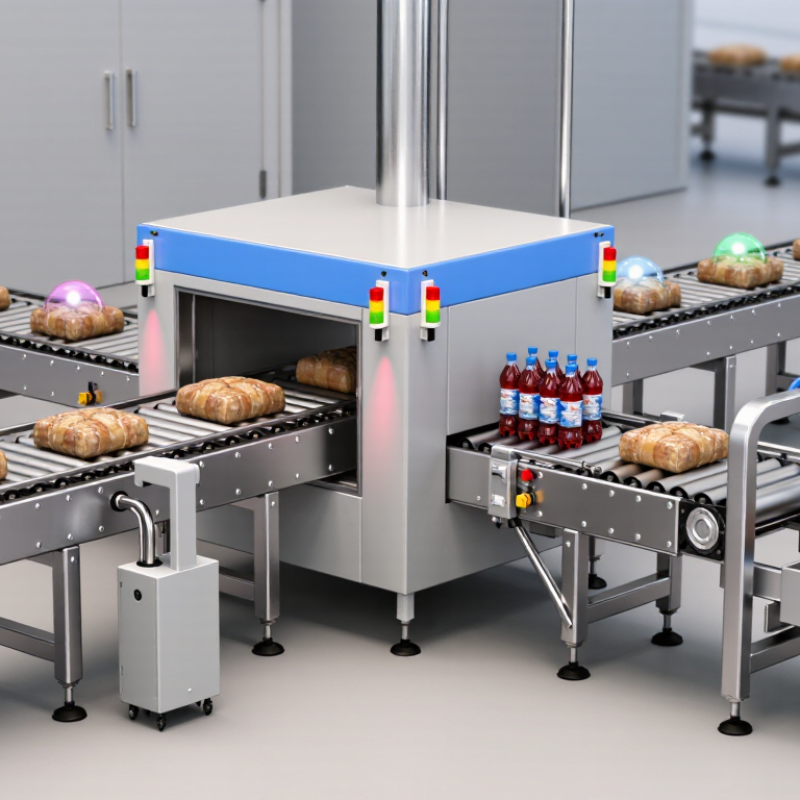
What an Automatic Checkweigher Is
An automatic checkweigher is an in-line weighing system that measures products while they move along a conveyor. A photoelectric sensor detects each item, and a load cell records its weight during a brief, controlled interval. Software compares that reading with preset upper and lower limits. Products outside those limits can trigger an alarm or a mechanical reject arm. No operator needs to place each item on a stationary scale. That matters.
The International Organization of Legal Metrology’s OIML R 51-1:2006, Automatic Catchweighing Instruments, describes accuracy classes and testing requirements for instruments weighing items in motion. It evaluates performance across different loads, including repeatability and permissible errors. In practice, a plant may test a checkweigher with certified test weights and sample packs at normal line speed. A 500-gram pouch, for example, must pass over the weighing section without touching guides or jolting the belt. Small detail. Vibration, belt wear, and uneven product flow can all affect readings, so the displayed weight is not automatically the whole story. Checkweighers monitor individual items; they do not replace good calibration or careful line setup. A reading may look precise, yet still reflect a poorly controlled process.
What Is an Automatic Checkweigher and How Does It Work? - What an Automatic Checkweigher Is
| Dimension | What It Is or Does | How It Fits the Checkweighing Process |
| Definition | An automatic checkweigher is an in-line weighing system that weighs individual products while they move along a production conveyor. | It compares each measured weight with configured acceptance limits and identifies items that fall outside those limits. |
| Infeed conveyor | The conveyor carries products toward the weighing section and helps space them apart. | Consistent spacing helps the system associate a weight reading with the correct product. |
| Product detection | A photoelectric sensor or similar detector senses when a product reaches a defined point. | The detection signal helps the controller time the weight measurement and track the product through the machine. |
| Weigh conveyor and load cell | A short conveyor section is supported by a weighing mechanism, commonly a load cell that converts force into an electrical signal. | As a product passes over the section, the system captures its weight during a brief measurement window. Stable product movement and suitable machine setup support reliable readings. |
| Controller and weight limits | The controller processes the weight signal and compares it with the product’s configured target and acceptance limits. | The result is typically classified as underweight, acceptable, or overweight. The limits depend on the product and the inspection requirements. |
| Reject or divert device | A configured mechanism, such as a pusher, air jet, or diverting arm, can remove a rejected product from the main line. | The controller times the action so it corresponds to the product identified as out of limits. The rejection method is selected to suit the product and line. |
| Outfeed conveyor | The outfeed section carries accepted products onward and may direct rejected products to a separate collection area. | This allows weight inspection to take place as part of the production flow rather than requiring each item to be weighed manually. |
| Typical applications | Packaged foods, beverages, pharmaceuticals, personal-care products, and other packaged goods. | Applications commonly include checking package weight, identifying missing contents, and monitoring production consistency. |
| Important operating factors | Line speed, product spacing, vibration, conveyor condition, product stability, and correct setup can affect measurement performance. | Routine checks, suitable installation, and following the machine’s operating instructions help maintain consistent results. |
The Main Components of an Automatic Checkweigher
The Main Components of an Automatic Checkweigher
An automatic checkweigher depends on several parts working together. The infeed conveyor spaces packages so they reach the weighing section one at a time. Side guides keep cartons centered, but guides set too tightly can rub or slow soft packs. A load cell supports the weighing conveyor. It measures force from each passing item and converts it into a weight signal. Keep vibration low. Nearby machinery or a loose floor mount can affect readings, so installation matters as much as the sensor itself.
A photoelectric sensor detects each package and helps the controller pair it with the correct weight reading. An encoder can track conveyor movement, while the controller compares each measurement with preset limits. The operator interface displays results, alarms, and product settings. Those settings need checking when package size or line speed changes. Small details matter. A misaligned sensor may cause inconsistent tracking, even when the scale is working correctly.
If a package falls outside the set limits, a reject device removes it from the line. Air jets, pushers, or diverters may suit different package weights and shapes. A confirmation sensor can check that the rejected pack actually left the flow. The outfeed conveyor carries accepted products onward, while a separate bin holds rejected packs for review. In practice, the checkweigher is a system, not just a scale; setup and routine checks still require attention.
How a Product Is Weighed on a Moving Line
On a moving production line, an automatic checkweigher measures each item without stopping the conveyor. An infeed belt helps create space between products, so one package does not blur into the next. The item then crosses a weighing belt supported by load cells, which register tiny changes in force. The system samples that signal while the product is moving and uses it to estimate the item’s weight. That moment is brief. Belt speed and product spacing need to stay consistent for readings to remain useful.
The measured weight is compared with configured limits. If an item falls outside them, a downstream pusher or other sorting device can divert it into a separate bin. Meanwhile, the system may record weights and counts for line monitoring. Vibration, loose product contact, airflow, and uneven spacing can all affect results. A neat screen reading is not proof that the setup is right. Operators should check performance with suitable test weights and representative products at normal line speed. A soft pouch may behave differently from a rigid carton, and that difference can be easy to overlook.
How an Automatic Checkweigher Weighs Products on a Moving Line
As each product travels over the checkweigher’s weighing platform, the system records its weight without stopping the line. This illustrative example shows 20 readings around a 500 g target; the dashed lines mark example limits of 490 g and 510 g. Products outside a configured range can be flagged for inspection or removal.
How Weight Readings Trigger Sorting or Rejection
An automatic checkweigher weighs each moving package without stopping the conveyor. A load cell converts the package’s force into a signal, while software filters vibration and calculates a stable weight. The system compares that reading with configured upper and lower limits. In-range products continue forward; out-of-range ones trigger a timed air jet, pusher, or drop gate. Small timing errors matter: the reject must meet the same package that produced the reading.
OIML Recommendation R 51-1 specifies accuracy classes for automatic catchweighing instruments. Its X-class factors include 0.5, 1, 1.5, 2, and 2.5, helping teams match instrument performance to the application. These are classification factors, not universal product tolerances. Set limits using the product specification, verified test weights, and actual line conditions. A reject is not automatically proof of underfill; vibration, product movement, or a poorly timed diverter may also cause a bad result. That distinction deserves regular review.
Tips: Test the reject device with marked packages at normal line speed. Check that each rejected item matches its recorded weight. Repeat after belt-speed or product changes. A little inconsistency can reveal a setup problem.
Where Automatic Checkweighers Are Used in Production
Automatic checkweighers are often placed after filling, sealing, or packaging, where each product can pass over a moving scale. On a snack line, for example, sealed bags may be weighed before entering a case packer. The system compares each reading with preset limits and can divert packs that fall outside them. Placement matters. A checkweigher too early in the process may miss weight changes caused by later packaging steps.
These systems also appear in beverage, pharmaceutical, personal-care, and hardware production. They can check bottles, cartons, tubes, or small boxed components, depending on line speed and product format.
Production teams may use weight records to spot gradual drift, such as a filler delivering slightly less product over several minutes. That information can help guide an adjustment, but it does not identify the cause by itself. Not every line. Vibration, uneven spacing, and product movement can affect readings, so setup and routine checks matter. In practice, a checkweigher is most useful when its results are reviewed alongside filling and packaging conditions, not treated as a stand-alone quality decision.





