What Are Automated Conveyors and How Do They Work?
Automated Conveyors are powered material-handling systems that move products through manufacturing, packing, and distribution facilities. They use belts, rollers, chains, or overhead tracks to carry goods along planned routes. Sensors detect cartons, while controllers coordinate motors, stops, and diverters. A parcel might pause at a barcode scanner, then continue toward its assigned packing lane. Small details matter.
Many systems combine photoelectric sensors, variable-speed drives, and programmable logic controllers. Together, these components help regulate flow and respond when a line backs up. Some installations connect conveyor controls with warehouse management software, giving operators a clearer view of product movement. The exact setup depends on package dimensions, throughput, floor space, and the tasks people still perform nearby. Automation does not remove every bottleneck.
The business case is gaining attention as facilities manage higher order volumes and repetitive handling. MHI’s 2024 Annual Industry Report found that 55% of surveyed supply-chain professionals planned to increase technology investment. This indicates industry interest, but it does not promise savings for every operation. Conveyor performance still depends on thoughtful layout, suitable equipment, maintenance, and effective integration. A belt designed for sturdy cartons, for example, may not handle soft mailers reliably.
This guide explains what automated conveyors are, how their components work together, and where different designs fit. It also examines safety, operating costs, and common implementation challenges. The practical question is not simply whether a conveyor moves goods faster. It is whether it moves the right goods to the right destination, with fewer delays and manageable upkeep. That distinction is easy to overlook.
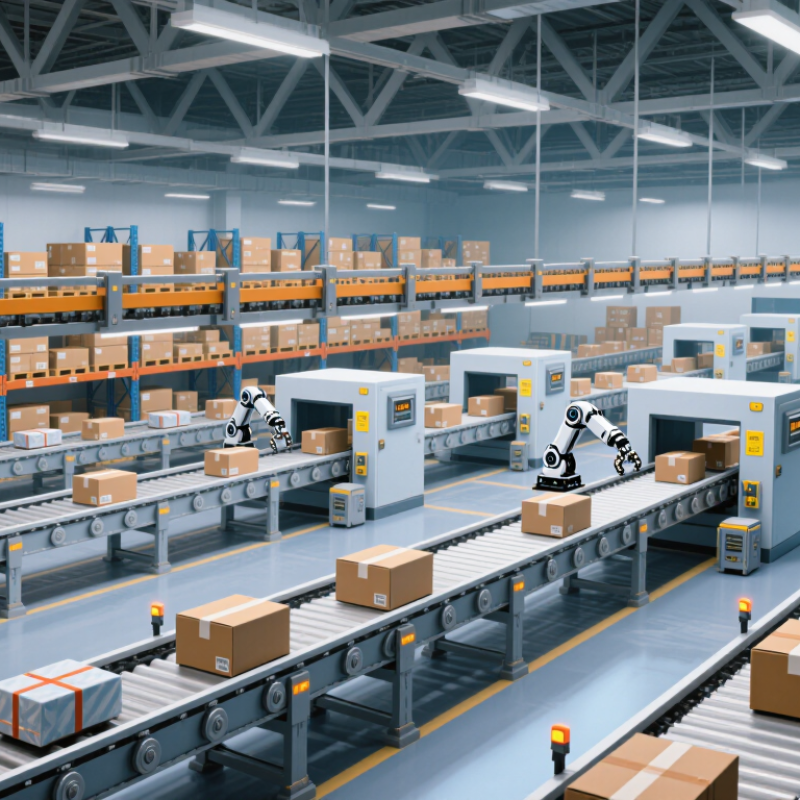
What Automated Conveyors Are and What They Move
Automated conveyors are powered systems that move materials through a facility along a planned route. They can carry cartons, parcels, bottles, components, trays, or bulk goods such as grain. The load may travel horizontally, climb a slope, or pass between work areas. Some conveyors run continuously; others start and stop as sensors detect incoming items. In practice, even a small gap between packages can affect the flow.
What a conveyor moves depends on its design. Belt conveyors suit flat-bottomed boxes and many loose products. Roller conveyors carry rigid cases, while chain or overhead systems can move heavier parts and suspended items. Automated controls may divert parcels at junctions, regulate spacing, or send a tote toward a picking station. A photoelectric sensor, for example, can detect a box approaching a merge point and signal the belt to pause. Not every item behaves neatly.
Weight, shape, surface, and fragility all matter when selecting a system. A soft bag may sag between rollers, while a tall carton can wobble on a fast curve. Facility teams should test representative loads, including awkward or partly filled containers, before setting speeds. That detail matters. Conveyors reduce repetitive carrying, but they do not remove the need for observation: dust, damaged packaging, or a misaligned guide can still interrupt movement.
What Are Automated Conveyors and How Do They Work?
Typical operating speed ranges by conveyor type
Automated conveyors use powered belts, rollers, screws, or buckets—often controlled by sensors and software—to move materials along a planned route. Belt and roller conveyors commonly carry cartons and parcels; screw conveyors move powders or granules; bucket elevators lift bulk materials vertically. Speed ranges are indicative only and vary with system design, material, and load.
The Main Components of an Automated Conveyor System
An automated conveyor system is a coordinated set of parts that moves goods along a planned route. Its frame supports the load and keeps the belt or rollers aligned. Steel frames suit many industrial settings, while lighter materials may work for smaller packages. The choice depends on load, distance, and surroundings. Not every layout is perfectly straight.
The conveying surface carries products. A belt provides continuous support, while rollers can move cartons with less contact. A motor and gearbox supply controlled motion, often through a drive pulley or roller. Sensors detect items, gaps, or blocked sections. Their signals go to a controller, which adjusts speed or starts and stops zones. Small details matter. A poorly placed sensor can miss a low package or read two items as one.
Controls connect the system’s components and let operators monitor its operation. Emergency stops and physical guards help protect people near moving parts; they should be selected and positioned for the specific installation. Transfer points also deserve attention. A small height mismatch can jolt a box, while an overly wide gap can catch its edge. Regular checks of belt tension, roller condition, sensor alignment, and wiring help reveal wear before it disrupts flow. Even a well-designed system needs adjustment as products and operating conditions change.
How Materials Travel Through a Conveyor
Automated conveyors move materials by combining a transport surface with powered components and controls. A motor turns a drive pulley, pulling a belt around rollers, or rotates rollers directly beneath each item. At the loading point, workers or upstream equipment place cartons, trays, or parts onto the moving line. Guides keep loads aligned. Small details matter.
Sensors can detect an approaching item and signal a controller to adjust speed, open a gate, or send the load onto a branch. At a transfer point, rollers, a diverter, or a short connecting belt directs the material toward its next destination. Some systems keep a steady gap between parcels; others allow items to queue in a buffer zone. The chosen method depends on the load’s weight, shape, and fragility. A loose bag behaves differently from a rigid box.
The route may include inclines, curves, and several handoffs. Each transition needs careful alignment, since even a small gap can catch an edge or tip an unstable load. In practice, flow is not always perfectly smooth. Dust, uneven packaging, and crowded loading can cause delays, so operators monitor sensors and clear jams safely. A neat diagram rarely shows every awkward package. That part deserves attention.
How Sensors and Controls Guide Conveyor Operation
An automated conveyor is more than a belt that moves boxes. Sensors tell its controls what is happening along the line. At a packing station, a photoelectric sensor can detect a carton approaching and signal a controller to start or slow a motor. An encoder tracks belt speed, while a jam sensor can flag a blocked chute. Small signals matter.
The controller uses these inputs to coordinate motors, divert gates, and alarms. At a merge point, for example, it can hold one lane until the next section is clear. This reduces collisions and keeps cartons moving at a steady pace. But sensors can misread glossy packaging or collect dust. A clean-looking screen does not always mean the line is running perfectly.
The 2024 MHI Annual Industry Report found that 88% of surveyed organizations planned to increase supply-chain technology investment. It also reported that 55% expected to invest more than $1 million over the following two years. These figures show growing interest in automation, not guaranteed performance. Reliable operation still depends on sensor placement, tested control logic, and regular checks. A brief manual inspection can catch a fault that software has not yet flagged.
Common Types of Automated Conveyors and Their Uses
Automated conveyors move goods along planned routes using powered belts, rollers, chains, or lifts. Belt conveyors suit cartons, bags, and lightweight parts, especially when items need steady, continuous travel. Roller conveyors handle rigid boxes and totes; powered rollers can buffer items before packing or inspection. For fragile loads, gaps and transfer points matter as much as conveyor speed.
Chain conveyors carry heavy pallets or fixtures through assembly areas, where loads need firm support. Overhead conveyors free floor space and move hanging garments, painted components, or parts between workstations. Vertical lifts connect floors when a horizontal route is not practical. Sensors, motors, and control software coordinate starts and stops, but real layouts often need adjustment after installation. A neat drawing may hide a clumsy handoff. Not always.
Tips: Match the conveyor type to item size, weight, surface, and required flow. Test the tightest turn with a full load, not an empty tote. Keep access clear around sensors and transfer points. Small misalignments can cause recurring jams.





