What is an ANSI Standard Bolt and Why is it Important?
In the world of manufacturing and construction, the relevance of the ANSI standard bolt cannot be overstated. According to John Smith, a leading expert in industrial fasteners, "ANSI standard bolts are crucial for ensuring safety and reliability in structural applications." These bolts meet rigorous specifications set by the American National Standards Institute, promoting uniformity in quality and performance.
ANSI standard bolts are designed to handle specific loads and stresses, making them vital in critical applications. Without adherence to these standards, the integrity of structures could be compromised. Many industries rely on these bolts for their durability and strength, which directly impact safety.
However, it's worth noting that not all bolts labeled as "ANSI standard" may meet its strict criteria. This inconsistency poses risks, necessitating careful verification by engineers and procurement teams. The goal is to ensure that these fasteners provide the expected performance in demanding environments. Ultimately, understanding the importance of ANSI standard bolts is essential for anyone involved in construction or manufacturing.
What is an ANSI Standard Bolt?
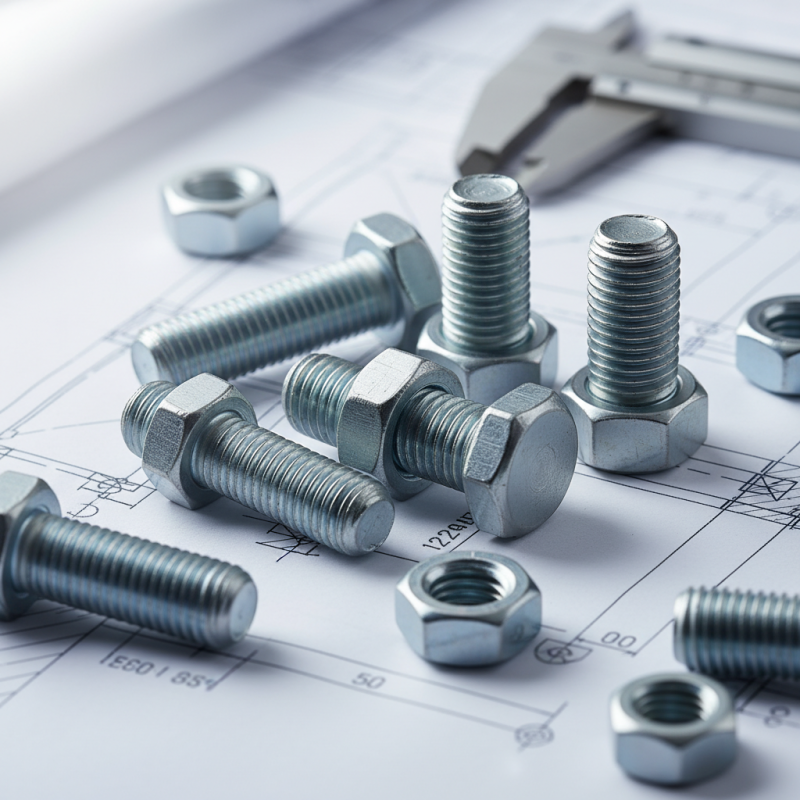
ANSI standard bolts play a crucial role in various industries. These bolts are designed according to the standards set by the American National Standards Institute (ANSI). This ensures consistency and reliability in performance. When you choose an ANSI standard bolt, you can trust its dimensions, strength, and durability. These attributes are vital in applications where safety is paramount.
Understanding ANSI standard bolts requires attention to detail. For instance, these bolts come in different grades, each indicating its tensile strength. A grade 2 bolt is sufficient for light tasks, while a grade 8 bolt is stronger for heavy-duty applications. The markings on the bolts display vital information regarding specifications.
However, not all bolts marketed as ANSI standard may meet the established criteria. This discrepancy can lead to potential hazards. It's important to source bolts from reputable suppliers who can provide certification. Quality assurance is essential for ensuring the right fit and performance in your projects. Remember, poorly made bolts can compromise the integrity of structures, creating risks that could have been avoided.
History and Development of ANSI Standards
The history of ANSI (American National Standards Institute) standards dates back to the early 20th century. In 1918, several organizations came together to establish a unified body for standardization. Their aim was to enhance compatibility and safety across various industries. Over the decades, ANSI has evolved, adapting to technological advancements and changes in manufacturing processes.
Tips: Regularly reviewing ANSI standards can keep you updated on best practices. Check for new editions or revisions every few years.
In the 1950s and 1960s, the growing complexity of machinery called for more stringent regulations. ANSI responded by creating comprehensive guidelines for bolts, nuts, and other fasteners. These standards ensure consistency in manufacturing, improving safety and reliability in construction. The attention to detail has made ANSI standards a cornerstone for engineers and builders alike.
Tips: Always source your materials from reputable suppliers. This guarantees you receive products that meet these critical standards.
Some may argue that the standards can slow down production. However, having a reliable reference point enhances the overall quality. As industries expand globally, maintaining these standards becomes crucial for competitive edge and consumer confidence. Regular audits and adherence to ANSI guidelines can yield long-term benefits despite the initial hurdles.
Key Characteristics of ANSI Standard Bolts
ANSI standard bolts play a critical role in various industrial applications. These bolts are defined by strict specifications, ensuring consistency and reliability. According to the Fastenal Company, adherence to ANSI standards improves safety and efficiency in manufacturing processes.
Key characteristics of ANSI standard bolts include their material quality and dimensional accuracy. Typically made from high-strength steel, these bolts resist deformation under heavy loads. The tolerances outlined in ANSI specifications guarantee that each bolt fits perfectly with its corresponding hardware. Such precision reduces the risk of equipment failure, a significant concern in sectors such as construction and automotive.
Another crucial aspect is the grading system. ANSI standard bolts are categorized based on their tensile strength and application. For instance, Grade 2 bolts are suitable for low-strength applications, while Grade 8 bolts are used in high-stress environments. The American Society for Testing and Materials (ASTM) reports that using the correct grade can significantly impact structural integrity, highlighting the relevance of these standards in varied applications.
ANSI Standard Bolt Characteristics
This chart represents the frequency of different characteristics of ANSI standard bolts. Material and strength grade are the most commonly specified, indicating their importance in construction and manufacturing applications.
Applications and Industries Utilizing ANSI Standard Bolts
ANSI standard bolts are vital in various industries due to their reliability and uniformity. These bolts ensure that connections can withstand significant forces, contributing to safety in construction, manufacturing, and automotive sectors. For instance, according to industry reports, over 70% of structural failures in buildings can be traced back to inadequate fastening. This highlights the importance of ANSI standards in providing robust mechanical connections.
Industries utilizing ANSI standard bolts include aerospace, where precision and reliability are critical. In 2022, the aerospace sector accounted for approximately 30% of the demand for high-strength fasteners, indicating a significant reliance on ANSI standards. Similarly, the automotive industry relies on these bolts for both assembly and safety. The automotive sector used around 2 billion fasteners in 2021, emphasizing the need for standardized, durable components.
Many construction projects also depend on ANSI standard bolts. Reports indicate that about 60% of new buildings utilize these bolts to ensure safety and compliance with regulations. Misuse or improper installation of these bolts can lead to serious construction failures. This requires continuous training and adherence to standards, underlining the need for constant evaluation and review in fastener applications.
What is an ANSI Standard Bolt and Why is it Important? - Applications and Industries Utilizing ANSI Standard Bolts
| Dimension | Material | Grade | Applications |
| 1/4" - 20 | Steel | Grade 2 | Automotive, Furniture |
| 3/8" - 16 | Stainless Steel | Grade 5 | Construction, Machinery |
| 1/2" - 13 | Carbon Steel | Grade 8 | Heavy Equipment, Shipping |
| 5/16" - 18 | Alloy Steel | Grade 8.8 | Aerospace, Defense |
| 3/4" - 10 | Bronze | N/A | Marine, Industrial |
The Importance of ANSI Standards in Safety and Quality
ANSI standards provide a crucial framework for manufacturing and using bolts. These standards ensure uniformity, safety, and quality across various industries. Without them, inconsistencies could lead to failures and accidents. For example, a bolt that does not meet ANSI specifications might be weaker than expected, compromising structural integrity.
The importance of ANSI standards cannot be overstated. They ensure that all bolts are made with specific materials and dimensions. This uniformity is key in industries like construction, automotive, and aerospace, where safety is paramount. Engineers and manufacturers rely on these standards to mitigate risk. Adhering to ANSI guidelines helps prevent catastrophic failures.
However, not all manufacturers always comply with these standards. Some might cut corners to save costs. This lack of adherence raises concerns about dependability. Companies need to invest in quality control and ensure their products meet ANSI requirements. The consequences of overlooking these standards can be dire, leading to damage and loss. It’s essential for professionals to scrutinize bolts for compliance, prioritizing safety and quality in their projects.





