


What Are Aluminum French Doors and How Do They Work?

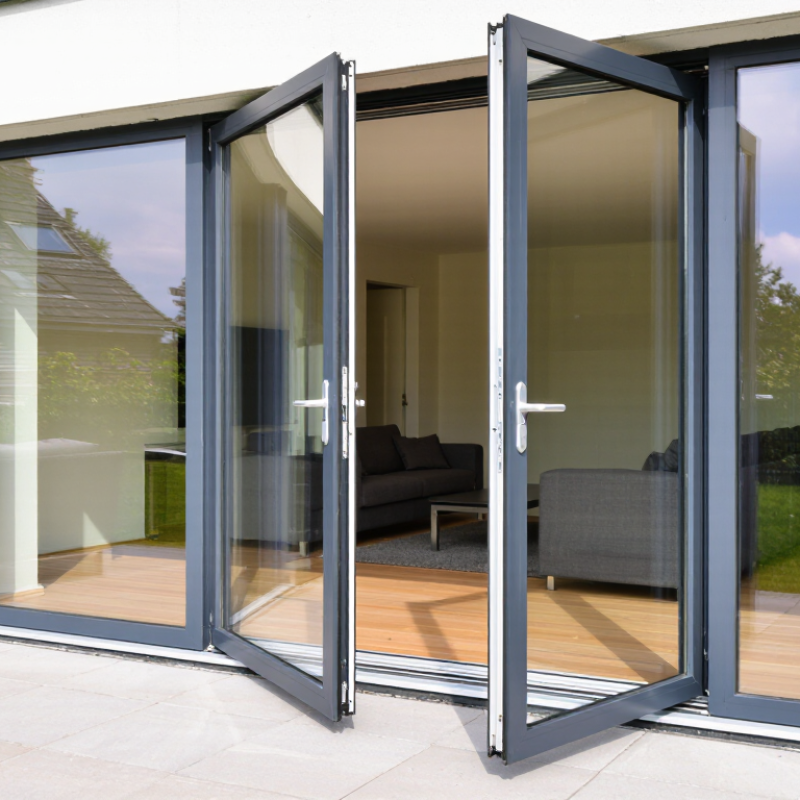
French Doors Aluminum combine the familiar symmetry of French doors with the strength and slim sightlines of aluminum framing. Each door leaf is hinged at the side and opens from the center. Some models swing inward, while others swing outward. A central meeting point, often fitted with a multipoint lock, helps secure the opening.

Unlike heavy timber doors, aluminum frames resist warping, swelling, and insect damage. Their powder-coated or anodized surfaces also offer consistent color with limited maintenance. Inside the frame, thermal breaks reduce heat transfer between the exterior and interior metal surfaces. Glazing choices matter too. Double or triple glass can improve insulation, reduce outside noise, and create a more comfortable room.

Tom Culp, a recognized fenestration consultant, emphasizes: “A door’s performance depends on the entire opening, not one component.” That principle is easy to overlook. The frame, glass, hinges, seals, threshold, and installation must work together. A beautifully designed French Doors Aluminum system may still perform poorly when the threshold is uneven or the weather seals are compressed incorrectly.

This guide explains how these doors operate, where they fit best, and what buyers should examine before installation. You will see the difference between a visual feature and a dependable building component. The details are practical. Some decisions remain imperfect, because climate, wall construction, budget, and daily use all change the right answer. An experienced installer should verify measurements, drainage, structural support, and local performance requirements before ordering.
What Are Aluminum French Doors and How Do They Work?

What Are Aluminum French Doors?

Aluminum French doors are a pair of hinged doors with a slim metal frame and a central meeting point. Both panels usually open inward or outward, like traditional double doors. Their large glass areas bring daylight into rooms, while aluminum provides a firm, stable structure. The doors may include single or double glazing, depending on climate, noise, and energy needs.

The frame often contains a thermal break, which separates the exterior metal from the interior metal. This design reduces heat transfer and helps limit condensation. Weather seals around the edges block drafts and rain. Hinges carry the panel weight, while a multipoint lock holds the doors tightly against the frame. When installed correctly, the opening feels smooth, not forced.

Small details matter. A level threshold supports easier movement and better water protection. In practical inspections, I check whether the meeting doors align evenly and whether the seals compress without gaps. Aluminum needs little maintenance, but neglected drainage holes can still cause trouble. A dark finish may also become hot in strong sunlight. That point is easy to overlook. Door performance depends on installation quality, not only on the frame material. Poor adjustment can create air leaks, stiff handles, or uneven closing. Measuring the opening carefully before ordering remains essential, even when the product specifications appear clear.


What Are Aluminum French Doors and How Do They Work?

Aluminum French doors are paired, hinged doors with glazed panels and an aluminum frame. The leaves open from the center, while hinges, weather seals, locking hardware, and the frame work together to provide access, daylight, and protection from air and moisture. Aluminum conducts heat efficiently, so modern frames commonly use thermal breaks to reduce heat transfer.

Representative thermal conductivity values in W/m·K. Lower values generally indicate lower heat transfer through the material itself.

Key Parts and Design Features of Aluminum French Doors

Aluminum French doors use two hinged panels that meet at the center. Each panel includes an insulated glass unit, aluminum frame, hinges, seals, and a locking system. The glass admits daylight, while the frame carries wind and operating loads. A thermal break separates the inner and outer aluminum sections. This reduces heat transfer, although it cannot eliminate it. The U.S. Department of Energy reports that windows can account for 25–30% of residential heating and cooling energy use. Large glazed doors deserve similar attention.

The most important design feature is the frame-to-glass connection. Warm-edge spacers, low-emissivity coatings, and compressible weatherstripping can improve comfort near the door surface. A multipoint lock usually engages at several points, helping the panels close evenly. The sill should include drainage paths and a durable threshold. NFRC ratings show U-factor and solar heat gain coefficient, while AAMA/WDMA/CSA 101/I.S.2/A440 testing evaluates air, water, and structural performance. These figures are useful, but installation still matters. A perfectly rated door can leak if the opening is poorly sealed.

Tips: Check the threshold height before ordering. Confirm the door swing, handle clearance, and screen-door space. Ask for tested air and water results, not vague efficiency claims. In practical inspections, uneven gaps often reveal hinge adjustment problems. No design is perfect; dark aluminum can still become hot in strong afternoon sun.

What Are Aluminum French Doors and How Do They Work? — Key Parts and Design Features of Aluminum French Doors
Key Part or Design Feature What It Is How It Works Typical Characteristics Why It Matters
Aluminum Frame The structural outer frame and internal profiles made from aluminum alloy. Supports the door panels, transfers their weight to the hinges, and connects the assembly to the surrounding wall. Lightweight, rigid, corrosion-resistant, and suitable for narrow sightlines. Provides strength and dimensional stability while allowing larger glazed areas than many traditional solid-door designs.
French Door Panels A pair of hinged door leaves that meet at the center of the opening. One panel is commonly designated as the active leaf for everyday access, while the other can be opened when the full passage width is needed. Usually inward- or outward-opening, depending on the building layout and local requirements. Creates a wide opening and a symmetrical appearance suitable for patios, balconies, gardens, and interior transitions.
Insulated Glass Unit Two or more panes separated by a sealed spacer and insulating cavity. The sealed cavity reduces heat transfer compared with single glazing; the glass also admits daylight and provides visibility. May use clear, low-emissivity, laminated, tempered, or decorative glass. Influences thermal performance, daylight, sound reduction, safety, privacy, and overall appearance.
Thermal Break A low-conductivity polymer section placed between the interior and exterior aluminum parts. Interrupts the direct path through which heat can travel across the aluminum frame. Common in thermally improved systems; performance varies with profile depth, seals, and glazing. Helps reduce interior condensation risk and improves energy efficiency in heated or cooled spaces.
Hinges Mechanical fittings that attach each panel to the frame. Allow the panels to rotate around a vertical axis while carrying the door weight. Often adjustable to help align the panels and maintain consistent clearances. Correct hinge selection and adjustment support smooth operation, reliable sealing, and long-term alignment.
Central Locking System The lock case, handle, cylinder, and associated locking points positioned around the meeting edge. Turning the handle moves the latch and, in multipoint systems, engages additional bolts into the frame. May include a latch, deadbolt, and multiple locking points depending on the system. Controls access and helps pull the panels tightly against the seals for improved security and weather resistance.
Astragal or Passive-Leaf Bolt A vertical meeting stile or edge detail used to secure the inactive panel. Top and bottom bolts hold the passive leaf in the head and sill when that panel is closed. Usually operated from the edge of the passive panel and coordinated with the active leaf. Stabilizes the pair and allows the active leaf to latch properly when both panels are closed.
Weather Seals and Gaskets Flexible seals fitted around the frame, glass, and meeting edges. Compress when the door closes, limiting air leakage and helping block rain, dust, and drafts. Commonly made from durable elastomeric materials and replaced when worn or hardened. Strongly affects weather resistance, thermal comfort, acoustic performance, and operating feel.
Threshold or Sill The lower horizontal component across the doorway. Supports the bottom seals, manages the transition between floor levels, and may direct water toward drainage paths. Available in standard, low-profile, or accessibility-oriented configurations, subject to design constraints. Influences step height, water management, durability, and ease of passage.
Drainage Channels Internal passages and external weep openings within the sill and frame. Collect incidental water that passes the outer seals and route it back outside through controlled outlets. Must remain clear of dirt, paint, and debris to function correctly. Reduces the risk of water accumulation and helps protect adjacent finishes and interior spaces.
Surface Finish A protective and decorative coating applied to the aluminum surface. Creates a durable outer layer that protects the alloy from environmental exposure and provides color or texture. Common options include powder coating and anodized finishes; color availability varies by system. Determines appearance, cleanability, resistance to weathering, and maintenance requirements.
Sightline The visible width of the aluminum frame around the glass and at the meeting stile. Profile geometry balances structural strength, hardware space, glazing support, and visual slimness. Narrower sightlines increase the apparent glass area but may require carefully engineered profiles. Shapes the visual character of the doors and affects how much natural light enters the room.
Opening Mechanism The coordinated movement of the hinged panels, hardware, and seals. When the handle is released, the latch and bolts retract; the panels then swing on their hinges through the designed opening arc. Requires adequate clearance for furniture, walls, curtains, and adjacent doors. Determines accessibility, ventilation potential, furniture placement, and daily usability.
Typical Applications Locations where a glazed pair of hinged doors is required. The doors provide a controlled connection between two spaces while allowing light transmission and occasional wide access. Used for patios, balconies, garden rooms, living areas, offices, and interior partitions. Offers a practical combination of daylight, ventilation, visual connection, and flexible access.
Routine Maintenance Periodic cleaning, inspection, lubrication, and adjustment of the door assembly. Cleaning the tracks and drainage openings, checking seals, and servicing hardware helps preserve the intended operation. Use non-abrasive cleaning methods and follow the system supplier’s care instructions. Supports smooth movement, reliable locking, weather performance, and a longer service life.

How Aluminum French Doors Open, Close, and Seal

Aluminum French doors usually have two hinged panels meeting at the center. One panel carries the main handle and latch. The other uses vertical bolts at its top and bottom. When you turn the handle, the active panel releases from the frame. The second panel opens after its bolts are withdrawn. Both panels can swing inward or outward, depending on the frame design and room layout.

Closing follows the reverse sequence. The inactive panel should close first, allowing its bolts to enter the head and threshold receivers. The active panel then closes against the central meeting edge. A multi-point lock may engage several points along the frame. This spreads pressure more evenly than a single latch. The order matters. Forcing the active panel first can leave the center joint misaligned.

Sealing depends on compression, not the aluminum surface alone. Flexible gaskets run around the frame and panels. A bottom sweep meets the threshold, while interlocking edges reduce drafts at the center. Many modern frames also include a thermal break, which limits heat transfer through the metal. Drainage channels guide rainwater toward exterior outlets. Small gaps matter. In practice, poor installation, worn gaskets, or loose hinges can weaken the seal. A door may still lock while admitting air or water. Regularly checking gasket contact and hinge alignment is sensible, although adjustment details vary by door construction.

Benefits and Limitations of Aluminum French Doors

Aluminum French doors use two hinged panels that meet at the center. One panel usually opens first, while the other stays secured with concealed bolts. Turning the handle releases the active panel, and secondary locks can open the fixed panel when wider access is needed. Compression seals around the frame reduce drafts, while insulated glass limits heat transfer. Installation quality matters more than many brochures suggest.

Their benefits are practical. Aluminum resists rot, insects, and warping, with slimmer frames than many wood systems. This can create a wider glass area and stronger daylight connection. The International Aluminium Institute reports that recycled aluminum requires about 5% of the energy used for primary aluminum production. That supports material recovery, although recycling depends on local collection systems.

Limitations deserve equal attention. Aluminum conducts heat, so poorly designed frames can create cold edges, condensation, or higher indoor heat gain. The U.S. Department of Energy estimates that windows account for 25–30% of residential heating and cooling energy use; glazed doors can contribute to the same envelope losses. Check the product’s NFRC-listed U-factor and solar heat gain coefficient, not appearance alone. French doors also need swing clearance, careful threshold detailing, and periodic seal inspection.

The trade-off is easy to miss. A beautiful door can still perform poorly when flashing, drainage, or alignment is neglected.

Installation, Maintenance, and Common Uses

Aluminum French doors are paired hinged doors with large glass panels and a central meeting point. Each leaf swings from its own side, creating a wide opening. Aluminum frames provide strength without excessive weight, while thermal breaks and insulated glass improve indoor comfort. During installation, the rough opening must be square, level, and properly supported. Installers typically use shims, sill flashing, and exterior sealant to control water. The door should open smoothly before the frame is permanently fastened.

The part I still find easy to underestimate is accurate adjustment. A few millimeters of unevenness can cause rubbing, air leakage, or a weak lock connection. Check the hinges, handle, multipoint lock, and weather seals after installation. Clean the tracks and drainage paths with a soft brush, especially after dusty construction work. Wash aluminum and glass with mild soapy water. Avoid abrasive pads, harsh chemicals, and forceful tools. Inspect sealant twice a year. Cracked sealant deserves attention before rain reaches the wall cavity.

These doors suit patios, garden rooms, balconies, dining areas, and interior openings between living spaces. They bring in daylight and can connect rooms with outdoor areas. In windy locations, choose hardware and glass suited to local conditions. A door facing strong afternoon sun may need shading or solar-control glass. In my experience, homeowners often focus on appearance and overlook clearance. Furniture, rugs, and nearby walls must not block the swing. That planning step is simple, but it prevents daily frustration.

Powder Coat Booths

For those larger-sized parts, or smaller quantity runs, we have 2 independent powder coat booths and ovens. The quality, durability and affordability of today’s powder coating finishes make this the process of choice for world-class companies.

Powder coating advantages over other forms of coating are many. Materials used in the Powder coating process can be metals and non-metals that come in a multitude of thicknesses, textures, colors, etc. Another of Powder coating’s biggest advantages over conventional coatings is its ability to create finishes in many different textures. Powder Coating Booths allow us the ability to apply these advantages to large products.

Wet Paint Line

Tri-State Fabricators runs a full-service conveyor line for painting. Wet painting can provide protection or decoration to many different part styles. From start to finish, every project is easier to undergo random and point-based inspection by our skilled painting team.

Advantages to our Wet Paint Line are these lines start with product prep and ends with a thorough inspection of a high quality finished product. Our ability to complete large and small projects with a superior finish and doing so in a timely and economical fashion. This passes along the savings in production to our customers. When powder coating ins not an option, our Wet Paint Line gets the job done right the first time.

Wet Paint Booths

When the parts get big and heavy we roll-out our custom paint racks and oversize booth. By utilizing our partnerships with all the major paint brands, we can match virtually any color with wet paint.

The advantages of having access to a Wet Paint Booth are many. Large projects of many different shapes can be loaded into the booth. The Wet Paint Booth offers an environment that is much more controlled than a typical parts painting operation.

Not only are they used because of their controlled environment, but they’re are also advantageous when it comes to applying paint to parts that are needed in industries that require specialty coatings such as medical, aerospace, etc.

Military CARC

Our military forces have some very high standards when it comes to the finish of their vehicles and equipment. From the first pre-treatment step to final coat, it takes a great deal of knowledge and experience to protect the men and women of our armed forces. They deserve only the best, and Tri-State Fabricators provides it.

All of our processes are closely monitored by our staff and management teams. Both of which are highly trained in the processes of metal fabrication and finishing. Tri-State Fabricators’ goal is to always fully satisfy each and every customer, including the military. We will always put a 110% into what we do.

Glass-Bead Blasting

Abrasive media blasting is an excellent way to remove old paint, rust, and increase the paint/powder adhesion. Glass beads produce a much smoother and brighter finish than angular abrasives; leaving the part clean yet without any dimensional change. Chemically inert and environmentally friendly, we can recycle our beads approximately 30 times; making them a more preferred method of metal cleaning or surface finishing.

Advantages to Glass Bead Blasting are many. Glass bead blast media is used when a project is needing rough surfaces need to become smooth for applications of coatings such as paint. It is typically used to clean paint and rust from a product surface without deforming the surface it is being used on. Overall, compared to many other blasting media, Glass Bead Blasting is a very economical choice and those savings are always passed on to our customers.

Part Washing

Tri-State Fabricators utilize a zinc phosphate wash to clean and etch the material to ensure the best paint adhesion possible. The unique design of our 3-stage wash system does the work like a 5-stage. From Cleaning and rinsing to conversion coating and post-treatment, Our Part Washing process is a complete service and works throughout the fabrication service and the finishing service.

Along with the previously mentioned benefits, Curing is a vital chemical reaction that leaves the product finish hard and relatively safe from mild abrasion and aggressive corrosion. This process can be done in more than one way; ambient air-dry or in curing ovens at temps that exceed 240°.

Burn-Off Oven

From fixing paint mistakes (someone else’s of course) to simply cleaning our paint line hooks, our burn-off oven is put to good use. After a quick burn-off, a little clean up, and a fresh coat of paint, your parts will look better than new.

Why does our Burn-Off Oven work so well? Because super heating the air around parts turns the materials into ashes. From paint and powder coatings to rubber and machining oils, high temps do the job without degrading the integrity of the part.

Masking

Masking is a vital part of producing high quality products. We have die-cut masking patterns to protect machined surfaces as well as a wide range of plugs and caps to protect threaded holes and bolts. We provide permanent and temporary masking.

Masking allows the selected sections of a product to be protected from a fabrication or finishing service. This can be with both chemicals when etching and tapes, paints when only finishing just a section of the product. Masking is great in aiding the customization process of a project.

Screen Printing

Screen printing is a photographic process that transfers artwork onto a porous nylon screen which allows colored ink to flow through the screen and be deposited on an aluminum or plastic component. We can generally have just about any design created onto a screen for your parts.

Some of the advantages of Screen Printing are, brand recognition for your business displaying on your products, assembly instructions, product warnings/hazards, etc. Tri-State Fabricators produces Screen Printing of the highest quality so you know it’s durable.

Metal Finishing

Metal Finishing is the art of treating the exterior portion of product, often metal but can also be made of other materials, so that the surface is clean and free of any debris. Then the process of applying coats or either paint of powder coat takes place. This coating process improves the quality of the product in both appearance and resistance to wear and corrosion.

Tri-State Fabricators, Inc., understands that a project typically isn’t complete until a high-quality finish has been added to your product. This is why our painting and powder coating teams continuously inspect the products throughout the Metal Finishing process.
