10 Air Humidity Sensor Buying Tips for Global Buyers
Choosing an Air Humidity Sensor is rarely as simple as comparing prices and measurement ranges. Global buyers must consider accuracy, operating conditions, calibration evidence, communication options, and long-term maintenance. A sensor installed inside a greenhouse faces heat and condensation. One used in a warehouse may face dust, airflow changes, and sudden temperature shifts.
This guide presents ten practical buying tips for evaluating humidity sensors across different industries and regions. It focuses on measurable performance rather than attractive product descriptions. Check the stated relative humidity range, temperature compensation, response time, repeatability, and acceptable error. Ask suppliers for calibration certificates, test conditions, product drawings, and clear warranty terms. These details reveal how seriously a manufacturer controls quality.
Small details matter.
A reliable purchasing decision also requires matching the sensor with its real installation environment. A compact probe may suit an office, but it may fail in a drying chamber without suitable protection. Buyers should review enclosure ratings, condensation resistance, output signals, software compatibility, and replacement availability. International projects also need stable packaging, technical support, documentation, and consistent after-sales communication. No specification sheet answers every question. Field testing may expose weaknesses that laboratory data does not show. That possibility deserves attention, even when the supplier appears experienced. By comparing evidence, asking precise questions, and allowing room for practical testing, buyers can reduce costly errors and select an Air Humidity Sensor that performs reliably over time.
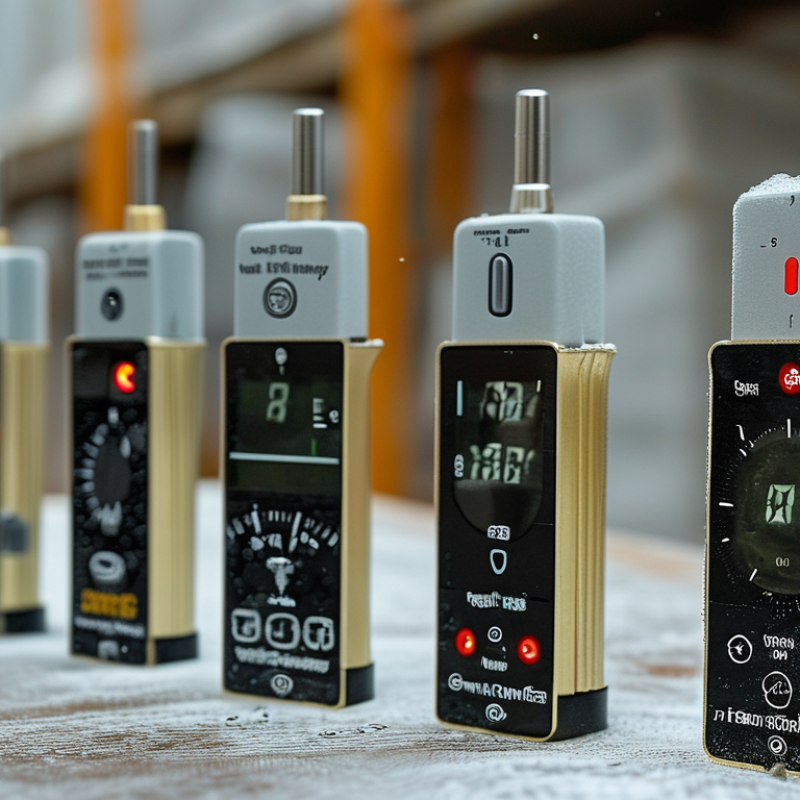
What an Air Humidity Sensor Measures and Why It Matters
An air humidity sensor measures the amount of water vapor in the air. Most devices report relative humidity as a percentage. A reading of 50% means the air holds half of its moisture capacity at that temperature. Temperature matters because warm air can contain more vapor than cold air. Some advanced sensors also calculate dew point, which helps predict condensation on windows, pipes, or stored products.
Humidity affects comfort, equipment, materials, and production quality. In a warehouse, excessive moisture may encourage mold or damage packaging. In a greenhouse, low humidity can increase plant water loss. Offices may feel dry when humidity falls below a comfortable range. A useful sensor should provide stable readings, respond quickly to changes, and operate across the expected temperature range. Check accuracy at both low and high humidity, not only at room conditions.
Placement can change the result. A sensor near a door, heater, vent, or sunny window may report local conditions rather than room conditions. I have seen readings shift after moving a device only one meter. That detail is easy to overlook. Look for calibration information, data logging, clear units, and a replaceable or protected sensing element. No sensor stays perfect forever. Dust, condensation, and aging can introduce errors, so periodic comparison with a trusted reference remains wise. Even careful buyers can miss this.
How to Define Measurement Range, Accuracy, and Response Requirements
For global buyers, define the humidity range from the actual environment, not the product brochure. Indoor air monitoring often targets 30–50% relative humidity, the range recommended by the U.S. Environmental Protection Agency. Storage rooms may need wider coverage, such as 10–90% RH. Process chambers can require near-condensation conditions. Write the minimum, maximum, temperature range, and exposure duration into the specification. Otherwise, “0–100% RH” may sound impressive but prove useless.
Accuracy needs a clear reference. A stated ±2% RH should identify temperature, calibration points, hysteresis, and long-term drift. The World Meteorological Organization’s Guide to Instruments and Methods of Observation stresses traceability and uncertainty evaluation. Ask for calibration evidence linked to recognized national standards. Also check whether accuracy applies across the entire range. Many sensors perform well near 50% RH but degrade at the extremes. That detail is easy to miss.
Response time should match the application’s air movement and sampling design. ISO 7726 provides guidance for measuring physical environmental quantities, including instrument response considerations. Request T63 or T90 data, and ask whether testing used still air or flowing air. A fast sensor can still deliver slow results inside a poorly designed probe. Real installation matters. Field trials are worth the inconvenience. I have seen specifications look precise, while condensation, filters, and temperature changes quietly distort readings. Build a tolerance budget, then allow room for imperfect conditions.
Which Sensor Technologies Fit Different Global Applications
Selecting an air humidity sensor starts with the application, not the product sheet. In HVAC systems, capacitive sensors offer stable readings across office temperatures. They suit moderate humidity and low maintenance schedules. For grain storage, polymer-based capacitive elements can work well, but dust protection matters. Check the enclosure rating before installation. A cheap exposed sensor may drift after one harvest season.
Resistive sensors can fit simple monitoring tasks and cost-sensitive projects. However, their accuracy may change with temperature, contamination, and long cable runs. Thermal conductivity sensors are useful in dry industrial gases. They are less suitable near condensation. For laboratories and calibration work, chilled mirror technology provides strong reference accuracy. It usually costs more and needs cleaner conditions. Consider service skill, replacement access, and local calibration resources.
Cold-chain logistics needs fast response and reliable performance near condensation. A sensor with protective filtering may outperform a faster, uncovered element. Agriculture often requires broad humidity ranges and resistance to dust, fertilizer, and outdoor temperature swings. Small errors matter. A displayed 5% difference can change irrigation decisions. During site reviews, buyers sometimes compare only accuracy percentages. That is incomplete. Response time, hysteresis, temperature compensation, output type, and calibration records deserve equal attention. I would also test the chosen sensor beside a trusted reference for several days. Field conditions often expose weaknesses that laboratory charts hide. Calibration is easy to overlook.
How to Compare Environmental Protection, Calibration, and Reliability
When comparing air humidity sensors, examine environmental protection beyond a low-power claim. Check energy use during continuous operation and standby periods. Ask whether the housing contains restricted substances and recyclable materials. Confirm the device tolerates dust, condensation, and temperature changes. An IP rating helps, but it does not replace installation planning. A sensor near a steam outlet may fail early, even with strong protection.
Calibration evidence deserves careful attention. Request a calibration certificate with reference standards, test conditions, date, and uncertainty. Results linked to an ISO/IEC 17025 laboratory provide stronger confidence. Compare the stated accuracy across the full humidity and temperature range. A sensor accurate at 50% RH may perform differently at 90% RH. Look for two-point calibration, temperature compensation, and field adjustment procedures. I once trusted a single midpoint reading too quickly. That shortcut created a costly blind spot.
Reliability depends on more than advertised accuracy. Review drift data, response time, hysteresis, condensation recovery, and expected service life. Ask how often recalibration is recommended under continuous use. Examine the connector, cable seal, and enclosure before approving the purchase. These small parts often face the harshest conditions. Request sample test records, not only polished specifications. Also compare data logging, alarm stability, replacement costs, and technical support across regions. A practical trial in the target environment can reveal problems that laboratory tables miss. Perfect performance is rarely permanent.
What to Check About Compliance, Integration, Cost, and Supplier Support
Buying an air humidity sensor is not only a specification exercise. Compliance affects customs clearance, installation, and future audits. Check applicable requirements for each destination, including electromagnetic compatibility, restricted substances, electrical safety, and radio approvals. Request test reports, declarations, material statements, and calibration records. Do not rely on a compliance logo alone. The IEA’s Energy Efficiency 2023 report estimates that buildings consume about 30% of global final energy, making reliable humidity control commercially important.
Integration deserves equal attention. Confirm the sensing range, accuracy, hysteresis, response time, operating temperature, and long-term drift. Check whether the output supports your controller, such as 4–20 mA, Modbus, BACnet, or a digital interface. Ask for wiring diagrams and sample code before ordering. Small mismatches can create expensive redesigns. They happen.
Calculate total cost, not just unit price. Include calibration, gateways, cables, replacement intervals, import charges, and technician time. The UNEP 2023 Global Status Report for Buildings and Construction reports that buildings and construction contribute roughly 37% of global energy-related emissions. Better monitoring may reduce waste, but only when readings remain stable. Supplier support matters here. Request calibration procedures, spare-part availability, firmware policies, and response-time commitments. A low-cost sensor without documentation may become the most expensive component. In field evaluations, buyers often compare accuracy first and discover support gaps later. That order deserves reconsideration.





