What Is an Air Conditioning Pump and How Does It Work?
An air conditioner can seem simple from across the room: set a temperature, hear a soft hum, and feel cooler air. Inside, however, several parts work together to move heat outdoors. The Air Condition Pump is often used to mean the system’s compressor, though the term can also describe a condensate pump. That distinction matters. They perform different jobs.
In a typical split system, the compressor circulates refrigerant through a sealed loop. It draws in low-pressure refrigerant vapor and compresses it, raising its pressure and temperature. The hot vapor then flows to the outdoor coil, where it releases heat and condenses into a liquid. After passing through an expansion device, the refrigerant cools and enters the indoor coil. There, it absorbs heat from indoor air. A fan moves that air across the coil, helping the room feel cooler. The cycle repeats. It is less like a pump moving water through a pipe and more like a carefully controlled heat-transfer process.
A condensate pump has another purpose. It lifts water collected as indoor air passes over a cold coil, especially when gravity cannot drain it away. A drip, unusual noise, or warm room may point to a problem, but symptoms alone cannot confirm the cause. Small details matter. This guide explains the pump’s role, the cooling cycle, common warning signs, and basic maintenance considerations. It also separates similar-sounding components, because even product descriptions do not always use the same terminology. When a system needs electrical or refrigerant work, a qualified HVAC technician can assess it safely.
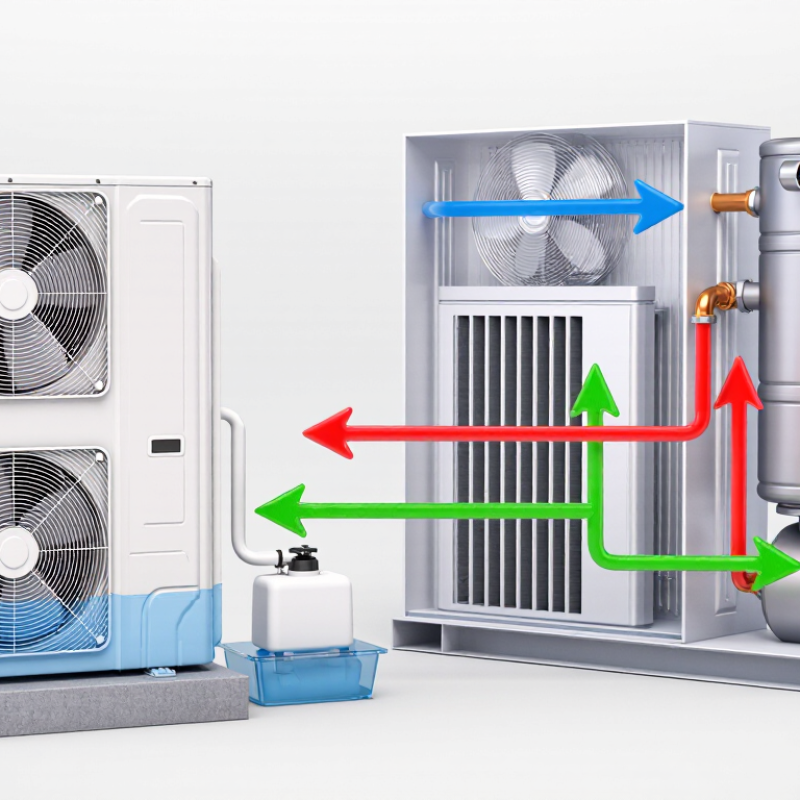
What an Air Conditioning Pump Is and What It Does
An air conditioning pump usually means the compressor, the component that keeps refrigerant moving through a cooling system. The name can be confusing. In some installations, “pump” may instead mean a condensate pump, which removes water collected as indoor air cools. These parts do different jobs.
The compressor draws in low-pressure refrigerant vapor from the indoor coil and squeezes it into a hotter, higher-pressure vapor. That vapor travels to the outdoor coil, where it releases heat and changes into liquid. The refrigerant then passes through a metering device, cools, and returns to the indoor coil to absorb heat again. It is a closed loop, not a pump drawing fresh air through the home. A steady hum may be normal, but hard rattling or repeated stops deserve attention. Small clues matter. If water collects in a drain pan, a condensate pump may be involved; a clogged hose or stuck float can interrupt its operation. The exact layout varies by system, so checking the equipment manual or asking a qualified technician is wiser than guessing from the word “pump” alone.
Where the Pump Fits Within an Air Conditioning System
The phrase “air conditioning pump” can describe more than one component. In a typical split system, the compressor—not a separate pump—drives refrigerant through the outdoor and indoor coils. That distinction matters. Calling every moving fluid device a pump can make troubleshooting confusing.
A condensate pump sits beside the indoor unit, usually near its drain pan. As the coil removes moisture from the air, water collects in the pan. Gravity normally carries it through a drain line. If the unit is below a suitable drain outlet, a small pump lifts that water through tubing to a drain. A float switch often starts the pump when its reservoir fills. A clogged tube may cause water to collect or trigger a safety shutoff.
Larger buildings may use chilled-water pumps, too. These sit in the water piping, moving chilled water between a chiller and indoor fan-coil units. They do not circulate refrigerant. A humming motor, weak flow, or damp floor can offer clues, but none proves the pump is faulty; blocked lines and electrical issues can look similar. The exact layout varies, so checking the system diagram is often more useful than relying on the component’s name.
The Main Parts of an Air Conditioning Pump
The air-conditioning pump is usually called the compressor. It moves refrigerant through the system by drawing in cool, low-pressure vapor and compressing it into hot, high-pressure vapor. Its exact design varies. A vehicle unit may use pistons, while other systems use scroll or rotary mechanisms.
The outer housing contains and protects the working parts. Inside, a motor or drive shaft turns the compression mechanism. Pistons, scrolls, or vanes squeeze the refrigerant.
Small parts matter. Valves guide refrigerant through the inlet and outlet ports, while bearings support moving shafts and reduce friction. Seals help keep refrigerant and lubricating oil inside. A worn seal may leave oily residue near a joint, though that clue alone does not confirm a leak.
Some vehicle compressors also have a clutch that connects the shaft to the engine drive when cooling is needed. Real assemblies can look less orderly than diagrams suggest, and their layouts differ.
Not always obvious. A technician checks the component design before identifying parts, since similar-looking fittings can serve different purposes.
How the Pump Moves Refrigerant Through the Cooling Cycle
An air-conditioning “pump” usually means the compressor. It does not push liquid through every part of the system. Instead, it draws in cool, low-pressure refrigerant vapor and compresses it. The vapor leaves hot and at high pressure, then flows through the outdoor condenser. There, heat escapes into the air, and the refrigerant becomes liquid. The term “pump” is a little misleading, but it describes the circulation job.
Next, the liquid passes through an expansion device, which sharply lowers its pressure. In the indoor evaporator, the refrigerant absorbs heat from room air and boils back into vapor. A fan moves air across the coil; you can feel the change at the vent. The compressor then receives the vapor, and the cycle repeats. The International Energy Agency’s Future of Cooling report estimates that air conditioners used about 2,000 terawatt-hours of electricity in 2016, roughly 10% of global electricity use. That figure is a reminder that small gains in system performance matter.
Tips: Keep the outdoor coil clear of leaves, and replace or clean filters as directed. If cooling weakens or ice forms, switch the system off and arrange a qualified inspection. Low refrigerant may indicate a leak; simply adding more may not fix the cause.
Common Types of Air Conditioning Pumps and Their Uses
An air conditioning pump moves water or refrigerant-related fluids; it does not create cooling by itself. The right pump depends on the system’s design. A condensate pump removes water collected as warm air passes over a cold evaporator coil. It is useful when the indoor unit sits below a drain outlet, such as in a basement. Many small systems rely on gravity and need no condensate pump. Simple, but easy to overlook.
In larger buildings, chilled-water circulation pumps move water between a chiller and air-handling coils. Centrifugal pumps are common for this job because they can maintain steady flow through long pipe runs. Inline models save floor space, while end-suction models are often easier to access for servicing. Pump size and flow must match the system; an oversized pump can waste energy and create unwanted pipe noise. Actual layouts vary.
Tips: Keep the condensate reservoir and float switch clean, and check the discharge tube for kinks or blockage. A pump that hums without moving water may have a stuck float or clogged line. Turn off power before inspection, and ask a qualified HVAC technician to diagnose recurring faults.
Common Types of Air Conditioning Pumps and Their Uses
Condensate pumps remove water collected during cooling. Chilled-water pumps circulate chilled water through hydronic cooling systems, while condenser-water pumps move water between a water-cooled chiller and its cooling tower. The chart shows typical duties, not performance ratings; actual system designs vary.





