


Aerogel Ceramic Fiber Insulation Paper HP-CF-010 is designed for applications where low weight, limited space, and heat control all matter. A thin sheet can help line a compact equipment enclosure or protect a hot pipe section without adding bulky insulation. Yet a product name alone does not prove performance. Buyers should check the current datasheet for service temperature, thickness, density, thermal conductivity, and installation limits.
Aerogel and ceramic fiber bring different strengths to an insulation system. Their combination may support effective thermal protection in a lightweight format, but results depend on the full assembly. Seams, compression, moisture, airflow, and contact with adjacent materials can change real-world performance. Small details matter.
A named expert quotation was not provided, and I cannot verify a reliable quotation about this specific product. Rather than inventing one, this introduction keeps its claims tied to information that should be confirmed in technical documentation. That caution is useful. It may also feel less persuasive than a confident sales claim, but reliability matters more.
This article examines why engineers may consider Aerogel Ceramic Fiber Insulation Paper HP-CF-010, what details to review before selection, and where application testing is prudent. The right choice depends on actual operating conditions, not just a headline specification. Check the data. Test the assembly.
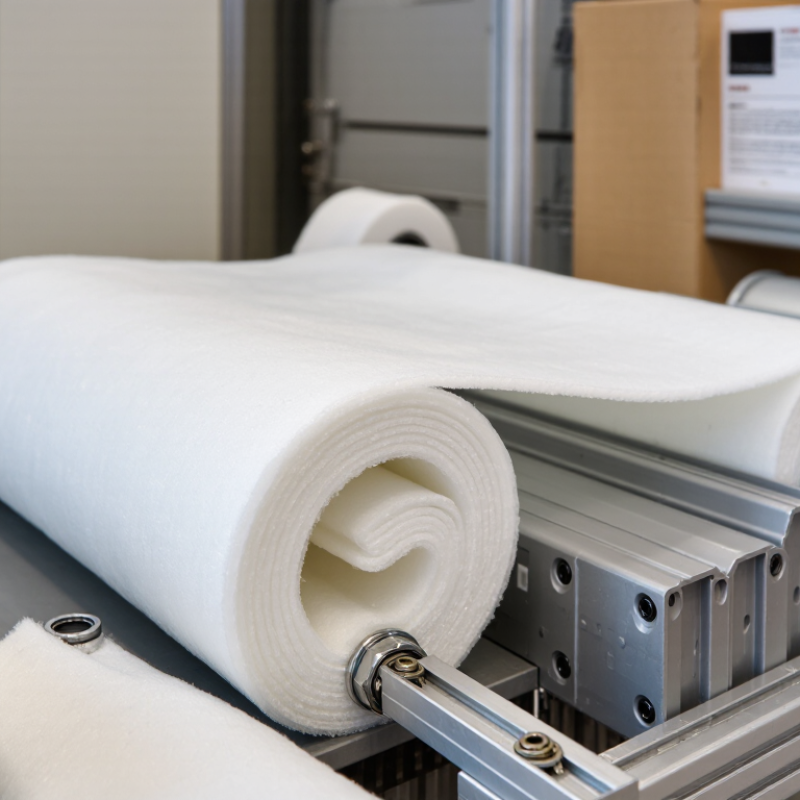
HP-CF-010 is a thin, flexible insulation sheet made for heat-control applications. Aerogel particles within a ceramic-fiber structure create a fine, porous barrier that slows heat transfer. The sheet can suit compact spaces around pipes, furnace components, or equipment panels, where bulky insulation is difficult to fit. Its paper-like form also makes it easier to cut and place. Check the product datasheet for exact composition, thickness, temperature limits, and handling guidance; these details can vary.
The need for effective insulation is substantial. The International Energy Agency’s 2023 tracking report estimates that industry accounts for about 37% of global energy use and 24% of direct CO₂ emissions. That figure is not a performance claim for this material. It does show why reducing heat loss in industrial processes matters. In practice, results depend on installation, compression, seams, and operating conditions. A small gap can undermine an otherwise well-fitted layer.
Tips: Measure the installation area before cutting, and keep the sheet dry and evenly fitted. Avoid compressing it unless the technical data permits this. One detail is easy to overlook: a thinner layer is not automatically the better choice. Compare verified thermal data with the actual service temperature and available space.

Aerogel ceramic fiber insulation paper works through a porous structure, not a single insulating ingredient. A ceramic-fiber web provides a thin framework that helps the sheet hold together during handling and installation. Silica aerogel fills many of the tiny spaces within that web. Its nanoscale pores restrict heat transfer through trapped gas, while the fiber network limits continuous solid paths. The result can be a lightweight sheet for insulating compact gaps. It may suit equipment covers, furnace components, or thermal breaks where bulky boards are awkward. Fit still matters.
The two materials balance each other. Aerogel offers low thermal conductivity, but can be fragile on its own. Ceramic fibers reinforce the sheet and make it easier to cut and place, though edges may fray. Small overlaps matter. Gaps around a pipe or panel can let heat bypass the insulation. Compression also deserves attention: squeezing the sheet may change its pore structure and reduce performance. Service temperature, thickness, binder content, and exposure conditions vary by product, so check technical data before specifying it. A thin sheet cannot correct poor joints or unstable supports. Its structure helps most when installation is neat and operating conditions are understood.
Thermal conductivity is a useful starting point when evaluating aerogel ceramic fiber insulation paper. A benchmark of 0.015–0.020 W/(m·K) indicates low heat transfer under the stated test conditions. For the same thickness and temperature difference, a lower value generally means less heat passes through the material. That matters.
In practical use, a thin sheet may help limit heat loss around equipment, pipework, or compact enclosures where space is tight. The actual result depends on temperature, density, compression, moisture, and installation quality. A small gap at an edge can undermine an otherwise careful fit. Compare data only when test methods and mean temperatures are similar; figures from different conditions are not directly interchangeable.
The benchmark deserves scrutiny, too. A single number can still mislead, and conductivity may rise as operating temperature changes. Ask for test details, including the measurement temperature and specimen thickness, before estimating system performance. Check how the paper handles bending and compression during installation. Real assemblies are rarely as tidy as laboratory samples. That difference is worth allowing for in design calculations.
Ceramic fiber grades can reach classification temperatures up to 1,260°C, making them useful in demanding thermal systems. That figure is not a universal continuous-use limit. Actual performance depends on the insulation grade, exposure time, atmosphere, and mechanical load. A furnace lining exposed to steady heat may behave differently from a thin sheet near a burner opening.
Aerogel ceramic fiber insulation paper combines a flexible sheet form with low thermal conductivity. It can fit narrow gaps around furnace doors, hot pipes, or equipment panels where rigid boards are awkward to install. The paper is lightweight and easy to cut, but edges can fray during handling. Wear suitable protective equipment and follow the product’s installation guidance.
Check the rated temperature and test conditions before selecting a grade. Also consider compression, airflow, moisture, and direct flame exposure. These details can reduce service life, even when the nominal rating appears suitable. A small test section may reveal fit or handling issues before a larger installation. It is tempting to size insulation by temperature alone. That can be a mistake. The exact operating conditions matter.
HP-CF-010 aerogel ceramic fiber insulation paper is suited to assemblies where limited space and heat loss both matter. Its thin, flexible format can help line equipment covers, thermal shields, and compact hot-face components. Think of a narrow gap behind a metal panel, not a thick blanket filling a large cavity. Fit matters.
Selection should start with the operating temperature and the temperature at the material’s actual location. A furnace reading alone may not describe conditions inside a layered assembly. Check the required thickness, available clearance, compression, and exposure to vibration or repeated heating cycles. Also confirm whether the paper will face direct contact, airflow, or moisture. These details affect installation and service life.
Handling deserves attention. Thin insulation can tear at cut edges, so plan clean cuts and support it during fitting. For irregular surfaces, check whether it can conform without excessive compression; squeezing it into place may reduce its insulating performance. Review the product’s technical data and test method before comparing values. The awkward part is that a low thermal-conductivity figure cannot predict every installation outcome. A small trial section may reveal fit problems that a drawing misses.
| Application or Selection Factor | Typical Conditions or Requirement | Where Insulation Paper May Fit | What to Check Before Selection |
|---|---|---|---|
| Furnace and kiln linings | High radiant heat, repeated heating cycles, and limited installation space. | A thin, flexible paper layer may be used as a backup layer, gasket, or part of a multilayer lining where its rated temperature and mechanical limits are suitable. | Confirm continuous and peak service temperatures, atmosphere, shrinkage, thermal cycling, and compatibility with the hot-face lining. |
| Industrial pipe and duct insulation | Heat loss control on hot process lines, ducts, or equipment with restricted clearance. | Thin insulation can help where space is constrained and a conformable layer is useful around curved surfaces or joints. | Check operating temperature, pipe geometry, required insulation thickness, weather protection, and whether a rigid or removable covering is needed. |
| Thermal barriers in equipment | Localized heat separation between hot components and nearby structures or controls. | Paper can serve as a compact barrier or separator when supported and protected from abrasion, airflow, and direct mechanical loading. | Assess heat flow, contact conditions, edge sealing, vibration, fastening method, and nearby materials’ temperature limits. |
| Appliance and heating-system components | Repeated operation in enclosed spaces, often with tight tolerances and formed parts. | A flexible sheet may be suitable for gaskets, spacers, or insulation inserts if the part is designed for the material’s service conditions. | Verify temperature cycling, compression behavior, electrical requirements, emissions requirements, and relevant product-safety standards. |
| Temperature rating | The material must withstand the actual continuous temperature and short-duration peaks. | Selection should be based on the finished material’s documented rating, not on the temperature rating of an individual ingredient. | Request the specific grade’s technical data sheet and distinguish continuous-use temperature from maximum or classification temperature. |
| Thermal performance and thickness | Required heat-loss reduction depends on temperature difference, geometry, installation, and insulation thickness. | A low-conductivity material can be useful where reducing thickness is important, but performance must be evaluated at the relevant mean temperature. | Compare thermal-conductivity data at applicable temperatures and calculate the required thickness for the design conditions. |
| Flexibility and installation | Complex shapes, narrow gaps, joints, or surfaces that require a conformable sheet. | Paper-format insulation can be easier to cut and fit than rigid boards in some installations. | Check thickness tolerance, density, handling strength, bend radius, joint design, and whether support or a protective facing is required. |
| Mechanical durability | Exposure to vibration, airflow, abrasion, compression, or repeated maintenance. | Use is most appropriate when the paper is restrained and not expected to act as a load-bearing component. | Confirm tensile and compressive properties, erosion resistance, fastening details, and the need for encapsulation or a protective layer. |
| Environment and compliance | Potential exposure to moisture, chemicals, process gases, or regulated work environments. | Suitability depends on the complete formulation and the operating environment; material names alone do not establish compatibility. | Review chemical compatibility, moisture effects, safety data, applicable regulations, and handling and installation guidance. |
| Product-specific verification | The title identifies HP-CF-010, but no product datasheet or verified performance values are provided here. | Treat the application examples as screening guidance rather than confirmed product approvals or specifications. | Before purchase or installation, obtain the current technical data sheet and confirm grade, dimensions, temperature limits, test methods, and application suitability with the supplier. |


For those larger-sized parts, or smaller quantity runs, we have 2 independent powder coat booths and ovens. The quality, durability and affordability of today’s powder coating finishes make this the process of choice for world-class companies.
Powder coating advantages over other forms of coating are many. Materials used in the Powder coating process can be metals and non-metals that come in a multitude of thicknesses, textures, colors, etc. Another of Powder coating’s biggest advantages over conventional coatings is its ability to create finishes in many different textures. Powder Coating Booths allow us the ability to apply these advantages to large products.
Tri-State Fabricators runs a full-service conveyor line for painting. Wet painting can provide protection or decoration to many different part styles. From start to finish, every project is easier to undergo random and point-based inspection by our skilled painting team.
Advantages to our Wet Paint Line are these lines start with product prep and ends with a thorough inspection of a high quality finished product. Our ability to complete large and small projects with a superior finish and doing so in a timely and economical fashion. This passes along the savings in production to our customers. When powder coating ins not an option, our Wet Paint Line gets the job done right the first time.
When the parts get big and heavy we roll-out our custom paint racks and oversize booth. By utilizing our partnerships with all the major paint brands, we can match virtually any color with wet paint.
The advantages of having access to a Wet Paint Booth are many. Large projects of many different shapes can be loaded into the booth. The Wet Paint Booth offers an environment that is much more controlled than a typical parts painting operation.
Not only are they used because of their controlled environment, but they’re are also advantageous when it comes to applying paint to parts that are needed in industries that require specialty coatings such as medical, aerospace, etc.
Our military forces have some very high standards when it comes to the finish of their vehicles and equipment. From the first pre-treatment step to final coat, it takes a great deal of knowledge and experience to protect the men and women of our armed forces. They deserve only the best, and Tri-State Fabricators provides it.
All of our processes are closely monitored by our staff and management teams. Both of which are highly trained in the processes of metal fabrication and finishing. Tri-State Fabricators’ goal is to always fully satisfy each and every customer, including the military. We will always put a 110% into what we do.
Abrasive media blasting is an excellent way to remove old paint, rust, and increase the paint/powder adhesion. Glass beads produce a much smoother and brighter finish than angular abrasives; leaving the part clean yet without any dimensional change. Chemically inert and environmentally friendly, we can recycle our beads approximately 30 times; making them a more preferred method of metal cleaning or surface finishing.
Advantages to Glass Bead Blasting are many. Glass bead blast media is used when a project is needing rough surfaces need to become smooth for applications of coatings such as paint. It is typically used to clean paint and rust from a product surface without deforming the surface it is being used on. Overall, compared to many other blasting media, Glass Bead Blasting is a very economical choice and those savings are always passed on to our customers.
Tri-State Fabricators utilize a zinc phosphate wash to clean and etch the material to ensure the best paint adhesion possible. The unique design of our 3-stage wash system does the work like a 5-stage. From Cleaning and rinsing to conversion coating and post-treatment, Our Part Washing process is a complete service and works throughout the fabrication service and the finishing service.
Along with the previously mentioned benefits, Curing is a vital chemical reaction that leaves the product finish hard and relatively safe from mild abrasion and aggressive corrosion. This process can be done in more than one way; ambient air-dry or in curing ovens at temps that exceed 240°.
From fixing paint mistakes (someone else’s of course) to simply cleaning our paint line hooks, our burn-off oven is put to good use. After a quick burn-off, a little clean up, and a fresh coat of paint, your parts will look better than new.
Why does our Burn-Off Oven work so well? Because super heating the air around parts turns the materials into ashes. From paint and powder coatings to rubber and machining oils, high temps do the job without degrading the integrity of the part.
Masking is a vital part of producing high quality products. We have die-cut masking patterns to protect machined surfaces as well as a wide range of plugs and caps to protect threaded holes and bolts. We provide permanent and temporary masking.
Masking allows the selected sections of a product to be protected from a fabrication or finishing service. This can be with both chemicals when etching and tapes, paints when only finishing just a section of the product. Masking is great in aiding the customization process of a project.
Screen printing is a photographic process that transfers artwork onto a porous nylon screen which allows colored ink to flow through the screen and be deposited on an aluminum or plastic component. We can generally have just about any design created onto a screen for your parts.
Some of the advantages of Screen Printing are, brand recognition for your business displaying on your products, assembly instructions, product warnings/hazards, etc. Tri-State Fabricators produces Screen Printing of the highest quality so you know it’s durable.
Metal Finishing is the art of treating the exterior portion of product, often metal but can also be made of other materials, so that the surface is clean and free of any debris. Then the process of applying coats or either paint of powder coat takes place. This coating process improves the quality of the product in both appearance and resistance to wear and corrosion.
Tri-State Fabricators, Inc., understands that a project typically isn’t complete until a high-quality finish has been added to your product. This is why our painting and powder coating teams continuously inspect the products throughout the Metal Finishing process.

