


7 Tips for Choosing the Right Modbus Converter?

Industrial systems rarely fail because a converter looks unattractive. They fail when electrical conditions, protocol settings, and maintenance expectations are misunderstood. A reliable Modbus Converter must match the existing network, not merely connect two plugs.

The Modbus Organization describes Modbus as an application-layer protocol used across serial links and TCP/IP networks. That flexibility explains its continued presence in PLCs, meters, drives, and building controls. However, compatibility is not automatic. RS-485 wiring, baud rate, parity, termination, isolation, and gateway mapping can all affect performance. One wrong setting may produce silent timeouts instead of a clear alarm.

Market evidence also supports careful selection. HMS Networks’ Industrial Network Market shares report has repeatedly shown industrial Ethernet gaining ground against traditional fieldbus technologies. This shift increases demand for gateways between legacy Modbus Rtu Devices and modern Ethernet systems. MarketsandMarkets has likewise identified industrial communication and networking as expanding areas, driven by automation, connected equipment, and digital monitoring. These reports describe momentum, not a guarantee of suitability.

The practical details matter. Check response time beside a noisy motor cabinet. Confirm whether the converter supports required function codes. Review isolation ratings, diagnostic logs, firmware controls, and vendor documentation. Cybersecurity deserves attention too, especially when Modbus TCP reaches broader operational networks. Modbus itself was not designed with modern authentication in mind.

No converter is perfect.

Even experienced engineers can overlook grounding paths or address conflicts. The following seven tips offer a disciplined way to compare specifications, installation risks, lifecycle support, and real operating conditions before purchasing a Modbus Converter.
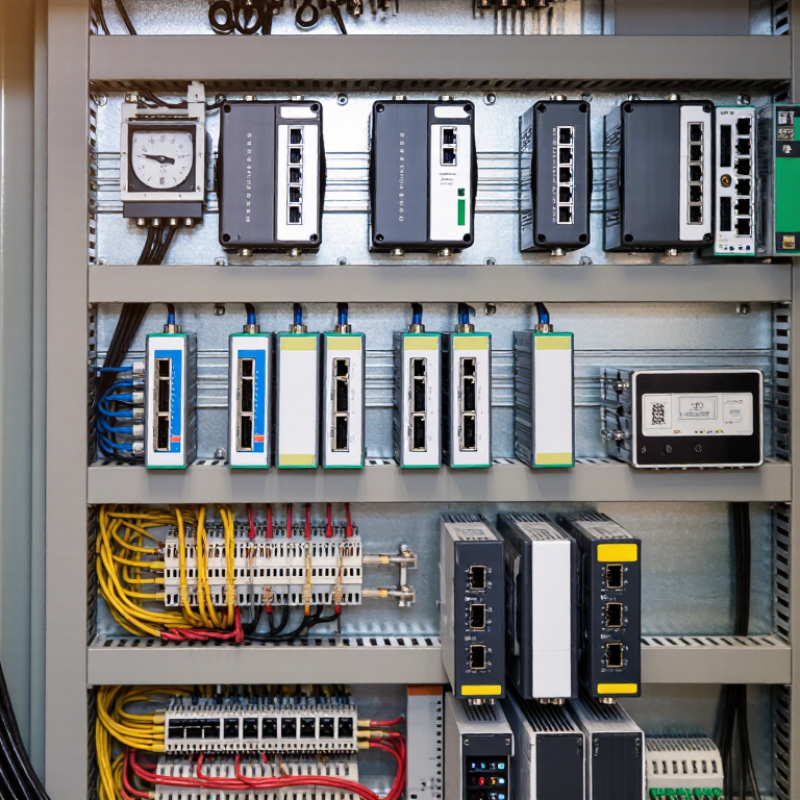
7 Tips for Choosing the Right Modbus Converter?

Define the Modbus Network Requirements

7 Tips for Choosing the Right Modbus Converter?

Define the Modbus Network Requirements

Choosing a Modbus converter starts with a clear picture of the existing network. Identify whether the system uses Modbus RTU, ASCII, or TCP. Record the baud rate, parity, stop bits, and device addresses. Small settings matter. One mismatch can stop communication across an entire line.

Count every field device and estimate the cable distance between them. RS-485 networks may need termination and biasing, especially across long industrial routes. Check the expected polling rate and response timing, too. A converter with suitable ports may still perform poorly when many devices answer at once. In practical commissioning work, simple node counts often reveal hidden capacity problems.

Environmental conditions also shape the requirement. Note electrical noise, temperature changes, grounding quality, and available power. Galvanic isolation can reduce failures caused by voltage differences between cabinets. Network documentation should include connector types, mounting space, and maintenance access. These details seem minor until a replacement must be installed quickly.

Future expansion deserves careful thought. A network supporting six devices today may require twenty next year. Leaving spare capacity usually costs less than replacing an undersized converter. My own planning can be imperfect when assumptions replace measurements. Verifying field settings with a meter, configuration file, or packet trace is safer than trusting old drawings. Every requirement should be tested against the real installation, not only the specification sheet.

7 Tips for Choosing the Right Modbus Converter? - Define the Modbus Network Requirements
Tip Network Requirement Key Questions to Define Converter Selection Guidance Important Checkpoints
1 Communication Interface Is the existing equipment using Modbus RTU over a serial line or Modbus TCP over Ethernet? Is a serial-to-Ethernet, Ethernet-to-serial, or protocol gateway required? Match the converter interfaces to the equipment on both sides. Modbus RTU commonly uses RS-485 or RS-232, while Modbus TCP uses Ethernet and TCP/IP. RS-485 RS-232 Ethernet
2 Serial Parameters What baud rate, data bits, parity, and stop bits are used by the Modbus RTU devices? Do all devices on the serial segment use compatible settings? Choose a converter that supports the required serial settings. Typical Modbus RTU configurations include 8 data bits with even parity and 1 stop bit, but the actual settings must follow the device documentation. Baud rate
Parity
Stop bits
3 Device Count and Addressing How many Modbus slave devices will communicate on the network? Are every device address and unit identifier unique within the applicable segment? Select a converter with sufficient serial device capacity and clear support for Modbus addressing. On a standard RS-485 Modbus segment, device addresses must not conflict. Unique addresses
Unit IDs
Device capacity
4 Distance and Signal Integrity What is the cable length between nodes? Will the cable pass near motors, variable-frequency drives, contactors, or other sources of electrical noise? Use a converter designed for the required transmission distance and environment. RS-485 installations generally require balanced twisted-pair cabling, correct polarity, and proper termination at the ends of the bus. Cable length
Shielding
120-ohm termination
5 Traffic and Response Timing How frequently will data be polled? Are fast response times, simultaneous access, or large register blocks required? Check the converter's throughput, buffering, timeout, and polling behavior. Modbus RTU is request-response based, so excessive polling or oversized requests can increase latency and communication errors. Poll interval
Timeout settings
Data buffering
6 Electrical and Environmental Conditions What supply voltage is available? Will the converter be installed in a control cabinet, outdoor enclosure, or area with vibration, dust, moisture, or temperature variation? Verify the input power range, isolation method, operating temperature, enclosure requirements, and mounting method. Galvanic isolation can help reduce ground-loop and transient-related communication problems. Power input
Isolation
Temperature rating
7 Diagnostics and Future Expansion How will faults be identified? Is remote configuration needed? Could the network require additional devices, interfaces, or security controls later? Prefer a converter with useful diagnostics such as status indicators, event logs, adjustable timeouts, serial monitoring, and configuration backup. For Ethernet-based networks, review supported network settings and access-control capabilities. LED indicators
Event logs
Remote management

Match the Converter with Modbus Protocol Types

Choosing a Modbus converter starts with identifying the protocol already installed. Modbus RTU and Modbus ASCII usually operate through serial interfaces, while Modbus TCP uses Ethernet and IP addressing. They are not interchangeable by default. Modbus Organization’s Application Protocol Specification V1.1b3 defines different message handling for serial and TCP networks, so the converter must match the actual communication layer. Check baud rate, parity, slave address, termination, and connector type before purchasing.

Tip 1: Map the signal path. A practical test begins at the field device and ends at the control system. Record every interface, cable length, and gateway function. If a serial meter connects to an Ethernet network, choose a serial-to-TCP converter with transparent data forwarding. Avoid assuming that every TCP device supports identical polling behavior.

Tip 2: Check network capacity. A 2024 industrial network market study from HMS Networks reported Ethernet at about 71% of newly installed industrial nodes, compared with 22% for fieldbus and 7% for wireless connections. This shift supports Ethernet conversion, but it does not remove serial requirements.

Tip 3: Verify diagnostics, isolation, and response timing. Look for adjustable timeout settings, surge protection, and clear status indicators. In field tests, unstable grounding can resemble a protocol mismatch. That mistake is easy to make. One overlooked setting can create intermittent faults, especially when multiple converters share a busy network.

Check Interface, Wiring, and Signal Compatibility

7 Tips for Choosing the Right Modbus Converter

Check Interface, Wiring, and Signal Compatibility

Tip 1: Confirm both interfaces before comparing prices. A converter for RS-485 cannot directly replace one designed for RS-232. Ethernet-based Modbus TCP also requires different network settings and testing.

Tip 2: Inspect the wiring carefully. Check whether your field network uses two-wire or four-wire RS-485 communication. Verify A and B polarity, cable shielding, grounding, and termination resistors. A reversed pair can make a healthy converter appear defective. I have seen this mistake during commissioning.

Tip 3: Match the signal details. Compare voltage levels, baud rate, parity, stop bits, and device address ranges. Current-loop or pulse signals may require a different converter entirely. Do not assume “Modbus compatible” means every signal will work.

Tip 4: Look for electrical isolation when devices have separate power sources. Isolation can reduce ground-loop problems and protect communication ports from field noise. It is not a cure for poor wiring, though.

Tip 5: Read the technical datasheet, not only the product label. Check operating temperature, connector type, transmission distance, and supported Modbus modes. Small details matter.

Tip 6: Test the converter with one known device first. Record stable communication settings before connecting the full network. This saves time.

Tip 7: Leave room for uncertainty. Older equipment may use unclear labels or inconsistent manuals. Verify signals with a meter or approved tester, and document every change. One assumption can stop an entire line.

7 Tips for Choosing the Right Modbus Converter

Check interface, wiring, and signal compatibility before selecting a converter.

Typical maximum segment lengths vary by physical interface. RS-232 is designed for short point-to-point connections, while RS-485 and RS-422 support longer balanced-wire networks. Standard copper Ethernet segments are typically limited to 100 meters. Actual distance depends on baud rate, cable quality, grounding, termination, and electromagnetic interference.

Evaluate Speed, Distance, Isolation, and Reliability

7 Tips for Choosing the Right Modbus Converter

Evaluate Speed, Distance, Isolation, and Reliability

Tip 1

Match the converter with your required communication speed. A fast network is useless if the connected devices respond slowly. Check baud rates, polling intervals, and maximum data throughput before installation. During commissioning, record actual response times under normal traffic. Numbers from a catalog may not reflect field conditions.

Tip 2

Measure the cable route, not just the drawing. Long RS-485 runs can suffer from attenuation, reflections, and electrical noise. Confirm the converter’s supported distance at your selected baud rate. Lowering speed may improve stability over older cables. It feels inefficient, but stable data is more valuable than impressive speed.

Tip 3

Treat isolation as essential near motors, inverters, or separate power systems. Galvanic isolation can reduce ground-loop faults and protect communication ports. Check isolation voltage, operating temperature, and installation spacing. A converter with weak isolation may work perfectly during testing, then fail after nearby equipment starts.

Tip 4

Examine reliability beyond the enclosure. Look for clear status indicators, diagnostic counters, watchdog functions, and safe recovery after power loss. Test the device through repeated restarts and temporary cable disconnections. I once overlooked restart behavior, and the network required manual intervention afterward. That mistake changed my commissioning checklist.

Compare Configuration, Support, and Total Cost

7 Tips for Choosing the Right Modbus Converter

Tip 1: Check configuration before comparing prices.

A converter should support the required Modbus RTU, ASCII, or TCP settings. Confirm baud rate, parity, slave addresses, and termination options. Clear web tools or labeled switches can reduce setup time.

Tip 2: Test documentation quality.

Wiring diagrams should show terminals, grounding, and indicator meanings. Vague instructions create avoidable commissioning delays.

Tip 3: Review compatibility with existing PLCs, sensors, and network equipment.

A small laboratory test is safer than discovering communication errors on site.

Tip 4: Examine technical support carefully.

Ask whether engineers provide setup guidance, diagnostic steps, and firmware information. Support response times matter during a production stoppage.

Tip 5: Look for practical evidence, such as test reports, operating temperature ranges, and verified isolation ratings.

Claims alone are not enough. I have seen projects choose inexpensive devices, then spend more on troubleshooting. That mistake is easy to repeat.

Tip 6: Calculate total cost, not only purchase price.

Include cables, software, mounting accessories, training, spare units, energy use, and maintenance hours. A slightly higher initial cost may reduce long-term labor.

Tip 7: Compare lifecycle reliability.

Check warranty terms, replacement procedures, and product availability. Ask how configuration files can be backed up and restored. Keep records. A converter that works today may still create future risk if settings cannot be recovered.

My own evaluation process is not perfect; field conditions often reveal details missed in a spreadsheet. Therefore, compare written specifications with a real installation sample, especially when network distance, electrical noise, or limited cabinet space could affect performance.

Powder Coat Booths

For those larger-sized parts, or smaller quantity runs, we have 2 independent powder coat booths and ovens. The quality, durability and affordability of today’s powder coating finishes make this the process of choice for world-class companies.

Powder coating advantages over other forms of coating are many. Materials used in the Powder coating process can be metals and non-metals that come in a multitude of thicknesses, textures, colors, etc. Another of Powder coating’s biggest advantages over conventional coatings is its ability to create finishes in many different textures. Powder Coating Booths allow us the ability to apply these advantages to large products.

Wet Paint Line

Tri-State Fabricators runs a full-service conveyor line for painting. Wet painting can provide protection or decoration to many different part styles. From start to finish, every project is easier to undergo random and point-based inspection by our skilled painting team.

Advantages to our Wet Paint Line are these lines start with product prep and ends with a thorough inspection of a high quality finished product. Our ability to complete large and small projects with a superior finish and doing so in a timely and economical fashion. This passes along the savings in production to our customers. When powder coating ins not an option, our Wet Paint Line gets the job done right the first time.

Wet Paint Booths

When the parts get big and heavy we roll-out our custom paint racks and oversize booth. By utilizing our partnerships with all the major paint brands, we can match virtually any color with wet paint.

The advantages of having access to a Wet Paint Booth are many. Large projects of many different shapes can be loaded into the booth. The Wet Paint Booth offers an environment that is much more controlled than a typical parts painting operation.

Not only are they used because of their controlled environment, but they’re are also advantageous when it comes to applying paint to parts that are needed in industries that require specialty coatings such as medical, aerospace, etc.

Military CARC

Our military forces have some very high standards when it comes to the finish of their vehicles and equipment. From the first pre-treatment step to final coat, it takes a great deal of knowledge and experience to protect the men and women of our armed forces. They deserve only the best, and Tri-State Fabricators provides it.

All of our processes are closely monitored by our staff and management teams. Both of which are highly trained in the processes of metal fabrication and finishing. Tri-State Fabricators’ goal is to always fully satisfy each and every customer, including the military. We will always put a 110% into what we do.

Glass-Bead Blasting

Abrasive media blasting is an excellent way to remove old paint, rust, and increase the paint/powder adhesion. Glass beads produce a much smoother and brighter finish than angular abrasives; leaving the part clean yet without any dimensional change. Chemically inert and environmentally friendly, we can recycle our beads approximately 30 times; making them a more preferred method of metal cleaning or surface finishing.

Advantages to Glass Bead Blasting are many. Glass bead blast media is used when a project is needing rough surfaces need to become smooth for applications of coatings such as paint. It is typically used to clean paint and rust from a product surface without deforming the surface it is being used on. Overall, compared to many other blasting media, Glass Bead Blasting is a very economical choice and those savings are always passed on to our customers.

Part Washing

Tri-State Fabricators utilize a zinc phosphate wash to clean and etch the material to ensure the best paint adhesion possible. The unique design of our 3-stage wash system does the work like a 5-stage. From Cleaning and rinsing to conversion coating and post-treatment, Our Part Washing process is a complete service and works throughout the fabrication service and the finishing service.

Along with the previously mentioned benefits, Curing is a vital chemical reaction that leaves the product finish hard and relatively safe from mild abrasion and aggressive corrosion. This process can be done in more than one way; ambient air-dry or in curing ovens at temps that exceed 240°.

Burn-Off Oven

From fixing paint mistakes (someone else’s of course) to simply cleaning our paint line hooks, our burn-off oven is put to good use. After a quick burn-off, a little clean up, and a fresh coat of paint, your parts will look better than new.

Why does our Burn-Off Oven work so well? Because super heating the air around parts turns the materials into ashes. From paint and powder coatings to rubber and machining oils, high temps do the job without degrading the integrity of the part.

Masking

Masking is a vital part of producing high quality products. We have die-cut masking patterns to protect machined surfaces as well as a wide range of plugs and caps to protect threaded holes and bolts. We provide permanent and temporary masking.

Masking allows the selected sections of a product to be protected from a fabrication or finishing service. This can be with both chemicals when etching and tapes, paints when only finishing just a section of the product. Masking is great in aiding the customization process of a project.

Screen Printing

Screen printing is a photographic process that transfers artwork onto a porous nylon screen which allows colored ink to flow through the screen and be deposited on an aluminum or plastic component. We can generally have just about any design created onto a screen for your parts.

Some of the advantages of Screen Printing are, brand recognition for your business displaying on your products, assembly instructions, product warnings/hazards, etc. Tri-State Fabricators produces Screen Printing of the highest quality so you know it’s durable.

Metal Finishing

Metal Finishing is the art of treating the exterior portion of product, often metal but can also be made of other materials, so that the surface is clean and free of any debris. Then the process of applying coats or either paint of powder coat takes place. This coating process improves the quality of the product in both appearance and resistance to wear and corrosion.

Tri-State Fabricators, Inc., understands that a project typically isn’t complete until a high-quality finish has been added to your product. This is why our painting and powder coating teams continuously inspect the products throughout the Metal Finishing process.


