Choosing a Battery System In Poultry is not simply a purchase decision. It shapes bird welfare, labor routines, hygiene, output, and long-term operating costs.
Global poultry production continues expanding. The OECD-FAO Agricultural Outlook 2024–2033 identifies poultry as a major source of affordable animal protein. Egg production also remains highly industrialized. USDA’s Chickens and Eggs reports show millions of laying hens managed in commercial systems across the United States. These figures reveal the scale of the decision. A small design weakness can affect thousands of birds, workers, and daily production records.
Welfare expectations are changing quickly. EFSA’s 2023 scientific opinion on laying-hen welfare highlights the importance of usable space, movement, bone health, litter access, and reduced injury risks. European rules also restrict conventional battery cages. Local requirements may differ, so equipment should never be selected from a brochure alone. Check current standards and consult qualified poultry engineers.
Look closely at cage dimensions, ventilation, manure removal, feeding lines, drinker access, lighting, and emergency access. Stand beside the system. Can a worker inspect a weak hen without disturbing an entire row? Can spilled feed be removed before attracting pests? These details matter.
No system is perfect. Energy use, maintenance delays, and training gaps can undermine attractive specifications. The following seven tips connect published evidence with practical farm experience. They help compare capacity, welfare performance, sanitation, durability, automation, service support, and total cost. A careful choice protects productivity, but it must also respect the birds behind every production figure.
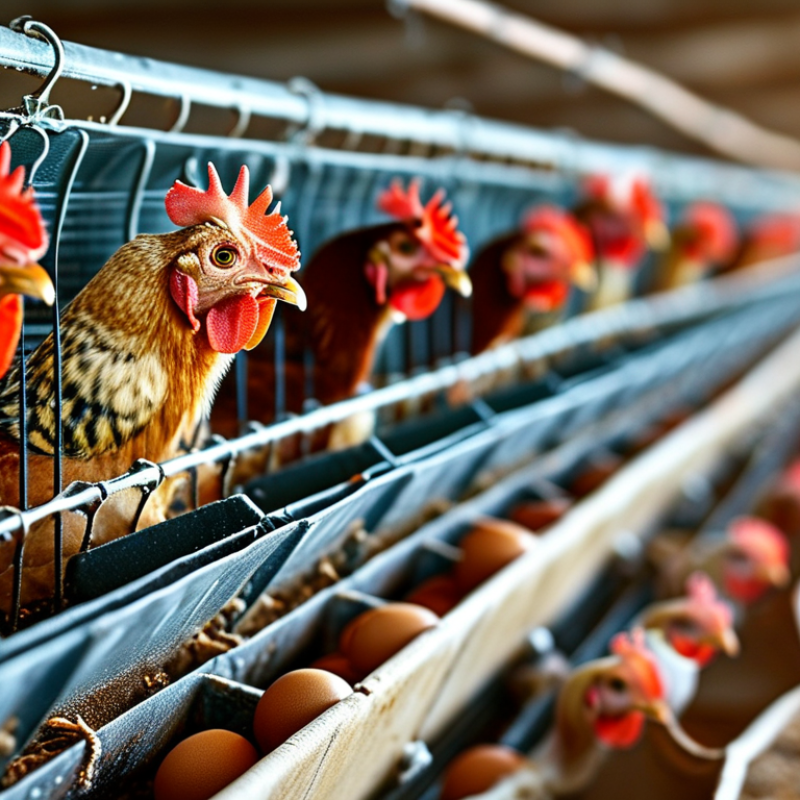
7 Tips for Choosing a Battery System in Poultry
Understanding Poultry Battery Systems and Their Main Functions
A poultry battery system is more than a row of cages. It coordinates feeding, watering, egg collection, ventilation, and manure handling. The system should match flock size, building height, labor capacity, and local welfare requirements. In daily operation, walk the aisle before choosing equipment. Check whether workers can reach drinker lines, remove broken eggs, and inspect hens without awkward bending. Small design faults become expensive routines.
The FAO’s 2023 Agricultural Production Statistics Yearbook recorded about 1.6 trillion hen eggs worldwide in 2022. That scale increases pressure on reliable collection and clean housing. Choose a system with even feed distribution, stable water pressure, and gentle egg transfer. USDA economic analyses commonly place feed near 60% of poultry production costs. Therefore, feeder accuracy deserves serious attention. A few grams wasted per bird can become a large monthly loss. Measure twice.
Ventilation is another core function. Fresh air must remove heat, dust, moisture, and ammonia without creating drafts. Select accessible manure belts or scrapers, then inspect their service points during a mock maintenance walk. European Commission welfare documentation also identifies space, nesting, perching, and litter-related needs in housing assessments. Requirements differ by market, so one layout is not universally suitable. I would not trust a brochure’s capacity figure alone. Compare usable floor area, bird density, downtime, cleaning time, and worker safety. The cheapest system can hide the highest labor bill. Air matters.
Poultry battery systems should be evaluated by their ability to support bird welfare, labor efficiency, hygiene, durability, and reliable daily operation. The planning scores below use a practical 1–5 scale, where 5 represents the highest selection priority.
The most important functions are dependable feeding and watering, effective manure handling, sufficient ventilation access, easy inspection, safe egg collection, and a layout that supports cleaning and maintenance. Actual specifications should be matched to flock size, housing regulations, climate, and local labor conditions.
7 Tips for Choosing a Battery System in Poultry
Choosing a battery system starts with the flock, not the equipment catalogue. Count current birds and estimate realistic growth for the next three to five years. A crowded house increases stress, manure buildup, and ventilation problems. Measure usable floor area, ceiling height, service aisles, and emergency access. Small mistakes matter. My early space estimates were too optimistic.
Match cage capacity to the flock size, while preserving practical working space. Check feeding and watering access for every bird. Observe whether workers can inspect hens without moving equipment. A system may fit on paper but fail during egg collection. Measure door widths and turning areas before delivery. Record daily egg numbers, mortality, feed use, and broken eggs.
Production goals should guide the final choice. Table-egg production may require efficient collection and clear inspection points. Breeding operations need closer attention to mating control and egg handling. Consider labor availability, cleaning routines, ventilation demand, and backup power. Ask for load calculations, maintenance intervals, and written safety guidance. Experienced installers can identify weak points, but farm staff should verify every measurement. Do not choose maximum capacity automatically. Leave room for growth, repairs, and uneven flock behavior. Some plans look efficient until summer heat exposes them. Recheck the layout with a simple scale drawing and a week of actual work records.
Check usable floor space, access to feed, and the distance birds must move. Rounded edges reduce injuries, while stable flooring supports cleaner feet. A practical inspection should include welds, doors, dividers, and manure clearance. Small faults become expensive quickly.
Galvanized steel can resist moisture, but coating quality matters near drinkers. Look for smooth wire, strong joints, and surfaces that are easy to wash. Thin components may bend during cleaning. That weak point is easy to miss. Also, test drinker height and water flow with birds present, not only during installation.
Provide suitable perches, nesting areas, litter access, and enough room for natural movement where the system design allows. Observe feather condition, foot health, stress behavior, and competition around feeders. Quiet birds are not always comfortable birds.
Poor airflow can leave damp manure beneath otherwise well-designed cages. Ask for maintenance records and inspect the system during a busy production period. Select equipment that supports local welfare requirements and veterinary guidance. One honest weakness is useful; hidden weaknesses are costly. A short trial with daily observations may reveal more than a polished brochure.
Test ventilation before comparing cage capacity. Air should move evenly above every row, without drafts at bird level. The 2017 EU BAT Reference Document identifies ventilation and manure handling as major emission controls. Install sensors for temperature, humidity, ammonia, and carbon dioxide. Do not trust one central sensor. Dust can make readings unreliable.
Inspect feeders during a full feeding cycle. Feed should remain accessible, but not accumulate beneath the trough. Check adjustment by hand. A 2022 commercial poultry management handbook reports typical water-to-feed ratios near 1.6–2.0, depending on temperature and flock age. Check nipple pressure, flow, leaks, and drinker height. Small leaks create wet litter surprisingly fast. Water meters should record each house separately.
Plan waste movement before installation. Manure belts, scrapers, storage areas, and access paths must work together. The system should remove waste without blocking ventilation or stressing workers. Review cleaning time, spare parts, and alarm records. Ask for measured ammonia results, not promises. A lower purchase price may hide higher labor costs. I would also inspect one operating farm, because drawings rarely show noise, dust, or awkward maintenance points.
Perfect layouts do not exist. Poor records remain a warning sign.
A poultry battery system should be judged beyond its purchase price. In practice, labor, repairs, cleaning time, and energy use often shape the real cost. I once underestimated the value of easy access; a small adjustment later required hours of work.
Tip 1: Request a full cost estimate, including installation, spare parts, waste handling, and transport.
Tip 2: Compare costs over five years, not just the initial quotation.
Maintenance details deserve close attention.
Tip 3: Inspect feeding lines, drinkers, belts, and fasteners before purchase. Can one worker reach them safely?
Tip 4: Choose components that can be replaced without dismantling entire rows.
Dust gathers everywhere. A blocked drinker can quickly create stress, wet litter, and extra labor. Keep maintenance records, even when the system seems reliable. My own records were incomplete once, which made recurring faults harder to trace.
Safety should guide every decision.
Tip 5: Check walking clearance, emergency access, sharp edges, electrical protection, and cleaning procedures.
Tip 6: Ask whether staff can safely operate the system during power loss or equipment failure.
Tip 7: Plan future expansion before fixing the layout.
Leave space for additional rows, stronger ventilation, and increased manure handling. Expansion sounds simple. It rarely is. A system that fits today may restrict tomorrow’s flock size, airflow, or inspection routine.



For those larger-sized parts, or smaller quantity runs, we have 2 independent powder coat booths and ovens. The quality, durability and affordability of today’s powder coating finishes make this the process of choice for world-class companies.
Powder coating advantages over other forms of coating are many. Materials used in the Powder coating process can be metals and non-metals that come in a multitude of thicknesses, textures, colors, etc. Another of Powder coating’s biggest advantages over conventional coatings is its ability to create finishes in many different textures. Powder Coating Booths allow us the ability to apply these advantages to large products.
Tri-State Fabricators runs a full-service conveyor line for painting. Wet painting can provide protection or decoration to many different part styles. From start to finish, every project is easier to undergo random and point-based inspection by our skilled painting team.
Advantages to our Wet Paint Line are these lines start with product prep and ends with a thorough inspection of a high quality finished product. Our ability to complete large and small projects with a superior finish and doing so in a timely and economical fashion. This passes along the savings in production to our customers. When powder coating ins not an option, our Wet Paint Line gets the job done right the first time.
When the parts get big and heavy we roll-out our custom paint racks and oversize booth. By utilizing our partnerships with all the major paint brands, we can match virtually any color with wet paint.
The advantages of having access to a Wet Paint Booth are many. Large projects of many different shapes can be loaded into the booth. The Wet Paint Booth offers an environment that is much more controlled than a typical parts painting operation.
Not only are they used because of their controlled environment, but they’re are also advantageous when it comes to applying paint to parts that are needed in industries that require specialty coatings such as medical, aerospace, etc.
Our military forces have some very high standards when it comes to the finish of their vehicles and equipment. From the first pre-treatment step to final coat, it takes a great deal of knowledge and experience to protect the men and women of our armed forces. They deserve only the best, and Tri-State Fabricators provides it.
All of our processes are closely monitored by our staff and management teams. Both of which are highly trained in the processes of metal fabrication and finishing. Tri-State Fabricators’ goal is to always fully satisfy each and every customer, including the military. We will always put a 110% into what we do.
Abrasive media blasting is an excellent way to remove old paint, rust, and increase the paint/powder adhesion. Glass beads produce a much smoother and brighter finish than angular abrasives; leaving the part clean yet without any dimensional change. Chemically inert and environmentally friendly, we can recycle our beads approximately 30 times; making them a more preferred method of metal cleaning or surface finishing.
Advantages to Glass Bead Blasting are many. Glass bead blast media is used when a project is needing rough surfaces need to become smooth for applications of coatings such as paint. It is typically used to clean paint and rust from a product surface without deforming the surface it is being used on. Overall, compared to many other blasting media, Glass Bead Blasting is a very economical choice and those savings are always passed on to our customers.
Tri-State Fabricators utilize a zinc phosphate wash to clean and etch the material to ensure the best paint adhesion possible. The unique design of our 3-stage wash system does the work like a 5-stage. From Cleaning and rinsing to conversion coating and post-treatment, Our Part Washing process is a complete service and works throughout the fabrication service and the finishing service.
Along with the previously mentioned benefits, Curing is a vital chemical reaction that leaves the product finish hard and relatively safe from mild abrasion and aggressive corrosion. This process can be done in more than one way; ambient air-dry or in curing ovens at temps that exceed 240°.
From fixing paint mistakes (someone else’s of course) to simply cleaning our paint line hooks, our burn-off oven is put to good use. After a quick burn-off, a little clean up, and a fresh coat of paint, your parts will look better than new.
Why does our Burn-Off Oven work so well? Because super heating the air around parts turns the materials into ashes. From paint and powder coatings to rubber and machining oils, high temps do the job without degrading the integrity of the part.
Masking is a vital part of producing high quality products. We have die-cut masking patterns to protect machined surfaces as well as a wide range of plugs and caps to protect threaded holes and bolts. We provide permanent and temporary masking.
Masking allows the selected sections of a product to be protected from a fabrication or finishing service. This can be with both chemicals when etching and tapes, paints when only finishing just a section of the product. Masking is great in aiding the customization process of a project.
Screen printing is a photographic process that transfers artwork onto a porous nylon screen which allows colored ink to flow through the screen and be deposited on an aluminum or plastic component. We can generally have just about any design created onto a screen for your parts.
Some of the advantages of Screen Printing are, brand recognition for your business displaying on your products, assembly instructions, product warnings/hazards, etc. Tri-State Fabricators produces Screen Printing of the highest quality so you know it’s durable.
Metal Finishing is the art of treating the exterior portion of product, often metal but can also be made of other materials, so that the surface is clean and free of any debris. Then the process of applying coats or either paint of powder coat takes place. This coating process improves the quality of the product in both appearance and resistance to wear and corrosion.
Tri-State Fabricators, Inc., understands that a project typically isn’t complete until a high-quality finish has been added to your product. This is why our painting and powder coating teams continuously inspect the products throughout the Metal Finishing process.


