


7 Tips for Buying Ceramic Lined Rubber Hose?

Buying a Ceramic Lined Rubber Hose is not simply a matter of comparing prices and diameters. The right choice depends on slurry density, particle size, operating pressure, temperature, chemical exposure, and routing conditions. A hose that looks robust on a warehouse floor may fail quickly beside a sharp bend or vibrating pump.

Wear-materials specialist Elena Marquez offers a useful reminder: “A hose fails where selection becomes assumption.” That observation deserves attention. Ceramic hardness matters, but so do rubber flexibility, lining thickness, flange quality, and manufacturing consistency. Small details can decide whether a hose lasts for months or several years.

This guide presents seven practical tips for buying with greater confidence. It examines application data, ceramic composition, pressure ratings, bend radius, connection design, inspection records, and supplier support. Ask for test evidence. Check the actual operating conditions. Do not rely on attractive photographs or vague claims.

A low quote can look persuasive. It can also conceal weak reinforcement or poor bonding. That is easy to miss.

One uncomfortable truth remains: even a well-designed Ceramic Lined Rubber Hose can fail when installation is careless. Excessive twisting, unsupported weight, or sudden pressure changes may shorten service life. Buyers should question assumptions, record field conditions, and compare suppliers using the same technical requirements. The best decision is rarely the cheapest one. It is the choice that balances wear resistance, flexibility, safety, maintenance access, and dependable evidence.
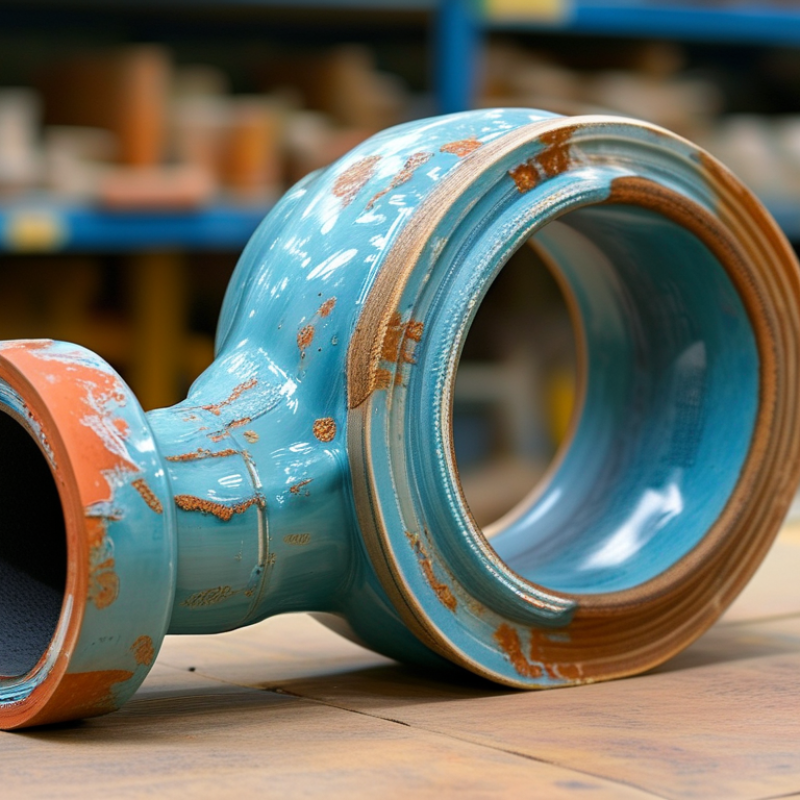
7 Tips for Buying Ceramic Lined Rubber Hose?

Define the Application and Operating Conditions

Before buying a ceramic lined rubber hose, define the application in measurable terms. A hose carrying dry sand needs different protection from one carrying a hot mineral slurry. Record the material, particle size, concentration, temperature, and flow rate. Also note whether the medium contains sharp particles or corrosive chemicals. A short site inspection helps. Check bends, pump outlets, supports, and connection points. Small details matter. If the material changes seasonally, include that variation in the specification.

Operating conditions deserve equal attention. Confirm normal pressure, pressure surges, vacuum exposure, and the maximum working temperature. Pressure spikes can damage a hose even when average pressure looks acceptable. Measure the tightest bend, not the planned bend. The installed radius may become smaller during operation. Check movement, vibration, and the weight of nearby fittings. Ceramic lining improves abrasion resistance, but it does not remove the need for correct support and alignment.

Field experience shows that many failures begin with incomplete information. A hose selected for water service may wear rapidly under dense solids. I once saw an installation where the temperature was recorded, but cleaning steam was ignored. That detail changed the real operating limit. It is worth asking uncomfortable questions about start-up, shutdown, flushing, and accidental dry running. A practical test section can reveal problems that a drawing misses. Recheck the conditions after installation. Real systems are rarely as tidy as the original specification.


Choose the Right Ceramic Lining and Rubber Compound

Tip 1: Match the ceramic type to the abrasive material. Fine silica, gravel, and metal particles wear surfaces differently. Alumina suits many general applications, while tougher ceramics may handle severe impact better.

Tip 2: Check the lining thickness against operating conditions. A thin layer can reduce flexibility, but it may fail sooner under heavy abrasion. Tip 3: Inspect the tile shape and joint design. Tight, staggered joints leave fewer exposed rubber gaps. Small gaps matter. Tip 4: Choose the rubber compound for temperature, pressure, and chemical exposure. Natural rubber often handles abrasion well, while synthetic compounds may resist oil, heat, or ozone better. Do not select rubber by hardness alone. A very hard compound can still crack under repeated bending.

Tip 5: Confirm ceramic-to-rubber bonding quality. Ask for test records, not only catalogue values. Poor adhesion may appear as lifting near the hose ends. Tip 6: Consider movement during service. A ceramic-lined hose must bend without forcing the lining to separate. Measure the minimum bend radius carefully. This detail is often underestimated. Tip 7: Review actual inspection data from similar applications. Reliable suppliers should explain failure patterns and recommended service intervals. However, field conditions rarely match laboratory testing perfectly. Dust, temperature swings, and uneven support can change performance. Before purchasing, request a sample inspection, lining specification, rubber compound data, and pressure test evidence. Examine every document critically.

7 Tips for Buying Ceramic Lined Rubber Hose? Choose the Right Ceramic Lining and Rubber Compound

Typical upper continuous service temperatures for commonly used rubber compounds

Selection Guidance

  1. Match the ceramic hardness and thickness to the material's particle size, velocity, and abrasiveness.
  2. Choose alumina for general abrasive slurry service and silicon carbide where high thermal conductivity or chemical resistance is important.
  3. Consider impact toughness before selecting a very hard ceramic for applications with large particles or sudden loading.
  4. Select the rubber compound according to temperature, oil exposure, chemicals, and flexibility requirements.
  5. Use natural rubber when excellent abrasion resistance and flexibility are more important than heat or oil resistance.
  6. Choose NBR for oil-containing materials and EPDM for hot water, steam, or many aqueous chemical services.
  7. Confirm the final selection against the hose manufacturer's pressure, vacuum, bend-radius, bonding, and test data.

The chart shows representative engineering limits commonly published for general-purpose compounds. Actual limits vary with formulation, pressure, exposure time, and hose construction; always verify the product datasheet.

Check Hose Construction, Flexibility, and Pressure Ratings

7 Tips for Buying Ceramic Lined Rubber Hose?

Ceramic lined rubber hose must match the service, not just the pipe diameter. Start with construction: confirm the ceramic tile or bead lining, rubber cover, reinforcement layers, and end connections. Abrasive slurry can attack weak joints first. In practice, I inspect the lining near bends and flanges, where turbulence often becomes visible as uneven wear.

Flexibility matters as much as abrasion resistance. A hose that is too stiff may transfer force to pumps, clamps, and pipe supports. Check the minimum bend radius supplied by the manufacturer, then compare it with the actual installation space. ASTM D5963 evaluates rubber abrasion through volume loss, but laboratory results cannot fully predict sharp-particle slurry behavior. That is an imperfect comparison, yet still useful.

Pressure ratings need careful reading. ISO 18752 defines hose pressure classes, including ratings reaching 42 MPa, but that maximum does not automatically apply to ceramic lined designs. Review working pressure, surge pressure, temperature, vacuum resistance, and coupling limits together. The weakest component controls the assembly. Leave a practical safety margin. I would not trust a catalog number alone. Request test records, hydrostatic proof results, and traceable inspection data. A small mismatch in pressure or bend radius can shorten service life dramatically.

7 Tips for Buying Ceramic Lined Rubber Hose? - Check Hose Construction, Flexibility, and Pressure Ratings

Tip Buying Dimension What to Check Practical Reference Why It Matters
1 Hose Construction Confirm the hose has a wear-resistant ceramic lining, a compatible rubber cover, and reinforcement appropriate for the service. Ask whether the ceramic is formed as tiles, beads, or cast material and how the joints are protected. Common constructions include ceramic lining, elastomer backing, textile or steel reinforcement, and an abrasion-resistant outer cover. The lining handles abrasive particles while the rubber absorbs impact and allows movement. Weak bonding or exposed joints can lead to premature failure.
2 Abrasion and Particle Load Match the lining to the material being conveyed, including particle hardness, size, shape, concentration, and conveying velocity. Evaluate whether the application involves sharp mineral particles or rounded slurry solids. Silica sand, crushed rock, mineral slurry, ash, and cement mixtures can impose very different wear patterns. Abrasion increases with harder particles, higher solids concentration, sharp edges, and higher flow velocity. Elbows and discharge points usually require extra attention.
3 Flexibility and Minimum Bend Radius Check the manufacturer’s minimum dynamic and static bend radius, hose outside diameter, reinforcement type, and movement frequency. Confirm that the hose will not be kinked, twisted, or bent close to the fittings. A hose with a 100 mm outside diameter may require a bend radius of several hundred millimetres; the actual value must come from the product specification. Bending below the rated radius can damage the ceramic lining, reinforcement, or end connections and can restrict material flow.
4 Working and Burst Pressure Compare the system’s maximum operating pressure, pressure surges, vacuum exposure, and temperature with the hose ratings. Check whether the stated pressure rating applies to the complete assembly, including fittings and clamps. Select a working-pressure rating above the maximum system pressure and account for water hammer, pump start-up, pulsation, and vacuum conditions. A hose can fail even when average pressure appears acceptable if short-term surges, vacuum collapse, or weak end connections are overlooked.
5 Temperature and Chemical Compatibility Verify the continuous and intermittent temperature limits of the rubber compound, ceramic lining, adhesive or bonding layer, and cover. Check compatibility with acids, alkalis, oils, solvents, and process additives. Temperature limits vary by elastomer and construction; do not use a generic rubber temperature range as the rating for the complete hose. Heat and chemicals can soften, swell, crack, or embrittle the rubber and bonding materials even when the ceramic itself remains stable.
6 Size, Flow, and Connection Design Select the correct nominal inside diameter and length, then confirm flange, cam-lock, threaded, or other end connections. Review flow velocity, alignment, gasket materials, and the need for reducers or elbows. Avoid sudden diameter changes and sharp unsupported bends. Use the actual inside diameter when estimating pressure loss and solids flow capacity. An undersized or poorly aligned hose increases pressure loss, turbulence, localized lining wear, and stress on the fittings.
7 Inspection, Testing, and Service Life Request dimensional tolerances, pressure-test records, lining inspection procedures, traceability information, and recommended inspection intervals. Establish a replacement criterion before installation. Inspect for cover cuts, bulges, exposed reinforcement, leakage, damaged fittings, excessive stiffness, and changes in flow or pressure loss. Regular inspection helps detect hidden lining wear and prevents an unexpected rupture or process interruption. Service life depends on the actual operating conditions.

Note: Pressure, temperature, bend-radius, and service-life values must be confirmed against the specific hose assembly specification and the conditions of the application.

Evaluate Wear Resistance, Connections, and Installation Needs

Tip 1: Check Wear Resistance

Ceramic lined rubber hose suits abrasive slurry, sand, and mineral particles. Do not judge durability by ceramic hardness alone. Ask for lining thickness, tile design, and abrasion test results. Confirm the data matches your material, particle size, flow speed, and temperature. A hose handling sharp quartz may wear differently from one carrying softer ash. Inspect the bend area carefully. It often experiences uneven stress and faster damage.

Tip 2: Examine the Connections

Connection quality can decide whether a good hose performs well. Match the hose flange, coupling, gasket, and pipe dimensions precisely. Check pressure ratings, bolt patterns, and sealing surfaces before ordering. Avoid forcing misaligned flanges together. That mistake can create local stress and leaks. I once saw a new hose fail early because the pipe supports carried insufficient weight. The lining was sound, but the installation was not.

Tip 3: Plan Installation Around the Site

Measure the actual route, including movement, bends, and maintenance space. Respect the manufacturer’s minimum bend radius. A tight bend can crack ceramic sections or flatten the rubber body. Add proper supports, but allow controlled movement where vibration exists. Confirm whether the hose carries pressure, vacuum, or both. This detail is easy to overlook. Also inspect lifting points and handling limits before moving a heavy assembly. Installation drawings help, though field conditions may still force revisions. Recheck them.

Compare Quality Standards, Service Life, and Total Cost

7 Tips for Buying Ceramic Lined Rubber Hose

Compare Quality Standards, Service Life, and Total Cost

In hose inspections, I have seen attractive prices hide weak ceramic bonding. Ask for test records covering pressure, abrasion, temperature, and chemical resistance. Check whether the lining thickness remains consistent near bends and flanges. Small gaps can become serious wear points.

Confirm the hose meets recognized industrial standards for pressure rating and material traceability. Request samples, inspection reports, and batch identification.

Tip three: match the hose to the actual slurry, not a general product description. Tip four: calculate service life from operating hours, flow speed, and particle hardness. A thicker lining may last longer, but it can also increase weight and handling difficulty.

Look closely at reinforcement, cover quality, and bend radius. Tip five: inspect the assembly, not only the ceramic tube. Tip six: compare replacement intervals, downtime, installation labor, and disposal costs. The cheapest hose may cost more after two emergency changes.

Tip seven: clarify technical support and warranty conditions before ordering. Response time matters during an unplanned shutdown. I would also request a trial section when the application is unusual. It adds effort. Still, laboratory data cannot fully reproduce sharp particles, vibration, or careless handling. A practical review should record actual wear after several weeks, because early assumptions are often wrong.

Powder Coat Booths

For those larger-sized parts, or smaller quantity runs, we have 2 independent powder coat booths and ovens. The quality, durability and affordability of today’s powder coating finishes make this the process of choice for world-class companies.

Powder coating advantages over other forms of coating are many. Materials used in the Powder coating process can be metals and non-metals that come in a multitude of thicknesses, textures, colors, etc. Another of Powder coating’s biggest advantages over conventional coatings is its ability to create finishes in many different textures. Powder Coating Booths allow us the ability to apply these advantages to large products.

Wet Paint Line

Tri-State Fabricators runs a full-service conveyor line for painting. Wet painting can provide protection or decoration to many different part styles. From start to finish, every project is easier to undergo random and point-based inspection by our skilled painting team.

Advantages to our Wet Paint Line are these lines start with product prep and ends with a thorough inspection of a high quality finished product. Our ability to complete large and small projects with a superior finish and doing so in a timely and economical fashion. This passes along the savings in production to our customers. When powder coating ins not an option, our Wet Paint Line gets the job done right the first time.

Wet Paint Booths

When the parts get big and heavy we roll-out our custom paint racks and oversize booth. By utilizing our partnerships with all the major paint brands, we can match virtually any color with wet paint.

The advantages of having access to a Wet Paint Booth are many. Large projects of many different shapes can be loaded into the booth. The Wet Paint Booth offers an environment that is much more controlled than a typical parts painting operation.

Not only are they used because of their controlled environment, but they’re are also advantageous when it comes to applying paint to parts that are needed in industries that require specialty coatings such as medical, aerospace, etc.

Military CARC

Our military forces have some very high standards when it comes to the finish of their vehicles and equipment. From the first pre-treatment step to final coat, it takes a great deal of knowledge and experience to protect the men and women of our armed forces. They deserve only the best, and Tri-State Fabricators provides it.

All of our processes are closely monitored by our staff and management teams. Both of which are highly trained in the processes of metal fabrication and finishing. Tri-State Fabricators’ goal is to always fully satisfy each and every customer, including the military. We will always put a 110% into what we do.

Glass-Bead Blasting

Abrasive media blasting is an excellent way to remove old paint, rust, and increase the paint/powder adhesion. Glass beads produce a much smoother and brighter finish than angular abrasives; leaving the part clean yet without any dimensional change. Chemically inert and environmentally friendly, we can recycle our beads approximately 30 times; making them a more preferred method of metal cleaning or surface finishing.

Advantages to Glass Bead Blasting are many. Glass bead blast media is used when a project is needing rough surfaces need to become smooth for applications of coatings such as paint. It is typically used to clean paint and rust from a product surface without deforming the surface it is being used on. Overall, compared to many other blasting media, Glass Bead Blasting is a very economical choice and those savings are always passed on to our customers.

Part Washing

Tri-State Fabricators utilize a zinc phosphate wash to clean and etch the material to ensure the best paint adhesion possible. The unique design of our 3-stage wash system does the work like a 5-stage. From Cleaning and rinsing to conversion coating and post-treatment, Our Part Washing process is a complete service and works throughout the fabrication service and the finishing service.

Along with the previously mentioned benefits, Curing is a vital chemical reaction that leaves the product finish hard and relatively safe from mild abrasion and aggressive corrosion. This process can be done in more than one way; ambient air-dry or in curing ovens at temps that exceed 240°.

Burn-Off Oven

From fixing paint mistakes (someone else’s of course) to simply cleaning our paint line hooks, our burn-off oven is put to good use. After a quick burn-off, a little clean up, and a fresh coat of paint, your parts will look better than new.

Why does our Burn-Off Oven work so well? Because super heating the air around parts turns the materials into ashes. From paint and powder coatings to rubber and machining oils, high temps do the job without degrading the integrity of the part.

Masking

Masking is a vital part of producing high quality products. We have die-cut masking patterns to protect machined surfaces as well as a wide range of plugs and caps to protect threaded holes and bolts. We provide permanent and temporary masking.

Masking allows the selected sections of a product to be protected from a fabrication or finishing service. This can be with both chemicals when etching and tapes, paints when only finishing just a section of the product. Masking is great in aiding the customization process of a project.

Screen Printing

Screen printing is a photographic process that transfers artwork onto a porous nylon screen which allows colored ink to flow through the screen and be deposited on an aluminum or plastic component. We can generally have just about any design created onto a screen for your parts.

Some of the advantages of Screen Printing are, brand recognition for your business displaying on your products, assembly instructions, product warnings/hazards, etc. Tri-State Fabricators produces Screen Printing of the highest quality so you know it’s durable.

Metal Finishing

Metal Finishing is the art of treating the exterior portion of product, often metal but can also be made of other materials, so that the surface is clean and free of any debris. Then the process of applying coats or either paint of powder coat takes place. This coating process improves the quality of the product in both appearance and resistance to wear and corrosion.

Tri-State Fabricators, Inc., understands that a project typically isn’t complete until a high-quality finish has been added to your product. This is why our painting and powder coating teams continuously inspect the products throughout the Metal Finishing process.
