


7 Tips for Buying a Zoomlion ZE18GU Digger?

Buying a Zoomlion Ze18gu Digger is not simply a price comparison. It is a practical decision involving ground conditions, transport limits, maintenance access, and future workload. A machine that looks affordable online may become expensive when hydraulic leaks, worn tracks, or delayed parts interrupt a project. Small details matter. Very much.

Industry equipment consultant Michael Turner says, “A compact excavator should be judged by its working history, not by its paint or advertised hours.” His advice fits the Zoomlion Ze18gu Digger market, where condition, configuration, and dealer support can vary widely. Buyers should inspect the hour meter, engine response, hydraulic smoothness, boom movement, track tension, and attachment couplers. A cold start can reveal more than a polished demonstration. Listen for uneven idling. Check the oil.

This guide presents seven practical tips for evaluating a Zoomlion Ze18gu Digger before purchase. It considers new and used machines, including their digging depth, operating weight, cab comfort, fuel use, and transport requirements. It also explains how to compare dealer warranties, service records, replacement parts, and operator feedback. Some specifications may differ by production year or regional configuration, so buyers should verify every figure with an authorized source. That step is easy to overlook.

No inspection is perfect. Even experienced buyers can miss hidden wear beneath clean panels. A short trial can also create false confidence. Therefore, take photographs, request written records, and, when possible, ask an independent technician to assess the machine before payment. Reliable information costs time, but rushed decisions usually cost more.
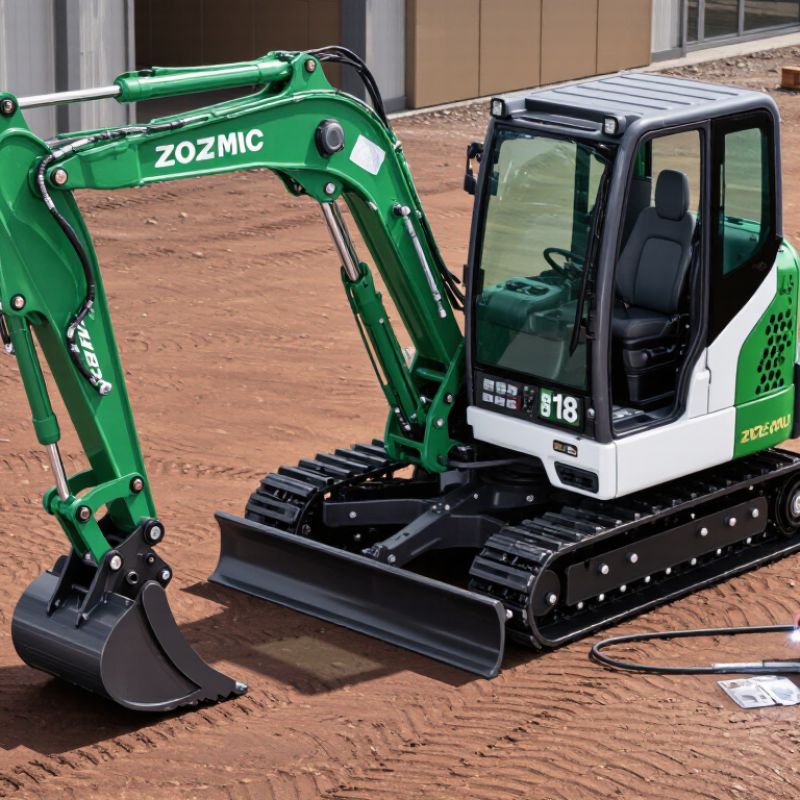
7 Tips for Buying a Zoomlion ZE18GU Digger?

Define Your Digging Needs Before Choosing the Zoomlion ZE18GU

Before choosing a ZE18GU-class digger, define the work precisely. Measure trench depth, soil type, access width, and available working height. A 1.8-ton excavator may suit garden drainage, utility trenches, and light foundation work. It may struggle in dense clay, deep rock, or continuous loading duties. Grand View Research projects the global mini excavator market to grow at roughly 5% annually through 2030. That growth reflects demand for compact machines in restricted urban spaces. Market growth does not guarantee the right match for your site.

Tip: Measure access twice. Record the narrowest gate, lowest branch, and turning space. Compare them with the machine’s width, tail swing, and transport height. Check rated digging depth against your actual trench requirement. A useful buffer matters. My practical mistake was treating maximum depth as a daily working depth. It is not.

Tip: Match attachments to the ground. A standard bucket handles ordinary soil, while a narrow bucket improves trench control. A breaker may help with hard layers, but it increases vibration and operating cost. The Association of Equipment Manufacturers reports that attachment demand strongly influences compact equipment utilization. Ask for hydraulic flow and pressure figures before buying. Also inspect service access, track condition, and documented maintenance. Fuel use matters, but idle time can quietly cost more. This part is easy to underestimate.


Check Key Specifications, Attachments, and Operating Performance

When buying a 1.8-ton compact digger, check the specification plate, not only the sales description. Confirm operating weight, engine power, maximum digging depth, bucket capacity, tail swing, and transport width. A working weight near 1,800 kilograms can affect trailer limits and ground pressure. The 2024 Off-Highway Research outlook identifies compact equipment as a strong construction segment, driven by urban and rental projects. That demand makes accurate specifications even more important.

Attachments decide practical value. A general bucket suits soil removal, while a grading bucket improves trench finishing. A hydraulic breaker needs adequate auxiliary flow and pressure. Check coupler compatibility, hose routing, pin wear, and attachment weight.

The Association of Equipment Manufacturers notes that attachment versatility remains a major purchasing factor for compact equipment users. Test the machine with the intended tools, if possible. Paper specifications can mislead.

Operating performance should feel controlled, not merely powerful. Inspect cold starting, idle stability, hydraulic response, travel speed, slew movement, and the accuracy of combined functions. Watch for boom drift after the controls are released. It may indicate leakage or wear. Fuel use also matters; the U.S. Energy Information Administration reports that diesel prices can vary sharply by region and season, affecting operating budgets. Ask for service records, oil analysis, and actual working hours.

I would not trust a clean exterior alone. Fresh paint can hide an expensive lesson.

Evaluate Machine Condition, Service History, and Inspection Results

Buying a used 1.8-ton excavator demands more than a clean paint finish.
I inspect it cold, before the engine hides weak starting behavior. Check hour-meter consistency against invoices, grease marks, and pedal wear. Look for oil around hydraulic fittings, the swing gearbox, and final drives. Fresh paint can conceal repairs. That matters.

A credible service history should show dates, operating hours, fluids, filters, and replaced components. Ask who performed each task and whether the parts met required specifications. Compare records with the machine serial number and inspection notes.

Missing months are not automatically fatal, but they require questions. I once saw a low-hour unit with badly worn bucket pins. The meter was probably not the whole story. Maybe the work was unusually severe. Maybe the records were incomplete.

During inspection, test travel in both directions, boom drift, auxiliary hydraulics, and swing smoothness. Listen for knocking, whining, or changes under load. Measure track tension and inspect sprocket teeth, rollers, hoses, and cylinder rods. A qualified technician should record pressures and check for structural cracks around the boom and blade mounts. Request a written report with photographs, fault codes, and estimated repair costs.
Do not rely on a brief yard demonstration. Small oversights become expensive.

Compare Pricing, Ownership Costs, Warranty, and Dealer Support

When buying a Zoomlion ZE18GU digger, compare the complete purchase price, not only the advertised figure. EquipmentWatch’s 2024 Used Equipment Market Report indicates that compact excavator values can vary by more than 20% between regions. Transport, attachments, taxes, and setup may widen the gap. Request a written quote covering the bucket, hydraulic lines, delivery, and commissioning. A low price may hide expensive exclusions.

Ownership costs deserve closer attention. The U.S. Environmental Protection Agency reports that idling can consume significant fuel without producing work. Check the machine’s hourly fuel estimate, service intervals, filter prices, and hydraulic oil capacity. A practical budget should include scheduled maintenance, wear parts, insurance, and unexpected downtime. Small leaks matter. Keep a three-year cost sheet using 500 operating hours annually, then test it against your real workload. My estimate may still be imperfect, especially on rocky sites.

Warranty terms need careful reading. Ask whether coverage includes travel, labor, hydraulic components, and emissions-related parts. Industry dealer-support surveys consistently rank repair response time and parts availability among major satisfaction factors. Request average parts lead times and the name of a service contact. A distant dealer may offer a stronger discount but create costly delays. Inspect service records, cold-start behavior, track tension, and boom movement before signing. Get every promise in writing.

Confirm Safety Features, Legal Documents, and Delivery Arrangements

Buying a compact 1.8-ton excavator requires more than checking engine hours. Safety deserves a physical inspection. The U.S. Bureau of Labor Statistics recorded 1,075 fatal construction work injuries in 2023. That figure supports careful equipment screening.

Check the rollover protection structure, operator restraint, emergency stop, travel alarm, and hydraulic hose guards. Test every control with the machine parked on level ground. Stop there.

A clean paint finish can mislead; relying on appearance is a poor shortcut. Review maintenance records, cold-start behavior, oil leaks, track wear, and unusual boom movement. ISO 20474 guidance also supports evaluating earth-moving machinery through safe operation and risk control.

Legal documents should match the machine’s serial plate exactly. Request the original owner’s manual, conformity or compliance paperwork, inspection records, and emissions documentation where required. Confirm the seller’s identity and obtain a signed sales invoice.

The document should describe the model, year, hours, attachments, price, and warranty terms. Check whether local registration, import clearance, or operator certification applies. Requirements differ by jurisdiction. Do not assume a document from another country is sufficient.

Delivery arrangements need equal attention. Agree on loading responsibility, transport insurance, delivery location, unloading equipment, and damage reporting deadlines. Use clear Incoterms 2020 language when cross-border shipping is involved.

Photograph the machine, serial plate, controls, and undercarriage before dispatch. At arrival, compare its condition with those images and record any damage immediately. Get it in writing.

A missed detail can become an expensive argument, and buyers sometimes approve delivery too quickly. Pause, inspect, and ask for clarification before signing acceptance.

Powder Coat Booths

For those larger-sized parts, or smaller quantity runs, we have 2 independent powder coat booths and ovens. The quality, durability and affordability of today’s powder coating finishes make this the process of choice for world-class companies.

Powder coating advantages over other forms of coating are many. Materials used in the Powder coating process can be metals and non-metals that come in a multitude of thicknesses, textures, colors, etc. Another of Powder coating’s biggest advantages over conventional coatings is its ability to create finishes in many different textures. Powder Coating Booths allow us the ability to apply these advantages to large products.

Wet Paint Line

Tri-State Fabricators runs a full-service conveyor line for painting. Wet painting can provide protection or decoration to many different part styles. From start to finish, every project is easier to undergo random and point-based inspection by our skilled painting team.

Advantages to our Wet Paint Line are these lines start with product prep and ends with a thorough inspection of a high quality finished product. Our ability to complete large and small projects with a superior finish and doing so in a timely and economical fashion. This passes along the savings in production to our customers. When powder coating ins not an option, our Wet Paint Line gets the job done right the first time.

Wet Paint Booths

When the parts get big and heavy we roll-out our custom paint racks and oversize booth. By utilizing our partnerships with all the major paint brands, we can match virtually any color with wet paint.

The advantages of having access to a Wet Paint Booth are many. Large projects of many different shapes can be loaded into the booth. The Wet Paint Booth offers an environment that is much more controlled than a typical parts painting operation.

Not only are they used because of their controlled environment, but they’re are also advantageous when it comes to applying paint to parts that are needed in industries that require specialty coatings such as medical, aerospace, etc.

Military CARC

Our military forces have some very high standards when it comes to the finish of their vehicles and equipment. From the first pre-treatment step to final coat, it takes a great deal of knowledge and experience to protect the men and women of our armed forces. They deserve only the best, and Tri-State Fabricators provides it.

All of our processes are closely monitored by our staff and management teams. Both of which are highly trained in the processes of metal fabrication and finishing. Tri-State Fabricators’ goal is to always fully satisfy each and every customer, including the military. We will always put a 110% into what we do.

Glass-Bead Blasting

Abrasive media blasting is an excellent way to remove old paint, rust, and increase the paint/powder adhesion. Glass beads produce a much smoother and brighter finish than angular abrasives; leaving the part clean yet without any dimensional change. Chemically inert and environmentally friendly, we can recycle our beads approximately 30 times; making them a more preferred method of metal cleaning or surface finishing.

Advantages to Glass Bead Blasting are many. Glass bead blast media is used when a project is needing rough surfaces need to become smooth for applications of coatings such as paint. It is typically used to clean paint and rust from a product surface without deforming the surface it is being used on. Overall, compared to many other blasting media, Glass Bead Blasting is a very economical choice and those savings are always passed on to our customers.

Part Washing

Tri-State Fabricators utilize a zinc phosphate wash to clean and etch the material to ensure the best paint adhesion possible. The unique design of our 3-stage wash system does the work like a 5-stage. From Cleaning and rinsing to conversion coating and post-treatment, Our Part Washing process is a complete service and works throughout the fabrication service and the finishing service.

Along with the previously mentioned benefits, Curing is a vital chemical reaction that leaves the product finish hard and relatively safe from mild abrasion and aggressive corrosion. This process can be done in more than one way; ambient air-dry or in curing ovens at temps that exceed 240°.

Burn-Off Oven

From fixing paint mistakes (someone else’s of course) to simply cleaning our paint line hooks, our burn-off oven is put to good use. After a quick burn-off, a little clean up, and a fresh coat of paint, your parts will look better than new.

Why does our Burn-Off Oven work so well? Because super heating the air around parts turns the materials into ashes. From paint and powder coatings to rubber and machining oils, high temps do the job without degrading the integrity of the part.

Masking

Masking is a vital part of producing high quality products. We have die-cut masking patterns to protect machined surfaces as well as a wide range of plugs and caps to protect threaded holes and bolts. We provide permanent and temporary masking.

Masking allows the selected sections of a product to be protected from a fabrication or finishing service. This can be with both chemicals when etching and tapes, paints when only finishing just a section of the product. Masking is great in aiding the customization process of a project.

Screen Printing

Screen printing is a photographic process that transfers artwork onto a porous nylon screen which allows colored ink to flow through the screen and be deposited on an aluminum or plastic component. We can generally have just about any design created onto a screen for your parts.

Some of the advantages of Screen Printing are, brand recognition for your business displaying on your products, assembly instructions, product warnings/hazards, etc. Tri-State Fabricators produces Screen Printing of the highest quality so you know it’s durable.

Metal Finishing

Metal Finishing is the art of treating the exterior portion of product, often metal but can also be made of other materials, so that the surface is clean and free of any debris. Then the process of applying coats or either paint of powder coat takes place. This coating process improves the quality of the product in both appearance and resistance to wear and corrosion.

Tri-State Fabricators, Inc., understands that a project typically isn’t complete until a high-quality finish has been added to your product. This is why our painting and powder coating teams continuously inspect the products throughout the Metal Finishing process.
