


7 Tips for Buying a 13.8kV Transformer?

Selecting a 13.8kv Transformer is a critical decision for industrial plants, utility systems, and large commercial facilities. The unit must match the network voltage, expected load, fault level, and operating environment. A transformer that looks suitable on paper may still perform poorly in a hot, dusty, or poorly ventilated substation.

This guide presents seven practical tips based on common engineering evaluations and field experience. Begin with the actual load profile, not only the nameplate rating. Motor starting currents, future expansion, harmonic-producing equipment, and seasonal demand can change the required capacity. Check insulation levels, cooling methods, impedance, tap-changer design, and enclosure protection with a qualified electrical engineer. Small details matter. A loose connection or unclear protection setting can create costly downtime.

Manufacturer reputation also deserves careful attention. Review test reports, routine inspection records, warranty terms, spare-part support, and references from comparable installations. Confirm that the design follows applicable technical standards and local grid requirements. Do not judge the purchase by price alone; transportation, installation, oil handling, testing, maintenance, and energy losses affect the real cost. A low quotation can mislead.

No checklist is perfect. Site conditions may expose assumptions that were missed during design. Therefore, request a documented factory acceptance test and complete commissioning checks after delivery. These seven tips will not replace professional engineering review, but they can help buyers ask sharper questions, identify hidden risks, and select a dependable 13.8kv Transformer for long-term service.
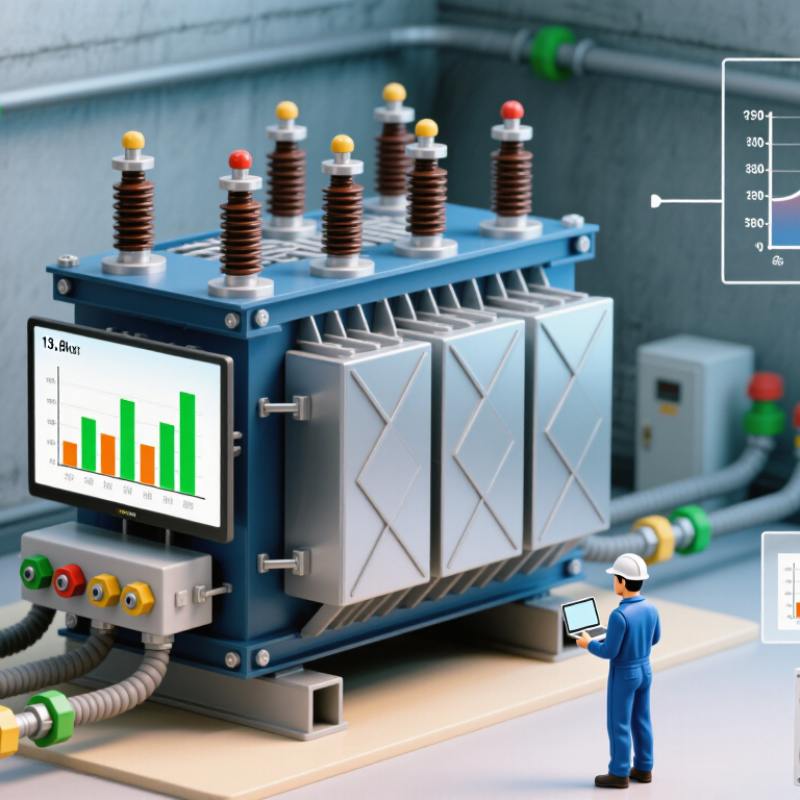
7 Tips for Buying a 13.8kV Transformer?

Define Voltage, Load, and Transformer Capacity Requirements

A 13.8kV transformer must match the electrical system, not just the equipment label. Confirm the primary voltage, secondary voltage, phase arrangement, frequency, and grounding method. A small mismatch can create unsafe operating conditions or prevent proper protection coordination.

Measure the expected load in kVA, not only in amperes. List motors, heaters, lighting, drives, and electronic equipment separately. Record their starting currents and operating schedules. A motor may demand several times its running current during startup. Include diversity, but question optimistic assumptions. A load rarely stays perfectly balanced.

Transformer capacity should cover the calculated demand without running continuously at its limit. Allow practical room for future expansion, temperature effects, and unusual operating periods. Do not oversize automatically. Excess capacity can increase cost, losses, and fault current. Check impedance because it affects voltage drop and available short-circuit current. Review the result with a qualified electrical engineer.

Site conditions also matter. Note ambient temperature, altitude, ventilation, indoor or outdoor installation, and available space for maintenance. Confirm the utility’s requirements and applicable electrical standards before ordering. A datasheet may look complete, yet omit a critical detail, such as inrush behavior or neutral loading. That omission deserves another review.


Check Insulation, Cooling, Protection, and Safety Specifications

Buying a 13.8kV transformer demands more than checking voltage and capacity. Insulation deserves close attention. Confirm the basic insulation level, power-frequency withstand, creepage distance, and partial-discharge limits. Ask for factory test records, not only a compliance statement. Moisture weakens insulation quietly. Oil-filled units need oil quality, moisture, and dissolved-gas testing. Dry-type units require suitable resin protection and clean ventilation.

Cooling affects service life. Match the cooling method to the actual load, site temperature, and future expansion. Natural-air cooling may suit a lightly loaded indoor installation. Forced-air cooling can support higher demand, but fans add failure points and maintenance. Check temperature-rise limits, winding sensors, alarm settings, and emergency shutdown logic. A small sensor detail matters. In field inspections, blocked air passages are surprisingly common. The datasheet may look perfect, yet the room can still run too hot.

Protection should cover more than a circuit breaker. Review overcurrent, ground-fault, thermal, and differential protection where appropriate. Oil-filled transformers may need pressure relief, oil-level monitoring, and gas detection. Verify grounding connections, enclosure rating, fire separation, access clearance, and arc-flash boundaries. Safety labels must remain readable after installation. Request installation drawings, commissioning procedures, and maintenance intervals. I would also question unclear exclusions in the quotation; missed accessories can create expensive site problems. No specification is flawless. A careful review catches what a hurried purchase overlooks.

7 Tips for Buying a 13.8kV Transformer? - Check Insulation, Cooling, Protection, and Safety Specifications
Tip Specification Area Typical Data to Review What to Check Before Purchase Safety and Application Notes
1 Confirm Voltage Class and Ratio Confirm the rated primary voltage, maximum system voltage, secondary voltage, phase arrangement, connection symbol, tap range, and impedance on the nameplate and approved drawings. The transformer ratio must match the system design. Incorrect tap selection can cause excessive secondary voltage, motor damage, or poor voltage regulation.
2 Check Insulation and Dielectric Strength Request certified dielectric-test results, impulse-test requirements, clearances, creepage distances, insulation material details, and the specified BIL for both high-voltage and low-voltage windings. Insulation coordination should consider lightning surges, switching surges, altitude, contamination, and the grounding method of the electrical system.
3 Select the Correct Cooling System Compare the continuous rating, self-cooled rating, forced-air rating, ambient temperature, altitude correction, enclosure ventilation, fan controls, and noise requirements. Blocked ventilation can reduce transformer life and increase fire risk. Fans, thermostats, alarms, and control power should be tested during commissioning.
4 Evaluate Thermal Performance and Loading Review the temperature-rise test, ambient-temperature assumptions, overload capability, load profile, harmonic content, and expected short-circuit duty. Consider a K-factor or derating requirement for nonlinear loads. Frequent overloading accelerates insulation aging. Harmonic currents can create additional winding and tank heating even when the measured average load appears acceptable.
5 Specify Protection and Monitoring Confirm alarm and trip settings, relay coordination, current-transformer ratios, control voltage, remote contacts, trip-circuit supervision, and compatibility with the facility protection system. Protection settings must coordinate with upstream and downstream devices so that faults are cleared quickly without unnecessary loss of service.
6 Review Grounding, Enclosure, and Installation Safety Check the grounding conductor size, bonding points, cable bending space, pad or foundation loading, lifting provisions, ventilation clearances, weather exposure, and indoor or outdoor installation conditions. The tank, enclosure, cable shields, neutral, and system grounding network must be bonded according to the approved electrical design. Installation and maintenance require qualified personnel.
7 Demand Testing, Documentation, and Compliance Confirm compliance with the project standard, local electrical code, environmental requirements, transportation limits, warranty terms, spare-parts list, maintenance schedule, and commissioning procedure. Do not energize until installation inspection, torque verification, insulation testing, phase identification, grounding checks, protection testing, and oil or enclosure inspection are complete.
Important: The values shown are typical reference data for a 13.8 kV transformer application. Final ratings, insulation levels, temperature rise, protection settings, and construction requirements must be selected according to the system study, installation conditions, applicable electrical standards, and the approved project specification.

Compare Compliance Standards, Certifications, and Technical Documentation

Buying a 13.8kV transformer requires more than checking price and capacity. Compare the applicable standards before reviewing quotations. IEEE and ANSI requirements are common in North American projects, while IEC 60076 may govern international installations. Local utility rules can add grounding, efficiency, noise, or enclosure requirements. Details matter. Confirm which standard controls the final installation.

Request certificates and test evidence, not only a compliance statement. Ask for routine test reports, type-test records, insulation resistance results, ratio checks, temperature-rise data, and impulse withstand verification. A certificate can look reassuring, yet it may cover a different configuration. Check the exact kVA rating, tap range, frequency, cooling method, impedance, BIL, and winding material shown in each document.

Technical documentation should include a certified outline drawing, terminal layout, nameplate data, wiring diagrams, protection settings, installation instructions, and maintenance procedures. For liquid-filled units, request fluid specifications and sampling guidance. For dry-type units, verify ventilation and fire-related requirements. I have seen projects delayed because the drawing omitted cable-entry dimensions. Do not guess. Ask whether documents are approved, revision-controlled, and traceable to the tested unit. Some requirements may be overlooked during procurement, especially when a regional standard is treated as universal. Review the package with the engineer responsible for the site.

Evaluate Suppliers, Warranty Terms, Lead Times, and Support

7 Tips for Buying a 13.8kV Transformer

Choose a supplier with documented experience in medium-voltage projects. Ask for references involving similar ratings, cooling methods, and installation conditions. Review factory test reports, quality procedures, and technician qualifications. A polished website is not enough. Request evidence. Confirm the supplier understands your load profile, site altitude, ambient temperature, and required impedance. These details affect performance, protection settings, and total cost.

Read the warranty line by line. Check its duration, coverage for insulation failure, and responsibility for transportation. Ask whether labor, replacement parts, and field repairs are included. Clarify exclusions caused by moisture, poor storage, or incorrect installation. Compare the quoted lead time with the manufacturing schedule, testing date, and shipping plan. Get critical milestones in writing. A promised delivery date without factory-test timing can be misleading. Allow extra time for design changes. Delays happen.

Evaluate technical support before signing. Confirm who will answer emergency calls during commissioning and whether specialists can visit the site. Ask for installation manuals, inspection checklists, spare-part recommendations, and training for operators. Verify support after the warranty ends, including repair capability and replacement components. Check communication quality during the quotation stage. It often predicts later service. I have seen buyers focus heavily on price and overlook storage requirements. That mistake can create avoidable damage before energization. Keep room for questions, even awkward ones.

Calculate Installation Costs, Maintenance Needs, and Total Ownership Value

Buying a 13.8kV transformer requires more than comparing purchase prices. Measure the complete installation path before requesting quotations. Confirm foundation dimensions, lifting access, cable length, grounding work, protection equipment, and commissioning labor. These details often cost more than expected. Ask a qualified engineer to review the load profile, short-circuit duty, insulation requirements, and local electrical rules. A transformer sized only for today’s load may become an expensive bottleneck. Leave practical capacity, but avoid oversized units that increase no-load losses.

Request separate prices for transport, unloading, testing, oil handling, accessories, and emergency labor. Site access matters. A narrow gate may require a crane or road closure. Price those risks early. Compare efficiency at actual loading, not only the nameplate rating. Calculate annual energy losses using operating hours and electricity rates. Then budget for inspection, thermography, oil sampling, bushing checks, and cooling-system service. Maintenance is quieter than failure. It still needs funding.

Review the warranty, spare-parts availability, technical documents, and field-support response time. Ask who will perform factory and site acceptance tests, and keep signed records. Use a 20-year ownership model covering downtime, insurance, labor, disposal, and future upgrades. Project reviews often show low bids becoming costly after missing cable terminations or unsuitable protection settings. No estimate is perfect. Soil conditions, outage costs, and access limitations can change the result sharply. Recheck each assumption with the installation team before approval.

Powder Coat Booths

For those larger-sized parts, or smaller quantity runs, we have 2 independent powder coat booths and ovens. The quality, durability and affordability of today’s powder coating finishes make this the process of choice for world-class companies.

Powder coating advantages over other forms of coating are many. Materials used in the Powder coating process can be metals and non-metals that come in a multitude of thicknesses, textures, colors, etc. Another of Powder coating’s biggest advantages over conventional coatings is its ability to create finishes in many different textures. Powder Coating Booths allow us the ability to apply these advantages to large products.

Wet Paint Line

Tri-State Fabricators runs a full-service conveyor line for painting. Wet painting can provide protection or decoration to many different part styles. From start to finish, every project is easier to undergo random and point-based inspection by our skilled painting team.

Advantages to our Wet Paint Line are these lines start with product prep and ends with a thorough inspection of a high quality finished product. Our ability to complete large and small projects with a superior finish and doing so in a timely and economical fashion. This passes along the savings in production to our customers. When powder coating ins not an option, our Wet Paint Line gets the job done right the first time.

Wet Paint Booths

When the parts get big and heavy we roll-out our custom paint racks and oversize booth. By utilizing our partnerships with all the major paint brands, we can match virtually any color with wet paint.

The advantages of having access to a Wet Paint Booth are many. Large projects of many different shapes can be loaded into the booth. The Wet Paint Booth offers an environment that is much more controlled than a typical parts painting operation.

Not only are they used because of their controlled environment, but they’re are also advantageous when it comes to applying paint to parts that are needed in industries that require specialty coatings such as medical, aerospace, etc.

Military CARC

Our military forces have some very high standards when it comes to the finish of their vehicles and equipment. From the first pre-treatment step to final coat, it takes a great deal of knowledge and experience to protect the men and women of our armed forces. They deserve only the best, and Tri-State Fabricators provides it.

All of our processes are closely monitored by our staff and management teams. Both of which are highly trained in the processes of metal fabrication and finishing. Tri-State Fabricators’ goal is to always fully satisfy each and every customer, including the military. We will always put a 110% into what we do.

Glass-Bead Blasting

Abrasive media blasting is an excellent way to remove old paint, rust, and increase the paint/powder adhesion. Glass beads produce a much smoother and brighter finish than angular abrasives; leaving the part clean yet without any dimensional change. Chemically inert and environmentally friendly, we can recycle our beads approximately 30 times; making them a more preferred method of metal cleaning or surface finishing.

Advantages to Glass Bead Blasting are many. Glass bead blast media is used when a project is needing rough surfaces need to become smooth for applications of coatings such as paint. It is typically used to clean paint and rust from a product surface without deforming the surface it is being used on. Overall, compared to many other blasting media, Glass Bead Blasting is a very economical choice and those savings are always passed on to our customers.

Part Washing

Tri-State Fabricators utilize a zinc phosphate wash to clean and etch the material to ensure the best paint adhesion possible. The unique design of our 3-stage wash system does the work like a 5-stage. From Cleaning and rinsing to conversion coating and post-treatment, Our Part Washing process is a complete service and works throughout the fabrication service and the finishing service.

Along with the previously mentioned benefits, Curing is a vital chemical reaction that leaves the product finish hard and relatively safe from mild abrasion and aggressive corrosion. This process can be done in more than one way; ambient air-dry or in curing ovens at temps that exceed 240°.

Burn-Off Oven

From fixing paint mistakes (someone else’s of course) to simply cleaning our paint line hooks, our burn-off oven is put to good use. After a quick burn-off, a little clean up, and a fresh coat of paint, your parts will look better than new.

Why does our Burn-Off Oven work so well? Because super heating the air around parts turns the materials into ashes. From paint and powder coatings to rubber and machining oils, high temps do the job without degrading the integrity of the part.

Masking

Masking is a vital part of producing high quality products. We have die-cut masking patterns to protect machined surfaces as well as a wide range of plugs and caps to protect threaded holes and bolts. We provide permanent and temporary masking.

Masking allows the selected sections of a product to be protected from a fabrication or finishing service. This can be with both chemicals when etching and tapes, paints when only finishing just a section of the product. Masking is great in aiding the customization process of a project.

Screen Printing

Screen printing is a photographic process that transfers artwork onto a porous nylon screen which allows colored ink to flow through the screen and be deposited on an aluminum or plastic component. We can generally have just about any design created onto a screen for your parts.

Some of the advantages of Screen Printing are, brand recognition for your business displaying on your products, assembly instructions, product warnings/hazards, etc. Tri-State Fabricators produces Screen Printing of the highest quality so you know it’s durable.

Metal Finishing

Metal Finishing is the art of treating the exterior portion of product, often metal but can also be made of other materials, so that the surface is clean and free of any debris. Then the process of applying coats or either paint of powder coat takes place. This coating process improves the quality of the product in both appearance and resistance to wear and corrosion.

Tri-State Fabricators, Inc., understands that a project typically isn’t complete until a high-quality finish has been added to your product. This is why our painting and powder coating teams continuously inspect the products throughout the Metal Finishing process.
