


7 Best Tablet Counter Machines for Global Buyers

Choosing the right Tablet Counter machine is rarely as simple as comparing prices or counting speeds. Global buyers must examine accuracy, container handling, cleaning access, noise, and after-sales support. A machine that performs well with round tablets may struggle with coated, dusty, or irregular shapes. Small details matter. For example, a narrow discharge chute can slow bottle changes, while poor sensor placement may cause false counts during a busy shift.

This guide reviews seven leading tablet counting machines for international purchasing decisions. The comparison considers counting precision, production capacity, tablet protection, control systems, and suitability for different facility sizes. It also considers practical requirements, including voltage compatibility, documentation, operator training, spare parts, and service response. These factors can affect daily output more than a brochure headline.

No machine wins every test.

The strongest option for a small contract packer may not suit a high-volume pharmaceutical plant. Buyers should confirm applicable quality standards, electrical requirements, and local import rules before ordering. Supplier claims deserve careful verification through test samples, videos, certificates, and written performance data. In real production, even an excellent Tablet Counter can require adjustment after installation. Dust levels, tablet shape, bottle size, and operator habits may change results. That is easy to overlook. Our selection aims to provide a practical starting point, not a substitute for factory trials or professional validation.
7 Best Tablet Counter Machines for Global Buyers

Tablet Counter Machines: Core Functions and Operating Principles

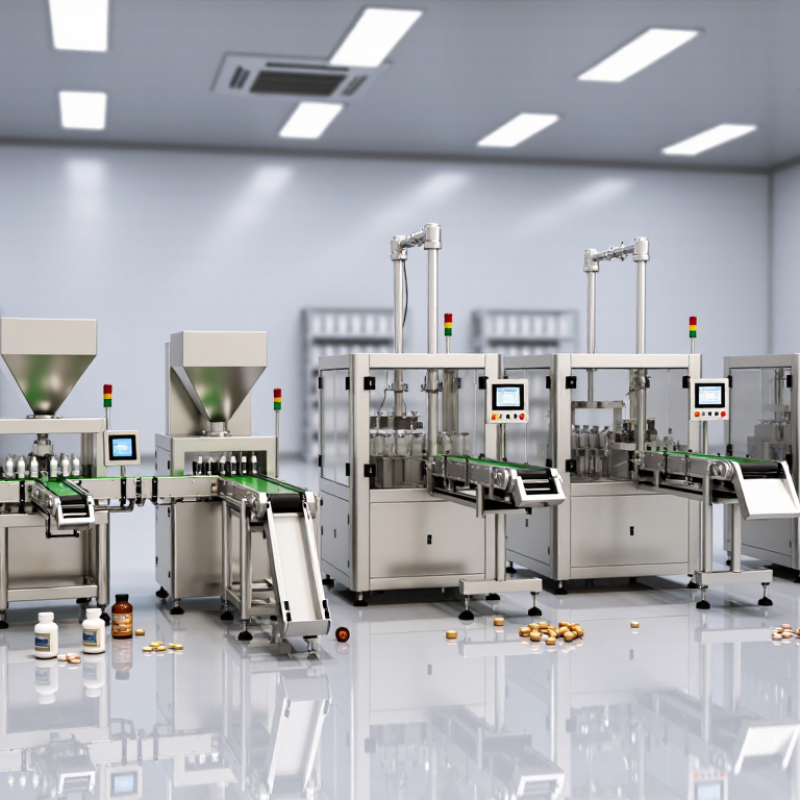
Tablet counter machines use controlled vibration, guided channels, and optical sensors to count solid tablets accurately. A hopper holds the product, while a vibrating plate separates tablets into a steady flow. Sensors detect each passing unit and send signals to the control system. The machine then stops the flow at the programmed quantity.

Accuracy depends on tablet shape, size, coating, and surface condition. Round tablets usually move smoothly, while irregular or fragile tablets may overlap or chip. Adjustable vibration speed and guide rails help reduce these problems. Calibration should match the tablet being processed, not a previous batch. Small errors multiply.

In practical operation, staff should inspect the hopper, counting channel, sensor window, and collection containers before production. Keep it clean. Dust can weaken detection and cause false counts. Experienced operators also test several containers at different speeds before full operation. A short test often reveals unstable feeding, delayed sensor response, or tablets bouncing near the outlet. No machine is perfect. Environmental factors, worn components, and rushed adjustments can affect results. Buyers should review counting accuracy, speed ranges, changeover time, cleaning access, alarm functions, and available technical support. Clear operating records also improve traceability and help identify repeated counting deviations.


7 Best Tablet Counter Machines for Global Buyers

Tablet counter machines use trays, vibratory channels, optical sensors, or rotary counting systems to separate and count solid-dose products. The chart compares representative rated throughput for seven common machine configurations.

Typical rated throughput ranges commonly specified for these machine classes. Actual performance varies with tablet size, shape, coating, feeding stability, counting speed, and container handling.

How the machines operate

Tablets are supplied to a hopper or tray, separated into a controlled flow, detected by sensors or guided through calibrated channels, and discharged into containers. Higher-capacity systems generally use multiple lanes, rotary pockets, or synchronized conveyor and sensor assemblies to increase counting speed while maintaining repeatable accuracy.

Seven Leading Tablet Counter Machines for Different Production Needs

Seven leading tablet counter machines serve different production needs, not one universal specification. A manual counter suits laboratories and small batches. A semi-automatic model supports pharmacies and pilot production. An electronic vibratory counter handles regular tablet sizes at moderate speed. A high-speed rotary counter fits large-volume lines. A vision-assisted counter improves detection of broken or doubled tablets. An integrated counting-and-bottling line reduces operator handling. A multi-format GMP counter offers quick changeovers for contract manufacturers.

The IQVIA Institute’s Global Use of Medicines 2024–2028 report forecasts global medicine spending will reach about $2.3 trillion by 2028. That growth increases pressure for accurate, traceable packaging. PMMI’s 2024 pharmaceutical packaging report also identifies flexibility, automation, and data integration as key equipment priorities. In practice, dust, static, and uneven tablet shapes still challenge ideal settings. Machine speed alone is not enough. Buyers should verify counting accuracy, reject performance, cleanability, and format-change time using representative tablets.

Tips: Request a factory trial with your smallest and largest tablets. Check whether the sensor system records batch counts and rejects. Confirm stainless-steel contact parts, tool-free access, and documented calibration procedures. A lower-cost machine may look efficient, but slower cleaning can quietly reduce daily output. That is easy to overlook.

Key Specifications for Comparing Tablet Counting Equipment

7 Best Tablet Counter Machines for Global Buyers

Key Specifications for Comparing Tablet Counting Equipment

Choosing among the 7 best tablet counter machines requires more than comparing advertised output. Measure usable speed with your actual tablet shape, coating, and batch size. A machine rated at 2,000 tablets per minute may slow near hopper refill. Counting accuracy matters more than impressive numbers. Look for sensor performance, reject control, and a documented test method. Ask for results across small, medium, and large batches. That evidence is more useful than a single factory figure.

Check tablet dimensions, thickness range, and hopper capacity before ordering. Product-contact surfaces should resist corrosion and allow simple cleaning. Dust control is essential in daily production. Inspect enclosure design, extraction points, and sensor access. A clear touchscreen helps operators adjust speed, targets, and alarms. Global buyers should verify voltage, frequency, language options, manuals, spare parts, and remote support. Data export can also support traceability and batch records. Do not ignore footprint or shipping weight. Both affect installation cost.

Tips: Request a sample run using your tablets. Record speed, missed counts, double feeds, noise, and cleaning time. Compare the results with the supplier’s specification. I would also test recovery after a jam, because real shifts are rarely perfect. A machine can count accurately yet remain inconvenient. That weakness may become expensive. Leave room for operator feedback before final approval.

How to Choose the Right Tablet Counter for Your Facility

How to Choose the Right Tablet Counter for Your Facility

Choosing a tablet counter starts with your actual production rhythm, not a catalogue headline. IQVIA’s Global Use of Medicines 2024 report projects worldwide medicine spending to reach about $2.3 trillion by 2028. That growth increases pressure on filling speed and batch consistency. Measure your peak hourly demand, then select a machine with practical headroom. A counter running at maximum speed all day may create more stoppages.

Tablet shape matters. Small, dusty tablets can bridge inside narrow channels. Large, irregular tablets may need wider feeding paths. Request a trial using your own tablets. Watch the hopper, chute, reject bin, and container changeover. Count accuracy should be checked across several batch sizes. One successful test is not enough.

Good equipment also supports documented controls. PIC/S GMP guidance emphasizes suitable equipment, cleaning, and traceable records. Look for tool-free contact-part removal, clear access points, and electronic batch data. Dust extraction is valuable when fine powder gathers beneath the counting area. It protects visibility and reduces cleaning time. Do not ignore operator experience. A technically advanced counter can still fail if settings are confusing. I would also challenge the supplier’s advertised speed. It may reflect ideal tablets, empty containers, and perfect feeding conditions. Real production is less polite. Pilot testing, documented acceptance criteria, and preventive maintenance records provide stronger evidence than a brochure.

Global Purchasing, Compliance, Installation, and Maintenance Factors

For global buyers, a tablet counter is a compliance decision, not merely a packaging purchase. The global pharmaceutical packaging equipment market was valued at about USD 8.4 billion in 2023, according to Grand View Research. Growth is driven by serialization, flexible production, and stricter quality controls. Buyers should verify counting accuracy, dust handling, contact-material certificates, and electrical compatibility before comparing prices.

Supplier documents must support local qualification. FDA 21 CFR Part 211.68 and 211.110 require controlled equipment operation and in-process testing. EU GMP Annex 15 expects documented qualification and validation. Ask for IQ, OQ, calibration records, software controls, and change-control procedures. A practical factory check should include 100, 500, and 1,000-tablet tests, using different shapes and coatings. Small tablets often expose weaknesses.

Installation planning is frequently underestimated. Leave service access around the machine. Confirm compressed-air quality, voltage, drainage, and line height before shipment. PMMI’s Pharmaceutical and Medical Device Packaging Trends report highlights faster changeovers and flexible equipment as major industry priorities. Maintenance should include sensor cleaning, belt inspection, lubrication, and periodic accuracy checks. Keep critical spare parts locally when possible. Remote support helps, but it cannot replace trained operators. Some purchasing teams still focus too heavily on maximum speed. That is a mistake worth reconsidering. Real output falls when cleaning, rejects, and format changes are ignored. Manufacturers should record downtime during acceptance testing and review performance after three months.

Powder Coat Booths

For those larger-sized parts, or smaller quantity runs, we have 2 independent powder coat booths and ovens. The quality, durability and affordability of today’s powder coating finishes make this the process of choice for world-class companies.

Powder coating advantages over other forms of coating are many. Materials used in the Powder coating process can be metals and non-metals that come in a multitude of thicknesses, textures, colors, etc. Another of Powder coating’s biggest advantages over conventional coatings is its ability to create finishes in many different textures. Powder Coating Booths allow us the ability to apply these advantages to large products.

Wet Paint Line

Tri-State Fabricators runs a full-service conveyor line for painting. Wet painting can provide protection or decoration to many different part styles. From start to finish, every project is easier to undergo random and point-based inspection by our skilled painting team.

Advantages to our Wet Paint Line are these lines start with product prep and ends with a thorough inspection of a high quality finished product. Our ability to complete large and small projects with a superior finish and doing so in a timely and economical fashion. This passes along the savings in production to our customers. When powder coating ins not an option, our Wet Paint Line gets the job done right the first time.

Wet Paint Booths

When the parts get big and heavy we roll-out our custom paint racks and oversize booth. By utilizing our partnerships with all the major paint brands, we can match virtually any color with wet paint.

The advantages of having access to a Wet Paint Booth are many. Large projects of many different shapes can be loaded into the booth. The Wet Paint Booth offers an environment that is much more controlled than a typical parts painting operation.

Not only are they used because of their controlled environment, but they’re are also advantageous when it comes to applying paint to parts that are needed in industries that require specialty coatings such as medical, aerospace, etc.

Military CARC

Our military forces have some very high standards when it comes to the finish of their vehicles and equipment. From the first pre-treatment step to final coat, it takes a great deal of knowledge and experience to protect the men and women of our armed forces. They deserve only the best, and Tri-State Fabricators provides it.

All of our processes are closely monitored by our staff and management teams. Both of which are highly trained in the processes of metal fabrication and finishing. Tri-State Fabricators’ goal is to always fully satisfy each and every customer, including the military. We will always put a 110% into what we do.

Glass-Bead Blasting

Abrasive media blasting is an excellent way to remove old paint, rust, and increase the paint/powder adhesion. Glass beads produce a much smoother and brighter finish than angular abrasives; leaving the part clean yet without any dimensional change. Chemically inert and environmentally friendly, we can recycle our beads approximately 30 times; making them a more preferred method of metal cleaning or surface finishing.

Advantages to Glass Bead Blasting are many. Glass bead blast media is used when a project is needing rough surfaces need to become smooth for applications of coatings such as paint. It is typically used to clean paint and rust from a product surface without deforming the surface it is being used on. Overall, compared to many other blasting media, Glass Bead Blasting is a very economical choice and those savings are always passed on to our customers.

Part Washing

Tri-State Fabricators utilize a zinc phosphate wash to clean and etch the material to ensure the best paint adhesion possible. The unique design of our 3-stage wash system does the work like a 5-stage. From Cleaning and rinsing to conversion coating and post-treatment, Our Part Washing process is a complete service and works throughout the fabrication service and the finishing service.

Along with the previously mentioned benefits, Curing is a vital chemical reaction that leaves the product finish hard and relatively safe from mild abrasion and aggressive corrosion. This process can be done in more than one way; ambient air-dry or in curing ovens at temps that exceed 240°.

Burn-Off Oven

From fixing paint mistakes (someone else’s of course) to simply cleaning our paint line hooks, our burn-off oven is put to good use. After a quick burn-off, a little clean up, and a fresh coat of paint, your parts will look better than new.

Why does our Burn-Off Oven work so well? Because super heating the air around parts turns the materials into ashes. From paint and powder coatings to rubber and machining oils, high temps do the job without degrading the integrity of the part.

Masking

Masking is a vital part of producing high quality products. We have die-cut masking patterns to protect machined surfaces as well as a wide range of plugs and caps to protect threaded holes and bolts. We provide permanent and temporary masking.

Masking allows the selected sections of a product to be protected from a fabrication or finishing service. This can be with both chemicals when etching and tapes, paints when only finishing just a section of the product. Masking is great in aiding the customization process of a project.

Screen Printing

Screen printing is a photographic process that transfers artwork onto a porous nylon screen which allows colored ink to flow through the screen and be deposited on an aluminum or plastic component. We can generally have just about any design created onto a screen for your parts.

Some of the advantages of Screen Printing are, brand recognition for your business displaying on your products, assembly instructions, product warnings/hazards, etc. Tri-State Fabricators produces Screen Printing of the highest quality so you know it’s durable.

Metal Finishing

Metal Finishing is the art of treating the exterior portion of product, often metal but can also be made of other materials, so that the surface is clean and free of any debris. Then the process of applying coats or either paint of powder coat takes place. This coating process improves the quality of the product in both appearance and resistance to wear and corrosion.

Tri-State Fabricators, Inc., understands that a project typically isn’t complete until a high-quality finish has been added to your product. This is why our painting and powder coating teams continuously inspect the products throughout the Metal Finishing process.
