


Video door phones are becoming a practical part of connected home entry systems. Fortune Business Insights estimated the global video doorbell market at USD 2.06 billion in 2023, with growth projected through 2032. That figure covers video doorbells, not every wired video door phone. Still, it signals rising buyer interest in seeing and speaking with visitors before opening a door.
For importers, installers, and property developers, choosing a supplier takes more than comparing product photos. Screen size, night visibility, wiring options, indoor monitor compatibility, and spare-part availability affect real projects. A sharp image matters. So does a stable call at the far end of a long hallway. Buyers searching for “Skynex Manufacturer Produce Video Door Phone” should confirm product specifications directly and request relevant test documents, warranty terms, and samples where practical. Claims can look polished online; performance needs checking.
This guide reviews seven Skynex video door phone manufacturers for buyers, focusing on product range, customization, manufacturing experience, and support. The comparison is intended as a starting point, not a certification. Some details may change by model or order. Ask precise questions before committing. A small omission can become an expensive site visit.
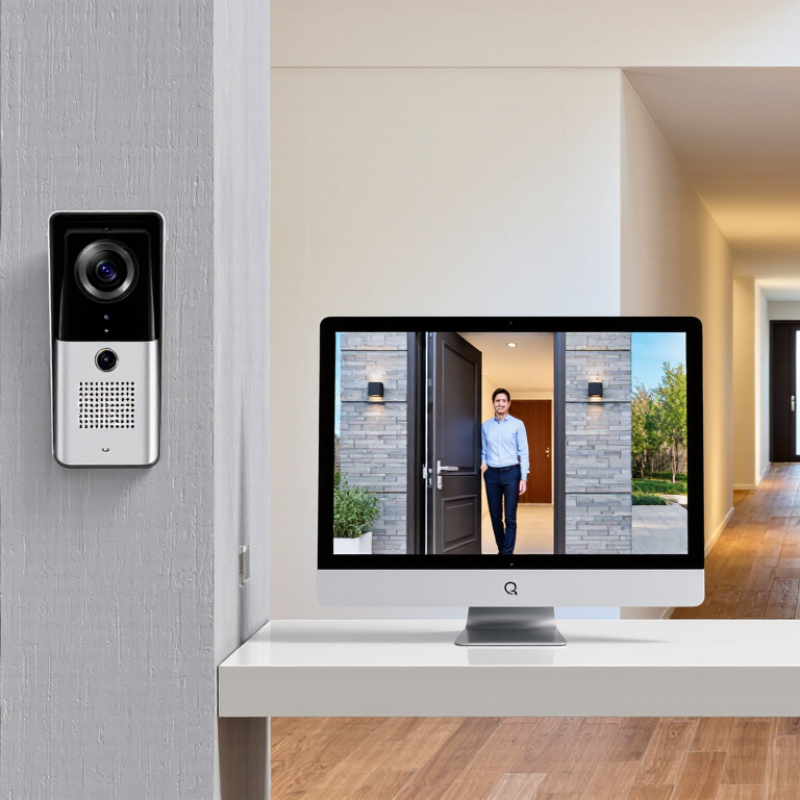
A video door phone lets a resident see and speak with a visitor before opening the entrance. A typical system has an outdoor camera and call panel, an indoor screen, a microphone, and a speaker. When someone presses the call button, the indoor monitor rings and displays live video. The resident can then talk through the system and, if connected, release the door lock. Some models use dedicated wiring; others send video over a home network. The exact setup varies, so check compatibility before buying.
Picture a delivery visitor standing in evening rain. A clear image, audible speech, and responsive controls matter more than a long feature list. Low-light performance and network stability can differ between installations. Even a capable system may disappoint if the camera points toward glare or the router is too far away.
Verizon’s 2024 Data Breach Investigations Report found that 68% of breaches involved a non-malicious human element. That figure is not specific to door phones, but it highlights why routine security habits matter for connected devices.
Tips: Test the image at night and the microphone from both sides of the door. Change default passwords, install software updates, and restrict app access to trusted users. Keep it simple. Check who can view recordings, too. That detail is easy to overlook.

A dependable video door phone manufacturer should explain how its equipment performs in everyday conditions, not only in a showroom. Ask for specifications on camera resolution, viewing angle, night visibility, and audio quality. A wide view is useful, but it may distort faces near the screen edge. Request a live demonstration at a doorway, including a test after the light is dimmed.
Check whether indoor monitors, outdoor stations, and wiring suit your building layout. Ask for installation guides, compatibility details, warranty terms, and the expected availability of replacement parts. These documents reveal more than a polished sales presentation. Small details matter. A loose terminal or unclear wiring diagram can slow an installer down.
Evaluate service as carefully as hardware. Ask how technical questions are handled, what troubleshooting support is available, and whether firmware updates are documented. If possible, speak with an installer who has used the equipment in a similar building. Compare written claims against practical feedback. I would not judge reliability from one successful test; a short demonstration cannot show years of use. Still, a supplier willing to discuss limitations plainly is often easier to assess than one promising flawless performance.
Buyer evaluation framework—not a manufacturer ranking. Compare specific models and confirm specifications with the supplier before purchasing.
| Evaluation factor | What to compare | Evidence to request | Why it matters |
|---|---|---|---|
| 1. Product range | Indoor monitors, outdoor door stations, and available system configurations. | Current product catalogue, model numbers, and installation manuals. | A suitable range makes it easier to match the equipment to the property and project size. |
| 2. Video and display specifications | Camera resolution, viewing angle, screen size, and performance in low light. | Model-specific datasheets and sample footage or a product demonstration. | Clear images and a usable display help residents identify visitors. |
| 3. Wiring and system architecture | Wiring requirements, power supply, maximum supported devices, and installation constraints. | Wiring diagrams, installation guide, and written confirmation of system limits. | The system must suit the building’s existing wiring or planned installation. |
| 4. Door access features | Door-release control, supported lock types, and any access methods included in the system. | Connection diagrams and compatibility details for the intended electric lock or access device. | Correctly matched access components are essential for safe, reliable door operation. |
| 5. Compatibility and integration | Compatibility among indoor monitors, outdoor stations, and any required accessories. | A model-by-model compatibility list and written confirmation for the proposed configuration. | Products that look similar are not necessarily interchangeable across system generations. |
| 6. Outdoor durability and compliance | Published environmental ratings, operating conditions, and applicable electrical or safety approvals. | Product-specific test reports, certificates, and installation requirements. | Verified ratings help determine whether equipment is appropriate for its intended location. |
| 7. Supply, warranty, and support | Warranty terms, spare-parts availability, technical support, and expected order lead times. | Written warranty policy, support process, parts list, and a dated quotation. | Clear after-sales arrangements reduce procurement risk and help with future maintenance. |
A useful comparison of seven video door phone manufacturers starts with their engineering strengths, not catalog claims. The first profile is an integrated OEM, combining camera, display, and control-board production. An IP-focused supplier emphasizes network stability and clear remote viewing. An apartment-system specialist designs multi-unit calling, visitor directories, and shared entry panels. These strengths are distinct. MarketsandMarkets’ 2023 Smart Home Market report estimated a US$101.0 billion market that year, projecting US$163.7 billion by 2028. This is broad market context, not a forecast for door phones alone.
A retrofit manufacturer prioritizes compact indoor monitors and straightforward wiring for older buildings. A weather-resistant specialist focuses on sealed call buttons, readable outdoor screens, and reliable operation in rain. A customization-led factory may offer tailored faceplates, screen sizes, and interface languages. An export-oriented producer often provides varied power options and detailed installation documents. Ask for wiring diagrams and test samples. Details matter.
Compare the seventh profile, a quality-control-led manufacturer, by checking inspection records, component traceability, and warranty handling. Request video tests in dim hallways, not only bright showrooms. Also verify how the system behaves when Wi-Fi drops; some models retain basic calling, while others lose remote features. A polished demo can still hide delays or uneven audio. That deserves a second look. Industry reports describe market growth, but they cannot verify one factory’s reliability. Check production consistency and after-sales response directly.
Comparing seven video door-phone manufacturers means looking beyond screen size and camera resolution. Grand View Research estimated the global video doorbell market at USD 2.26 billion in 2023 and forecast 12.5% annual growth from 2024 to 2030. That growth makes feature claims easy to find, but real differences show up in daily use. Check whether the indoor monitor stays clear in a dim hallway, whether motion alerts arrive promptly, and whether recorded clips are easy to retrieve. Small details matter. A wide viewing angle is useful, yet poor night images can make it less valuable.
Support deserves the same scrutiny as hardware. Compare warranty length, replacement procedures, firmware update history, and access to technical help after installation. Ask how long a typical reply takes, and whether support can troubleshoot wiring remotely. A polished specification sheet cannot answer that. For a practical check, request a sample installation guide and test the app on the phones your household actually uses. Also confirm what happens during a Wi-Fi outage; some systems retain local functions, while others lose key features. The comparison may not be perfectly neat: support quality can vary by region and installer, so written service terms matter more than a reassuring sales conversation.
Choosing a video door phone supplier takes more than comparing screen sizes and quoted prices. Grand View Research estimated the global smart-home market at USD 127.8 billion in 2024, reflecting growing demand for connected devices. For buyers, that makes stable app connectivity and long-term software support important questions—not bonus features.
Ask suppliers for clear specifications on camera resolution, night vision, viewing angle, audio quality, and indoor monitor compatibility. Request a working sample. Test it at the actual entrance, where backlighting, rain exposure, and Wi-Fi distance can reveal issues a brochure will not. Test it in low light, too. A sharp daytime image is not enough.
Check whether the supplier can provide firmware updates, spare parts, wiring diagrams, and a written warranty. Ask how defects are handled and how quickly replacement units can be shipped. If the answers stay vague, take note. Compare response times and support terms across suppliers, not just unit prices. A low quote may exclude essential accessories or after-sales help. I would still leave room for a practical trial: paper specifications rarely show how well a device fits an existing building.


For those larger-sized parts, or smaller quantity runs, we have 2 independent powder coat booths and ovens. The quality, durability and affordability of today’s powder coating finishes make this the process of choice for world-class companies.
Powder coating advantages over other forms of coating are many. Materials used in the Powder coating process can be metals and non-metals that come in a multitude of thicknesses, textures, colors, etc. Another of Powder coating’s biggest advantages over conventional coatings is its ability to create finishes in many different textures. Powder Coating Booths allow us the ability to apply these advantages to large products.
Tri-State Fabricators runs a full-service conveyor line for painting. Wet painting can provide protection or decoration to many different part styles. From start to finish, every project is easier to undergo random and point-based inspection by our skilled painting team.
Advantages to our Wet Paint Line are these lines start with product prep and ends with a thorough inspection of a high quality finished product. Our ability to complete large and small projects with a superior finish and doing so in a timely and economical fashion. This passes along the savings in production to our customers. When powder coating ins not an option, our Wet Paint Line gets the job done right the first time.
When the parts get big and heavy we roll-out our custom paint racks and oversize booth. By utilizing our partnerships with all the major paint brands, we can match virtually any color with wet paint.
The advantages of having access to a Wet Paint Booth are many. Large projects of many different shapes can be loaded into the booth. The Wet Paint Booth offers an environment that is much more controlled than a typical parts painting operation.
Not only are they used because of their controlled environment, but they’re are also advantageous when it comes to applying paint to parts that are needed in industries that require specialty coatings such as medical, aerospace, etc.
Our military forces have some very high standards when it comes to the finish of their vehicles and equipment. From the first pre-treatment step to final coat, it takes a great deal of knowledge and experience to protect the men and women of our armed forces. They deserve only the best, and Tri-State Fabricators provides it.
All of our processes are closely monitored by our staff and management teams. Both of which are highly trained in the processes of metal fabrication and finishing. Tri-State Fabricators’ goal is to always fully satisfy each and every customer, including the military. We will always put a 110% into what we do.
Abrasive media blasting is an excellent way to remove old paint, rust, and increase the paint/powder adhesion. Glass beads produce a much smoother and brighter finish than angular abrasives; leaving the part clean yet without any dimensional change. Chemically inert and environmentally friendly, we can recycle our beads approximately 30 times; making them a more preferred method of metal cleaning or surface finishing.
Advantages to Glass Bead Blasting are many. Glass bead blast media is used when a project is needing rough surfaces need to become smooth for applications of coatings such as paint. It is typically used to clean paint and rust from a product surface without deforming the surface it is being used on. Overall, compared to many other blasting media, Glass Bead Blasting is a very economical choice and those savings are always passed on to our customers.
Tri-State Fabricators utilize a zinc phosphate wash to clean and etch the material to ensure the best paint adhesion possible. The unique design of our 3-stage wash system does the work like a 5-stage. From Cleaning and rinsing to conversion coating and post-treatment, Our Part Washing process is a complete service and works throughout the fabrication service and the finishing service.
Along with the previously mentioned benefits, Curing is a vital chemical reaction that leaves the product finish hard and relatively safe from mild abrasion and aggressive corrosion. This process can be done in more than one way; ambient air-dry or in curing ovens at temps that exceed 240°.
From fixing paint mistakes (someone else’s of course) to simply cleaning our paint line hooks, our burn-off oven is put to good use. After a quick burn-off, a little clean up, and a fresh coat of paint, your parts will look better than new.
Why does our Burn-Off Oven work so well? Because super heating the air around parts turns the materials into ashes. From paint and powder coatings to rubber and machining oils, high temps do the job without degrading the integrity of the part.
Masking is a vital part of producing high quality products. We have die-cut masking patterns to protect machined surfaces as well as a wide range of plugs and caps to protect threaded holes and bolts. We provide permanent and temporary masking.
Masking allows the selected sections of a product to be protected from a fabrication or finishing service. This can be with both chemicals when etching and tapes, paints when only finishing just a section of the product. Masking is great in aiding the customization process of a project.
Screen printing is a photographic process that transfers artwork onto a porous nylon screen which allows colored ink to flow through the screen and be deposited on an aluminum or plastic component. We can generally have just about any design created onto a screen for your parts.
Some of the advantages of Screen Printing are, brand recognition for your business displaying on your products, assembly instructions, product warnings/hazards, etc. Tri-State Fabricators produces Screen Printing of the highest quality so you know it’s durable.
Metal Finishing is the art of treating the exterior portion of product, often metal but can also be made of other materials, so that the surface is clean and free of any debris. Then the process of applying coats or either paint of powder coat takes place. This coating process improves the quality of the product in both appearance and resistance to wear and corrosion.
Tri-State Fabricators, Inc., understands that a project typically isn’t complete until a high-quality finish has been added to your product. This is why our painting and powder coating teams continuously inspect the products throughout the Metal Finishing process.

