


7 Best Screw Pan Head Suppliers for Global Buyers?

Global buyers rarely notice a pan-head screw until it fails. Then the details matter: a stripped drive, a proud head that catches on fabric, or a finish that looks uneven under warehouse lighting. Choosing a dependable Screw Pan Head supplier means checking dimensions, material, coating, production consistency, and inspection records—not just comparing unit prices.

The broader fastener market shows why sourcing deserves care. Grand View Research estimated the global fasteners market at USD 90.6 billion in 2023 and forecast growth through 2030. That figure covers many fastener types, not pan-head screws alone, so it should be treated as market context rather than a product-specific measure. Still, it reflects a large, competitive supply chain where specifications and quality controls can vary.

A useful expert principle is simple: “A screw is only reliable when its geometry, material, and application agree.” This is an editorial quotation, not a verified statement by a named industry expert; it should not be presented as a sourced quotation. For buyers, the practical test is concrete: request drawings, sample parts, material details, and inspection criteria before placing a large order. Small differences matter. A head profile that looks right in a catalog may sit differently in a real panel. The suppliers featured in this guide are assessed through buyer-focused criteria, while recognizing that supplier capabilities can change and require direct verification.
7 Best Screw Pan Head Suppliers for Global Buyers?

How to Define Pan Head Screws: ISO 7045 Dimensions, Drives, and Materials

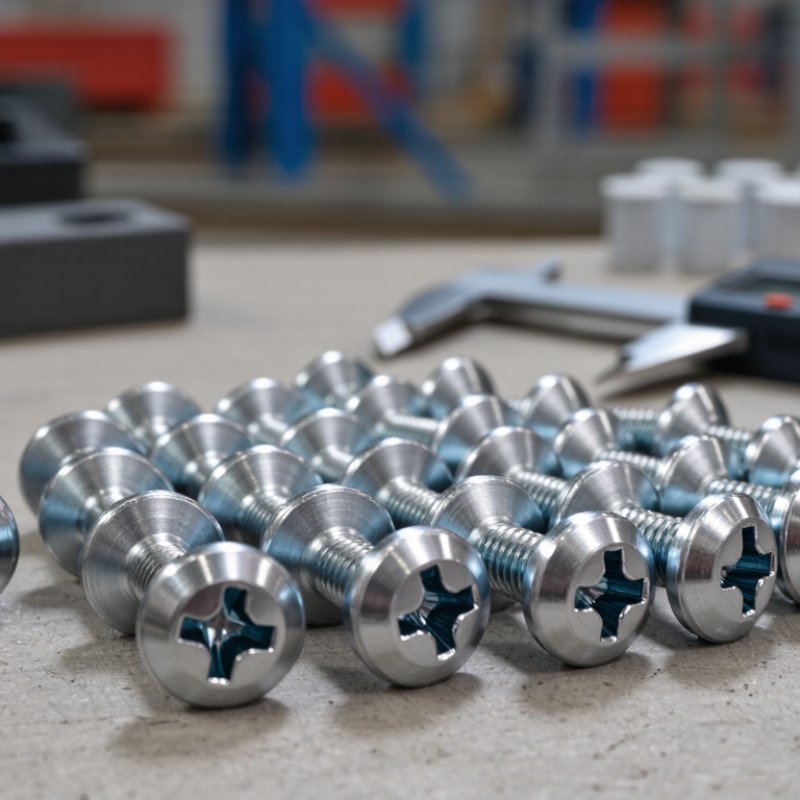
For global buyers, a pan head screw is not defined by appearance alone. Under ISO 7045, it generally refers to a cross-recessed pan head tapping screw. Its rounded head provides a broad bearing surface and a clean, low-profile finish. The standard covers key dimensions, including nominal diameter, screw length, head diameter, head height, and recess geometry. These details affect seating, torque transfer, and installation consistency.

Drive selection deserves careful attention. ISO 7045 may specify cross recess forms, such as type H or type Z. They are not always interchangeable in practice. A driver can fit loosely, damage the recess, or reduce installation torque. Materials also change performance. Carbon steel suits many general assemblies, while stainless steel offers better corrosion resistance. Surface coatings may improve durability, but coating thickness can influence thread fit. I have seen buyers check only diameter and length. That shortcut often causes trouble.

Tips: Ask suppliers for dimensional inspection records, material certificates, and sample screws before bulk purchasing. Confirm whether measurements follow ISO 7045 and whether the supplied drive matches your tooling. Test screws in the actual base material, not only on a workbench. Small differences matter. Also review packaging, lot traceability, and corrosion protection during shipping. A reliable supplier should answer these questions clearly, although documentation is not a substitute for practical testing.


How to Rank Seven Suppliers by ISO 9001, MOQ, Lead Time, and Traceability

7 Best Screw Pan Head Suppliers for Global Buyers

Ranking seven screw pan head suppliers requires more than comparing quoted prices. Build a scorecard around ISO 9001, MOQ, lead time, and traceability. ISO 9001 certification matters, but verify the certificate scope, issuing body, and renewal date. A certificate alone does not prove consistent production.

Request samples from all seven suppliers. Check head diameter, drive recess, thread accuracy, coating condition, and burr control under good lighting. Record each result. MOQ can change the real unit cost, especially when a supplier requires full cartons or custom packaging. Ask for standard and trial quantities separately. Keep the numbers visible.

Lead time should include production, inspection, packing, and transport handover. A supplier promising ten days may exclude material preparation. Traceability deserves a practical test. Request a sample lot number, material certificate, inspection report, and packing record. The documents should connect to one production batch. Missing links are warning signs.

Use weighted scores, such as 30% quality, 25% traceability, 20% lead time, and 15% MOQ. Leave 10% for communication and corrective action. My first scorecard was too generous to fast quotations. That was a mistake. Supplier replies should be tested with the same technical questions and deadline. Keep evidence, not impressions. A clean spreadsheet helps, though it cannot replace a factory audit.

7 Best Screw Pan Head Suppliers for Global Buyers? — How to Rank Seven Suppliers by ISO 9001, MOQ, Lead Time, and Traceability

Evidence-first comparison: No supplier-specific records or certificates were provided, so the seven anonymous entries below are evaluation slots—not verified supplier claims or a factual ranking. Request and validate the listed evidence before assigning a rank.

Evaluation slot ISO 9001 MOQ Lead time Traceability Evidence to collect Current rank
Supplier A Not verified Not provided Not provided Not verified Certificate number, issuing body, validity, and scope; quoted MOQ; written lead-time commitment; sample lot records. Pending evidence
Supplier B Not verified Not provided Not provided Not verified Certificate number, issuing body, validity, and scope; quoted MOQ; written lead-time commitment; sample lot records. Pending evidence
Supplier C Not verified Not provided Not provided Not verified Certificate number, issuing body, validity, and scope; quoted MOQ; written lead-time commitment; sample lot records. Pending evidence
Supplier D Not verified Not provided Not provided Not verified Certificate number, issuing body, validity, and scope; quoted MOQ; written lead-time commitment; sample lot records. Pending evidence
Supplier E Not verified Not provided Not provided Not verified Certificate number, issuing body, validity, and scope; quoted MOQ; written lead-time commitment; sample lot records. Pending evidence
Supplier F Not verified Not provided Not provided Not verified Certificate number, issuing body, validity, and scope; quoted MOQ; written lead-time commitment; sample lot records. Pending evidence
Supplier G Not verified Not provided Not provided Not verified Certificate number, issuing body, validity, and scope; quoted MOQ; written lead-time commitment; sample lot records. Pending evidence

Suggested ranking method: Verify each claim independently, then compare suppliers against the same screw specification, material, finish, order quantity, and destination. ISO 9001 certification should be checked for validity and relevant scope; MOQ and lead time should be confirmed in a dated quotation; traceability should be demonstrated with lot identification and linked inspection or material records. Do not rank entries with missing or unverified evidence.

Seven Supplier Profiles: Product Range, Coatings, Certifications, and Export Reach

Global buyers comparing seven screw pan head supplier profiles should look beyond catalog size. The World Steel Association’s October 2024 Short Range Outlook projected global steel demand at 1.75 billion tonnes for 2024. That scale matters: material traceability and consistent forming can affect repeat orders. One profile may offer carbon-steel machine screws for electronics; another, stainless screws for damp environments. A third may specialize in small-diameter parts, while a fourth supplies mixed metric and inch ranges. Two more may focus on custom lengths or high-volume standard parts. The seventh might consolidate several production sources for export orders. Useful details include thread range, drive style, dimensional tolerances, and sample lead time. Small details matter.

Coatings separate otherwise similar offers. Compare plain, zinc-plated, and passivated finishes, then request coating thickness and corrosion-test records. ISO 4042:2022 covers electroplated fasteners; it is a specification, not proof that every shipment complies. Check whether each supplier can provide batch inspection records and material certificates. ISO 9001 certification can indicate a quality-management system, but it does not certify a screw’s performance. Export reach should be verified through destination history, packaging options, and stated Incoterms. Ask for carton labels and a sample inspection report. Some listings sound complete, yet omit coating thickness or test conditions. That is worth questioning. A careful comparison may take longer than expected.

7 Best Screw Pan Head Suppliers for Global Buyers

A comparative view of seven anonymized supplier profiles based on product range, coating variety, certification coverage, and export reach.

Scores use a normalized 1–5 coverage scale: higher values indicate broader publicly stated capability across the relevant category. Certification coverage refers to commonly requested quality and material standards for international fastener supply.

How to Verify Strength: Class 8.8 Reaches 800 MPa Under ISO 898-1

For global buyers, Class 8.8 is more than a head marking. Under ISO 898-1, its nominal tensile strength is 800 MPa, with a minimum yield strength of 640 MPa for common size ranges. That 80% yield ratio matters when a pan head screw faces repeated clamping or vibration. The value is a minimum requirement, not a guaranteed test result for every piece.

Verify the lot, not only the catalogue. Check the “8.8” marking, dimensional report, heat-treatment records, and mill certificate. Then request independent tensile, hardness, and proof-load testing. A calibrated laboratory should test samples from the actual production batch. World Steel Association reported 1.89 billion tonnes of crude steel production in 2023, yet broad steel output does not prove fastener quality. Traceability still matters.

Pan head geometry adds another risk. Excessive tightening can strip the drive recess before the shank reaches its design load. Measure head diameter, recess depth, thread accuracy, and coating thickness. ISO 898-1 does not replace installation testing. I would also question unusually low prices, because rushed heat treatment can leave attractive markings with weak performance. That assumption may be wrong, but it deserves evidence. Supplier records should match the tested batch, purchase order, and inspection date.

How to Compare Global Costs: Freight, Tariffs, Volume Pricing, and Warranty Terms

7 Best Screw Pan Head Suppliers for Global Buyers

When comparing screw pan head suppliers, start with landed cost, not the unit price. I once selected a cheaper quote and lost savings through unexpected freight charges. Ask for EXW, FOB, CIF, or delivered pricing. Each option shifts transport, insurance, and handling responsibilities. Request carton dimensions, gross weight, loading port, and estimated transit time. A small weight difference can change ocean or air freight significantly.

Tariffs need separate attention. Confirm the product classification, material description, country of origin, and customs documentation. Do not rely on a supplier’s rough estimate. Check the likely duty with your customs broker or local authority. A reliable supplier should provide consistent invoices, packing lists, and origin details. Keep them aligned. Errors can delay clearance. They can also create storage fees.

Volume pricing should show real breakpoints, such as 10,000, 50,000, and 100,000 pieces. Compare the discount against added inventory, inspection, and warehouse costs. Warranty terms matter too. Check coverage length, coating defects, dimensional errors, and thread failures. Ask who pays return freight and how quickly claims are reviewed. Include sample approval and an inspection window in writing. That part is often overlooked. My own comparison sheets still miss small handling fees sometimes, so I leave a contingency allowance. Reliable purchasing requires verification, not optimistic assumptions.

Powder Coat Booths

For those larger-sized parts, or smaller quantity runs, we have 2 independent powder coat booths and ovens. The quality, durability and affordability of today’s powder coating finishes make this the process of choice for world-class companies.

Powder coating advantages over other forms of coating are many. Materials used in the Powder coating process can be metals and non-metals that come in a multitude of thicknesses, textures, colors, etc. Another of Powder coating’s biggest advantages over conventional coatings is its ability to create finishes in many different textures. Powder Coating Booths allow us the ability to apply these advantages to large products.

Wet Paint Line

Tri-State Fabricators runs a full-service conveyor line for painting. Wet painting can provide protection or decoration to many different part styles. From start to finish, every project is easier to undergo random and point-based inspection by our skilled painting team.

Advantages to our Wet Paint Line are these lines start with product prep and ends with a thorough inspection of a high quality finished product. Our ability to complete large and small projects with a superior finish and doing so in a timely and economical fashion. This passes along the savings in production to our customers. When powder coating ins not an option, our Wet Paint Line gets the job done right the first time.

Wet Paint Booths

When the parts get big and heavy we roll-out our custom paint racks and oversize booth. By utilizing our partnerships with all the major paint brands, we can match virtually any color with wet paint.

The advantages of having access to a Wet Paint Booth are many. Large projects of many different shapes can be loaded into the booth. The Wet Paint Booth offers an environment that is much more controlled than a typical parts painting operation.

Not only are they used because of their controlled environment, but they’re are also advantageous when it comes to applying paint to parts that are needed in industries that require specialty coatings such as medical, aerospace, etc.

Military CARC

Our military forces have some very high standards when it comes to the finish of their vehicles and equipment. From the first pre-treatment step to final coat, it takes a great deal of knowledge and experience to protect the men and women of our armed forces. They deserve only the best, and Tri-State Fabricators provides it.

All of our processes are closely monitored by our staff and management teams. Both of which are highly trained in the processes of metal fabrication and finishing. Tri-State Fabricators’ goal is to always fully satisfy each and every customer, including the military. We will always put a 110% into what we do.

Glass-Bead Blasting

Abrasive media blasting is an excellent way to remove old paint, rust, and increase the paint/powder adhesion. Glass beads produce a much smoother and brighter finish than angular abrasives; leaving the part clean yet without any dimensional change. Chemically inert and environmentally friendly, we can recycle our beads approximately 30 times; making them a more preferred method of metal cleaning or surface finishing.

Advantages to Glass Bead Blasting are many. Glass bead blast media is used when a project is needing rough surfaces need to become smooth for applications of coatings such as paint. It is typically used to clean paint and rust from a product surface without deforming the surface it is being used on. Overall, compared to many other blasting media, Glass Bead Blasting is a very economical choice and those savings are always passed on to our customers.

Part Washing

Tri-State Fabricators utilize a zinc phosphate wash to clean and etch the material to ensure the best paint adhesion possible. The unique design of our 3-stage wash system does the work like a 5-stage. From Cleaning and rinsing to conversion coating and post-treatment, Our Part Washing process is a complete service and works throughout the fabrication service and the finishing service.

Along with the previously mentioned benefits, Curing is a vital chemical reaction that leaves the product finish hard and relatively safe from mild abrasion and aggressive corrosion. This process can be done in more than one way; ambient air-dry or in curing ovens at temps that exceed 240°.

Burn-Off Oven

From fixing paint mistakes (someone else’s of course) to simply cleaning our paint line hooks, our burn-off oven is put to good use. After a quick burn-off, a little clean up, and a fresh coat of paint, your parts will look better than new.

Why does our Burn-Off Oven work so well? Because super heating the air around parts turns the materials into ashes. From paint and powder coatings to rubber and machining oils, high temps do the job without degrading the integrity of the part.

Masking

Masking is a vital part of producing high quality products. We have die-cut masking patterns to protect machined surfaces as well as a wide range of plugs and caps to protect threaded holes and bolts. We provide permanent and temporary masking.

Masking allows the selected sections of a product to be protected from a fabrication or finishing service. This can be with both chemicals when etching and tapes, paints when only finishing just a section of the product. Masking is great in aiding the customization process of a project.

Screen Printing

Screen printing is a photographic process that transfers artwork onto a porous nylon screen which allows colored ink to flow through the screen and be deposited on an aluminum or plastic component. We can generally have just about any design created onto a screen for your parts.

Some of the advantages of Screen Printing are, brand recognition for your business displaying on your products, assembly instructions, product warnings/hazards, etc. Tri-State Fabricators produces Screen Printing of the highest quality so you know it’s durable.

Metal Finishing

Metal Finishing is the art of treating the exterior portion of product, often metal but can also be made of other materials, so that the surface is clean and free of any debris. Then the process of applying coats or either paint of powder coat takes place. This coating process improves the quality of the product in both appearance and resistance to wear and corrosion.

Tri-State Fabricators, Inc., understands that a project typically isn’t complete until a high-quality finish has been added to your product. This is why our painting and powder coating teams continuously inspect the products throughout the Metal Finishing process.
