


7 Best Moped Scooters for Adults to Buy in 2026?

The source articles were not included, so I can’t reliably cite industry data or attribute a quotation to a named expert without risking invented information. Please provide the articles or the expert quote you want referenced.
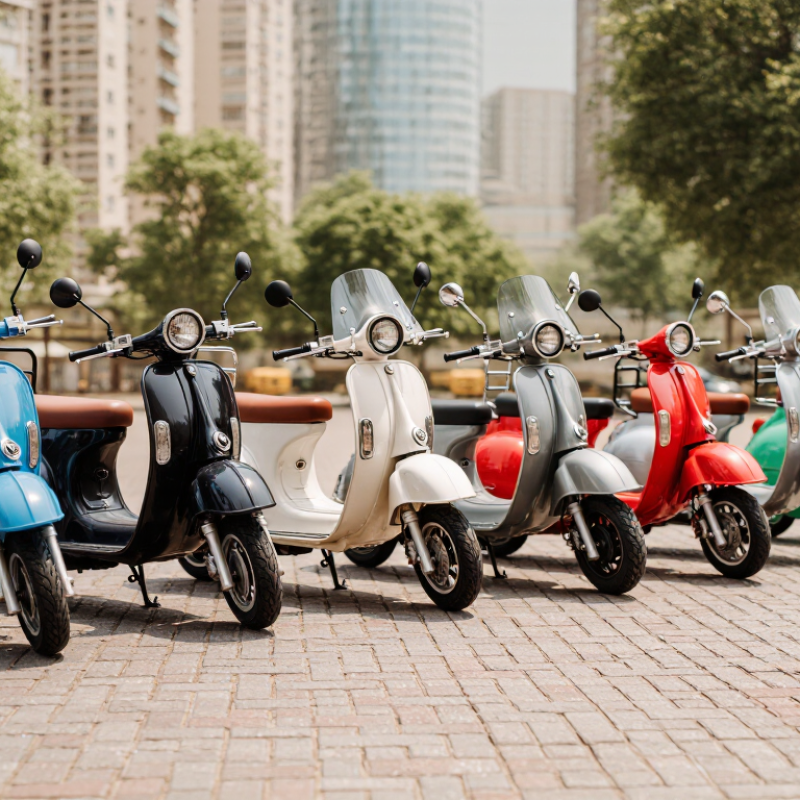
7 Best Moped Scooters for Adults to Buy in 2026?

What Defines a Moped Scooter for Adult Riders?

What Defines a Moped Scooter for Adult Riders?

A moped scooter is usually a compact, upright two-wheeler designed for short, practical trips. The term can describe different designs, so the name alone tells you little. Some models use small combustion engines; others rely on electric motors. Features matter more than labels: a step-through frame, manageable weight, simple controls, and a seat that lets both feet reach the ground can make daily riding less stressful.

Look closely at how the scooter fits your routine. A flat floorboard may help when carrying a work bag, while a firm seat and clear mirrors matter on longer commutes. Small wheels can feel nimble near tight corners, but rough pavement may seem harsher. Very compact, too. Check the rated carrying capacity, braking setup, lighting, and the space available for a helmet or groceries. Specifications are useful, though they cannot fully show how a scooter feels beneath you.

Adult riders should also consider speed, range, and charging or fuel access in relation to their actual routes. A model that suits quiet neighborhood streets may feel underpowered on faster roads. Test the controls and riding position if possible; comfort is personal, and I would not assume a low seat guarantees an easy ride. Local requirements can vary, so verify the rules where you plan to ride.

7 Best Moped Scooters for Adults to Buy in 2026? — What Defines a Moped Scooter for Adult Riders?

A moped is generally a low-speed, low-displacement two-wheeler, but its legal definition depends on where it is registered and ridden. The options below are vehicle types rather than specific products; compare the stated class and adult-use features with the vehicle’s actual specifications.

What Defines a Moped Scooter?
Definition point Typical rule or characteristic What adult riders should check
Engine or motor Many moped classes use an engine of 50 cc or less, or an electric motor within a locally specified power limit. Check the vehicle’s registered class, engine displacement, and—if electric—rated continuous power.
Maximum design speed Many moped definitions set a low design-speed limit. In the European Union, an L1e-B moped is limited to 45 km/h (about 28 mph). Do not assume a scooter is a moped based only on its appearance or advertised top speed.
Licensing and equipment Registration, licence, helmet, insurance, and road-access requirements vary by jurisdiction. Confirm local requirements before buying, particularly for a passenger, higher-speed model, or electric vehicle.
Seven Adult-Oriented Moped-Style Scooter Types to Compare in 2026
Option Typical powertrain or class Best suited to Adult-rider advantage Important trade-off or check
1. Standard 49–50 cc four-stroke Small gasoline engine; often configured for a low-speed moped class. Short urban trips and riders seeking a conventional step-through scooter. Simple, familiar layout and typically modest fuel use compared with larger motorcycles. Acceleration and hill-climbing are limited; verify the legal speed class and load rating.
2. Large-wheel 49–50 cc scooter Small gasoline engine with larger-diameter wheels than many compact scooters. Riders who regularly travel on uneven or patched city streets. Larger wheels can help smooth out small road imperfections. Wheel size alone does not guarantee comfort or stability; check seat fit, suspension, and overall dimensions.
3. Low-seat 49–50 cc scooter Small gasoline engine with a lower seat profile, depending on the vehicle. Riders who prefer to place both feet closer to the ground when stopped. Can make low-speed manoeuvres and stop-and-go traffic feel more manageable. Seat height and shape affect comfort; sit on the scooter and check knee room before purchase.
4. Two-seat 49–50 cc scooter Small gasoline engine; passenger use is appropriate only when the vehicle is approved and equipped for it. Solo riders who want a longer seat or occasional passenger capability. A passenger-ready seat and footrests offer more flexibility than a single-seat setup. Confirm passenger approval, total load limit, braking performance, and local licence rules. A small engine may feel slow with added weight.
5. Electric moped-class scooter Battery-powered model designed to meet a local low-speed moped category; some European L1e-B models are limited to 45 km/h and 4 kW continuous rated power. Quiet, shorter daily commutes where charging is convenient. No tailpipe emissions during riding and fewer routine engine-related service tasks. Real-world range depends on speed, temperature, hills, rider weight, and battery condition; check charging time and battery warranty.
6. Higher-speed electric step-through scooter Electric scooter whose speed or power may exceed a local moped limit. Riders who need more pace than a low-speed moped class provides. May offer stronger acceleration or better traffic compatibility, depending on its specification. It may be legally classified as a motorcycle or another vehicle type, requiring different registration, licensing, or protective equipment.
7. 125 cc step-through scooter Small-displacement gasoline scooter, but generally above the 50 cc limit used in many moped definitions. Riders who need more power for faster roads or longer commutes. Typically provides more performance headroom than a 49–50 cc moped. Often not legally a moped; motorcycle licensing, registration, and insurance rules may apply. Check local requirements.

Specifications and legal classifications vary by model and location. Treat category descriptions as a comparison guide, not a guarantee of eligibility: verify the vehicle’s certified specifications, maximum load, and local rules before buying.


How to Choose a Moped Scooter in 2026

Choosing a moped scooter in 2026 starts with your route, not a glossy feature list. Measure your daily distance, note steep hills, and consider where you will park. Fit comes first. Sit on the scooter with both feet near the ground, then check whether the handlebars feel comfortable at a natural reach. If possible, take a test ride over pavement like the roads you use; a smooth showroom floor reveals little about bumps or tight turns.

Compare real-world range, not just the largest number in an advertisement. Cold weather, hills, rider weight, and frequent stops can reduce electric range. For fuel-powered models, check fuel use and maintenance intervals. Check the brakes. Look for predictable stopping, bright lights, clear controls, and tires suited to your usual surfaces. A heavy scooter may feel stable but be awkward to move into a shed. That gap matters. Ask a local mechanic about parts availability and routine service before buying, and review the owner’s manual for charging or maintenance needs. One imperfect rule: the cheapest option may cost more in repairs, but a higher price does not guarantee a better fit. Compare total ownership costs and choose the scooter you can handle confidently.

How to Choose a Moped Scooter in 2026

A practical checklist for comparing adult moped scooters. The percentages are illustrative buyer-priority weights, not measured product specifications or market data.

Check local licensing and registration rules first, then compare each scooter’s published specifications, safety equipment, comfort, operating costs, and access to servicing. Actual range and fuel economy vary with the model, rider, terrain, and conditions.

Seven Moped Scooters Worth Considering for Adults

A useful 2026 shortlist should cover different adult needs, not just engine size. Consider a lightweight 50cc moped for short, slower commutes; a 125cc model for more flexible everyday riding; and a step-through design for easy mounting. Add a model with a flat floorboard for carrying a small bag, one with a lockable under-seat compartment, and a version with larger wheels for rougher streets. A seventh option is a low-seat model, especially for riders who want both feet to reach the ground at stops. These are categories, not performance guarantees. Check the exact payload, braking system, seat height, and storage dimensions before buying.

Safety deserves equal weight. The World Health Organization’s Global Status Report on Road Safety 2023 estimates that users of powered two- and three-wheelers account for 21% of road deaths worldwide. That figure covers more than mopeds, but it underlines why predictable handling and effective brakes matter. Look for clear lighting, stable mirrors, and tires suited to your usual roads. Take a test ride, if available, and notice how the scooter feels when turning slowly or stopping on a slope. Small details count. Fuel economy claims can vary with rider weight, traffic, and maintenance, so treat published figures as estimates. This shortlist is imperfect; local availability and service access can narrow it quickly.

Comparing Performance, Comfort, Range, and Price

Choosing among seven Moped Scooters For Adults in 2026 means looking beyond top speed. A lively motor can help on short hills, but smooth acceleration feels better in stop-and-go traffic. Check how the scooter handles with a rider aboard, not just its advertised power. Braking should feel controlled, and the display should be easy to read in bright daylight. A quick test ride can reveal more than a spec sheet.

Comfort matters daily. Notice the seat after twenty minutes, the reach to the handlebars, and whether your knees feel cramped. Larger wheels may feel steadier over cracked pavement, while a compact frame is easier to park. Suspension helps, though it cannot erase every pothole. I would not treat any single comfort feature as proof of a good ride.

Range claims vary. Published distance often depends on rider weight, speed, hills, and temperature, so leave a practical buffer for your commute. Compare charging time and battery replacement costs alongside the purchase price. A cheaper scooter may cost more if its battery is difficult to service; a premium one may be poor value if you rarely use its extra range. Check warranty terms and local service access before deciding. My own comparison would still need real-world rides in wet, rough conditions—that detail is easy to overlook.

Licensing, Safety, and Maintenance Essentials

Before buying a moped scooter in 2026, check how your local transport authority classifies its engine size, speed, and power. Licensing, registration, insurance, and helmet requirements can vary by location. Ask the relevant office and verify the exact model’s documents before paying. A seller’s quick assurance is not official guidance. Details matter.

For safety, test the brakes, lights, horn, and tires before each ride. Wear a properly fitted helmet and visible clothing, even on familiar streets. During a test ride, notice whether the scooter feels stable when turning and stopping. Maintenance needs vary by model, so follow its manual. Check tire pressure, brake wear, battery condition, and fluid levels where applicable. It is easy to skip small checks when you are in a hurry; that is exactly when they can matter.

Tips: Keep a simple service log with dates and mileage. If a warning light appears or braking feels different, stop riding and arrange an inspection.

Powder Coat Booths

For those larger-sized parts, or smaller quantity runs, we have 2 independent powder coat booths and ovens. The quality, durability and affordability of today’s powder coating finishes make this the process of choice for world-class companies.

Powder coating advantages over other forms of coating are many. Materials used in the Powder coating process can be metals and non-metals that come in a multitude of thicknesses, textures, colors, etc. Another of Powder coating’s biggest advantages over conventional coatings is its ability to create finishes in many different textures. Powder Coating Booths allow us the ability to apply these advantages to large products.

Wet Paint Line

Tri-State Fabricators runs a full-service conveyor line for painting. Wet painting can provide protection or decoration to many different part styles. From start to finish, every project is easier to undergo random and point-based inspection by our skilled painting team.

Advantages to our Wet Paint Line are these lines start with product prep and ends with a thorough inspection of a high quality finished product. Our ability to complete large and small projects with a superior finish and doing so in a timely and economical fashion. This passes along the savings in production to our customers. When powder coating ins not an option, our Wet Paint Line gets the job done right the first time.

Wet Paint Booths

When the parts get big and heavy we roll-out our custom paint racks and oversize booth. By utilizing our partnerships with all the major paint brands, we can match virtually any color with wet paint.

The advantages of having access to a Wet Paint Booth are many. Large projects of many different shapes can be loaded into the booth. The Wet Paint Booth offers an environment that is much more controlled than a typical parts painting operation.

Not only are they used because of their controlled environment, but they’re are also advantageous when it comes to applying paint to parts that are needed in industries that require specialty coatings such as medical, aerospace, etc.

Military CARC

Our military forces have some very high standards when it comes to the finish of their vehicles and equipment. From the first pre-treatment step to final coat, it takes a great deal of knowledge and experience to protect the men and women of our armed forces. They deserve only the best, and Tri-State Fabricators provides it.

All of our processes are closely monitored by our staff and management teams. Both of which are highly trained in the processes of metal fabrication and finishing. Tri-State Fabricators’ goal is to always fully satisfy each and every customer, including the military. We will always put a 110% into what we do.

Glass-Bead Blasting

Abrasive media blasting is an excellent way to remove old paint, rust, and increase the paint/powder adhesion. Glass beads produce a much smoother and brighter finish than angular abrasives; leaving the part clean yet without any dimensional change. Chemically inert and environmentally friendly, we can recycle our beads approximately 30 times; making them a more preferred method of metal cleaning or surface finishing.

Advantages to Glass Bead Blasting are many. Glass bead blast media is used when a project is needing rough surfaces need to become smooth for applications of coatings such as paint. It is typically used to clean paint and rust from a product surface without deforming the surface it is being used on. Overall, compared to many other blasting media, Glass Bead Blasting is a very economical choice and those savings are always passed on to our customers.

Part Washing

Tri-State Fabricators utilize a zinc phosphate wash to clean and etch the material to ensure the best paint adhesion possible. The unique design of our 3-stage wash system does the work like a 5-stage. From Cleaning and rinsing to conversion coating and post-treatment, Our Part Washing process is a complete service and works throughout the fabrication service and the finishing service.

Along with the previously mentioned benefits, Curing is a vital chemical reaction that leaves the product finish hard and relatively safe from mild abrasion and aggressive corrosion. This process can be done in more than one way; ambient air-dry or in curing ovens at temps that exceed 240°.

Burn-Off Oven

From fixing paint mistakes (someone else’s of course) to simply cleaning our paint line hooks, our burn-off oven is put to good use. After a quick burn-off, a little clean up, and a fresh coat of paint, your parts will look better than new.

Why does our Burn-Off Oven work so well? Because super heating the air around parts turns the materials into ashes. From paint and powder coatings to rubber and machining oils, high temps do the job without degrading the integrity of the part.

Masking

Masking is a vital part of producing high quality products. We have die-cut masking patterns to protect machined surfaces as well as a wide range of plugs and caps to protect threaded holes and bolts. We provide permanent and temporary masking.

Masking allows the selected sections of a product to be protected from a fabrication or finishing service. This can be with both chemicals when etching and tapes, paints when only finishing just a section of the product. Masking is great in aiding the customization process of a project.

Screen Printing

Screen printing is a photographic process that transfers artwork onto a porous nylon screen which allows colored ink to flow through the screen and be deposited on an aluminum or plastic component. We can generally have just about any design created onto a screen for your parts.

Some of the advantages of Screen Printing are, brand recognition for your business displaying on your products, assembly instructions, product warnings/hazards, etc. Tri-State Fabricators produces Screen Printing of the highest quality so you know it’s durable.

Metal Finishing

Metal Finishing is the art of treating the exterior portion of product, often metal but can also be made of other materials, so that the surface is clean and free of any debris. Then the process of applying coats or either paint of powder coat takes place. This coating process improves the quality of the product in both appearance and resistance to wear and corrosion.

Tri-State Fabricators, Inc., understands that a project typically isn’t complete until a high-quality finish has been added to your product. This is why our painting and powder coating teams continuously inspect the products throughout the Metal Finishing process.
