


7 Best Air Rock Picks for Global Buyers

Choosing the right Air Rock Picks requires more than comparing prices or advertised impact rates. Global buyers must examine performance, safety, maintenance, and local support together. A tool that works well on hard concrete may perform poorly in layered stone or confined spaces.

This guide evaluates seven Air Rock Picks for practical purchasing decisions. The comparison considers impact energy, operating pressure, air consumption, weight, grip comfort, and vibration control. It also reviews compatible hoses, replacement points, and manufacturer documentation. These details matter on real job sites, where compressors may be undersized and spare parts may arrive slowly. Small differences can affect productivity.

Safety remains essential. Buyers should verify recognized certifications, pressure ratings, noise data, and workplace requirements before ordering. Operators may also need hearing protection, gloves, eye protection, and training. Regional import rules can differ, so product claims should be checked against official technical documents. Do not rely on photographs alone.

The selected models suit different users, from contractors handling concrete repairs to industrial teams working with natural rock. Some prioritize power, while others reduce fatigue during longer shifts. No single pick is perfect. In testing and field feedback, comfort can be difficult to measure consistently. Even strong tools may need better handles, quieter exhaust systems, or clearer manuals. These limitations deserve attention before purchase.

Use this overview as a starting point, not a substitute for professional assessment. Confirm the tool’s specifications with the manufacturer and match them to your compressor, material, and working environment. A careful choice protects budgets, workers, and project schedules.
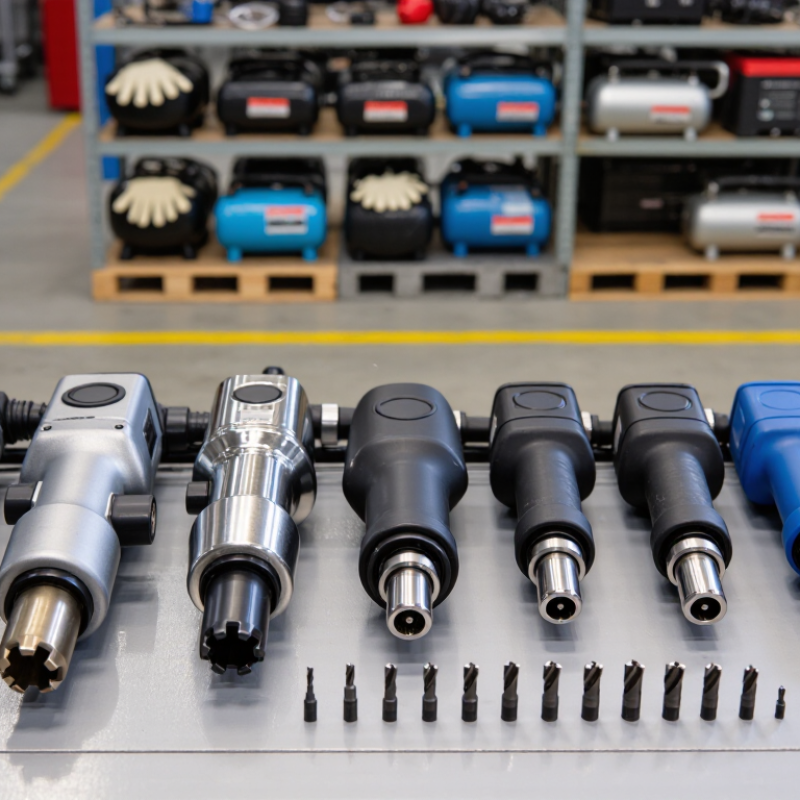
7 Best Air Rock Picks for Global Buyers

What Air Rock Picks Are and How They Work

7 Best Air Rock Picks for Global Buyers

What Air Rock Picks Are and How They Work

Air rock picks are compact pneumatic tools for breaking, trimming, and loosening hard materials. They use compressed air instead of an electric motor or fuel engine. Inside the housing, air moves a piston back and forth. The piston strikes a steel tool bit, creating repeated impact at the working point. The operator guides the pick rather than forcing it through the material.

They are common in construction, quarry maintenance, utility work, and controlled rock removal. A narrow point can start a crack, while a wider chisel can split or shape softer surfaces. Performance depends on air pressure, airflow, piston design, bit condition, and material hardness. More pressure does not always mean better results. It may increase wear or reduce control.

From practical inspections, hose size is often overlooked. A restricted hose can make a capable pick feel weak. Check the coupling, lubricate the air line as instructed, and inspect the bit before each shift. Wear eye, hearing, hand, and foot protection. Keep both hands stable, especially when the tool rebounds.

The word “best” needs caution. A lightweight pick may suit overhead work, but a heavier model can deliver steadier impact. Noise, vibration, spare-bit availability, and local service also matter for global buyers. Product specifications are useful, but real performance should be tested against the buyer’s compressor and working conditions.

7 Best Air Rock Picks for Global Buyers - What Air Rock Picks Are and How They Work

Air rock picks are handheld pneumatic tools that use compressed air to drive a reciprocating piston and transmit impact energy through a pointed or chisel-shaped bit. The specifications below represent common industrial ranges and should be checked against the manufacturer’s technical data before purchase.

Air Rock Pick Type Typical Tool Weight Typical Air Pressure Typical Air Consumption Typical Impact Rate Best Application Main Advantage Important Consideration
Light-Duty Air Pick 4–7 kg 6–7 bar Approximately 20–35 L/s 1,500–2,200 blows/min Light masonry, soft rock, tile removal, and maintenance work Lower operator fatigue and easier handling in confined spaces Not intended for continuous heavy breaking or very hard rock
General-Purpose Air Pick 7–11 kg 6–7 bar Approximately 35–55 L/s 1,200–1,900 blows/min Routine construction, utility work, concrete patching, and medium rock Balanced combination of impact power, portability, and versatility Requires a compressor capable of maintaining pressure during peak demand
Heavy-Duty Air Pick 11–18 kg 6–7 bar Approximately 50–80 L/s 900–1,500 blows/min Dense concrete, hard rock, trenching, and demolition Higher impact energy for demanding breaking tasks Greater vibration, weight, and air demand require trained operation
Paving Breaker-Style Air Pick 15–25 kg 6–7 bar Approximately 70–100 L/s 700–1,200 blows/min Road repair, thick slabs, foundations, and reinforced concrete Strong single-blow energy and effective material penetration Usually needs a larger compressor and is less suitable for overhead work
Water-Jacketed or Wet-Work Air Pick 8–16 kg 6–7 bar Approximately 40–75 L/s 900–1,700 blows/min Dust-sensitive demolition, concrete cutting support, and underground work Water helps suppress airborne dust at the point of impact Needs a clean water supply, drainage control, and corrosion protection
Low-Vibration Air Pick 8–15 kg 6–7 bar Approximately 35–70 L/s 800–1,600 blows/min Long-duration breaking, structural maintenance, and vibration-sensitive locations Reduced transmitted vibration can improve operator comfort and control Vibration reduction may increase tool weight, cost, or maintenance complexity
Extended-Reach Air Pick 9–18 kg 6–7 bar Approximately 40–80 L/s 700–1,500 blows/min Trenches, vertical surfaces, deep recesses, and hard-to-reach areas Provides greater working reach while keeping the operator away from the impact zone Longer tools can be harder to balance and may reduce precision in tight spaces
How Air Rock Picks Work: Compressed air enters the cylinder, moves a piston back and forth, and transfers repeated impact energy to the inserted tool bit. The bit then fractures or loosens rock, concrete, masonry, or other brittle materials. Actual output depends on air pressure, compressor flow, hose size, tool condition, bit design, and the material being broken.

Key Features Global Buyers Should Compare

7 Best Air Rock Picks for Global Buyers

Global buyers should compare air rock picks by performance, safety, and long-term serviceability. Start with operating pressure and air consumption. These figures must match your compressor, hose length, and local workshop conditions. A powerful tool may perform poorly with an undersized compressor. Impact frequency also matters. Faster impacts can improve breaking speed, but they may increase vibration and operator fatigue.

Weight matters. Choose a model that balances force with manageable handling during long shifts. Check the grip design, trigger control, vibration reduction, and noise level. Ask for tested specifications, not only marketing claims. Materials should resist dust, moisture, and repeated impacts. Spare seals, springs, bits, and maintenance instructions are important for buyers far from service centers. Regional plug standards may not apply, but air fittings and thread sizes still require careful checking.

Tips: Compare total ownership cost, not just the purchase price. Confirm shipping dimensions, replacement-part availability, warranty terms, and technical support before ordering. Request pressure, airflow, and noise data in consistent units. Also inspect workplace requirements in your country. No tool is perfect. A lighter pick may sacrifice impact strength, while a stronger one may become tiring. I would test a sample under real working conditions before placing a large international order. Small details often decide whether the tool performs reliably after several months.

7 Best Air Rock Picks for Global Buyers

Key features global buyers should compare: typical airflow capacity, recommended aquarium volume, and operating depth.

The comparison uses common air-stone formats and typical specification ranges found in aquarium equipment: fine-pore models create smaller bubbles, larger models generally support higher airflow, and deeper placement requires a stronger air pump. Actual performance varies with pump pressure, tubing, water depth, and pore condition.

Seven Air Rock Picks for Different Outdoor Needs

7 Best Air Rock Picks for Global Buyers

Seven Air Rock Picks for Different Outdoor Needs

Choosing an air rock pick depends on terrain, weather, and personal strength. A compact alpine pick suits steep trails, loose ridges, and emergency balance. Its short shaft packs easily beside a rain shell.

A lightweight trekking pick works better for long approaches where every gram matters. Beginners may prefer a stable, medium-length pick with a comfortable grip. It feels less intimidating on mixed ground.

For winter routes, an insulated-grip pick protects fingers during slow movements. A technical ice pick offers sharper control on hard, frozen surfaces. It needs careful handling and regular inspection.

A travel-friendly folding model helps international hikers with limited luggage space. However, moving parts can collect grit.

A durable expedition pick is designed for repeated use, heavy gloves, and rough conditions. It may be heavier than expected.

I have learned that advertised weight does not tell the whole story. Balance, grip shape, and attachment points affect real comfort.

Check the material, certification, maintenance guidance, and local transport rules before purchase. Test the pick with gloves, if possible. A model that feels excellent in a shop may slip on wet stone.

Air pressure changes can also affect inflatable storage cases, not the metal tool itself. That detail is easy to overlook.

Good judgment still matters more than a long feature list.

Safety, Durability, and Maintenance Considerations

7 Best Air Rock Picks for Global Buyers

The best air rock picks balance impact power, operator safety, serviceability, and working conditions.

Tool weight
Impact frequency
Air consumption
Vibration
Noise
Handle design
Spare-part access

Buyers should compare seven details: tool weight, impact frequency, air consumption, vibration, noise, handle design, and spare-part access.

OSHA limits respirable crystalline silica exposure to 50 micrograms per cubic meter over an eight-hour shift. Wet suppression or local extraction matters when breaking stone. Dust still settles on collars and hose fittings. Clean them daily.

Vibration deserves equal attention. The European vibration directive sets an action value of 2.5 m/s² A(8) and a limit value of 5.0 m/s² A(8) for hand-arm exposure. NIOSH also recommends an 85 dBA workplace noise limit for an eight-hour shift.

Use measured data, not advertising claims. Inspect the retainer, piston, bushing, and air inlet before each shift. Replace damaged hoses immediately. Use the lubricant specified for pneumatic equipment, but avoid over-oiling. Excess oil can contaminate exhaust areas.

Durability depends on maintenance more than appearance. A forged steel body may resist impact, yet poor storage can cause internal corrosion. Drain compressors and store tools dry.

In humid ports, this is often overlooked. It should not be. ISO 5349 guidance supports measuring vibration exposure, although field conditions make exact estimates difficult. That uncertainty deserves review.

A heavier pick may reduce rebound but increase fatigue. Test the tool with real rock, protective equipment, and local air pressure before purchasing large quantities.

How to Choose the Right Air Rock Pick Worldwide

7 Best Air Rock Picks for Global Buyers

Choosing the right air rock pick starts with the worksite, not the product label. Check the rock type, working depth, and daily operating hours. Hard granite demands stronger impact energy, while softer masonry may need better control.

Compare seven practical points: impact force, tool weight, air consumption, shank size, vibration, noise, and service access.

A lighter pick improves overhead work, but excessive lightness can reduce stability. No tool is perfect.

Confirm your local air system before ordering. The compressor must deliver steady pressure and enough airflow during continuous use. A long, narrow hose can weaken performance. Check couplings, replacement parts, and maintenance instructions in your region.

Choose a corrosion-resistant body for humid sites. For cold climates, inspect lubricant recommendations carefully. Safety certification and workplace noise limits also vary worldwide. Treat them as purchasing requirements, not optional details.

Tips: Test the pick on similar material whenever possible. Measure vibration after several minutes, not just one strike. Ask for technical drawings and verified airflow data. Do not trust impressive impact figures alone. Operators often notice balance before raw power. Also, plan for imperfect conditions: dusty air, worn hoses, and irregular servicing can change performance quickly.

Powder Coat Booths

For those larger-sized parts, or smaller quantity runs, we have 2 independent powder coat booths and ovens. The quality, durability and affordability of today’s powder coating finishes make this the process of choice for world-class companies.

Powder coating advantages over other forms of coating are many. Materials used in the Powder coating process can be metals and non-metals that come in a multitude of thicknesses, textures, colors, etc. Another of Powder coating’s biggest advantages over conventional coatings is its ability to create finishes in many different textures. Powder Coating Booths allow us the ability to apply these advantages to large products.

Wet Paint Line

Tri-State Fabricators runs a full-service conveyor line for painting. Wet painting can provide protection or decoration to many different part styles. From start to finish, every project is easier to undergo random and point-based inspection by our skilled painting team.

Advantages to our Wet Paint Line are these lines start with product prep and ends with a thorough inspection of a high quality finished product. Our ability to complete large and small projects with a superior finish and doing so in a timely and economical fashion. This passes along the savings in production to our customers. When powder coating ins not an option, our Wet Paint Line gets the job done right the first time.

Wet Paint Booths

When the parts get big and heavy we roll-out our custom paint racks and oversize booth. By utilizing our partnerships with all the major paint brands, we can match virtually any color with wet paint.

The advantages of having access to a Wet Paint Booth are many. Large projects of many different shapes can be loaded into the booth. The Wet Paint Booth offers an environment that is much more controlled than a typical parts painting operation.

Not only are they used because of their controlled environment, but they’re are also advantageous when it comes to applying paint to parts that are needed in industries that require specialty coatings such as medical, aerospace, etc.

Military CARC

Our military forces have some very high standards when it comes to the finish of their vehicles and equipment. From the first pre-treatment step to final coat, it takes a great deal of knowledge and experience to protect the men and women of our armed forces. They deserve only the best, and Tri-State Fabricators provides it.

All of our processes are closely monitored by our staff and management teams. Both of which are highly trained in the processes of metal fabrication and finishing. Tri-State Fabricators’ goal is to always fully satisfy each and every customer, including the military. We will always put a 110% into what we do.

Glass-Bead Blasting

Abrasive media blasting is an excellent way to remove old paint, rust, and increase the paint/powder adhesion. Glass beads produce a much smoother and brighter finish than angular abrasives; leaving the part clean yet without any dimensional change. Chemically inert and environmentally friendly, we can recycle our beads approximately 30 times; making them a more preferred method of metal cleaning or surface finishing.

Advantages to Glass Bead Blasting are many. Glass bead blast media is used when a project is needing rough surfaces need to become smooth for applications of coatings such as paint. It is typically used to clean paint and rust from a product surface without deforming the surface it is being used on. Overall, compared to many other blasting media, Glass Bead Blasting is a very economical choice and those savings are always passed on to our customers.

Part Washing

Tri-State Fabricators utilize a zinc phosphate wash to clean and etch the material to ensure the best paint adhesion possible. The unique design of our 3-stage wash system does the work like a 5-stage. From Cleaning and rinsing to conversion coating and post-treatment, Our Part Washing process is a complete service and works throughout the fabrication service and the finishing service.

Along with the previously mentioned benefits, Curing is a vital chemical reaction that leaves the product finish hard and relatively safe from mild abrasion and aggressive corrosion. This process can be done in more than one way; ambient air-dry or in curing ovens at temps that exceed 240°.

Burn-Off Oven

From fixing paint mistakes (someone else’s of course) to simply cleaning our paint line hooks, our burn-off oven is put to good use. After a quick burn-off, a little clean up, and a fresh coat of paint, your parts will look better than new.

Why does our Burn-Off Oven work so well? Because super heating the air around parts turns the materials into ashes. From paint and powder coatings to rubber and machining oils, high temps do the job without degrading the integrity of the part.

Masking

Masking is a vital part of producing high quality products. We have die-cut masking patterns to protect machined surfaces as well as a wide range of plugs and caps to protect threaded holes and bolts. We provide permanent and temporary masking.

Masking allows the selected sections of a product to be protected from a fabrication or finishing service. This can be with both chemicals when etching and tapes, paints when only finishing just a section of the product. Masking is great in aiding the customization process of a project.

Screen Printing

Screen printing is a photographic process that transfers artwork onto a porous nylon screen which allows colored ink to flow through the screen and be deposited on an aluminum or plastic component. We can generally have just about any design created onto a screen for your parts.

Some of the advantages of Screen Printing are, brand recognition for your business displaying on your products, assembly instructions, product warnings/hazards, etc. Tri-State Fabricators produces Screen Printing of the highest quality so you know it’s durable.

Metal Finishing

Metal Finishing is the art of treating the exterior portion of product, often metal but can also be made of other materials, so that the surface is clean and free of any debris. Then the process of applying coats or either paint of powder coat takes place. This coating process improves the quality of the product in both appearance and resistance to wear and corrosion.

Tri-State Fabricators, Inc., understands that a project typically isn’t complete until a high-quality finish has been added to your product. This is why our painting and powder coating teams continuously inspect the products throughout the Metal Finishing process.


