


Choosing a Delta Frequency Drive is no longer a simple price comparison. Global buyers must examine motor compatibility, control accuracy, enclosure protection, service access, and regional certification. A dusty cement plant needs different protection from a clean packaging line. That practical difference can decide whether a drive performs reliably or fails early.
The International Energy Agency and its 4E initiative identify motor-driven systems as responsible for nearly half of global electricity consumption. Market estimates also show strong demand. MarketsandMarkets valued the global variable-frequency-drive market at approximately USD 23.9 billion in 2024 and projects continued growth through 2029. Grand View Research reports a similar expansion trend, although its market boundaries and forecast assumptions differ. The numbers are useful, but not perfect. Buyers should question every forecast.
Energy-efficiency specialist Paul Waide has stated, “Motor systems account for nearly half of global electricity use.” His point matters here. A Delta Frequency Drive can reduce speed-related energy waste, but savings depend on correct sizing, load profiles, installation quality, and maintenance. The best option is rarely the cheapest model on a supplier’s spreadsheet. It may be the unit with stronger overload capacity, clearer diagnostics, wider voltage tolerance, and dependable local support.
This guide compares five leading Delta Frequency Drive options for global buyers. It considers industrial duty, automation integration, energy performance, environmental conditions, and lifetime service risk. Some specifications look impressive. Field results may still vary. That is why real operating conditions deserve more attention than polished brochures.
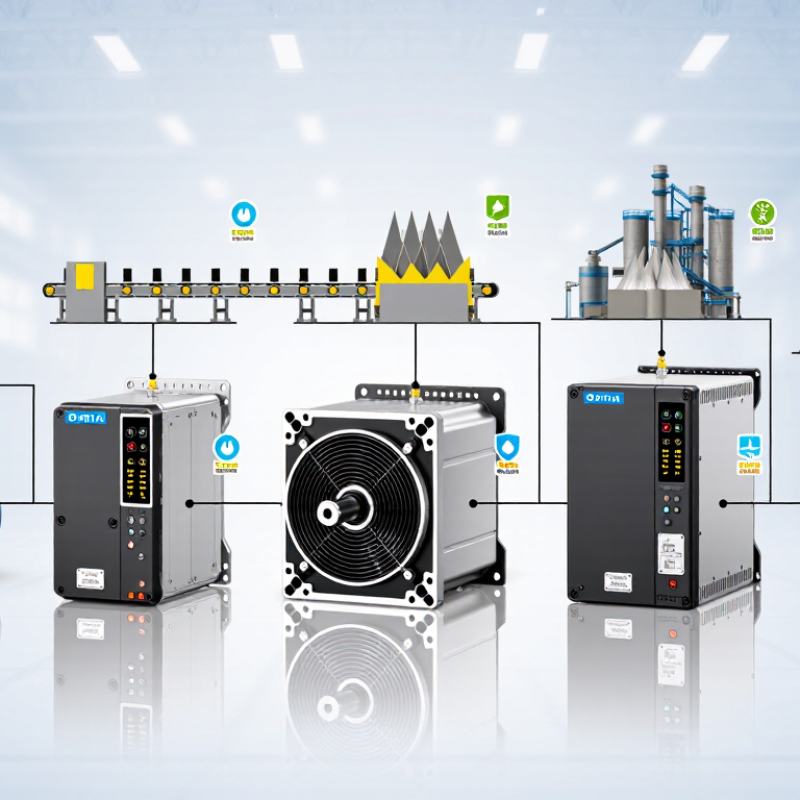
Global buyers should compare five frequency-drive options by application: general-purpose, HVAC, heavy-duty, regenerative, and compact machine drives.
The best choice depends on efficiency, harmonics, voltage, duty cycle, and serviceability. A 400 V motor may run at 50 Hz in one market and 60 Hz elsewhere. Confirm this before comparing quotations.
IEC 61800-9-2 provides a common method for measuring drive-module and complete-drive efficiency. Buyers should request IE and IES classifications at realistic load points, not only full load.
The U.S. Department of Energy reports that motor systems consume more than half of industrial electricity. Small efficiency differences can therefore become significant operating costs. Ask for test conditions, standby losses, and partial-load results. Nameplate efficiency alone is insufficient.
IEEE 519-2022 evaluates harmonic performance at the point of common coupling. For systems below 69 kV, the commonly applied planning values are 5% total voltage distortion and 3% individual voltage distortion.
Current limits depend on the short-circuit ratio, so one universal pass number is unreliable. Specify whether the drive needs a line reactor, passive filter, or active front end. Measure distortion with a power-quality analyzer during acceleration and steady operation.
A spreadsheet can still mislead. I would also check ambient temperature, altitude derating, enclosure cooling, and local technical support. These details often decide whether an efficient drive remains reliable after installation.

A compact frequency drive can simplify motor control in pumps, conveyors, fans, and small machine tools. This general-purpose range supports motors from 0.1 to 22 kW, covering many light industrial duties. Its small footprint helps installers save cabinet space. That matters when an existing panel is already crowded.
In field work, simple commissioning often matters more than impressive specifications. A clear keypad, practical parameter groups, and stable speed control reduce setup mistakes. V/f control suits basic loads, while sensorless vector control can improve torque at lower speeds. Input voltage and braking requirements still need careful checking. Do not select by power alone.
I would not call this type of drive perfect. Very small motors may need extra attention during autotuning. Long cable runs can also require suitable installation practices and filters. Model-specific overload ratings, ambient temperature limits, and enclosure protection should be verified before purchase. Global buyers should confirm local supply voltage, frequency, documentation, spare parts, and technical support. A drive that fits the motor may still fail the project if service access is poor. Test one unit under real load conditions. Small details expose big assumptions.
Nominal motor-power checkpoints within the 0.1–22 kW general-purpose application range. Actual drive selection should also consider motor current, supply voltage, overload duty, braking, and local electrical standards.
The five points represent commonly used IEC motor power ratings: 0.1 kW for small machinery, 0.75 kW for light-duty equipment, 3.7 kW for general-purpose machinery, 7.5 kW for pumps and conveyors, and 22 kW for larger industrial loads. These are nominal motor ratings, not guaranteed output capabilities.
For global buyers, a frequency drive should deliver more than smooth motor speed control. A high-performance unit must respond accurately during acceleration, braking, and sudden load changes. This matters in conveyors, pumps, fans, and processing equipment. Stable torque can reduce mechanical stress and production interruptions.
IEC 61800-5-2 safety support adds important value. It can support safety functions such as Safe Torque Off, when correctly configured within the machine’s safety design. The drive itself does not replace a complete risk assessment. Wiring, emergency-stop circuits, and external safety devices still require professional verification. Check the manual carefully.
During commissioning, technicians should confirm motor data, control mode, braking settings, and fault responses. Clear parameter software can shorten setup time, especially for overseas service teams. Yet no drive is perfectly plug-and-play. Poor grounding, excessive cabinet heat, or incorrect cable length can create unstable operation. I have seen small installation details cause large delays.
Global purchasers should also review input voltage ranges, communication protocols, enclosure requirements, and available technical support. A compact cabinet may look attractive, but restricted airflow can shorten component life. Ask for safety documentation, conformity information, wiring diagrams, and tested application references. These details provide stronger evidence than marketing claims alone.
For HVAC and pumping systems, the CP2000 drive family covers applications from 0.75 to 400 kW. That range suits small circulation pumps, rooftop units, and large chilled-water plants. In field commissioning, stable low-speed control often matters more than maximum output. A drive should maintain pressure without repeatedly starting and stopping the motor.
Built-in PID control can adjust pump speed as demand changes. Sleep and wake functions may reduce energy use during quiet periods. Fan and pump profiles also help manage acceleration, deceleration, and motor loading. For a 110 kW chilled-water pump, technicians should verify flow, pressure, motor current, and cooling conditions before final tuning. Small wiring errors can create large operating problems.
The enclosure, installation space, and local temperature deserve equal attention. A 400 kW cabinet needs practical ventilation, safe cable routing, and sufficient service clearance. Harmonic conditions may also require an input reactor or other mitigation equipment. Specifications can look convincing.
However, not every HVAC site needs the highest feature set. A smaller pump may benefit from simple parameter settings and clear fault reporting. I have seen projects delayed by ignoring motor data during commissioning. That mistake is avoidable. Buyers should confirm voltage, overload requirements, communication protocols, bypass arrangements, and local service support before ordering. Supplier documentation should match the exact model and application, not merely the product family.
| Option | Recommended System | Typical Power Range | Common Input Supply | Motor Control | Typical Enclosure | Typical Overload Capability | Best-Fit Applications |
|---|---|---|---|---|---|---|---|
| 1. Compact Variable-Torque Drive | Small HVAC, ventilation and water-transfer systems | 0.75–7.5 kW | Three-phase, 380–480 V AC, 50/60 Hz | V/f and sensorless vector control | IP20 cabinet installation; IP55 available in packaged systems | Approximately 110% for 1 minute in variable-torque duty | Fans, small pumps, air-handling units and booster sets |
| 2. General-Purpose Pump Drive | Commercial water supply and building-service equipment | 11–30 kW | Three-phase, 380–480 V AC, 50/60 Hz | V/f, sensorless vector and PID pressure control | IP20 for panels; IP55 or higher when installed in a protected outdoor enclosure | Approximately 110% for 1 minute in variable-torque duty | Centrifugal pumps, circulation pumps, irrigation and pressure-boosting systems |
| 3. HVAC Fan and Chiller Drive | Medium-size air-conditioning and mechanical-room equipment | 37–90 kW | Three-phase, 380–480 V AC, 50/60 Hz | Sensorless vector control with PID and energy-saving modes | IP20 cabinet installation; higher protection requires a suitable enclosure | Approximately 110–120% for 1 minute, depending on duty setting | Supply and return fans, cooling-tower fans, chilled-water pumps and air handlers |
| 4. Heavy-Duty Process Pump Drive | Municipal water, wastewater and industrial pumping | 110–250 kW | Three-phase, 380–480 V AC, 50/60 Hz | Sensorless vector control, PID, sleep/wake and multi-pump control | IP20 drive module within a ventilated electrical cabinet | Approximately 150% for 1 minute in heavy-duty operation | Raw-water intake, wastewater lift stations, process circulation and high-head pumps |
| 5. High-Power Central Pump Drive | Large infrastructure and industrial utility systems | 315–400 kW | Three-phase, 380–480 V AC, 50/60 Hz | Closed-loop or sensorless vector control with programmable PID | IP20 power section installed in a dedicated, ventilated cabinet or switchroom | Typically 110% for variable-torque duty; confirm the selected overload class | Large cooling-water pumps, district-energy plants, desalination and industrial water networks |
For global buyers, the real comparison is not only price or rated horsepower. It is application fit. A heavy-duty drive suits conveyors, crushers, hoists, and pumps with frequent load changes. A compact general-purpose drive fits lighter machinery and smaller control cabinets. Heavy-duty capacity usually includes stronger overload performance, better thermal management, and improved low-speed torque. Check the duty rating carefully. “Heavy duty” is not always defined identically.
IP protection also needs practical interpretation. Many drives use IP20 housings and require a clean, ventilated cabinet. An IP55 enclosure may support harsher locations, but it does not remove the need for temperature control. Dust, moisture, and cable glands still matter. In field inspections, poor cabinet sealing often causes more trouble than the drive itself. I have also seen buyers compare IP ratings without checking the complete installation. That comparison is incomplete.
EMC performance depends on more than an internal filter. Confirm compliance with IEC 61800-3, then review cable length, shielding, grounding, and motor-frame bonding. A heavy-duty option may offer stronger filtering and control stability, while a compact option can be easier to install. However, added filtering may increase leakage current. That detail is easy to miss. For five potential selections, compare overload class, enclosure arrangement, EMC category, cooling method, and local certification. Do not rely on a catalog headline alone. Verify the exact variant.


For those larger-sized parts, or smaller quantity runs, we have 2 independent powder coat booths and ovens. The quality, durability and affordability of today’s powder coating finishes make this the process of choice for world-class companies.
Powder coating advantages over other forms of coating are many. Materials used in the Powder coating process can be metals and non-metals that come in a multitude of thicknesses, textures, colors, etc. Another of Powder coating’s biggest advantages over conventional coatings is its ability to create finishes in many different textures. Powder Coating Booths allow us the ability to apply these advantages to large products.
Tri-State Fabricators runs a full-service conveyor line for painting. Wet painting can provide protection or decoration to many different part styles. From start to finish, every project is easier to undergo random and point-based inspection by our skilled painting team.
Advantages to our Wet Paint Line are these lines start with product prep and ends with a thorough inspection of a high quality finished product. Our ability to complete large and small projects with a superior finish and doing so in a timely and economical fashion. This passes along the savings in production to our customers. When powder coating ins not an option, our Wet Paint Line gets the job done right the first time.
When the parts get big and heavy we roll-out our custom paint racks and oversize booth. By utilizing our partnerships with all the major paint brands, we can match virtually any color with wet paint.
The advantages of having access to a Wet Paint Booth are many. Large projects of many different shapes can be loaded into the booth. The Wet Paint Booth offers an environment that is much more controlled than a typical parts painting operation.
Not only are they used because of their controlled environment, but they’re are also advantageous when it comes to applying paint to parts that are needed in industries that require specialty coatings such as medical, aerospace, etc.
Our military forces have some very high standards when it comes to the finish of their vehicles and equipment. From the first pre-treatment step to final coat, it takes a great deal of knowledge and experience to protect the men and women of our armed forces. They deserve only the best, and Tri-State Fabricators provides it.
All of our processes are closely monitored by our staff and management teams. Both of which are highly trained in the processes of metal fabrication and finishing. Tri-State Fabricators’ goal is to always fully satisfy each and every customer, including the military. We will always put a 110% into what we do.
Abrasive media blasting is an excellent way to remove old paint, rust, and increase the paint/powder adhesion. Glass beads produce a much smoother and brighter finish than angular abrasives; leaving the part clean yet without any dimensional change. Chemically inert and environmentally friendly, we can recycle our beads approximately 30 times; making them a more preferred method of metal cleaning or surface finishing.
Advantages to Glass Bead Blasting are many. Glass bead blast media is used when a project is needing rough surfaces need to become smooth for applications of coatings such as paint. It is typically used to clean paint and rust from a product surface without deforming the surface it is being used on. Overall, compared to many other blasting media, Glass Bead Blasting is a very economical choice and those savings are always passed on to our customers.
Tri-State Fabricators utilize a zinc phosphate wash to clean and etch the material to ensure the best paint adhesion possible. The unique design of our 3-stage wash system does the work like a 5-stage. From Cleaning and rinsing to conversion coating and post-treatment, Our Part Washing process is a complete service and works throughout the fabrication service and the finishing service.
Along with the previously mentioned benefits, Curing is a vital chemical reaction that leaves the product finish hard and relatively safe from mild abrasion and aggressive corrosion. This process can be done in more than one way; ambient air-dry or in curing ovens at temps that exceed 240°.
From fixing paint mistakes (someone else’s of course) to simply cleaning our paint line hooks, our burn-off oven is put to good use. After a quick burn-off, a little clean up, and a fresh coat of paint, your parts will look better than new.
Why does our Burn-Off Oven work so well? Because super heating the air around parts turns the materials into ashes. From paint and powder coatings to rubber and machining oils, high temps do the job without degrading the integrity of the part.
Masking is a vital part of producing high quality products. We have die-cut masking patterns to protect machined surfaces as well as a wide range of plugs and caps to protect threaded holes and bolts. We provide permanent and temporary masking.
Masking allows the selected sections of a product to be protected from a fabrication or finishing service. This can be with both chemicals when etching and tapes, paints when only finishing just a section of the product. Masking is great in aiding the customization process of a project.
Screen printing is a photographic process that transfers artwork onto a porous nylon screen which allows colored ink to flow through the screen and be deposited on an aluminum or plastic component. We can generally have just about any design created onto a screen for your parts.
Some of the advantages of Screen Printing are, brand recognition for your business displaying on your products, assembly instructions, product warnings/hazards, etc. Tri-State Fabricators produces Screen Printing of the highest quality so you know it’s durable.
Metal Finishing is the art of treating the exterior portion of product, often metal but can also be made of other materials, so that the surface is clean and free of any debris. Then the process of applying coats or either paint of powder coat takes place. This coating process improves the quality of the product in both appearance and resistance to wear and corrosion.
Tri-State Fabricators, Inc., understands that a project typically isn’t complete until a high-quality finish has been added to your product. This is why our painting and powder coating teams continuously inspect the products throughout the Metal Finishing process.

