


A 22m Telescopic Diesel Boom Lift is a self-propelled access platform with a straight, extendable boom, designed to raise workers and tools to elevated work areas. The “22m” figure usually refers to maximum working height, not platform height. Exact measurements vary by manufacturer, so buyers should check the machine’s specification sheet before planning a task.
On site, its diesel engine and rough-terrain chassis can suit outdoor work where ground conditions are uneven and electric charging is impractical. The telescopic boom reaches outward as well as upward, helping crews position a platform near steel frames, roof edges, or building façades. Reach is not unlimited. The load, boom angle, and ground slope affect where the platform can safely operate.
Safety deserves equal attention. IPAF’s Global Safety Report 2024 reviews powered-access incident reports and identifies recurring hazards, including falls, entrapment, and electrocution. These are practical reminders to assess the work area, train operators, and follow the manufacturer’s operating instructions. That matters.
A machine’s advertised height alone cannot tell you whether it suits a specific job. Check horizontal outreach, platform capacity, machine width, and stabilisation requirements. Then compare those figures with the actual worksite. A detail can be missed. Even experienced teams may focus on height and overlook access routes or overhead obstructions. Understanding the machine’s capabilities—and its limits—makes equipment selection more reliable.
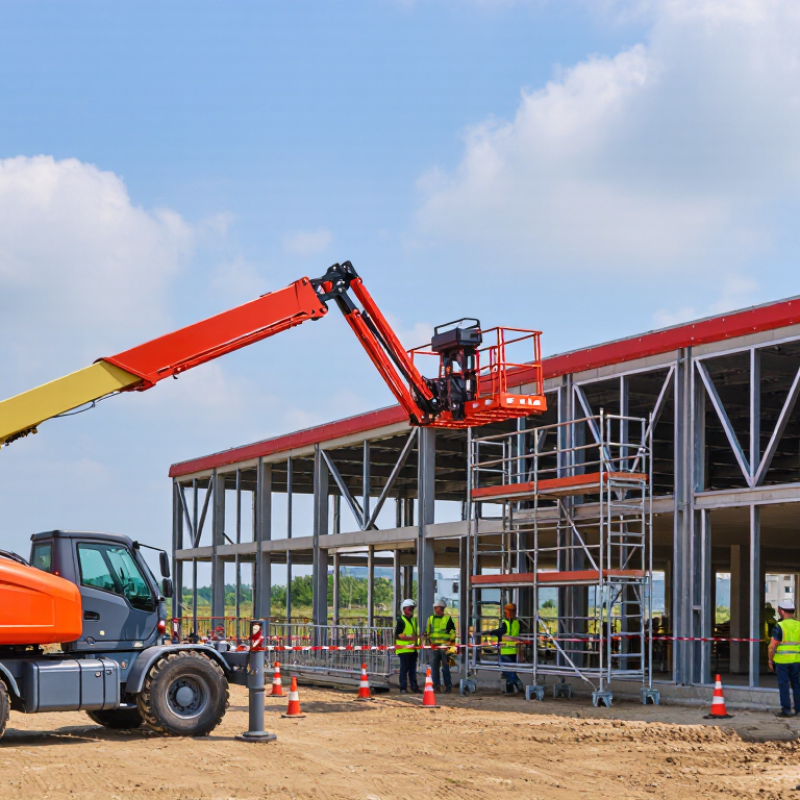
A 22 m telescopic diesel boom lift is a mobile elevating work platform (MEWP) with a telescoping boom and a stated working height of about 22 metres. Working height is not usually the height of the platform floor. A common industry convention adds roughly 2 metres to platform height, making the platform’s maximum elevation about 20 metres. Actual figures vary by specification, so check the manufacturer’s stated platform height and outreach. The label is easy to misread.
Under IPAF’s MEWP classification, a self-propelled boom lift that can travel while elevated is generally Category 3b. “Diesel” describes its power source; it does not determine the MEWP category. The classification helps operators identify the machine type, but it does not tell them whether a particular setup can safely reach a work point. Ground slope, load, wind, and boom position matter. IPAF’s Global Safety Report 2024 collates reported incidents by event type, including falls, overturning, and entrapment. Those categories underline why height alone is a poor measure of safe access. Check the unit’s operating chart and site conditions before positioning it; I would verify the platform-height figure twice, because product labels can blur these distinctions.

A 22 m telescopic diesel boom lift is commonly described by its working height, not the height of its platform. In many specifications, a 22 m working height corresponds to a platform height of about 20 m. The difference matters when checking whether the basket can reach a roof edge or overhead structure. Numbers need context.
Outreach is model-specific. One lift may reach farther horizontally than another, even when both have a similar working height. The rated outreach can also change with the platform load and boom position. Check the machine’s chart, not just a headline figure. A tape measure and a site sketch can help reveal whether a wall, canopy, or setback limits access.
Ground conditions matter, too. A machine may have the reach on paper but still need firm, level setup space. Measure the target height and the horizontal gap separately, then compare both with the exact model’s operating chart. Check the label. Treat early measurements as planning estimates, not guarantees; site details are easy to miss, and that deserves a second look before work begins.
A 22 m telescopic diesel boom lift often has a rated platform capacity of 230–450 kg. The exact figure depends on the model and its approved configuration. That rating includes every person, tool, and material in the basket. For example, two 90 kg workers, a 35 kg tool kit, and 60 kg of fittings add up to 275 kg. A 230 kg limit is already exceeded. Easy to miss.
Capacity is a ceiling, not a comfortable target. Check the machine’s platform decal and operator manual before lifting; do not rely on a generic product description. Confirm whether the stated rating applies to the selected platform, extension deck, and operating zone. Some configurations have different limits, and a higher rating may not apply at every reach. Keep loads balanced and inside the platform. Diesel power does not change the basket rating. It is tempting to treat small fittings as negligible; that estimate deserves a second look. Count them too.
| Specification | Typical range or value | What it means |
|---|---|---|
| Working height | About 22 m | Maximum reach to the work area; manufacturers commonly calculate this as platform height plus approximately 2 m. |
| Platform height | About 20 m | Vertical height of the platform above the ground; the exact figure varies by model. |
| Rated platform capacity | Typically 230–450 kg | Maximum combined load of occupants, tools, and materials. Capacity may be lower at certain boom positions or outreach limits. |
| Horizontal outreach | Approximately 17–19 m | Typical maximum horizontal reach from the machine’s center of rotation; actual reach depends on boom geometry and load limits. |
| Platform occupants | Usually 2–3, subject to the rated capacity | The permitted number depends on the model, operating conditions, and the platform’s posted rating. |
| Power source | Diesel engine | Commonly used for outdoor work where longer operating time and travel over rough terrain are needed. |
| Drive and terrain features | Typically 4-wheel drive; some models include oscillating axles | Designed to improve traction and mobility on suitable outdoor job-site surfaces. Terrain capability varies by machine and conditions. |
| Stowed dimensions | Approximately 9–10 m long and 2.4–2.5 m wide | Indicative transport dimensions only; check the specific machine’s overall height and transport requirements. |
| Machine weight | Approximately 10,000–13,000 kg | Weight varies with configuration and equipment; confirm ground-bearing pressure and transport limits before use. |
Figures are indicative ranges for this equipment class, not guaranteed specifications. Always check the machine’s data plate, operator’s manual, and load chart before operation.
A 22 m telescopic diesel boom lift pairs a long-reaching platform with an engine designed for outdoor work. Diesel’s energy density can support sustained operation away from charging points, but fuel consumption still depends on load, terrain, and engine condition. The U.S. Energy Information Administration lists diesel at about 137,381 Btu per gallon, compared with 120,286 for gasoline. That is energy content, not a promise of better job-site performance.
Four-wheel drive helps distribute traction when wheels cross loose gravel, mud, or uneven ground. It does not increase the lift’s rated capacity or make every slope safe. Operators should check the machine’s grade limits, tire condition, ground firmness, and platform load before travelling. On a rough site, a shallow rut can matter. So can a soft patch hidden beneath grass.
Diesel engines produce noise and exhaust, so ventilation and nearby workers need consideration, even outdoors. The International Powered Access Federation’s 2024 Global Safety Report recorded 100 powered-access fatalities across 18 countries in 2023. That figure is not specific to diesel lifts, but it underlines why drive choice cannot replace sound planning and trained operation. A practical detail is easy to overlook: four-wheel drive may help a lift reach a work area, while a poor setup can still leave it unstable.
A 22m telescopic diesel boom lift works high above ground, so stability depends on more than its reach. EN 280-1:2022 sets design and testing requirements for mobile elevating work platforms. For outdoor stability calculations, EN 280 uses a reference wind speed of 12.5 m/s, or 45 km/h.
That is a design value, not automatic permission to operate in those winds. The machine’s own wind rating and operating manual take priority. A gust can catch a raised platform like a sail.
Slope limits are equally specific to the machine. Check the chassis inclination limit, the platform-height restrictions, and any alarm or drive cutout instructions on the data plate. A firm-looking gravel pad may still hide a rut beneath one wheel.
IPAF’s 2024 Global Safety Report recorded 4,374 incident reports from 22 countries; these cover different MEWP types and do not represent a model-specific risk rate. Still, they underline why site checks matter.
Measure the ground, watch the anemometer, and stop when conditions exceed the stated limits. Small details matter. Operators can miss them.


For those larger-sized parts, or smaller quantity runs, we have 2 independent powder coat booths and ovens. The quality, durability and affordability of today’s powder coating finishes make this the process of choice for world-class companies.
Powder coating advantages over other forms of coating are many. Materials used in the Powder coating process can be metals and non-metals that come in a multitude of thicknesses, textures, colors, etc. Another of Powder coating’s biggest advantages over conventional coatings is its ability to create finishes in many different textures. Powder Coating Booths allow us the ability to apply these advantages to large products.
Tri-State Fabricators runs a full-service conveyor line for painting. Wet painting can provide protection or decoration to many different part styles. From start to finish, every project is easier to undergo random and point-based inspection by our skilled painting team.
Advantages to our Wet Paint Line are these lines start with product prep and ends with a thorough inspection of a high quality finished product. Our ability to complete large and small projects with a superior finish and doing so in a timely and economical fashion. This passes along the savings in production to our customers. When powder coating ins not an option, our Wet Paint Line gets the job done right the first time.
When the parts get big and heavy we roll-out our custom paint racks and oversize booth. By utilizing our partnerships with all the major paint brands, we can match virtually any color with wet paint.
The advantages of having access to a Wet Paint Booth are many. Large projects of many different shapes can be loaded into the booth. The Wet Paint Booth offers an environment that is much more controlled than a typical parts painting operation.
Not only are they used because of their controlled environment, but they’re are also advantageous when it comes to applying paint to parts that are needed in industries that require specialty coatings such as medical, aerospace, etc.
Our military forces have some very high standards when it comes to the finish of their vehicles and equipment. From the first pre-treatment step to final coat, it takes a great deal of knowledge and experience to protect the men and women of our armed forces. They deserve only the best, and Tri-State Fabricators provides it.
All of our processes are closely monitored by our staff and management teams. Both of which are highly trained in the processes of metal fabrication and finishing. Tri-State Fabricators’ goal is to always fully satisfy each and every customer, including the military. We will always put a 110% into what we do.
Abrasive media blasting is an excellent way to remove old paint, rust, and increase the paint/powder adhesion. Glass beads produce a much smoother and brighter finish than angular abrasives; leaving the part clean yet without any dimensional change. Chemically inert and environmentally friendly, we can recycle our beads approximately 30 times; making them a more preferred method of metal cleaning or surface finishing.
Advantages to Glass Bead Blasting are many. Glass bead blast media is used when a project is needing rough surfaces need to become smooth for applications of coatings such as paint. It is typically used to clean paint and rust from a product surface without deforming the surface it is being used on. Overall, compared to many other blasting media, Glass Bead Blasting is a very economical choice and those savings are always passed on to our customers.
Tri-State Fabricators utilize a zinc phosphate wash to clean and etch the material to ensure the best paint adhesion possible. The unique design of our 3-stage wash system does the work like a 5-stage. From Cleaning and rinsing to conversion coating and post-treatment, Our Part Washing process is a complete service and works throughout the fabrication service and the finishing service.
Along with the previously mentioned benefits, Curing is a vital chemical reaction that leaves the product finish hard and relatively safe from mild abrasion and aggressive corrosion. This process can be done in more than one way; ambient air-dry or in curing ovens at temps that exceed 240°.
From fixing paint mistakes (someone else’s of course) to simply cleaning our paint line hooks, our burn-off oven is put to good use. After a quick burn-off, a little clean up, and a fresh coat of paint, your parts will look better than new.
Why does our Burn-Off Oven work so well? Because super heating the air around parts turns the materials into ashes. From paint and powder coatings to rubber and machining oils, high temps do the job without degrading the integrity of the part.
Masking is a vital part of producing high quality products. We have die-cut masking patterns to protect machined surfaces as well as a wide range of plugs and caps to protect threaded holes and bolts. We provide permanent and temporary masking.
Masking allows the selected sections of a product to be protected from a fabrication or finishing service. This can be with both chemicals when etching and tapes, paints when only finishing just a section of the product. Masking is great in aiding the customization process of a project.
Screen printing is a photographic process that transfers artwork onto a porous nylon screen which allows colored ink to flow through the screen and be deposited on an aluminum or plastic component. We can generally have just about any design created onto a screen for your parts.
Some of the advantages of Screen Printing are, brand recognition for your business displaying on your products, assembly instructions, product warnings/hazards, etc. Tri-State Fabricators produces Screen Printing of the highest quality so you know it’s durable.
Metal Finishing is the art of treating the exterior portion of product, often metal but can also be made of other materials, so that the surface is clean and free of any debris. Then the process of applying coats or either paint of powder coat takes place. This coating process improves the quality of the product in both appearance and resistance to wear and corrosion.
Tri-State Fabricators, Inc., understands that a project typically isn’t complete until a high-quality finish has been added to your product. This is why our painting and powder coating teams continuously inspect the products throughout the Metal Finishing process.

