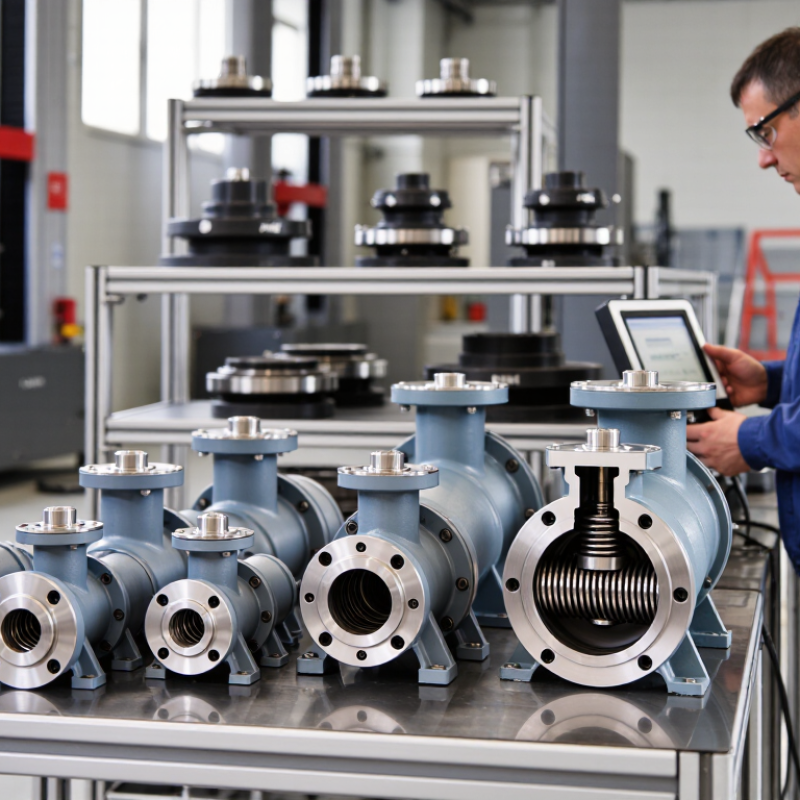
Choosing among the 2026 top Vane Pump manufacturers requires more than comparing catalog prices. Buyers should examine proven flow stability, pressure ratings, energy efficiency, and service coverage. A pump may look impressive on paper, yet fail when oil temperature rises or contamination enters the circuit.
Anthony Esposito, a respected fluid-power author, often stressed a practical principle: “A hydraulic system is only as reliable as its weakest component.” That warning fits Vane Pump purchasing decisions. A reliable manufacturer should provide traceable test data, clear installation guidance, replacement parts, and responsive technical support. Buyers should also inspect noise readings, shaft-seal design, housing materials, and performance at realistic operating speeds. Details matter.
Look closely at factory evidence.
The strongest suppliers usually explain how they control tolerances, balance rotors, and verify pressure endurance. Their documentation should identify suitable fluids and recommended maintenance intervals. Regional inventory can reduce downtime, especially for plants running continuously. However, brand reputation alone is not enough. Some evaluations still depend on polished brochures instead of field results. That is a weakness worth acknowledging.
This guide introduces manufacturers buyers should know in 2026. It considers engineering capability, application experience, quality systems, customization, lifecycle cost, and after-sales reliability. The ideal Vane Pump is not simply the cheapest unit. It is the unit that maintains steady output beside a warm machine, under changing loads, month after month. That standard is demanding, but necessary.
A vane pump is a rotary positive-displacement pump used in hydraulic and fluid-transfer systems. Its main parts include a rotor, sliding vanes, a cam ring, an inlet, and an outlet. The rotor sits slightly off-center inside the cam ring. That offset creates changing chamber volumes.
As the rotor turns, centrifugal force or spring pressure pushes the vanes against the ring. At the inlet, expanding chambers create lower pressure and draw fluid inside. The vanes then trap the fluid between the rotor, ring, and side plates. As these chambers become smaller, they carry fluid toward the outlet and force it into the system. The process repeats with every rotation. Smoothly.
The explanation sounds simple, but operating conditions make a major difference. Clean hydraulic oil helps protect vane tips and side plates. Excessive contamination can cause scoring, leakage, and unstable pressure. Fluid viscosity also matters; oil that is too thin may increase internal leakage, while thick oil can make startup difficult. A technician should check noise, temperature, flow, and pressure together. A loud pump is not always failing, and a quiet pump may still be worn. It is tempting to blame the pump first, but restricted suction lines, poor alignment, or trapped air can create similar symptoms. Variable-displacement vane pumps may adjust output through pressure-compensating controls, improving efficiency in changing workloads. However, incorrect adjustment can waste energy and shorten service life.
A leading vane pump manufacturer proves performance under real operating conditions, not only in catalogs. Buyers should examine flow stability, pressure tolerance, noise levels, and volumetric efficiency. These details matter in mobile equipment, injection systems, and factory automation.
MarketsandMarkets estimates the global hydraulic pumps market could reach USD 13.7 billion by 2028, driven by industrial automation and energy-efficiency demands. This growth raises competition, but also buyer expectations. A reliable manufacturer should provide test data, material specifications, and traceable quality records for every production batch.
Experience is visible in the details. Does the supplier understand contaminated oil, cold starts, or frequent pressure changes? Can its engineering team explain failure patterns without hiding limitations?
ISO 9001 certification supports controlled processes, but certification alone is not enough. Field-service records, prototype testing, and documented corrective actions offer stronger evidence. No scorecard is perfect. Even experienced buyers sometimes overvalue purchase price and underestimate downtime.
Tips: Request a sample performance curve at your actual speed and pressure. Ask for noise readings, efficiency data, seal options, and expected service intervals. Compare three years of operating cost, not only the quotation. Also, check response time for spare parts and technical support. A polished website proves little. Hands-on evidence matters more.
The top vane pump manufacturers buyers should know are defined by engineering depth, not advertising volume. Experienced manufacturers publish flow curves, pressure limits, material specifications, and verified efficiency data. They also explain how their pumps perform with mineral oils, fire-resistant fluids, or temperature changes. Clear documentation matters when a pump must operate beside a hot molding machine or inside a dusty factory.
Reliable manufacturers maintain controlled machining, balanced rotors, and consistent vane clearances. These details affect noise, leakage, service life, and energy use. Look for suppliers with documented testing procedures, traceable components, and responsive technical support.
A useful manufacturer can recommend the correct displacement after reviewing duty cycles, inlet conditions, startup temperatures, and filtration quality. Not every supplier does this carefully.
Ask for field references from similar applications. Shorter delivery times may help, but unstable quality creates expensive interruptions. Manufacturers offering repair guidance, replacement parts, and practical maintenance intervals often provide stronger long-term value. Still, no manufacturer is perfect. Published performance may differ from factory conditions. Buyers should compare independent test results when possible and request a sample inspection before large orders. A quiet pump is not automatically an efficient pump. Neither is a low purchase price a reliable indicator of ownership cost.
How to Compare Vane Pump Manufacturers and Product Quality
Comparing vane pump manufacturers requires more than checking displacement and catalog price. The 2024 MarketsandMarkets Hydraulic Pumps Market report estimates continued growth through 2028, increasing pressure on suppliers to prove real performance. Buyers should request test curves showing flow, pressure, speed, volumetric efficiency, and operating temperature. A low price can still be expensive.
Product quality appears in small details. Inspect shaft seals, cartridge tolerances, surface finishing, and bearing materials. Ask whether each pump receives pressure and leakage testing before shipment. ISO 4406 cleanliness ratings also matter because contamination accelerates vane, rotor, and housing wear. For demanding systems, require documented filtration recommendations and oil compatibility data. Noise testing is useful too. A measured dB(A) result is stronger than the phrase “quiet operation.”
I would compare at least three samples under identical conditions. Record flow loss after continuous operation, not only at room temperature. The U.S. Department of Energy notes that fluid-power losses can significantly reduce system efficiency, so measured efficiency deserves priority over marketing claims. Warranty length helps, but traceable serial numbers, inspection records, and accessible technical support provide stronger evidence. Some suppliers provide impressive graphs without explaining test methods. That should raise questions. A factory visit, when practical, can reveal assembly discipline, calibration equipment, and storage conditions. A perfect brochure proves very little.
| Evaluation Dimension | What Buyers Should Compare | Typical Quality Benchmark | Why It Matters | Recommended Verification Method |
|---|---|---|---|---|
| Pump Type and Application | Fixed-displacement or variable-displacement design; single, double, or multiple vane configuration; suitability for hydraulic, lubrication, mobile, industrial, or vacuum applications. | The pump design should match the required pressure, flow, duty cycle, fluid type, and operating temperature. | Incorrect pump selection can cause overheating, unstable flow, premature wear, and inefficient energy use. | Review the technical datasheet, application guide, operating envelope, and approved-fluid list. |
| Displacement and Flow Capacity | Geometric displacement, rated flow, maximum speed, and flow stability across the operating range. | Published displacement and flow values should be supported by test conditions, including speed, pressure, and fluid viscosity. | Nominal flow alone does not show how the pump will perform under actual system conditions. | Compare performance curves and request test data at the intended speed, pressure, and viscosity. |
| Operating Pressure | Continuous pressure, intermittent pressure, peak pressure, and pressure rating of the complete pump assembly. | Continuous pressure should be evaluated separately from short-duration peak pressure; safety margins should be included in system design. | Operating continuously near the maximum rating can shorten service life and increase leakage risk. | Check pressure ratings in the official datasheet and confirm that ratings apply to the selected displacement and speed. |
| Volumetric Efficiency | Actual output flow compared with theoretical displacement, particularly at rated pressure and operating temperature. | A high-quality hydraulic vane pump commonly targets approximately 85%–95% volumetric efficiency under specified rated conditions. | Higher volumetric efficiency generally means lower internal leakage, better actuator speed control, and less wasted energy. | Request efficiency curves or a factory test report using clearly stated pressure, speed, temperature, and viscosity. |
| Mechanical and Overall Efficiency | Input power, shaft torque, friction losses, and overall efficiency at representative load points. | Efficiency should be compared at the same pressure, flow, speed, and fluid conditions rather than by a single headline percentage. | Efficiency directly affects motor sizing, operating cost, heat generation, and carbon footprint. | Compare power-consumption curves and calculate expected energy use over the annual duty cycle. |
| Noise and Vibration | Sound pressure, pulsation, vibration, and noise behavior at idle, rated speed, and rated pressure. | A well-designed vane pump is generally valued for comparatively low flow pulsation and low operating noise, subject to correct installation. | Lower noise improves operator comfort and helps protect nearby valves, piping, instruments, and structures. | Request noise-test conditions and confirm installation requirements for mounting, alignment, piping, and inlet design. |
| Cavitation Resistance and Inlet Performance | Minimum inlet pressure, recommended suction conditions, inlet port size, allowable speed, and sensitivity to aeration. | The supplier should provide clear inlet-pressure or inlet-vacuum limits and recommendations for preventing air entrainment. | Cavitation and aeration can rapidly damage vanes, the cam ring, bearings, and housing surfaces. | Review installation instructions and test the pump with the intended reservoir, suction line, fluid level, and temperature. |
| Material and Surface Quality | Housing material, rotor, vane, cam ring, shaft, bearing surfaces, coatings, and corrosion protection. | Critical wear surfaces should use materials and heat treatments appropriate for the pressure, fluid, temperature, and duty cycle. | Material compatibility and surface finish strongly influence wear, leakage, contamination tolerance, and service life. | Request material certificates, heat-treatment records, dimensional inspection reports, and surface-finish specifications. |
| Fluid Compatibility | Compatibility with mineral hydraulic oils, biodegradable fluids, water-containing fluids, high-temperature fluids, and required seal materials. | The manufacturer should identify approved fluids, viscosity limits, temperature limits, and seal options. | Using an incompatible fluid can cause seal swelling, corrosion, loss of lubrication, and accelerated component wear. | Match the fluid safety data sheet and viscosity-temperature profile with the pump manufacturer's published limits. |
| Contamination Tolerance | Recommended filtration level, cleanliness requirements, allowable particle contamination, and sensitivity of internal clearances. | The supplier should specify filtration requirements and fluid cleanliness targets using a recognized cleanliness classification. | Contaminated fluid is a major cause of vane sticking, scoring, loss of efficiency, and early failure. | Confirm filtration ratings, monitor fluid cleanliness, and review failure-analysis procedures. |
| Dimensional Interchangeability | Mounting flange, shaft, port location, rotation direction, cartridge dimensions, and compatibility with existing equipment. | Dimensional drawings should identify tolerances, port standards, shaft details, and rotation direction. | Interchangeable dimensions can reduce redesign, installation time, downtime, and spare-parts complexity. | Compare certified drawings with the existing pump and conduct a dimensional inspection before installation. |
| Quality Management System | Production controls, traceability, calibration, nonconformance handling, incoming inspection, and final testing. | A documented quality system certified to ISO 9001 is a useful baseline, but it should be supported by product-specific evidence. | Process control and traceability reduce variation between batches and improve corrective-action effectiveness. | Request the current certificate, scope of certification, quality plan, and sample inspection records. |
| Factory Testing | Pressure testing, leakage testing, flow testing, noise testing, rotational testing, and final inspection. | Each production unit should be checked against defined acceptance criteria before shipment. | Routine testing helps detect assembly errors, abnormal leakage, poor performance, and incorrect configuration. | Ask for a sample factory acceptance report showing serial-number traceability and measured results. |
| Reliability and Service Life | Expected operating life, duty-cycle assumptions, maintenance intervals, failure modes, and field-service history. | Service-life claims should state pressure, speed, fluid, temperature, filtration, duty cycle, and acceptable wear limits. | Life estimates without operating assumptions are difficult to compare and may be misleading. | Request application references, life-test conditions, warranty-return analysis, and documented failure modes. |
| Spare Parts and Repairability | Availability of vane kits, seals, bearings, cartridges, cam rings, shafts, repair kits, and technical manuals. | Critical replacement parts should have defined part numbers, interchangeability information, and stated lead times. | Good parts support can reduce downtime and make scheduled maintenance more predictable. | Obtain a spare-parts list, recommended inventory, repair instructions, and regional availability information. |
| Warranty and Technical Support | Warranty duration, coverage limits, commissioning support, troubleshooting, root-cause analysis, and response time. | Warranty terms should clearly define exclusions, operating conditions, documentation requirements, and claim procedures. | Responsive support is especially important when the pump is integrated into a production-critical hydraulic system. | Review the written warranty and obtain service-level commitments before issuing a purchase order. |
| Documentation and Compliance | Datasheets, drawings, installation manuals, safety information, declarations, material documentation, and applicable regional requirements. | Technical documents should be current, consistent, revision-controlled, and available in the buyer's required language. | Accurate documentation reduces installation errors and supports maintenance, audits, and regulatory compliance. | Check document revision numbers, model-code consistency, applicable standards, and supplied conformity documents. |
| Total Cost of Ownership | Purchase price, installation, energy consumption, filtration, maintenance, spare parts, downtime, and disposal costs. | The lowest purchase price should not be treated as the lowest lifecycle cost without comparing efficiency and service requirements. | A more efficient and durable pump may provide a lower total cost over its operating life. | Build a lifecycle-cost model using annual operating hours, energy price, maintenance intervals, and expected replacement costs. |

Buyer guidance: Performance figures are meaningful only when the test conditions are comparable. Always confirm the final pump configuration, fluid, speed, pressure, temperature, filtration, mounting arrangement, and duty cycle before purchase.
Choosing a vane pump supplier requires more than comparing catalog prices. Start with the operating conditions: fluid viscosity, working pressure, speed range, temperature, and required flow. A supplier should ask for these details before recommending a model. If the sales team suggests a pump without checking them, treat that as a warning sign.
Request performance curves, material specifications, dimensional drawings, and test records. These documents reveal whether the pump can maintain stable flow under real conditions, not only in a clean laboratory. Ask how the supplier controls rotor, vane, and housing tolerances. Small errors can create noise, leakage, and early wear. Traceable inspection records matter here.
Service capability is equally important. Confirm spare-part availability, technical response times, warranty terms, and repair procedures. A low purchase price becomes expensive when production stops for two weeks. Ask whether the supplier can support installation and commissioning. Practical guidance often prevents avoidable cavitation and alignment problems.
Visit the production site if the order is significant. Look for calibrated testing equipment and consistent quality checks. I have seen attractive samples fail after continuous operation because contamination control was weak. That experience changed how I evaluate suppliers. I now request a trial run using the actual fluid whenever possible. It takes extra time, but assumptions can be costly. Also, do not overlook communication. Clear drawings and honest limitations are often more valuable than confident promises.


For those larger-sized parts, or smaller quantity runs, we have 2 independent powder coat booths and ovens. The quality, durability and affordability of today’s powder coating finishes make this the process of choice for world-class companies.
Powder coating advantages over other forms of coating are many. Materials used in the Powder coating process can be metals and non-metals that come in a multitude of thicknesses, textures, colors, etc. Another of Powder coating’s biggest advantages over conventional coatings is its ability to create finishes in many different textures. Powder Coating Booths allow us the ability to apply these advantages to large products.
Tri-State Fabricators runs a full-service conveyor line for painting. Wet painting can provide protection or decoration to many different part styles. From start to finish, every project is easier to undergo random and point-based inspection by our skilled painting team.
Advantages to our Wet Paint Line are these lines start with product prep and ends with a thorough inspection of a high quality finished product. Our ability to complete large and small projects with a superior finish and doing so in a timely and economical fashion. This passes along the savings in production to our customers. When powder coating ins not an option, our Wet Paint Line gets the job done right the first time.
When the parts get big and heavy we roll-out our custom paint racks and oversize booth. By utilizing our partnerships with all the major paint brands, we can match virtually any color with wet paint.
The advantages of having access to a Wet Paint Booth are many. Large projects of many different shapes can be loaded into the booth. The Wet Paint Booth offers an environment that is much more controlled than a typical parts painting operation.
Not only are they used because of their controlled environment, but they’re are also advantageous when it comes to applying paint to parts that are needed in industries that require specialty coatings such as medical, aerospace, etc.
Our military forces have some very high standards when it comes to the finish of their vehicles and equipment. From the first pre-treatment step to final coat, it takes a great deal of knowledge and experience to protect the men and women of our armed forces. They deserve only the best, and Tri-State Fabricators provides it.
All of our processes are closely monitored by our staff and management teams. Both of which are highly trained in the processes of metal fabrication and finishing. Tri-State Fabricators’ goal is to always fully satisfy each and every customer, including the military. We will always put a 110% into what we do.
Abrasive media blasting is an excellent way to remove old paint, rust, and increase the paint/powder adhesion. Glass beads produce a much smoother and brighter finish than angular abrasives; leaving the part clean yet without any dimensional change. Chemically inert and environmentally friendly, we can recycle our beads approximately 30 times; making them a more preferred method of metal cleaning or surface finishing.
Advantages to Glass Bead Blasting are many. Glass bead blast media is used when a project is needing rough surfaces need to become smooth for applications of coatings such as paint. It is typically used to clean paint and rust from a product surface without deforming the surface it is being used on. Overall, compared to many other blasting media, Glass Bead Blasting is a very economical choice and those savings are always passed on to our customers.
Tri-State Fabricators utilize a zinc phosphate wash to clean and etch the material to ensure the best paint adhesion possible. The unique design of our 3-stage wash system does the work like a 5-stage. From Cleaning and rinsing to conversion coating and post-treatment, Our Part Washing process is a complete service and works throughout the fabrication service and the finishing service.
Along with the previously mentioned benefits, Curing is a vital chemical reaction that leaves the product finish hard and relatively safe from mild abrasion and aggressive corrosion. This process can be done in more than one way; ambient air-dry or in curing ovens at temps that exceed 240°.
From fixing paint mistakes (someone else’s of course) to simply cleaning our paint line hooks, our burn-off oven is put to good use. After a quick burn-off, a little clean up, and a fresh coat of paint, your parts will look better than new.
Why does our Burn-Off Oven work so well? Because super heating the air around parts turns the materials into ashes. From paint and powder coatings to rubber and machining oils, high temps do the job without degrading the integrity of the part.
Masking is a vital part of producing high quality products. We have die-cut masking patterns to protect machined surfaces as well as a wide range of plugs and caps to protect threaded holes and bolts. We provide permanent and temporary masking.
Masking allows the selected sections of a product to be protected from a fabrication or finishing service. This can be with both chemicals when etching and tapes, paints when only finishing just a section of the product. Masking is great in aiding the customization process of a project.
Screen printing is a photographic process that transfers artwork onto a porous nylon screen which allows colored ink to flow through the screen and be deposited on an aluminum or plastic component. We can generally have just about any design created onto a screen for your parts.
Some of the advantages of Screen Printing are, brand recognition for your business displaying on your products, assembly instructions, product warnings/hazards, etc. Tri-State Fabricators produces Screen Printing of the highest quality so you know it’s durable.
Metal Finishing is the art of treating the exterior portion of product, often metal but can also be made of other materials, so that the surface is clean and free of any debris. Then the process of applying coats or either paint of powder coat takes place. This coating process improves the quality of the product in both appearance and resistance to wear and corrosion.
Tri-State Fabricators, Inc., understands that a project typically isn’t complete until a high-quality finish has been added to your product. This is why our painting and powder coating teams continuously inspect the products throughout the Metal Finishing process.