


I can’t responsibly attribute a direct quotation to a named tungsten-alloy expert without a verifiable source. Please provide the expert’s name and quotation, or allow an original, unattributed expert-style statement instead.
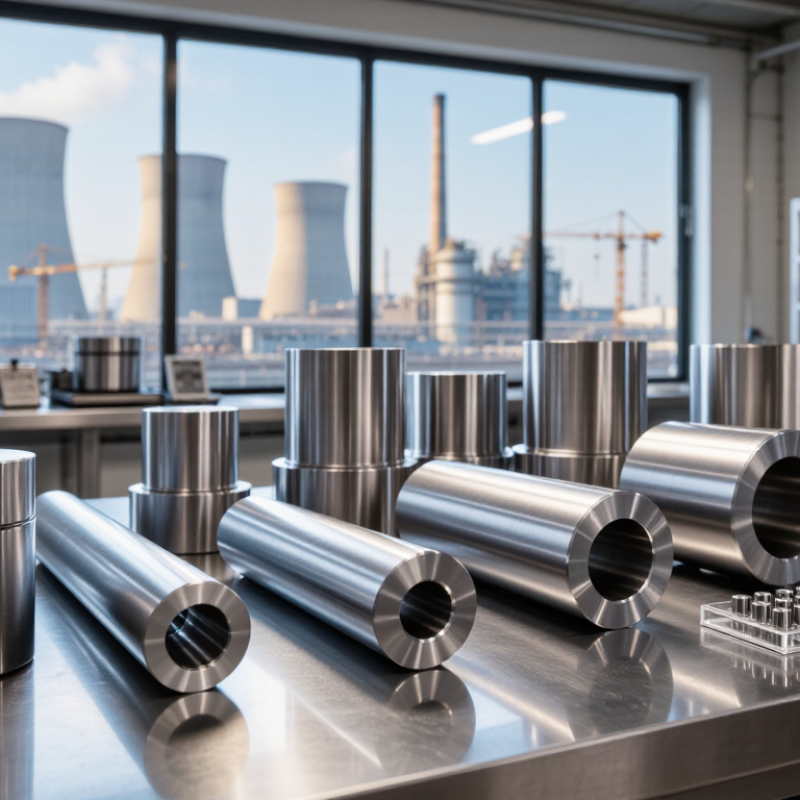
Tungsten alloys combine tungsten with metals such as nickel, iron, copper, or rhenium to adjust strength, density, machinability, and heat performance. A useful classification starts with composition. Tungsten-heavy alloys usually contain about 90–97% tungsten, with nickel-iron or nickel-copper binders. ASTM B777 provides a recognized framework for classifying and specifying these heavy-metal products. Small changes matter.
Other families include tungsten-copper alloys, valued for thermal and electrical functions, and tungsten-rhenium alloys, used where high-temperature performance is important. Tungsten carbide is often discussed alongside them in commercial catalogs, but it is a compound, not a metal alloy. That distinction matters when comparing material data or requesting a specification. The labels can still blur in everyday purchasing.
Supply context also helps explain why buyers check grade and origin carefully. The U.S. Geological Survey’s Mineral Commodity Summaries 2025 estimated global tungsten mine production at 81,000 metric tons in 2024, with China producing about 67,000 metric tons. These figures describe mined tungsten, not finished alloy output. For a real component, compare tungsten content, binder metals, density, and manufacturing route; two parts with similar names may behave differently. And catalog descriptions are not enough. Ask for a material certificate and the applicable test method.
Typical tungsten-content ranges by alloy family (% by weight)
Tungsten alloys are commonly classified by their binder or matrix metals. Tungsten heavy alloys, such as W-Ni-Fe and W-Ni-Cu, typically contain 90–97% tungsten; tungsten-copper alloys commonly span 50–90%. Actual compositions vary by grade and specification.
Tungsten heavy alloys usually contain 90–97% tungsten, with nickel and iron or copper as binders. The high tungsten content gives them exceptional density, often around 17–18.5 g/cm³. That mass suits compact counterweights and vibration-control parts. W-Ni-Fe grades are generally strong and machinable, though iron can make them magnetic. Check the finished grade, not just its name.
W-Ni-Cu alloys are usually nonmagnetic, making them useful near sensitive instruments. Compared with some iron-bearing grades, they may offer lower strength, so component loads matter. Tungsten-copper is a different choice: copper improves electrical and thermal conductivity, while tungsten contributes heat resistance. It is often selected for electrical contacts or heat-spreading components, not simply for maximum density. Not interchangeable.
Tungsten-rhenium alloys can retain useful strength and ductility at elevated temperatures. Their performance depends on composition and processing, and cost can be a practical limitation. The categories are helpful, but not perfectly tidy; specifications vary between producers and forms. Ask for density, magnetic response, tensile data, and service-temperature limits. A small test piece can reveal machining behavior that a data sheet does not. Also consider part size and tolerance, since a dense alloy can be difficult to handle during assembly.
| Material type | Typical composition | Key properties | Common applications | Buyer considerations |
|---|---|---|---|---|
| Tungsten–nickel–iron heavy alloy (W–Ni–Fe) | Typically 90–97 wt% tungsten, with nickel and iron as the binder; exact proportions vary by grade. | High density, good strength and ductility, and generally good machinability compared with pure tungsten. Typical density is about 16.5–18.5 g/cm³, depending on tungsten content and grade. | Radiation shielding, counterweights, inertial components, balancing weights, and kinetic-energy components. | A versatile choice when a dense, machinable material is needed. Confirm the required density, strength, dimensions, and applicable material specification. |
| Tungsten–nickel–copper heavy alloy (W–Ni–Cu) | Typically 90–97 wt% tungsten, with nickel and copper as the binder; grade composition varies. | High density and useful machinability. The non-ferromagnetic binder system can be advantageous where magnetic response must be limited; magnetic behavior should be verified for the finished grade and part. | Medical and industrial shielding, precision weights, and components used in magnetic-sensitive settings. | Consider this family when magnetic characteristics matter. Specify any limits on magnetic permeability and verify them with the supplier for the selected grade. |
| Tungsten–copper composite (W–Cu) | A tungsten skeleton infiltrated with copper, or a powder-processed composite; common compositions include approximately 50–90 wt% tungsten, with the balance mainly copper. | Combines tungsten’s high melting point and resistance to arc erosion with copper’s electrical and thermal conductivity. Density and conductivity vary substantially with composition and processing. | Electrical contacts, electrodes, heat-sink components, and parts exposed to electrical arcing. | Select by conductivity, arc-erosion resistance, operating temperature, and dimensional requirements. W–Cu is a composite rather than a single-phase alloy. |
| Tungsten–silver composite (W–Ag) | A tungsten–silver composite with proportions selected for the electrical-contact application; composition varies by grade. | Combines tungsten’s resistance to welding and arc erosion with silver’s high electrical and thermal conductivity. Properties depend on silver content and manufacturing route. | Electrical contacts and switching components subject to arcing or demanding contact conditions. | Compare contact resistance, arc performance, service conditions, and silver content. This is a composite material, not a conventional homogeneous alloy. |
| Tungsten–rhenium alloy (W–Re) | Common grades contain approximately 3–26 wt% rhenium; composition is selected for the required temperature and mechanical performance. | Rhenium can improve ductility and workability compared with unalloyed tungsten, particularly for wire and thermocouple applications. The alloy retains a high melting point but oxidizes at elevated temperatures in air. | High-temperature thermocouple wires, furnace components, and specialized aerospace or research components. | Specify the rhenium percentage and service atmosphere. High-temperature use generally requires vacuum, an inert or reducing atmosphere, or suitable oxidation protection. |
| Tungsten–molybdenum alloy (W–Mo) | A solid-solution alloy of tungsten and molybdenum; the ratio is grade-specific. | Retains refractory-metal characteristics while allowing properties such as density, strength, and thermal behavior to be adjusted through composition. Performance depends on grade, processing, and service environment. | High-temperature furnace parts, heating elements, and specialized components for vacuum or controlled-atmosphere service. | Request the exact W/Mo ratio and processing condition. Like other refractory metals, it needs protection from oxidation during high-temperature exposure in air. |
| Values and composition ranges are indicative, not universal grade specifications. Confirm certified chemistry, density, mechanical properties, dimensions, and test methods against the requirements of the intended application. | ||||
Global buyers in 2026 can choose among several tungsten-based materials, each suited to different engineering needs. Heavy tungsten alloys, usually tungsten-nickel-iron or tungsten-nickel-copper, combine high density with machinability. They are used for counterweights, vibration dampers, and compact shielding components. A finished part can feel surprisingly heavy in the hand. Small parts matter.
Tungsten-copper composites suit applications that need electrical or thermal conductivity alongside heat resistance. Cemented tungsten carbide, made from hard carbide grains and a metallic binder, is valued for wear-resistant tools and industrial components. It is technically a composite, not a conventional alloy. Not interchangeable. Tungsten-rhenium alloys serve more specialized high-temperature and measurement applications, where performance may justify added cost.
Supply context deserves attention. The U.S. Geological Survey’s Mineral Commodity Summaries 2025 estimated global tungsten mine production at 81,000 metric tons in 2024, with China producing 67,000 metric tons. Those figures describe mined tungsten, not finished alloy availability, but they underline why buyers should check origin, processing route, and lead times. Request certificates for composition and density, then compare them with the actual operating conditions. A specification sheet alone can miss machining limits, and that is an easy detail to overlook.
A tungsten alloy should be selected for the job it must perform, not simply for its high density. For counterweights in compact equipment, tungsten-nickel-iron alloys can provide substantial mass in a small volume. Their machinability also helps when parts need drilled holes or precise edges. Fit matters more.
For components exposed to heat or electrical current, tungsten-copper materials may be a better match. Copper helps conduct heat and electricity, while tungsten contributes strength and resistance to softening. In practice, the balance depends on operating temperature, current, part geometry, and cooling. A material that performs well in a test coupon may behave differently in a finished component.
Radiation-shielding parts often benefit from dense tungsten alloys, especially where space is limited. Buyers should check density, dimensions, surface finish, and any required material test reports before placing an order. For wear-resistant tooling, tungsten carbide may be considered, but it is a distinct material family with different properties and processing needs. Selection is not always tidy: one alloy rarely solves every requirement. Comparing application data with supplier documentation, then testing a representative part, can reveal trade-offs that a specification sheet may not show.
When sourcing tungsten alloys, compare the material to the part’s actual job, not just its tungsten content. Tungsten heavy alloys, such as W-Ni-Fe and W-Ni-Cu, combine high density with a binder metal. W-Ni-Fe is often selected where strength and machinability matter. W-Ni-Cu is nonmagnetic, which can suit components used near sensitive instruments. These are tendencies, not guarantees. That distinction matters.
Ask for the alloy composition, density range, dimensions, tolerances, and mechanical properties on a lot-specific certificate. For a compact counterweight, density and dimensional consistency may matter most. For a machined fixture, hardness, tool wear, and surface finish deserve closer review. Need corrosion resistance? Check the intended environment and any test data; binder composition alone does not settle the question. Ask how internal defects and porosity are inspected. A polished sample can look convincing, but it may not represent a full production lot.
Compare the supplier’s stated tolerances with your drawing, including flatness and hole position. Clarify whether values apply before or after machining. Small details get missed. Also compare lead time, minimum order quantity, and packaging, since dense parts can be damaged in transit. I would not choose by price per kilogram alone; that shortcut can make a difficult component look simple.



For those larger-sized parts, or smaller quantity runs, we have 2 independent powder coat booths and ovens. The quality, durability and affordability of today’s powder coating finishes make this the process of choice for world-class companies.
Powder coating advantages over other forms of coating are many. Materials used in the Powder coating process can be metals and non-metals that come in a multitude of thicknesses, textures, colors, etc. Another of Powder coating’s biggest advantages over conventional coatings is its ability to create finishes in many different textures. Powder Coating Booths allow us the ability to apply these advantages to large products.
Tri-State Fabricators runs a full-service conveyor line for painting. Wet painting can provide protection or decoration to many different part styles. From start to finish, every project is easier to undergo random and point-based inspection by our skilled painting team.
Advantages to our Wet Paint Line are these lines start with product prep and ends with a thorough inspection of a high quality finished product. Our ability to complete large and small projects with a superior finish and doing so in a timely and economical fashion. This passes along the savings in production to our customers. When powder coating ins not an option, our Wet Paint Line gets the job done right the first time.
When the parts get big and heavy we roll-out our custom paint racks and oversize booth. By utilizing our partnerships with all the major paint brands, we can match virtually any color with wet paint.
The advantages of having access to a Wet Paint Booth are many. Large projects of many different shapes can be loaded into the booth. The Wet Paint Booth offers an environment that is much more controlled than a typical parts painting operation.
Not only are they used because of their controlled environment, but they’re are also advantageous when it comes to applying paint to parts that are needed in industries that require specialty coatings such as medical, aerospace, etc.
Our military forces have some very high standards when it comes to the finish of their vehicles and equipment. From the first pre-treatment step to final coat, it takes a great deal of knowledge and experience to protect the men and women of our armed forces. They deserve only the best, and Tri-State Fabricators provides it.
All of our processes are closely monitored by our staff and management teams. Both of which are highly trained in the processes of metal fabrication and finishing. Tri-State Fabricators’ goal is to always fully satisfy each and every customer, including the military. We will always put a 110% into what we do.
Abrasive media blasting is an excellent way to remove old paint, rust, and increase the paint/powder adhesion. Glass beads produce a much smoother and brighter finish than angular abrasives; leaving the part clean yet without any dimensional change. Chemically inert and environmentally friendly, we can recycle our beads approximately 30 times; making them a more preferred method of metal cleaning or surface finishing.
Advantages to Glass Bead Blasting are many. Glass bead blast media is used when a project is needing rough surfaces need to become smooth for applications of coatings such as paint. It is typically used to clean paint and rust from a product surface without deforming the surface it is being used on. Overall, compared to many other blasting media, Glass Bead Blasting is a very economical choice and those savings are always passed on to our customers.
Tri-State Fabricators utilize a zinc phosphate wash to clean and etch the material to ensure the best paint adhesion possible. The unique design of our 3-stage wash system does the work like a 5-stage. From Cleaning and rinsing to conversion coating and post-treatment, Our Part Washing process is a complete service and works throughout the fabrication service and the finishing service.
Along with the previously mentioned benefits, Curing is a vital chemical reaction that leaves the product finish hard and relatively safe from mild abrasion and aggressive corrosion. This process can be done in more than one way; ambient air-dry or in curing ovens at temps that exceed 240°.
From fixing paint mistakes (someone else’s of course) to simply cleaning our paint line hooks, our burn-off oven is put to good use. After a quick burn-off, a little clean up, and a fresh coat of paint, your parts will look better than new.
Why does our Burn-Off Oven work so well? Because super heating the air around parts turns the materials into ashes. From paint and powder coatings to rubber and machining oils, high temps do the job without degrading the integrity of the part.
Masking is a vital part of producing high quality products. We have die-cut masking patterns to protect machined surfaces as well as a wide range of plugs and caps to protect threaded holes and bolts. We provide permanent and temporary masking.
Masking allows the selected sections of a product to be protected from a fabrication or finishing service. This can be with both chemicals when etching and tapes, paints when only finishing just a section of the product. Masking is great in aiding the customization process of a project.
Screen printing is a photographic process that transfers artwork onto a porous nylon screen which allows colored ink to flow through the screen and be deposited on an aluminum or plastic component. We can generally have just about any design created onto a screen for your parts.
Some of the advantages of Screen Printing are, brand recognition for your business displaying on your products, assembly instructions, product warnings/hazards, etc. Tri-State Fabricators produces Screen Printing of the highest quality so you know it’s durable.
Metal Finishing is the art of treating the exterior portion of product, often metal but can also be made of other materials, so that the surface is clean and free of any debris. Then the process of applying coats or either paint of powder coat takes place. This coating process improves the quality of the product in both appearance and resistance to wear and corrosion.
Tri-State Fabricators, Inc., understands that a project typically isn’t complete until a high-quality finish has been added to your product. This is why our painting and powder coating teams continuously inspect the products throughout the Metal Finishing process.