


2026 Top Suction And Discharge Hose Types for Global Buyers?

Choosing the right Suction And Discharge Hose can influence transfer safety, service life, and operating cost. Global buyers face many options, including rubber, PVC, thermoplastic, composite, corrugated, and layflat designs. Each type responds differently to pressure, vacuum, temperature, chemicals, abrasion, and weather.

This guide examines the leading hose types expected to attract attention in 2026. It focuses on practical selection details, not impressive labels alone. A chemical transfer hose may require different tube materials than a dredging hose. A food-grade application needs cleanable surfaces and suitable certifications. An oil hose may need resistance to swelling, static buildup, and repeated flexing.

Small details matter.

We will compare construction, pressure ratings, flexibility, coupling methods, and typical service environments. We will also consider hose diameter, working length, bending radius, reinforcement layers, and storage conditions. These factors can affect installation time and unexpected replacement costs. Experienced buyers often inspect the actual fluid, temperature range, suction level, and connection hardware before placing an order.

No single hose wins every application. That assumption is easy to make, and often wrong. Product data sheets may also differ in testing methods, so direct comparisons require care. Our comparison is not flawless; field conditions can expose weaknesses that laboratory figures miss. Still, this overview offers a reliable starting point for distributors, engineers, contractors, and industrial purchasers. It helps readers ask better questions before choosing a hose for water, fuel, chemicals, slurry, food products, or bulk materials.
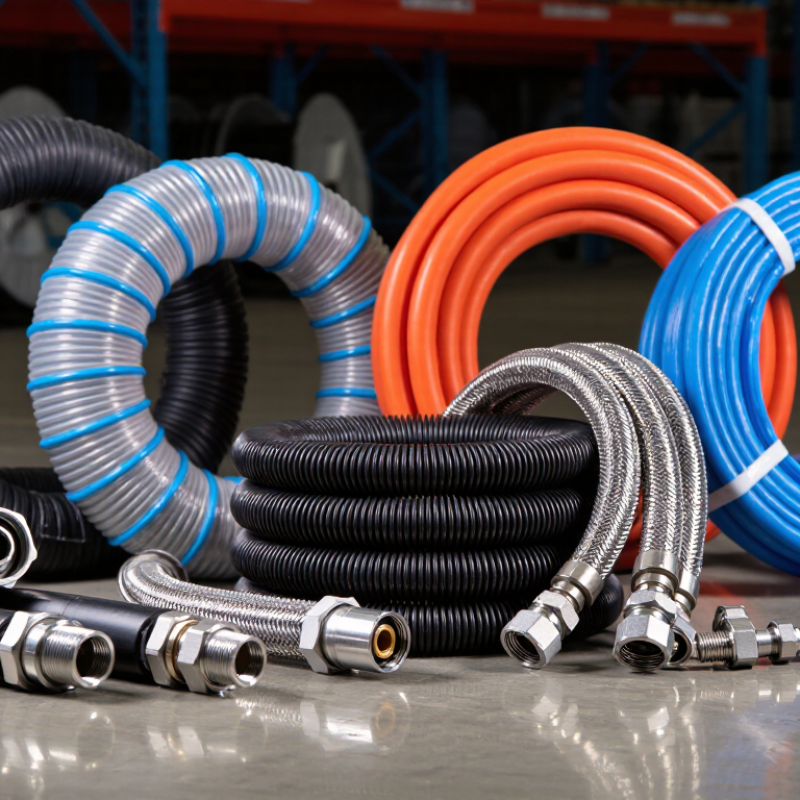
2026 Top Suction And Discharge Hose Types for Global Buyers?

What Suction and Discharge Hoses Do: Vacuum, Pressure, and Flow Roles

Suction and discharge hoses perform different jobs, even when they look similar on a warehouse shelf. A suction hose must resist collapse under vacuum. Its spiral reinforcement keeps the bore open while a pump pulls liquid through it. A discharge hose handles positive pressure instead. It needs strong reinforcement, secure couplings, and a working pressure rating that suits the system.

Common choices include PVC suction hoses for light water transfer, rubber hoses for demanding industrial service, and thermoplastic hoses for lower weight and flexible handling. Composite hoses can suit chemical or fuel transfer when their construction matches the fluid. However, material names alone do not prove suitability. Temperature, abrasion, bending radius, and fluid compatibility matter just as much.

Flow depends on more than hose diameter. A narrow bore creates friction, reduces delivery, and may increase pump strain. A hose that is too large can become heavy and difficult to control. In field checks, I look for flattened sections, loose clamps, and sharp bends near the pump connection. These details often explain poor performance. Many buyers focus on pressure first. That assumption can fail. Vacuum rating, suction lift, operating temperature, and coupling quality deserve equal attention. A small installation sketch can expose problems before shipping and setup costs grow.


The Main 2026 Hose Types: Rubber, PVC, TPU, Layflat, and Corrugated

2026 Top Suction And Discharge Hose Types for Global Buyers

The main 2026 hose types are rubber, PVC, TPU, layflat, and corrugated designs. Each performs differently under pressure, temperature, abrasion, and bending demands. Rubber hose suits heavy-duty suction and discharge work. Its thick wall resists impact and repeated flexing on construction sites. It can be heavy, especially during manual installation. PVC hose is lighter and often easier to inspect. Clear PVC can reveal trapped air, sediment, or fluid movement. However, cold conditions may reduce its flexibility. TPU hose offers strong abrasion resistance with a lighter handling feel. It works well for granular materials, slurry, and frequent movement. Chemical compatibility still requires careful checking.

Layflat hose saves storage space and deploys quickly across farms, drainage areas, and temporary transfer systems. It needs proper support because sharp stones can damage its folded body. Corrugated hose bends around pumps and tight equipment layouts. Its flexible shape helps prevent kinking, but the grooves may retain residue. Cleaning becomes more demanding. Real sites are messier than catalogs suggest. Field experience shows that couplings, clamps, and hose tails often fail before the hose itself. Buyers should match the working pressure, vacuum rating, temperature range, bend radius, and fluid composition. They should also request batch records, test information, and dimensional checks. No selection is perfect. A cheaper hose may cost more after repeated replacement. Small details matter.

2026 Top Suction and Discharge Hose Types for Global Buyers: Rubber, PVC, TPU, Layflat, and Corrugated

Hose Type Typical Construction Best-Fit Applications Typical Working Temperature* Pressure Capability* Main Advantages Important Limitations
Rubber Synthetic or natural-rubber tube with textile, helix-wire, or steel-wire reinforcement. Heavy-duty water, slurry, dredging, cement, mining, oil transfer, and industrial suction/discharge service. Approximately −40°C to +80°C; some engineered grades reach about +100°C or higher. Commonly about 6–20 bar working pressure, depending on reinforcement and diameter. Excellent abrasion resistance, impact tolerance, flexibility, and vacuum resistance when properly reinforced. Usually heavier and more expensive than PVC; chemical and oil resistance varies by rubber compound.
PVC Flexible PVC tube with rigid PVC spiral, textile braid, or embedded helix reinforcement. Water, irrigation, drainage, food and beverage transfer, light chemicals, powders, and general-purpose suction. Typically −10°C to +60°C; low-temperature flexibility depends strongly on formulation. Commonly about 3–10 bar working pressure; suction performance depends on spiral design. Lightweight, economical, transparent options available, and generally resistant to water and many mild chemicals. Less resistant to high heat, severe abrasion, oils, and repeated flexing than many rubber or TPU designs.
TPU Thermoplastic polyurethane tube with textile reinforcement or abrasion-resistant polyurethane wall and helix. Abrasive solids, grain, pellets, powders, mining slurry, shot-blasting media, and demanding material handling. Approximately −40°C to +80°C; exact limits depend on TPU grade and service medium. Commonly about 5–15 bar working pressure, with higher values possible in reinforced designs. Very high abrasion resistance, good tear strength, low material adhesion, and lower weight than many rubber hoses. Can be affected by prolonged heat, certain solvents, hydrolysis, or UV exposure unless specially formulated.
Layflat Flat-folding PVC, TPU, or rubberized fabric tube with textile reinforcement; normally designed for discharge. Irrigation, dewatering, flood control, temporary bypass, construction pumping, and agricultural water transfer. Usually about −20°C to +60°C, depending on polymer and reinforcement. Often about 4–16 bar working pressure; pressure ratings vary significantly by diameter and fabric. Lightweight, compact for transport and storage, fast to deploy, and suitable for long temporary runs. Generally unsuitable for sustained suction or sharp-edged abrasion; requires protection from puncture and dragging damage.
Corrugated Corrugated wall made from PVC, rubber, TPU, or thermoplastic elastomer, often with an embedded helix. Tank transfer, wastewater, ventilation, liquid food handling, chemical service, and applications requiring a tight bend radius. Typically −30°C to +80°C; material-specific designs may operate outside this range. Commonly about 2–12 bar working pressure; deep corrugation generally favors flexibility over pressure capacity. Excellent flexibility, reduced bending force, good crush recovery, and easier routing around equipment. Corrugations can increase flow turbulence and cleaning difficulty; pressure and vacuum ratings must be checked carefully.
Buyer note: The temperature and pressure figures are typical market ranges, not universal ratings. Final selection should be based on the hose manufacturer’s data sheet, actual medium, suction height, flow rate, bend radius, coupling method, vacuum level, and applicable standards.

Material Selection by Data: −40°C to 100°C and Chemical Compatibility

2026 Top Suction And Discharge Hose Types for Global Buyers

Material choice controls hose performance from −40°C to 100°C. Suction hoses need strong vacuum resistance, while discharge hoses need reliable pressure strength. Thermoplastic hoses can suit light chemical transfer and moderate temperatures. Reinforced rubber hoses often perform better under vibration and repeated bending. For harsh chemicals, PTFE-lined or fluoropolymer designs may reduce permeation. However, no material is universally safe.

Chemical compatibility depends on concentration, temperature, exposure time, and flow speed. A hose rated for a chemical at 20°C may fail at 90°C. EPDM can handle many water-based fluids, but it may resist oils poorly.

Nitrile often suits petroleum fluids, yet strong oxidizers can damage it. Check the manufacturer’s data sheet, pressure rating, vacuum rating, and minimum bend radius. Real service conditions matter more than a simple material label.

Tips: Match the hose to the coldest start-up temperature, not the average temperature. Confirm chemical compatibility at the actual concentration. Inspect the inner tube after trial use. Swelling, soft spots, discoloration, or cracking indicate trouble. I once saw a hose pass a short bench test but fail after continuous heat exposure. That result was not useless, but it was incomplete. Allow extra safety margin for temperature, pressure, abrasion, and installation stress.

Pressure Safety Explained: Working, Burst, and the 3:1 Safety Ratio

For global buyers, suction and discharge hoses must be judged by pressure behavior, not appearance alone. Working pressure is the highest pressure a hose should handle continuously under specified conditions. Burst pressure is the point where failure may occur during a pressure test. It is not an operating target.

The 3:1 safety ratio means burst pressure should be at least three times the stated working pressure. A hose rated for 10 bar working pressure should therefore provide a minimum 30 bar burst rating. This margin helps cover pressure spikes, aging, temperature changes, and installation errors. It does not make poor installation safe. Couplings, clamps, and hose ends must support the same pressure level. One weak connection can defeat the entire calculation.

Suction service needs a separate check. Vacuum rating shows how well the hose resists collapse, especially during pumping, unloading, or sudden flow restriction. A thick hose may still flatten if its vacuum rating is too low. Confirm the working pressure at the actual temperature, fluid, bend radius, and hose length. Inspect cuts, bulges, soft spots, and exposed reinforcement before use. Small damage matters. In practice, buyers sometimes trust the 3:1 ratio too much and overlook pressure surges or worn fittings. That deserves a second look.

Global Buyer Checklist: ISO 1307, EN 12115, Couplings, and DN Sizing

Global buyers should treat hose selection as a documented engineering decision, not a catalogue search.

Grand View Research’s 2024 industrial hose market analysis valued the sector at more than USD 13 billion in 2023. That scale reflects demanding transfer systems, not simple rubber tubes.

ISO 1307 helps verify nominal bore, inside-diameter tolerances, and size consistency. Ask for the measured internal diameter, not only “DN50.”

DN sizing needs caution.

DN50 usually indicates a nominal 50 mm connection, but the actual hose bore can vary by construction. A few millimetres matter. They affect flow speed, pressure loss, and coupling fit.

EN 12115 adds requirements for chemical hose assemblies, including electrical resistance and test performance.

Check the hose’s resistance category, working pressure, temperature range, and test certificate. Do not accept a standard number without its edition and scope.

Couplings deserve the same scrutiny.

Confirm thread or flange geometry, sealing material, locking method, and end-load limits.

MarketsandMarkets reported that industrial hose demand is being supported by process industries and fluid-transfer infrastructure, where downtime carries measurable costs.

A coupling may look correct on a warehouse floor and still fail after thermal cycling.

I have seen specifications copied between projects without rechecking DN and media compatibility. That shortcut is uncomfortable, but common.

Request batch traceability, pressure-test records, and assembly drawings before shipment. Verify the final length under operating movement, not only on a straight table.

Powder Coat Booths

For those larger-sized parts, or smaller quantity runs, we have 2 independent powder coat booths and ovens. The quality, durability and affordability of today’s powder coating finishes make this the process of choice for world-class companies.

Powder coating advantages over other forms of coating are many. Materials used in the Powder coating process can be metals and non-metals that come in a multitude of thicknesses, textures, colors, etc. Another of Powder coating’s biggest advantages over conventional coatings is its ability to create finishes in many different textures. Powder Coating Booths allow us the ability to apply these advantages to large products.

Wet Paint Line

Tri-State Fabricators runs a full-service conveyor line for painting. Wet painting can provide protection or decoration to many different part styles. From start to finish, every project is easier to undergo random and point-based inspection by our skilled painting team.

Advantages to our Wet Paint Line are these lines start with product prep and ends with a thorough inspection of a high quality finished product. Our ability to complete large and small projects with a superior finish and doing so in a timely and economical fashion. This passes along the savings in production to our customers. When powder coating ins not an option, our Wet Paint Line gets the job done right the first time.

Wet Paint Booths

When the parts get big and heavy we roll-out our custom paint racks and oversize booth. By utilizing our partnerships with all the major paint brands, we can match virtually any color with wet paint.

The advantages of having access to a Wet Paint Booth are many. Large projects of many different shapes can be loaded into the booth. The Wet Paint Booth offers an environment that is much more controlled than a typical parts painting operation.

Not only are they used because of their controlled environment, but they’re are also advantageous when it comes to applying paint to parts that are needed in industries that require specialty coatings such as medical, aerospace, etc.

Military CARC

Our military forces have some very high standards when it comes to the finish of their vehicles and equipment. From the first pre-treatment step to final coat, it takes a great deal of knowledge and experience to protect the men and women of our armed forces. They deserve only the best, and Tri-State Fabricators provides it.

All of our processes are closely monitored by our staff and management teams. Both of which are highly trained in the processes of metal fabrication and finishing. Tri-State Fabricators’ goal is to always fully satisfy each and every customer, including the military. We will always put a 110% into what we do.

Glass-Bead Blasting

Abrasive media blasting is an excellent way to remove old paint, rust, and increase the paint/powder adhesion. Glass beads produce a much smoother and brighter finish than angular abrasives; leaving the part clean yet without any dimensional change. Chemically inert and environmentally friendly, we can recycle our beads approximately 30 times; making them a more preferred method of metal cleaning or surface finishing.

Advantages to Glass Bead Blasting are many. Glass bead blast media is used when a project is needing rough surfaces need to become smooth for applications of coatings such as paint. It is typically used to clean paint and rust from a product surface without deforming the surface it is being used on. Overall, compared to many other blasting media, Glass Bead Blasting is a very economical choice and those savings are always passed on to our customers.

Part Washing

Tri-State Fabricators utilize a zinc phosphate wash to clean and etch the material to ensure the best paint adhesion possible. The unique design of our 3-stage wash system does the work like a 5-stage. From Cleaning and rinsing to conversion coating and post-treatment, Our Part Washing process is a complete service and works throughout the fabrication service and the finishing service.

Along with the previously mentioned benefits, Curing is a vital chemical reaction that leaves the product finish hard and relatively safe from mild abrasion and aggressive corrosion. This process can be done in more than one way; ambient air-dry or in curing ovens at temps that exceed 240°.

Burn-Off Oven

From fixing paint mistakes (someone else’s of course) to simply cleaning our paint line hooks, our burn-off oven is put to good use. After a quick burn-off, a little clean up, and a fresh coat of paint, your parts will look better than new.

Why does our Burn-Off Oven work so well? Because super heating the air around parts turns the materials into ashes. From paint and powder coatings to rubber and machining oils, high temps do the job without degrading the integrity of the part.

Masking

Masking is a vital part of producing high quality products. We have die-cut masking patterns to protect machined surfaces as well as a wide range of plugs and caps to protect threaded holes and bolts. We provide permanent and temporary masking.

Masking allows the selected sections of a product to be protected from a fabrication or finishing service. This can be with both chemicals when etching and tapes, paints when only finishing just a section of the product. Masking is great in aiding the customization process of a project.

Screen Printing

Screen printing is a photographic process that transfers artwork onto a porous nylon screen which allows colored ink to flow through the screen and be deposited on an aluminum or plastic component. We can generally have just about any design created onto a screen for your parts.

Some of the advantages of Screen Printing are, brand recognition for your business displaying on your products, assembly instructions, product warnings/hazards, etc. Tri-State Fabricators produces Screen Printing of the highest quality so you know it’s durable.

Metal Finishing

Metal Finishing is the art of treating the exterior portion of product, often metal but can also be made of other materials, so that the surface is clean and free of any debris. Then the process of applying coats or either paint of powder coat takes place. This coating process improves the quality of the product in both appearance and resistance to wear and corrosion.

Tri-State Fabricators, Inc., understands that a project typically isn’t complete until a high-quality finish has been added to your product. This is why our painting and powder coating teams continuously inspect the products throughout the Metal Finishing process.
