


2026 Top Steel Wire Rod Manufacturers for Global Buyers

Choosing a Steel Wire Rod Manufacturer requires more than comparing annual output or advertised prices. Global buyers need evidence of stable chemistry, controlled cooling, surface quality, and dependable shipment planning. A bright coil can still hide inconsistent tensile performance.

The World Steel Association reported approximately 1.88 billion tonnes of crude steel production in 2024. That scale shows steel’s importance, but it also reveals intense competition among producers. Steel wire rod sits at a critical stage between billet casting and finished wire. Small variations in carbon, manganese, sulfur, or diameter can affect drawing efficiency, welding strength, and final product reliability. The OECD Steel Market Developments reports also highlight continuing pressure from excess capacity, trade uncertainty, and uneven regional demand. Buyers should therefore examine verified mill data, not attractive brochures.

Edwin Basson, Director General of the World Steel Association, has stated, “Steel is essential to modern life, and its production must become more sustainable.” His observation applies directly to wire rod sourcing. A responsible supplier should demonstrate energy management, emissions reporting, traceability, and credible quality systems. ISO 9001 certification helps, but it is not the whole answer. Factory audits still matter. So do recent test certificates, loading photographs, and customer references.

This 2026 guide evaluates leading manufacturers through practical buyer criteria. These include product consistency, export experience, technical support, lead time, packaging, and responsible production. Some rankings remain debatable. Market data changes quickly. That is why every buyer should confirm current capacity, specifications, and delivery terms before signing a contract.
2026 Top Steel Wire Rod Manufacturers for Global Buyers

What Steel Wire Rod Is and Why Global Buyers Need It

What Steel Wire Rod Is and Why Global Buyers Need It

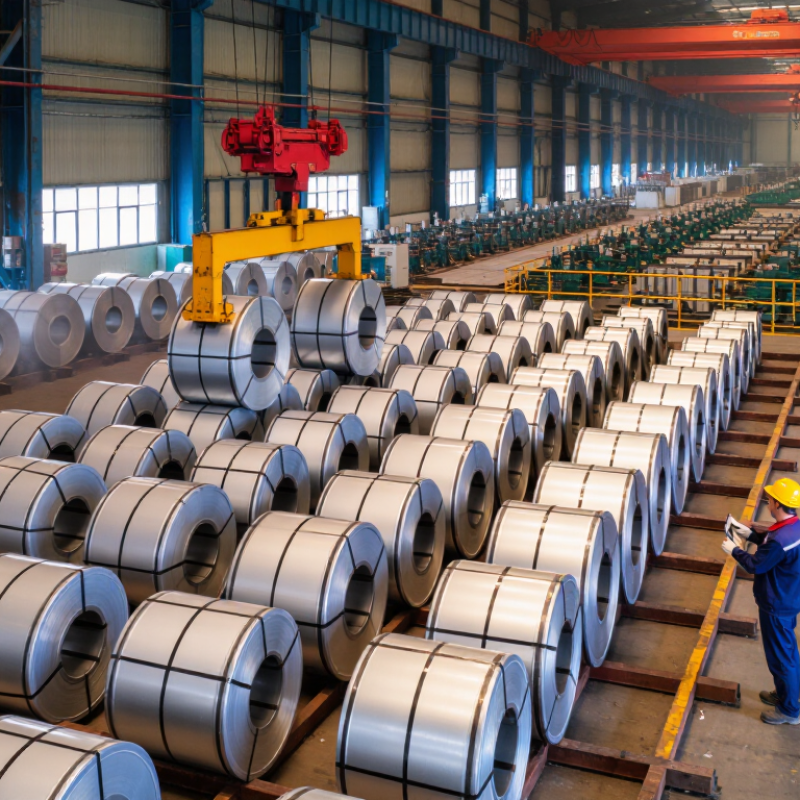
Steel wire rod is a hot-rolled, semi-finished steel product supplied in coils. Its round cross-section and continuous length make it suitable for drawing into finer wire. Buyers use it for fasteners, welded mesh, springs, cables, nails, and reinforcement products.

The right grade depends on the final process. Low-carbon rod supports easy forming and welding. Higher-carbon grades offer improved strength for springs and demanding mechanical parts. Diameter, surface condition, chemical composition, tensile strength, and coil weight all affect production results. A reliable supplier should provide mill test certificates, dimensional records, and traceable heat numbers. Independent inspection can add confidence before shipment.

Small details matter.

In practical sourcing, buyers should compare more than price. Uneven surfaces may increase die wear during drawing. Excessive scale can create cleaning problems. Incorrect coil weight can also disrupt handling equipment and storage plans. A polished specification sheet is not enough. I have seen purchasing teams approve material without checking the customer’s drawing tolerance. That mistake can become expensive later. Requirements should be confirmed with production engineers, not only sales staff.

Tips: Define grade, diameter, tolerance, coil weight, and end use before requesting quotations. Ask for recent test data and packaging photographs. Confirm rust protection for the planned transport route. Keep a sample for comparison when repeat orders are expected. One overlooked detail can affect an entire batch.


Key Criteria for Evaluating Steel Wire Rod Manufacturers

2026 Top Steel Wire Rod Manufacturers for Global Buyers

Evaluating a steel wire rod manufacturer requires more than comparing quotations. Check chemical consistency, tensile strength, surface quality, coil weight, and dimensional tolerance. The World Steel Association reported 1.88 billion tonnes of crude steel production in 2024. This scale makes supplier discipline more important, not less. Ask for recent mill test certificates, heat numbers, and independent inspection records. Traceability should reach the furnace batch.

Production capability also matters. Confirm monthly capacity, rolling-mill equipment, annealing options, packaging methods, and shipment history. A supplier may promise fast delivery, but port congestion and raw material disruptions can change the schedule. Review at least twelve months of on-time delivery data. The International Energy Agency reports that steelmaking creates about 7% to 9% of global energy-related emissions. Request energy data, scrap usage, and emissions targets, but treat vague claims carefully. Sustainability language is not evidence.

Tips: Compare three sample coils, not only paperwork. Test diameter at several points. Inspect rust, edge damage, and winding tension. Ask how rejected coils are handled. A low price can still be expensive. No scorecard is perfect; even experienced buyers can overlook small chemistry variations. Recheck critical grades through a qualified laboratory before approving large orders. Choose suppliers with clear corrective-action records, stable export documentation, and technical staff who answer precise questions.

Leading Steel Wire Rod Manufacturers in 2026

Leading steel wire rod manufacturers in 2026 are competing on more than furnace capacity. Global buyers now inspect chemistry control, rolling stability, delivery discipline, and technical support. Experienced purchasing teams ask for mill certificates, heat numbers, dimensional tolerances, and test methods before signing contracts. A reliable producer should explain how billets are sourced, how coils are cooled, and how defects are screened. These details matter when rod enters tire cord, fasteners, welding wire, or construction mesh. Small variations can become costly during drawing.

Tips: Compare suppliers using the same specification sheet. Check carbon range, tensile strength, surface condition, coil weight, and packing design. Request recent test records, not only brochures. Confirm production capacity for your required grade and monthly volume. Ask about port routes and contingency planning. A factory may quote an attractive price, yet weak shipment planning can stop a production line. Visiting a plant can reveal housekeeping and process discipline, although one visit never proves everything.

The strongest manufacturers combine metallurgical expertise with transparent communication. They discuss nonconformity procedures instead of hiding them. They also support trial orders, sampling, and corrective action reports. In 2026, digital traceability is becoming useful for repeated imports and regulated applications. Still, software cannot replace physical testing. Buyers should review samples with an independent laboratory when risk is high. Some evaluations remain imperfect, and my own preference is to record every assumption. That habit exposes gaps early and prevents confident but careless decisions.

Product Grades, Standards, and Customization Options

2026 Top Steel Wire Rod Manufacturers for Global Buyers

Global buyers should assess wire rod by grade, standard, and documented consistency, not price alone. The World Steel Association reported 1.88 billion tonnes of crude steel production in 2024. That scale highlights the need for traceable quality across international supply chains. Common carbon grades support fasteners, mesh, welding wire, and cold heading applications. Low-alloy grades serve higher-strength components. Stainless grades resist corrosion in demanding environments.

Standards matter. ASTM A510/A510M covers general carbon and alloy wire rods, while ISO 16120 addresses non-alloy steel wire rod for wire manufacturing. EN 10016 remains widely referenced in European purchasing. Buyers should request heat numbers, chemical analysis, tensile results, and dimensional records. Small differences matter. A 0.1-millimeter variation can affect drawing performance and tool wear.

Customization may include diameters, coil weights, surface condition, decarburization limits, and controlled cooling. Manufacturers can also adjust carbon ranges, residual elements, packaging, and delivery documentation. The OECD’s latest steel outlook continues to emphasize overcapacity and uneven demand, making supplier verification increasingly important. However, standards alone do not guarantee smooth processing. Actual drawing trials may expose issues that certificates miss. A practical specification should include end use, drawing passes, lubrication method, and acceptable defect limits. That detail is often overlooked.

2026 Top Steel Wire Rod Manufacturers for Global Buyers - Product Grades, Standards, and Customization Options
Product Family Representative Grades Common International Standards Typical Diameter Range Key Product Characteristics Customization Options Typical End Uses
Low-Carbon Steel Wire Rod SAE 1006, SAE 1008, SAE 1010, SAE 1018, SAE 1022; C4D–C22D ASTM A510/A510M SAE J403 EN 10016-1/-2 ISO 16120 Approximately 5.5–25 mm; larger sizes may be available by mill capability Good ductility, weldability, cold-forming performance, and suitability for drawing. Typical carbon content is generally below 0.25%, depending on grade. Diameter and dimensional tolerance, controlled chemistry, pickled or mechanically descaled surface, drawing-quality surface, coil weight, coil ID/OD, and reduced residual elements. Nails, mesh, fencing, general-purpose wire, fasteners, wire products, and cold-drawn wire.
Cold-Heading and Cold-Forming Rod SAE 1006–1022, 10B21, 10B33; C4C, C8C, C10C, C15C EN 10263-1/-2 ASTM A510/A510M SAE J403 ISO 16120 Approximately 5.5–22 mm for common fastener feedstock Low inclusion level, consistent spheroidized-annealing response, controlled surface quality, and high deformability for heading and extrusion. Phosphorus and sulfur limits, boron addition, aluminum-killed chemistry, controlled decarburization depth, spheroidizing-annealing suitability, and surface-defect limits. Bolts, screws, rivets, nuts, automotive fasteners, clips, and cold-extruded components.
High-Carbon Steel Wire Rod SAE 1070, SAE 1080, SAE 1084, SAE 1090; C66D–C92D; SWRH72A–SWRH82B EN 10016-1/-2 ISO 16120 JIS G3506 SAE J403 Approximately 5.5–16 mm for many tire-cord, spring, and high-strength wire applications High tensile potential, controlled pearlitic structure, good patenting response, and suitability for heavy drawing reductions. Carbon range, manganese level, non-metallic inclusion control, patenting suitability, controlled segregation, tight ovality, and surface-quality requirements. Steel cord, bead wire, saw wire, high-strength rope wire, mattress wire, piano wire, and prestressing wire feedstock.
Spring Steel Wire Rod SAE 1070–1090, SAE 5160, SAE 9254; 51CrV4; 55Cr3 EN 10089 EN 10270-1 SAE J404 ISO 16120 Approximately 5.5–20 mm, subject to grade and downstream process High fatigue resistance, controlled hardenability, reliable heat-treatment response, and resistance to decarburization. Alloy additions such as chromium, silicon, manganese, or vanadium; hardenability limits; inclusion rating; surface conditioning; and customized coil dimensions. Automotive springs, suspension components, agricultural springs, mechanical springs, and high-stress wire products.
Alloy and Quenched-and-Tempered Steel Rod SAE 4130, SAE 4140, SAE 4145; 34CrMo4; 42CrMo4 EN 10083-3 SAE J404 ASTM A29/A29M Approximately 6–25 mm for common wire-rod and conversion applications Higher strength and hardenability than plain-carbon grades, with controlled alloy chemistry for heat treatment and mechanical performance. Alloy chemistry, restricted-element limits, spheroidizing-annealing response, center segregation control, ultrasonic testing, surface conditioning, and heat-treatment condition. High-strength fasteners, mechanical parts, oilfield components, automotive parts, and cold-forged or machined products.
Microalloyed Steel Wire Rod Vanadium-, niobium-, or titanium-microalloyed carbon-manganese grades; application-specific HSLA grades EN 10016 ISO 16120 ASTM A510/A510M Customer specification Approximately 5.5–25 mm Enhanced yield strength and grain refinement with reduced reliance on conventional heat treatment, depending on chemistry and processing route. Microalloy content, controlled rolling temperature, accelerated cooling, ferrite-pearlite or bainitic structure, grain-size targets, and mechanical-property windows. High-strength fasteners, automotive wire products, structural wire, reinforcement-related products, and engineered components.
Welding Wire Rod Feedstock Low-carbon manganese-silicon grades for solid welding wire; chemistry selected for ER70S-type classifications AWS A5.18/A5.18M ISO 14341 EN 10264-1 ASTM A510/A510M Commonly 5.5–16 mm before drawing and surface treatment Clean steel, stable drawing performance, controlled copper and residual elements, and chemistry designed for consistent weld-metal properties. Manganese and silicon levels, copper coating compatibility, surface cleanliness, drawing reduction plan, coil weight, and welding-classification chemistry. Gas-metal arc welding wire, submerged-arc welding wire, fabricated steel structures, machinery, shipbuilding, and pressure equipment.
Stainless Steel Wire Rod 304/304L, 316/316L, 321, 410, 430, and other austenitic, ferritic, and martensitic grades ASTM A493/A493M EN 10088-3 ISO 16143 JIS G4308 Approximately 5.5–25 mm, depending on grade and finishing route Corrosion resistance, controlled surface condition, and grade-specific formability or heat-treatment response. Low-carbon or stabilized grades, solution-annealed condition, bright or pickled surface, magnetic-property control, diameter tolerance, and corrosion-performance requirements. Fasteners, welding wire, springs, wire mesh, medical and food-processing components, marine equipment, and architectural products.
Tire Cord and Steel Cord Feedstock High-carbon pearlitic grades, commonly within approximately 0.70–0.95% carbon ranges ISO 16120 EN 10016 Customer tire-cord specification Commonly 5.5–6.5 mm for downstream multi-stage drawing Very low inclusion content, narrow chemistry range, fine pearlitic structure, excellent drawability, and tight surface-quality control. Carbon and manganese limits, restricted phosphorus and sulfur, inclusion-size limits, controlled segregation, decarburization limits, and specialized coil packaging. Passenger-car tire cord, truck and bus tire cord, bead wire, hose reinforcement, and conveyor-belt reinforcement.
Prestressing and High-Tensile Wire Feedstock High-carbon pearlitic grades selected for prestressing wire or strand production EN 10016 ISO 16120 EN 10138 ASTM A510/A510M Approximately 5.5–13 mm for common downstream drawing operations High tensile-strength potential, uniform microstructure, low surface-defect frequency, and reliable response to drawing and stabilization. Strength class, relaxation-performance targets, inclusion control, decarburization limits, ovality, coil weight, and traceability requirements. Prestressing wire, prestressed concrete strand, bridge components, railway sleepers, and precast concrete products.
Note: Diameter ranges, available grades, tolerances, coil dimensions, and certification options vary by production line and purchase specification. Buyers should confirm the applicable edition of each standard, chemical limits, inspection plan, and delivery condition before ordering.

Global Sourcing, Quality Control, and Supplier Selection

For global buyers, choosing a steel wire rod manufacturer in 2026 requires more than comparing price lists. Start with end use, diameter tolerance, carbon range, surface condition, and required drawing performance. Ask suppliers for recent mill certificates, heat numbers, tensile results, and dimensional records. Those documents should match the physical coil labels. Traceability matters at the warehouse, not only in a sales folder. Details expose risk.

Quality control should combine supplier evidence with independent checks. Request a pre-shipment inspection covering coil weight, rust, winding, welds, packaging, and marking. For critical orders, test samples through an accredited laboratory near the destination market. Check chemical composition and tensile strength against the purchase specification. A factory visit can reveal storage problems, poor moisture protection, or overloaded production lines. Do not rely on polished samples. They may hide inconsistency.

Supplier selection also depends on communication and logistics. Compare response times, production capacity, minimum order quantities, lead-time history, export documents, and port options. Confirm how the supplier handles claims, replacement coils, and unexpected delays. A written quality agreement reduces disputes, but it cannot replace consistent inspection. Lower prices can reflect real efficiency, or weaker controls. That distinction deserves evidence. Buyers should score suppliers across quality, reliability, technical support, and total landed cost. Even a strong audit is only a snapshot. Recheck performance after the first shipment, especially when steel grades, seasons, or production teams change.

Powder Coat Booths

For those larger-sized parts, or smaller quantity runs, we have 2 independent powder coat booths and ovens. The quality, durability and affordability of today’s powder coating finishes make this the process of choice for world-class companies.

Powder coating advantages over other forms of coating are many. Materials used in the Powder coating process can be metals and non-metals that come in a multitude of thicknesses, textures, colors, etc. Another of Powder coating’s biggest advantages over conventional coatings is its ability to create finishes in many different textures. Powder Coating Booths allow us the ability to apply these advantages to large products.

Wet Paint Line

Tri-State Fabricators runs a full-service conveyor line for painting. Wet painting can provide protection or decoration to many different part styles. From start to finish, every project is easier to undergo random and point-based inspection by our skilled painting team.

Advantages to our Wet Paint Line are these lines start with product prep and ends with a thorough inspection of a high quality finished product. Our ability to complete large and small projects with a superior finish and doing so in a timely and economical fashion. This passes along the savings in production to our customers. When powder coating ins not an option, our Wet Paint Line gets the job done right the first time.

Wet Paint Booths

When the parts get big and heavy we roll-out our custom paint racks and oversize booth. By utilizing our partnerships with all the major paint brands, we can match virtually any color with wet paint.

The advantages of having access to a Wet Paint Booth are many. Large projects of many different shapes can be loaded into the booth. The Wet Paint Booth offers an environment that is much more controlled than a typical parts painting operation.

Not only are they used because of their controlled environment, but they’re are also advantageous when it comes to applying paint to parts that are needed in industries that require specialty coatings such as medical, aerospace, etc.

Military CARC

Our military forces have some very high standards when it comes to the finish of their vehicles and equipment. From the first pre-treatment step to final coat, it takes a great deal of knowledge and experience to protect the men and women of our armed forces. They deserve only the best, and Tri-State Fabricators provides it.

All of our processes are closely monitored by our staff and management teams. Both of which are highly trained in the processes of metal fabrication and finishing. Tri-State Fabricators’ goal is to always fully satisfy each and every customer, including the military. We will always put a 110% into what we do.

Glass-Bead Blasting

Abrasive media blasting is an excellent way to remove old paint, rust, and increase the paint/powder adhesion. Glass beads produce a much smoother and brighter finish than angular abrasives; leaving the part clean yet without any dimensional change. Chemically inert and environmentally friendly, we can recycle our beads approximately 30 times; making them a more preferred method of metal cleaning or surface finishing.

Advantages to Glass Bead Blasting are many. Glass bead blast media is used when a project is needing rough surfaces need to become smooth for applications of coatings such as paint. It is typically used to clean paint and rust from a product surface without deforming the surface it is being used on. Overall, compared to many other blasting media, Glass Bead Blasting is a very economical choice and those savings are always passed on to our customers.

Part Washing

Tri-State Fabricators utilize a zinc phosphate wash to clean and etch the material to ensure the best paint adhesion possible. The unique design of our 3-stage wash system does the work like a 5-stage. From Cleaning and rinsing to conversion coating and post-treatment, Our Part Washing process is a complete service and works throughout the fabrication service and the finishing service.

Along with the previously mentioned benefits, Curing is a vital chemical reaction that leaves the product finish hard and relatively safe from mild abrasion and aggressive corrosion. This process can be done in more than one way; ambient air-dry or in curing ovens at temps that exceed 240°.

Burn-Off Oven

From fixing paint mistakes (someone else’s of course) to simply cleaning our paint line hooks, our burn-off oven is put to good use. After a quick burn-off, a little clean up, and a fresh coat of paint, your parts will look better than new.

Why does our Burn-Off Oven work so well? Because super heating the air around parts turns the materials into ashes. From paint and powder coatings to rubber and machining oils, high temps do the job without degrading the integrity of the part.

Masking

Masking is a vital part of producing high quality products. We have die-cut masking patterns to protect machined surfaces as well as a wide range of plugs and caps to protect threaded holes and bolts. We provide permanent and temporary masking.

Masking allows the selected sections of a product to be protected from a fabrication or finishing service. This can be with both chemicals when etching and tapes, paints when only finishing just a section of the product. Masking is great in aiding the customization process of a project.

Screen Printing

Screen printing is a photographic process that transfers artwork onto a porous nylon screen which allows colored ink to flow through the screen and be deposited on an aluminum or plastic component. We can generally have just about any design created onto a screen for your parts.

Some of the advantages of Screen Printing are, brand recognition for your business displaying on your products, assembly instructions, product warnings/hazards, etc. Tri-State Fabricators produces Screen Printing of the highest quality so you know it’s durable.

Metal Finishing

Metal Finishing is the art of treating the exterior portion of product, often metal but can also be made of other materials, so that the surface is clean and free of any debris. Then the process of applying coats or either paint of powder coat takes place. This coating process improves the quality of the product in both appearance and resistance to wear and corrosion.

Tri-State Fabricators, Inc., understands that a project typically isn’t complete until a high-quality finish has been added to your product. This is why our painting and powder coating teams continuously inspect the products throughout the Metal Finishing process.
