


Steel Cord Conveyor Belts are becoming more important as mines, ports, and bulk terminals handle heavier loads over longer distances. World Steel Association data recorded approximately 1.89 billion tonnes of crude steel production in 2023. This scale reflects continuing demand for reliable raw-material transportation systems. Meanwhile, the International Energy Agency’s Global Critical Minerals Outlook 2024 highlighted strong growth in mineral supply requirements for energy technologies. More mineral movement means greater attention to belt strength, maintenance, and operating efficiency.
The leading 2026 belt types will not be judged by tensile strength alone. High-tensile ST belts suit long-distance routes and steep, heavily loaded conveyors. Abrasion-resistant grades protect against sharp iron ore and crushed rock. Flame-resistant belts support underground and enclosed facilities, where risk control is critical. Oil-resistant and heat-resistant designs serve applications involving petroleum materials, hot clinker, or elevated discharge temperatures. Pipe conveyor belts can reduce spillage around towns, rivers, and sensitive sites.
The details matter.
A belt carrying coarse ore may experience repeated impact at the loading point. A poorly aligned splice can then cause serious downtime, even when the belt has a high safety factor. ISO 15236 and DIN 22131 provide important technical references, but field conditions still decide performance. Pulley diameter, cord construction, cover thickness, troughing, and splice quality should be reviewed together. Market forecasts may suggest rapid growth, yet some projections combine different belt categories and regions. That weakens direct comparisons. A practical 2026 ranking should therefore balance published industry data with inspection records, maintenance experience, and the conveyor’s actual duty cycle.
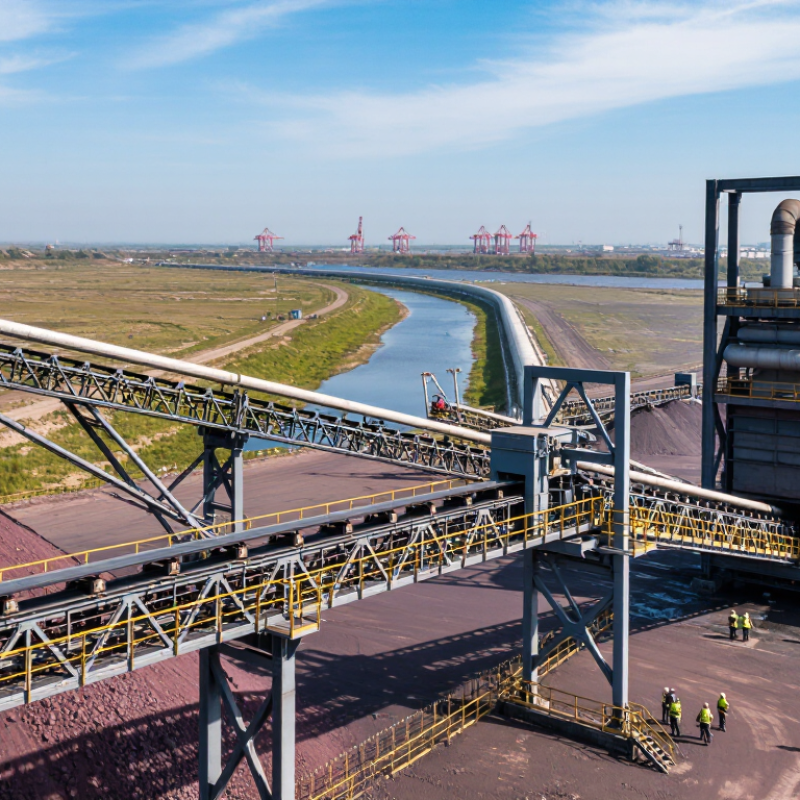
In 2026, a steel cord conveyor belt is defined by its internal reinforcement, not its cover color or marketing label. Longitudinal steel cords carry tension across long, heavy-duty conveyor routes. Rubber compounds protect them from abrasion, heat, moisture, and impact. ISO 15236-1 specifies key requirements for steel cord belt construction, including cord spacing, strength, and cover performance.
The main types include standard high-tension belts, abrasion-resistant belts, heat-resistant belts, and rip-detection designs. Pipe conveyor belts use steel cords for enclosed material transport and tighter curves. High-tension ST belts remain important in mining, ports, and power materials handling. Grand View Research valued the global conveyor belt market at about USD 5.1 billion in 2023 and projects continued growth through 2030. MarketsandMarkets also identifies mining as a major demand sector, driven by longer conveyor systems and higher carrying capacities.
But strength alone is not enough. A belt may meet its rated tension and still fail through poor splicing, edge damage, or trapped moisture. Field inspections should check cord exposure, splice alignment, cover cracking, and pulley conditions. Small installation errors can become expensive failures. The 2024 Global Conveyor Belt Market report by Research and Markets highlights durability and predictive maintenance as major purchasing factors. That point deserves caution: forecast numbers vary, and real service life depends heavily on material size, temperature, loading, and maintenance discipline.

In 2026, the most widely used steel cord conveyor belts remain standard high-tensile belts for long-distance, heavy-duty material transport. They use longitudinal steel cords to carry high loads with limited belt elongation. Mining, ports, power plants, and aggregate facilities commonly select this type. It performs well under continuous loading, but splice quality can decide the real service life. A strong belt cannot compensate for a poorly aligned joint.
Fire-resistant belts are also widely used in enclosed mines, tunnels, and processing buildings. Their covers are designed to reduce flame spread and meet application-specific safety requirements. Abrasion-resistant belts suit crushed stone, iron ore, and other sharp materials. Heat-resistant versions handle hot clinker, sintered material, and heated aggregates. However, “heat-resistant” is not a single performance level. Temperature, exposure time, and material contact area must be checked together.
Rip-resistant steel cord belts are increasingly chosen where sharp objects may cut the cover and expose the cords. They often include transverse reinforcement, which helps limit longitudinal tearing after an impact. Oil-resistant and cold-resistant types serve more specialized routes, especially in recycling, fertilizer, and outdoor operations. Field inspections should compare cover wear, splice condition, belt tracking, and cord corrosion. Standards such as ISO 15236, ISO 340, and ISO 284 can support specification work, but laboratory ratings may not match every site. That gap deserves attention.
| Steel Cord Conveyor Belt Type | Primary Construction or Feature | Typical Strength Range | Common Applications | Main Advantages | Main Limitations | Relative Use in 2026 |
|---|---|---|---|---|---|---|
| Standard Steel Cord Belt | Longitudinal steel cords embedded in rubber with transverse reinforcement and protective covers. | Commonly selected from approximately ST1000 to ST5400; higher ratings are available for specialized systems. | Bulk handling of coal, iron ore, copper ore, limestone, aggregates, and overburden. | High tensile strength, low elongation, long conveying distances, and good load-carrying capacity. | Requires precise installation, correct pulley sizing, and careful splice design. | Very widely used as the general-purpose steel cord option. |
| High-Tensile Steel Cord Belt | Higher-grade or more closely engineered steel cords designed for high belt tension. | Often above ST2500 and commonly engineered for ST4000 to ST7500-class systems. | Long overland conveyors, large open-pit mines, high-capacity port terminals, and steep terrain routes. | Supports high tonnage, long centers, and reduced belt width compared with some lower-strength designs. | Higher capital cost and greater sensitivity to alignment, dynamic tension, and splice quality. | Widely used in large-scale mining and infrastructure projects. |
| Fire-Resistant Steel Cord Belt | Steel cord carcass combined with rubber compounds tested for flame resistance and reduced flame spread. | Available across many standard and high-tensile ratings; the required rating depends on conveyor tension. | Underground coal mines, enclosed transfer systems, tunnels, and facilities with elevated fire-safety requirements. | Improves fire performance and supports compliance with applicable safety standards. | Fire resistance does not eliminate ignition risks; inspection and fire-protection systems remain necessary. | Widely used where regulatory or site fire requirements apply. |
| Heat-Resistant Steel Cord Belt | Heat-resistant cover rubber formulated for elevated material and ambient temperatures. | Strength classes vary from moderate to high tension; temperature capability depends on the rubber grade and exposure time. | Cement plants, clinker handling, sinter plants, foundries, lime processing, and hot ash conveying. | Better resistance to thermal aging, hardening, cracking, and cover degradation than general-purpose compounds. | Excessive temperature, long dwell time, or hot fines can still shorten service life. | Widely used in high-temperature mineral and cement applications. |
| Oil-Resistant Steel Cord Belt | Oil-resistant cover compounds designed to limit swelling, softening, and loss of abrasion resistance. | Produced in multiple strength classes; the correct grade depends on belt tension and oil type. | Petroleum coke, oily minerals, recycled materials, wood products, fertilizers, and process materials containing oils. | Maintains cover integrity when exposed to selected mineral, vegetable, or process oils. | Oil resistance is compound-specific; incompatible chemicals can damage the cover or bonding layers. | Moderately used in specialized material-handling environments. |
| Abrasion-Resistant Steel Cord Belt | Cover rubber optimized for resistance to cutting, gouging, and wear from sharp or coarse bulk solids. | Available across a broad range of ST ratings, selected according to conveyor tension and impact conditions. | Iron ore, hard rock, crushed stone, slag, quarry products, and heavy-duty mining transfer points. | Improved cover wear life and better resistance to impact-related surface damage. | A tougher cover may increase resistance to flexing and does not replace proper impact-bed and chute design. | Very widely used for abrasive bulk materials. |
| Rip-Detection or Rip-Resistant Steel Cord Belt | Transverse reinforcement elements or conductive detection loops designed to help limit or identify longitudinal tears. | Available for standard and high-tension conveyors, subject to the belt construction and detection system. | Remote mine conveyors, high-capacity overland systems, tunnels, and routes where belt damage can cause major downtime. | Can reduce the risk or duration of longitudinal belt damage when integrated with suitable monitoring equipment. | Adds system complexity and does not prevent every type of tear or puncture. | Increasingly used on critical, high-consequence conveyors. |
| Low-Rolling-Resistance Steel Cord Belt | Belt construction and rubber compounds engineered to reduce indentation rolling resistance under load. | Typically specified for medium- to high-tension long-distance conveyor systems. | Long overland conveyors, energy-sensitive mining routes, and high-capacity bulk terminals. | May reduce operating energy, drive demand, and long-term power consumption when system conditions are suitable. | Benefits depend on load, idler quality, belt temperature, alignment, and complete conveyor design. | Growing use in projects emphasizing energy efficiency. |
Note: ST strength designations and temperature, fire, oil, and abrasion performance must be selected according to the applicable conveyor-belt standard, operating conditions, material properties, belt width, and splice design.
What Are the 2026 Top Types of Steel Cord Conveyor Belts?
Steel cord conveyor belts differ mainly in strength and internal construction. Their strength is usually specified in newtons per millimeter, such as ST1000 or ST4000. A higher rating uses thicker or stronger longitudinal steel cords. These belts suit long distances, steep lifts, and heavy materials such as ore or crushed stone.
Construction affects performance just as much. Steel cords run lengthwise and carry the main tension. Transverse reinforcement helps resist impact, tearing, and edge damage. Rubber must penetrate around each cord to limit corrosion and improve bonding. Cover thickness also varies. Thick covers handle sharp rock better, while thinner covers can reduce resistance and energy demand.
A common mistake is choosing the highest strength available. Bigger cords may require larger pulleys, stronger splices, and careful alignment. They can also reduce flexibility.
Splice quality matters greatly.
During inspection, technicians should check cord spacing, rubber adhesion, pulley diameter, and cover wear. A belt may have excellent laboratory strength but perform poorly with weak joints or poor tension control. Field measurements should guide selection, especially where loading changes suddenly. Construction details often decide service life more than the strength label alone. In some installations, the calculated design looks correct, yet repeated impact exposes a weakness in the cover or splice. That possibility deserves honest review.
Common steel cord conveyor belt classes are identified by nominal tensile strength. The values below are standardized strength classes expressed in newtons per millimetre (N/mm), rather than company or brand specifications.
ST1000 to ST2000 belts commonly serve general bulk conveying, moderate lift, and medium-distance applications.
ST2500 to ST4000 belts are selected for heavier loads, longer conveyors, and higher conveying capacity.
ST4500 to ST7500 belts use closely spaced longitudinal steel cords and are intended for very long or high-capacity systems.
Steel cord belts generally consist of longitudinal steel cords embedded in rubber, with rubber covers protecting the belt surface. Depending on the application, transverse reinforcement, impact-resistant rubber, abrasion-resistant covers, and special splice designs may be added. Higher tensile classes normally require larger or stronger cords, optimized cord spacing, and correspondingly stronger pulley, splice, and take-up systems.
What Are the 2026 Top Types of Steel Cord Conveyor Belts?
In 2026, high-tensile steel cord belts remain essential for long-distance bulk handling. Their reinforced cables carry heavy loads across mines, ports, and power plants. They suit steep terrain and continuous operation where belt replacement is difficult. Wide belts also reduce transfer points and material spillage.
Abrasion-resistant steel cord belts work well with crushed rock, iron ore, clinker, and sharp aggregate. Their thick covers face repeated impact from large falling material. Heat-resistant types are used near furnaces, cement plants, and hot ash lines. They need carefully selected covers, because excessive heat can harden rubber and weaken flexibility. Flame-retardant belts support enclosed industrial conveyors where fire risk demands tighter control. Oil-resistant versions handle coal blends, recycled materials, and oily mineral products more reliably.
Application details should guide the belt type, not catalog labels alone. Engineers check material size, drop height, belt speed, temperature, incline, and cleaning methods. Splice design matters too. A strong belt can still fail at a poor joint. Small errors matter. Regular inspections should examine cover cracks, cord exposure, mistracking, and unusual vibration. Rip-detection systems can limit damage after a sharp object penetrates the belt, though they cannot replace good loading practice. Selection is sometimes imperfect; operating conditions change, and an initially suitable belt may later need a different cover or maintenance schedule.
Businesses should choose a belt from operating evidence, not a catalog ranking. Standard steel cord belts suit long, high-tension routes carrying ore, coal, limestone, or aggregate. Rip-resistant versions add transverse protection where sharp rocks fall from loading chutes. Fire-resistant covers support enclosed facilities and underground applications. Oil-resistant covers fit material containing petroleum or vegetable oils. The cord remains important, but the cover compound often decides service life.
Capacity and distance should guide the first decision. CEMA’s Belt Conveyors for Bulk Materials, 7th Edition, recommends checking belt tension, lump size, loading method, pulley diameter, and take-up movement. A higher ST rating is not automatically better. It can increase splice demands and installation cost.
Speed matters. A 2024 Grand View Research assessment valued the global conveyor belt market at approximately US$4.4 billion in 2023, reflecting wider investment in automated bulk handling. However, market growth does not justify overspecification.
Ask for verified test results under comparable conditions. ISO 15236-1 provides requirements for steel-cord belt construction and dimensions. Confirm tensile strength, cord spacing, rubber grade, troughability, and splice performance. Measure actual moisture, temperature, impact height, and chemical exposure.
Field experience shows that loading zones often fail first. A belt can look perfect elsewhere.
Not always.
One practical mistake is selecting by breaking strength alone; return idler alignment and cleaning quality may matter more. Recheck those details before purchase.


For those larger-sized parts, or smaller quantity runs, we have 2 independent powder coat booths and ovens. The quality, durability and affordability of today’s powder coating finishes make this the process of choice for world-class companies.
Powder coating advantages over other forms of coating are many. Materials used in the Powder coating process can be metals and non-metals that come in a multitude of thicknesses, textures, colors, etc. Another of Powder coating’s biggest advantages over conventional coatings is its ability to create finishes in many different textures. Powder Coating Booths allow us the ability to apply these advantages to large products.
Tri-State Fabricators runs a full-service conveyor line for painting. Wet painting can provide protection or decoration to many different part styles. From start to finish, every project is easier to undergo random and point-based inspection by our skilled painting team.
Advantages to our Wet Paint Line are these lines start with product prep and ends with a thorough inspection of a high quality finished product. Our ability to complete large and small projects with a superior finish and doing so in a timely and economical fashion. This passes along the savings in production to our customers. When powder coating ins not an option, our Wet Paint Line gets the job done right the first time.
When the parts get big and heavy we roll-out our custom paint racks and oversize booth. By utilizing our partnerships with all the major paint brands, we can match virtually any color with wet paint.
The advantages of having access to a Wet Paint Booth are many. Large projects of many different shapes can be loaded into the booth. The Wet Paint Booth offers an environment that is much more controlled than a typical parts painting operation.
Not only are they used because of their controlled environment, but they’re are also advantageous when it comes to applying paint to parts that are needed in industries that require specialty coatings such as medical, aerospace, etc.
Our military forces have some very high standards when it comes to the finish of their vehicles and equipment. From the first pre-treatment step to final coat, it takes a great deal of knowledge and experience to protect the men and women of our armed forces. They deserve only the best, and Tri-State Fabricators provides it.
All of our processes are closely monitored by our staff and management teams. Both of which are highly trained in the processes of metal fabrication and finishing. Tri-State Fabricators’ goal is to always fully satisfy each and every customer, including the military. We will always put a 110% into what we do.
Abrasive media blasting is an excellent way to remove old paint, rust, and increase the paint/powder adhesion. Glass beads produce a much smoother and brighter finish than angular abrasives; leaving the part clean yet without any dimensional change. Chemically inert and environmentally friendly, we can recycle our beads approximately 30 times; making them a more preferred method of metal cleaning or surface finishing.
Advantages to Glass Bead Blasting are many. Glass bead blast media is used when a project is needing rough surfaces need to become smooth for applications of coatings such as paint. It is typically used to clean paint and rust from a product surface without deforming the surface it is being used on. Overall, compared to many other blasting media, Glass Bead Blasting is a very economical choice and those savings are always passed on to our customers.
Tri-State Fabricators utilize a zinc phosphate wash to clean and etch the material to ensure the best paint adhesion possible. The unique design of our 3-stage wash system does the work like a 5-stage. From Cleaning and rinsing to conversion coating and post-treatment, Our Part Washing process is a complete service and works throughout the fabrication service and the finishing service.
Along with the previously mentioned benefits, Curing is a vital chemical reaction that leaves the product finish hard and relatively safe from mild abrasion and aggressive corrosion. This process can be done in more than one way; ambient air-dry or in curing ovens at temps that exceed 240°.
From fixing paint mistakes (someone else’s of course) to simply cleaning our paint line hooks, our burn-off oven is put to good use. After a quick burn-off, a little clean up, and a fresh coat of paint, your parts will look better than new.
Why does our Burn-Off Oven work so well? Because super heating the air around parts turns the materials into ashes. From paint and powder coatings to rubber and machining oils, high temps do the job without degrading the integrity of the part.
Masking is a vital part of producing high quality products. We have die-cut masking patterns to protect machined surfaces as well as a wide range of plugs and caps to protect threaded holes and bolts. We provide permanent and temporary masking.
Masking allows the selected sections of a product to be protected from a fabrication or finishing service. This can be with both chemicals when etching and tapes, paints when only finishing just a section of the product. Masking is great in aiding the customization process of a project.
Screen printing is a photographic process that transfers artwork onto a porous nylon screen which allows colored ink to flow through the screen and be deposited on an aluminum or plastic component. We can generally have just about any design created onto a screen for your parts.
Some of the advantages of Screen Printing are, brand recognition for your business displaying on your products, assembly instructions, product warnings/hazards, etc. Tri-State Fabricators produces Screen Printing of the highest quality so you know it’s durable.
Metal Finishing is the art of treating the exterior portion of product, often metal but can also be made of other materials, so that the surface is clean and free of any debris. Then the process of applying coats or either paint of powder coat takes place. This coating process improves the quality of the product in both appearance and resistance to wear and corrosion.
Tri-State Fabricators, Inc., understands that a project typically isn’t complete until a high-quality finish has been added to your product. This is why our painting and powder coating teams continuously inspect the products throughout the Metal Finishing process.

