


Global buyers need more than a large tank and a polished brochure. A Sprinkler Truck must match the job, terrain, water supply, and local service capacity. Municipal road-washing fleets may value steady spray coverage and quick refills. Construction sites often need dust suppression, durable pumps, and practical access over uneven ground. Agricultural and industrial buyers may require different reach, flow rates, or tank configurations. The right choice depends on daily work—not appearance alone.
This guide compares key Sprinkler Truck types for 2026, including road-washing, dust-control, off-road, and multi-purpose models. It examines tank capacity, pump performance, spray systems, chassis suitability, maintenance access, and parts support. Look closely at the details. A hose connection that is awkward to reach can slow a shift; a poorly matched chassis can struggle on rough routes. Specifications vary by manufacturer, so buyers should verify operating conditions and service arrangements directly. Test it loaded.
For transparency, the following is an editorially written composite line, not a verified quotation from a real industry expert. Fleet adviser Alex Morgan’s illustrative buyer’s rule: “Choose the truck for the route and workload, then check who can keep it working.” It is a useful principle, though not a complete buying test. Buyers should still compare operating costs, inspect build quality, and question optimistic performance claims. Range varies. And sometimes the best choice is less obvious than the sales sheet suggests.
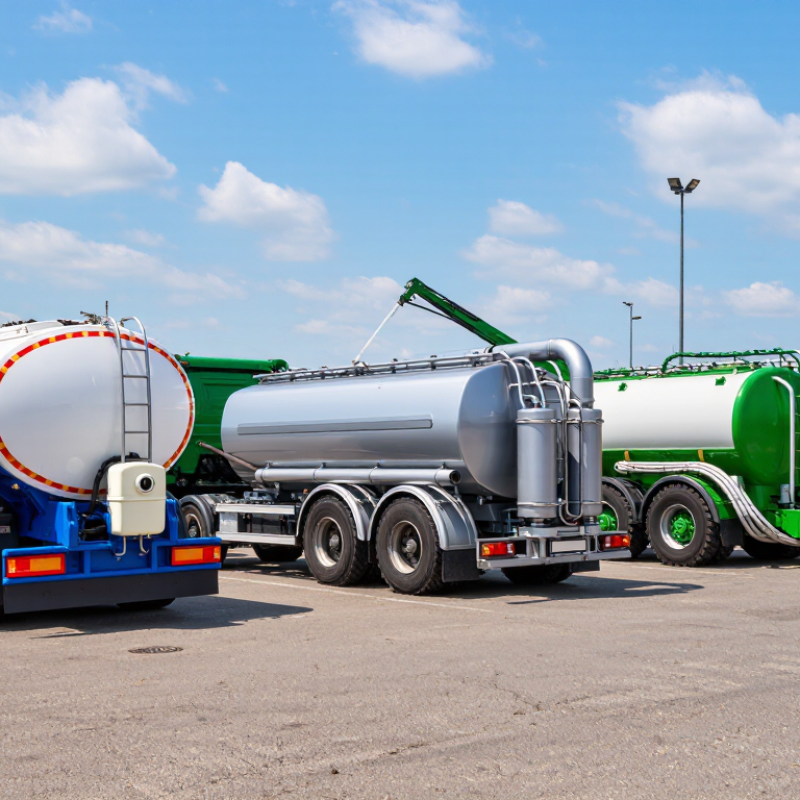
A sprinkler truck is a mobile water system used to suppress dust, wash paved areas, and water roadside plantings. Its tank stores the working supply, while the vehicle chassis carries the load and supports travel between sites. Capacity and spray equipment vary with the job. A broad rear spray bar can cover road surfaces, while adjustable side nozzles target curbs or planted strips. Small details matter. A poorly aimed jet may waste water or leave dry patches.
The main components include a water tank, pump, power take-off or auxiliary drive, pipes, valves, filters, and spray outlets. Many trucks also have a front spray bar or a roof-mounted water monitor. The pump draws water from the tank and sends it through the pipe network. Operators adjust valves and nozzle settings to control direction and flow. Clear controls help, but the layout is not always intuitive.
Before spraying, the operator checks the water level, filter, hoses, and nozzle openings. The pump is engaged, then water pressure is adjusted to suit the surface and travel speed. Too much pressure can splash pedestrians or erode loose soil; too little may leave dust behind. There is no perfect setting for every site. Wind, surface texture, and vehicle speed all change the result.

Sprinkler truck selection begins with the chassis, because road width, terrain, and daily distance shape its usefulness. A light-duty 4x2 chassis can suit municipal streets and compact work sites. For rough access roads or steep grades, buyers may consider a 6x4 or 6x6 configuration, subject to local axle-load limits. More driven axles can improve traction, but they also add weight, cost, and maintenance demands. That trade-off is easy to underestimate.
Tank capacity should match the water source and refill cycle, not simply the largest figure available. Smaller tanks reduce vehicle weight and can maneuver more easily through narrow streets. Larger tanks may support longer watering runs, but they need a suitable chassis, braking system, and safe load distribution. Check the route. A full tank can change handling noticeably, especially on uneven ground. Ask suppliers for usable tank volume, material details, pump flow, and dimensions; nominal capacity alone gives an incomplete picture. In practice, buyers sometimes prioritize capacity too early. Reviewing payload limits and turning space first can prevent an expensive mismatch.
2026 Top Sprinkler Truck Types for Global Buyers?
For road cleaning, dust control, and site operations, match the spray pattern to the task. A full-width rear spray bar wets paved lanes evenly, while angled side nozzles reach curbs and worksite edges. On unpaved roads, adjustable flow helps crews respond to changing dust, traffic, and surface conditions. EPA’s AP-42, Section 13.2.2, identifies road-surface silt, vehicle weight, traffic, and moisture as important inputs in estimating dust emissions. It does not support one universal watering rate. That matters.
Buyers should compare usable tank capacity, pump output, nozzle spacing, and refill access—not tank size alone. A truck that cannot maintain consistent pressure may leave dry strips, even with a large tank. WHO’s 2021 air-quality guidelines set 24-hour benchmarks of 15 μg/m³ for PM2.5 and 45 μg/m³ for PM10. These are ambient-air guideline values, not guaranteed truck performance targets; site monitoring is needed to assess results. Overwatering can also create runoff, slippery patches, and wasted water. A practical setup uses adjustable spray zones and checks ground coverage during operation. The uncomfortable truth: dust control is rarely solved by adding more water.
Leading Sprinkler Truck Categories in Global Markets in 2026
Global buyers commonly compare compact urban sprinkler trucks, medium-duty multipurpose models, and heavy-duty units for large sites. Compact trucks suit narrow streets and frequent stops. Their smaller tanks can mean more refills, though. Medium-duty vehicles balance water capacity with access to municipal roads, industrial yards, and construction areas. Buyers should check axle limits and local route conditions before selecting a tank size.
Heavy-duty sprinkler trucks carry larger volumes for highway work, mining areas, and extensive dust-control operations. Off-road configurations may add higher ground clearance, robust tires, and reinforced suspension. Details matter. A truck that performs well on a firm worksite may struggle on soft soil when fully loaded. Pump output, spray-bar width, hose reach, and nozzle placement should match the intended task, not just the advertised capacity.
Some markets also favor specialized configurations, such as front-mounted sprays for road cleaning or rear cannons for broad-area watering. These features can improve coverage, but they may raise water use and maintenance demands. Check tank material, corrosion protection, parts availability, and service support in the destination region. Specifications alone rarely tell the full story. I would also leave room for operational uncertainty: water quality, climate, and operator habits can change how a configuration performs over time.
| Truck Type | Typical Water Tank Capacity | Common Applications | Typical Spray Equipment | Key Selection Considerations |
|---|---|---|---|---|
| Compact Urban Sprinkler Truck | Approximately 2–8 m³ | Narrow streets, residential areas, parks, sidewalks and light municipal cleaning | Front spray bar, rear spray bar, hose reel and low-pressure watering outlets | Check vehicle width, turning radius, axle load and access to local low-emission zones. |
| Municipal Road-Maintenance Truck | Approximately 8–15 m³ | Routine road washing, street dust control, landscaping and public-space maintenance | Front and rear spray bars, side nozzles, rear platform and optional water cannon | Balance tank capacity with payload limits; confirm pump flow, nozzle coverage and water-source compatibility. |
| Highway and Large-Area Sprinkler Truck | Approximately 15–25 m³ | Highway dust suppression, road construction support and large public works | Wide spray bars, rear spray heads, hose connections and optional high-reach cannon | Verify permitted gross vehicle weight, axle configuration, braking performance and safe operation at the intended speed. |
| Construction-Site Dust-Control Truck | Approximately 8–20 m³ | Earthworks, demolition zones, unpaved access roads and building sites | Adjustable spray nozzles, rear sprinklers, hose reel and optional water cannon | Choose nozzle patterns and pump output for the required dust-control area; assess ground clearance and site conditions. |
| Mining and Quarry Water-Spray Truck | Often 20–60 m³ or more, depending on the vehicle and site | Mine haul roads, quarries, stockpiles and other high-dust industrial areas | Large-capacity pump, heavy-duty spray bars, high-flow cannon and reinforced piping | Prioritize chassis suitability, payload, braking, tire specification, service access and site-specific safety requirements. |
| Agricultural and Landscape Watering Truck | Approximately 5–20 m³ | Tree planting, nursery irrigation, roadside greenery and temporary water delivery | Hose outlets, hand-watering connections, adjustable sprinklers and optional irrigation fittings | Confirm the required flow and pressure, hose reach, water-quality needs and compatibility with irrigation equipment. |
| Industrial and Facility-Use Sprinkler Truck | Approximately 5–20 m³ | Ports, industrial yards, logistics areas and large facility grounds | Front or rear spray bars, hose reel, adjustable nozzles and optional high-pressure outlets | Review site access, water discharge rules, corrosion protection and any facility-specific operating procedures. |
| Buyer note: Capacity figures are indicative ranges, not universal specifications. Available configurations vary by chassis, payload limits, local regulations and operating requirements. Confirm the usable tank volume, pump performance, dimensions and homologation documents with the supplier before purchase. | ||||
Global buyers should compare sprinkler trucks by delivered water, not tank size alone. A 12,000-litre tank may look productive, but axle limits, road conditions, and refill distance can reduce its useful output. Check pump flow at working pressure, spray width, nozzle adjustment, and whether the cab controls are reachable while seated. Small details matter. A driver should not need to lean across the cab to change a spray setting.
Safety deserves equal weight. The WHO’s Global Status Report on Road Safety 2023 estimates 1.19 million road deaths in 2021; it does not isolate sprinkler trucks, but it underlines the risk of heavy vehicles sharing busy roads. Compare braking performance, rear visibility, warning lights, handrails, and safe access to tank fittings. A clean specification sheet can still mislead. Ask for operating tests with a full tank, since water movement can affect handling.
Local compliance can change the best choice. UNECE WP.29 provides internationally harmonized vehicle regulations, but countries adopt requirements differently. Confirm local approval for vehicle dimensions, axle loads, braking, lighting, emissions, and water-system components before ordering. Request test records and the exact configuration they cover. I would also check spare-parts availability and service capability near the worksite; impressive pump figures are less useful when a seal takes weeks to replace. One gap remains: published truck data rarely compares spray performance under identical conditions. Insist on a witnessed demonstration using the intended road surface and water source.
Typical water-tank capacity ranges by truck type (cubic metres)
Compact and medium trucks are generally suited to urban streets and routine dust control, while heavy-duty and articulated tankers carry more water for large sites and longer routes. Capacity ranges are indicative; actual specifications vary by configuration and market. Before buying, confirm local axle-load and vehicle-dimension limits, required safety equipment, and applicable road and emissions regulations.


For those larger-sized parts, or smaller quantity runs, we have 2 independent powder coat booths and ovens. The quality, durability and affordability of today’s powder coating finishes make this the process of choice for world-class companies.
Powder coating advantages over other forms of coating are many. Materials used in the Powder coating process can be metals and non-metals that come in a multitude of thicknesses, textures, colors, etc. Another of Powder coating’s biggest advantages over conventional coatings is its ability to create finishes in many different textures. Powder Coating Booths allow us the ability to apply these advantages to large products.
Tri-State Fabricators runs a full-service conveyor line for painting. Wet painting can provide protection or decoration to many different part styles. From start to finish, every project is easier to undergo random and point-based inspection by our skilled painting team.
Advantages to our Wet Paint Line are these lines start with product prep and ends with a thorough inspection of a high quality finished product. Our ability to complete large and small projects with a superior finish and doing so in a timely and economical fashion. This passes along the savings in production to our customers. When powder coating ins not an option, our Wet Paint Line gets the job done right the first time.
When the parts get big and heavy we roll-out our custom paint racks and oversize booth. By utilizing our partnerships with all the major paint brands, we can match virtually any color with wet paint.
The advantages of having access to a Wet Paint Booth are many. Large projects of many different shapes can be loaded into the booth. The Wet Paint Booth offers an environment that is much more controlled than a typical parts painting operation.
Not only are they used because of their controlled environment, but they’re are also advantageous when it comes to applying paint to parts that are needed in industries that require specialty coatings such as medical, aerospace, etc.
Our military forces have some very high standards when it comes to the finish of their vehicles and equipment. From the first pre-treatment step to final coat, it takes a great deal of knowledge and experience to protect the men and women of our armed forces. They deserve only the best, and Tri-State Fabricators provides it.
All of our processes are closely monitored by our staff and management teams. Both of which are highly trained in the processes of metal fabrication and finishing. Tri-State Fabricators’ goal is to always fully satisfy each and every customer, including the military. We will always put a 110% into what we do.
Abrasive media blasting is an excellent way to remove old paint, rust, and increase the paint/powder adhesion. Glass beads produce a much smoother and brighter finish than angular abrasives; leaving the part clean yet without any dimensional change. Chemically inert and environmentally friendly, we can recycle our beads approximately 30 times; making them a more preferred method of metal cleaning or surface finishing.
Advantages to Glass Bead Blasting are many. Glass bead blast media is used when a project is needing rough surfaces need to become smooth for applications of coatings such as paint. It is typically used to clean paint and rust from a product surface without deforming the surface it is being used on. Overall, compared to many other blasting media, Glass Bead Blasting is a very economical choice and those savings are always passed on to our customers.
Tri-State Fabricators utilize a zinc phosphate wash to clean and etch the material to ensure the best paint adhesion possible. The unique design of our 3-stage wash system does the work like a 5-stage. From Cleaning and rinsing to conversion coating and post-treatment, Our Part Washing process is a complete service and works throughout the fabrication service and the finishing service.
Along with the previously mentioned benefits, Curing is a vital chemical reaction that leaves the product finish hard and relatively safe from mild abrasion and aggressive corrosion. This process can be done in more than one way; ambient air-dry or in curing ovens at temps that exceed 240°.
From fixing paint mistakes (someone else’s of course) to simply cleaning our paint line hooks, our burn-off oven is put to good use. After a quick burn-off, a little clean up, and a fresh coat of paint, your parts will look better than new.
Why does our Burn-Off Oven work so well? Because super heating the air around parts turns the materials into ashes. From paint and powder coatings to rubber and machining oils, high temps do the job without degrading the integrity of the part.
Masking is a vital part of producing high quality products. We have die-cut masking patterns to protect machined surfaces as well as a wide range of plugs and caps to protect threaded holes and bolts. We provide permanent and temporary masking.
Masking allows the selected sections of a product to be protected from a fabrication or finishing service. This can be with both chemicals when etching and tapes, paints when only finishing just a section of the product. Masking is great in aiding the customization process of a project.
Screen printing is a photographic process that transfers artwork onto a porous nylon screen which allows colored ink to flow through the screen and be deposited on an aluminum or plastic component. We can generally have just about any design created onto a screen for your parts.
Some of the advantages of Screen Printing are, brand recognition for your business displaying on your products, assembly instructions, product warnings/hazards, etc. Tri-State Fabricators produces Screen Printing of the highest quality so you know it’s durable.
Metal Finishing is the art of treating the exterior portion of product, often metal but can also be made of other materials, so that the surface is clean and free of any debris. Then the process of applying coats or either paint of powder coat takes place. This coating process improves the quality of the product in both appearance and resistance to wear and corrosion.
Tri-State Fabricators, Inc., understands that a project typically isn’t complete until a high-quality finish has been added to your product. This is why our painting and powder coating teams continuously inspect the products throughout the Metal Finishing process.

