What Are the 2026 Top Solar Energy Light Pole Types?

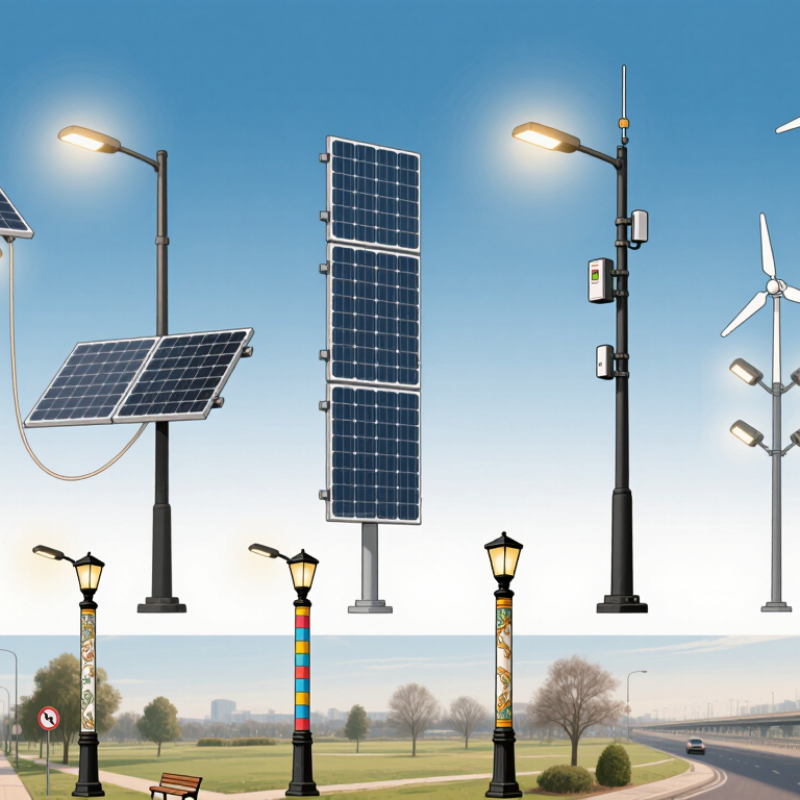
As cities pursue lower-carbon infrastructure, the solar energy light pole is becoming more adaptable, intelligent, and application-specific. In 2026, buyers will likely compare several leading designs rather than choose one universal solution. Integrated all-in-one poles combine panels, batteries, controllers, and LED fixtures in a compact housing. Split-type systems separate these components, allowing larger panels and easier servicing. Vertical photovoltaic poles can perform better where roof-like panel angles face heavy snow, dust, or limited space.

Other important options include smart solar poles with remote monitoring, motion sensors, adaptive dimming, and emergency communication functions. Hybrid solar-wind poles may suit coastal or exposed areas, although added mechanical parts can increase maintenance needs. Decorative and high-mast versions also deserve attention, especially for parks, highways, campuses, and public squares. Each type has a different balance of brightness, autonomy, appearance, durability, and installation cost.

Practical selection begins with the site. Consider sunlight hours, winter temperatures, wind load, soil conditions, traffic patterns, and nighttime safety requirements. Battery capacity should match expected cloudy periods, not only average weather. Check LED output, photovoltaic efficiency, IP and IK protection, controller quality, and local installation standards. Real projects often reveal gaps between catalog figures and field performance.

There is no perfect pole.

Some predicted 2026 trends may develop unevenly. Therefore, this guide compares the top types through measurable specifications, maintenance experience, and realistic use cases. It also highlights compromises, because reliable lighting depends on careful design more than impressive marketing.
What Are the 2026 Top Solar Energy Light Pole Types?

Solar Energy Light Poles: Definition, Structure, and Operating Principles

What Are the 2026 Top Solar Energy Light Pole Types?

Solar energy light poles are outdoor lighting systems that generate and store electricity on site. They usually combine a photovoltaic panel, lithium battery, charge controller, LED lamp, pole, and foundation. During daylight, the panel converts sunlight into electricity. The controller manages charging and protects the battery. After dusk, a light sensor activates the LED fixture.

In 2026, common designs include all-in-one poles, split-type poles, hybrid solar poles, and smart modular poles. All-in-one models place the panel, battery, and lamp in one compact housing. Split systems separate the panel from the lamp, which helps when shade affects the installation area. Hybrid poles can connect to the grid during extended cloudy periods. Smart modular poles may adjust brightness through motion sensors or remote monitoring. Field experience shows that layout matters as much as rated power. A larger panel cannot fully solve heavy shade or poor orientation.

Tips: Check winter sunlight, battery capacity, wind loading, and soil conditions before choosing a pole. Keep the panel clear of dust and nearby branches. Confirm the controller includes low-voltage protection. A high wattage label can mislead. Real sites are rarely perfect. Drainage, salt air, and uneven pavement may shorten service life, so inspection records deserve attention. A careful design review often prevents expensive foundation changes later.

Key Types of Solar Energy Light Poles Available in 2026

Key Types of Solar Energy Light Poles Available in 2026

Solar energy light poles are becoming more specialized in 2026. IRENA reported 1,865 GW of global solar capacity by the end of 2024. This expanding market supports wider component choices. All-in-one poles combine the panel, battery, controller, and LED fixture above the shaft. They suit parks, walkways, and small parking areas. Installation is fast. However, compact designs may provide less battery capacity during long cloudy periods.

Split-type poles place the solar panel separately from the lamp and battery. This layout allows larger panels, adjustable angles, and easier maintenance. It works well beside roads, industrial yards, and open public spaces. Hybrid solar poles combine photovoltaic power with grid electricity or another approved backup source. They offer steadier lighting during winter and heavy rain. The trade-off is greater wiring complexity and higher installation cost.

Smart solar poles add motion sensors, remote monitoring, dimming, and fault alerts. Some vertical-panel designs perform better where rooftops, trees, or narrow streets limit sunlight. The U.S. Department of Energy notes that controls and adaptive lighting can reduce energy use substantially, although savings depend on operating schedules. In practice, pole spacing, shading, battery temperature, and drainage matter as much as panel wattage. A common mistake is choosing the brightest fixture first. I would also question advertised autonomy figures, because testing conditions are rarely identical. IEA’s Renewables 2024 report expects solar PV to dominate renewable growth through 2030, but local performance still needs field verification.

How to Compare Solar Light Pole Performance and Features

Solar light poles in 2026 are not judged by brightness alone.

Their real value appears after cloudy nights, seasonal temperature changes, and repeated maintenance visits. The main types include all-in-one LED poles, split-system poles, and hybrid solar poles with backup charging. Each design suits different sites. All-in-one units simplify installation, while split systems allow larger panels and easier component replacement. Hybrid models offer stronger reliability where darkness lasts longer.

Compare performance through measurable details. Check LED efficacy, daily operating hours, battery capacity, and solar charging time. A pole producing 120 lumens per watt may still disappoint if its battery stores too little energy. Ask for autonomy data based on winter conditions, not only clear summer days. Lithium battery chemistry usually supports better cycle life, but thermal protection remains important. Small details matter.

Inspect the pole structure as carefully as the electronics.

Confirm wind-load ratings, corrosion protection, cable sealing, and IP and impact resistance levels. Motion sensors can reduce energy use on quiet roads, although frequent activation may affect comfort and battery planning. Remote monitoring helps identify weak charging early. In field evaluations, I also measure illumination at ground level, not just beneath the fixture. A bright first-night test can mislead. Even careful comparisons have limits, because shade, dust, and local weather change results. Thin poles may look elegant, but their foundation requirements deserve closer review.

Best Applications for Different Solar Light Pole Types

For 2026 projects, solar light poles should be selected by application, not appearance. From site assessments, I find integrated poles fit pathways, parks, and small parking areas. Their panel, battery, controller, and LED head share one housing. Installation is faster, but limited battery space can reduce overnight endurance. That trade-off matters.

Split-type poles suit wide roads, campuses, and locations with partial shade. A separate panel can face the best sunlight, while the luminaire stays above the traffic zone. Technicians can replace batteries more easily inside a ground-accessible cabinet. However, longer cables require careful voltage-drop and waterproofing checks. Poor routing creates avoidable faults. For highways and large depots, high-mast solar systems provide broader coverage. They need stronger foundations, wind-load calculations, and disciplined spacing.

Smart solar poles work well in municipal streets, pedestrian zones, and security-sensitive entrances. Dimming schedules, motion sensors, and remote diagnostics can reduce wasted energy. Connectivity should not become a single point of failure. Keep access practical. I recommend testing each design through cloudy-day scenarios before approving the layout. Check illumination levels, battery reserve, glare, and maintenance access. I have seen attractive layouts fail here. Light quality matters. Local structural and electrical requirements must guide the final specification.

What Are the 2026 Top Solar Energy Light Pole Types?

Typical LED power ranges and best applications for common solar light pole designs

All-in-one: Compact streets, pathways, parks, and residential roads where simple installation is important.
Split-type: High-traffic roads, parking areas, and public spaces requiring larger panels, batteries, or higher lighting output.
Vertical PV: Narrow streets, snowy or windy locations, and sites with limited horizontal mounting space.
Solar-grid hybrid: Urban roads and critical facilities that need solar energy with grid backup during extended cloudy periods.
Smart solar: Smart-city roads, campuses, and facilities using motion dimming, remote monitoring, and adaptive lighting controls.

Values show representative LED power levels commonly used in solar roadway-lighting designs; final specifications depend on road classification, lighting standards, solar resource, battery autonomy, and local weather conditions.


Installation, Maintenance, and Selection Considerations in 2026

What Are the 2026 Top Solar Energy Light Pole Types?

Installation, Maintenance, and Selection Considerations in 2026

In 2026, all-in-one solar light poles remain popular for streets, parks, and parking areas. Their panel, battery, controller, and LED fixture share one compact housing. Split solar poles suit locations needing larger panels or shaded fixture positions. Hybrid poles can connect to the grid when sunlight becomes insufficient. This option improves reliability, but increases installation complexity and permitting requirements.

Installation starts with a solar access survey, not a product catalogue. Check winter shadows, roof reflections, soil strength, drainage, and local wind loads. A pole may receive strong summer sunlight but fail during shorter winter days. Set the panel toward the best annual solar angle. Avoid placing it beneath trees, even when branches appear thin. Confirm battery access before pouring the foundation. Poor access creates expensive maintenance later.

Selection should match lighting calculations, not only wattage. Review lumen output, beam distribution, battery capacity, charging efficiency, and operating hours. Check the enclosure’s water and impact protection ratings. Lithium batteries offer useful energy density, but temperature control still matters. Maintenance crews should clean panels, inspect cable glands, test fasteners, and record nighttime performance. Replace damaged seals early. Small faults grow quickly. A motion sensor can reduce energy use, yet excessive dimming may reduce perceived safety. The best design is not always the most automated one. Recheck assumptions after real traffic patterns appear.

Article Source:

Powder Coat Booths

For those larger-sized parts, or smaller quantity runs, we have 2 independent powder coat booths and ovens. The quality, durability and affordability of today’s powder coating finishes make this the process of choice for world-class companies.

Powder coating advantages over other forms of coating are many. Materials used in the Powder coating process can be metals and non-metals that come in a multitude of thicknesses, textures, colors, etc. Another of Powder coating’s biggest advantages over conventional coatings is its ability to create finishes in many different textures. Powder Coating Booths allow us the ability to apply these advantages to large products.

Wet Paint Line

Tri-State Fabricators runs a full-service conveyor line for painting. Wet painting can provide protection or decoration to many different part styles. From start to finish, every project is easier to undergo random and point-based inspection by our skilled painting team.

Advantages to our Wet Paint Line are these lines start with product prep and ends with a thorough inspection of a high quality finished product. Our ability to complete large and small projects with a superior finish and doing so in a timely and economical fashion. This passes along the savings in production to our customers. When powder coating ins not an option, our Wet Paint Line gets the job done right the first time.

Wet Paint Booths

When the parts get big and heavy we roll-out our custom paint racks and oversize booth. By utilizing our partnerships with all the major paint brands, we can match virtually any color with wet paint.

The advantages of having access to a Wet Paint Booth are many. Large projects of many different shapes can be loaded into the booth. The Wet Paint Booth offers an environment that is much more controlled than a typical parts painting operation.

Not only are they used because of their controlled environment, but they’re are also advantageous when it comes to applying paint to parts that are needed in industries that require specialty coatings such as medical, aerospace, etc.

Military CARC

Our military forces have some very high standards when it comes to the finish of their vehicles and equipment. From the first pre-treatment step to final coat, it takes a great deal of knowledge and experience to protect the men and women of our armed forces. They deserve only the best, and Tri-State Fabricators provides it.

All of our processes are closely monitored by our staff and management teams. Both of which are highly trained in the processes of metal fabrication and finishing. Tri-State Fabricators’ goal is to always fully satisfy each and every customer, including the military. We will always put a 110% into what we do.

Glass-Bead Blasting

Abrasive media blasting is an excellent way to remove old paint, rust, and increase the paint/powder adhesion. Glass beads produce a much smoother and brighter finish than angular abrasives; leaving the part clean yet without any dimensional change. Chemically inert and environmentally friendly, we can recycle our beads approximately 30 times; making them a more preferred method of metal cleaning or surface finishing.

Advantages to Glass Bead Blasting are many. Glass bead blast media is used when a project is needing rough surfaces need to become smooth for applications of coatings such as paint. It is typically used to clean paint and rust from a product surface without deforming the surface it is being used on. Overall, compared to many other blasting media, Glass Bead Blasting is a very economical choice and those savings are always passed on to our customers.

Part Washing

Tri-State Fabricators utilize a zinc phosphate wash to clean and etch the material to ensure the best paint adhesion possible. The unique design of our 3-stage wash system does the work like a 5-stage. From Cleaning and rinsing to conversion coating and post-treatment, Our Part Washing process is a complete service and works throughout the fabrication service and the finishing service.

Along with the previously mentioned benefits, Curing is a vital chemical reaction that leaves the product finish hard and relatively safe from mild abrasion and aggressive corrosion. This process can be done in more than one way; ambient air-dry or in curing ovens at temps that exceed 240°.

Burn-Off Oven

From fixing paint mistakes (someone else’s of course) to simply cleaning our paint line hooks, our burn-off oven is put to good use. After a quick burn-off, a little clean up, and a fresh coat of paint, your parts will look better than new.

Why does our Burn-Off Oven work so well? Because super heating the air around parts turns the materials into ashes. From paint and powder coatings to rubber and machining oils, high temps do the job without degrading the integrity of the part.

Masking

Masking is a vital part of producing high quality products. We have die-cut masking patterns to protect machined surfaces as well as a wide range of plugs and caps to protect threaded holes and bolts. We provide permanent and temporary masking.

Masking allows the selected sections of a product to be protected from a fabrication or finishing service. This can be with both chemicals when etching and tapes, paints when only finishing just a section of the product. Masking is great in aiding the customization process of a project.

Screen Printing

Screen printing is a photographic process that transfers artwork onto a porous nylon screen which allows colored ink to flow through the screen and be deposited on an aluminum or plastic component. We can generally have just about any design created onto a screen for your parts.

Some of the advantages of Screen Printing are, brand recognition for your business displaying on your products, assembly instructions, product warnings/hazards, etc. Tri-State Fabricators produces Screen Printing of the highest quality so you know it’s durable.

Metal Finishing

Metal Finishing is the art of treating the exterior portion of product, often metal but can also be made of other materials, so that the surface is clean and free of any debris. Then the process of applying coats or either paint of powder coat takes place. This coating process improves the quality of the product in both appearance and resistance to wear and corrosion.

Tri-State Fabricators, Inc., understands that a project typically isn’t complete until a high-quality finish has been added to your product. This is why our painting and powder coating teams continuously inspect the products throughout the Metal Finishing process.



