


What Are the 2026 Top Painting Line Types for Buyers?

Choosing a Painting Line in 2026 requires more than comparing speed, price, and supplier brochures. Buyers must study the complete production picture. That includes coating type, substrate, curing method, floor space, energy demand, maintenance access, and operator training. A line that looks efficient on paper may create bottlenecks beside the oven or spray booth. Small details matter. Overspray becomes visible quickly.

Industrial finishing consultant Michael R. Miller states, “The best painting line is the one that delivers stable quality, not simply higher speed.” This principle deserves attention when evaluating powder coating lines, liquid spray systems, electrophoretic lines, and UV-curing equipment. Each type serves different products and production targets. Powder systems often suit durable metal parts. Liquid systems offer broader color and finish flexibility. Electrophoretic coating supports consistent coverage on complex components. UV technology can reduce curing time, but only when materials and equipment align correctly.

The strongest 2026 options will combine automation with practical human control. Robotic guns, sensors, data monitoring, and automatic color changes can improve repeatability. Yet advanced features may increase training demands and repair costs. That is easy to overlook. Buyers should request sample panels, energy figures, coating-transfer results, and references from comparable factories. They should also examine cleaning time between colors. A beautiful specification is not enough. Real performance appears during the third shift, when filters load, temperatures fluctuate, and skilled technicians must respond. This guide compares the leading Painting Line types through that practical lens, while recognizing that no single system fits every buyer.
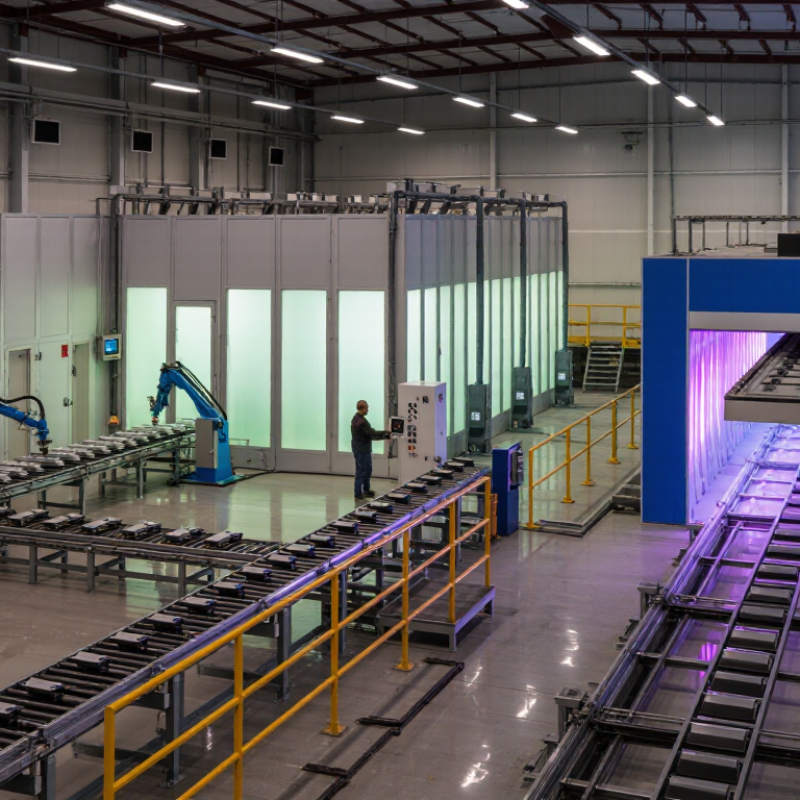
What Are the 2026 Top Painting Line Types for Buyers?

What Painting Line Types Are Available to Buyers in 2026?

In 2026, buyers can choose from several painting line types, depending on product size, material, and production volume. Manual spray lines suit small workshops and frequent color changes. They need limited equipment, but finish consistency depends heavily on operator skill. A compact spray booth, filtered airflow, and a controlled drying area are essential details.

Batch powder coating lines work well for metal parts produced in mixed sizes. Operators load parts onto racks, apply powder, and cure them inside an oven. This setup reduces overspray waste and supports durable finishes. Buyers should check oven temperature uniformity, ventilation capacity, and rack loading limits. These details often affect real output more than advertised line speed.

Automated conveyor painting lines suit large, repeatable production. They may include pretreatment, spraying, curing, cooling, and inspection sections. Sensors can monitor temperature, coating thickness, and conveyor movement. Dip coating and electrocoating lines are also available for parts requiring even coverage around edges or internal surfaces. They usually demand higher installation costs and stricter process control. Not every factory needs that complexity.

In factory assessments, I have seen buyers underestimate floor space and maintenance access. That mistake becomes expensive. Energy recovery systems can lower operating costs, but their value depends on daily production hours. A reliable supplier should provide airflow data, curing tests, safety documentation, and training records. Buyers should request sample panels before approval. Even then, one test may not represent every future material or color.


How the Main Painting Line Technologies Work

In 2026, buyers are comparing painting lines by process control, not appearance alone. A painting line moves parts through preparation, coating, flash-off, curing, and inspection. Each stage affects the final surface. Conveyor speed sets production rhythm, while sensors monitor temperature, humidity, and coating thickness. Small changes matter. A clean booth and stable airflow can prevent dust, runs, and uneven edges.

Automatic spray lines use pumps and spray guns to atomize liquid paint into fine droplets. Robotic arms adjust distance, angle, and movement around complex parts. This method offers flexible coverage, but paint viscosity must remain consistent. Roller coating transfers paint through rotating rollers, creating a controlled film on flat panels or sheets. It uses less overspray. It is fast. However, edges and recessed areas may remain difficult.

Curtain coating allows a continuous sheet of liquid paint to fall across moving panels. It works well for flat products and steady production volumes. Powder coating lines use electrostatic charging to attract dry powder to grounded parts. An oven then melts and cures the coating into a durable layer. The process can reduce liquid waste, but heat-sensitive materials need careful evaluation. Not always. Buyers should test real parts, record film thickness, and inspect corners after curing. A technically impressive line may still underperform when cleaning, color changes, or operator training are overlooked.

What Are the 2026 Top Painting Line Types for Buyers? - How the Main Painting Line Technologies Work

Painting Line Type How the Technology Works Typical Coating Materials Typical Operating Range Best-Fit Applications Main Advantages Main Limitations
Air Spray Line Compressed air atomizes liquid paint into a fine spray. The operator or automatic reciprocator controls the spray pattern and coating thickness. Waterborne, solvent-borne, two-component and clear coatings. Atomizing air commonly 1.5–4 bar; coating thickness often 15–50 μm per coat. Complex metal parts, plastic components, furniture, machinery and products requiring a high-quality appearance. Excellent finish quality, flexible color changes and good control on irregular surfaces. Overspray can be high; booth ventilation, paint filtration and operator training are important.
Airless Spray Line A high-pressure pump forces coating through a small orifice, breaking it into droplets without compressed-air atomization. High-build primers, protective coatings, acrylics, epoxies and polyurethanes. Fluid pressure commonly 70–250 bar; suitable for medium-to-high film build. Large steel structures, agricultural equipment, containers, tanks and heavy industrial parts. Fast application, high productivity and good coverage with thick coatings. Less forgiving on small or intricate parts; overspray and surface texture require process control.
Electrostatic Liquid Spray Line The paint droplets receive an electrical charge and are attracted to a grounded workpiece, improving wraparound deposition. Solvent-borne and waterborne liquid paints formulated for electrostatic application. Typical transfer efficiency is approximately 60–90%, depending on part geometry and settings. Automotive components, appliances, metal furniture, cabinets and repeated production parts. Reduced overspray, strong edge coverage and consistent finish on conductive parts. Requires electrical grounding and controlled booth conditions; recessed areas may receive less coating.
Powder Coating Line Dry powder is electrostatically charged and sprayed onto a grounded part, then melted and cross-linked in an oven. Thermoset epoxy, polyester and epoxy-polyester powders; thermoplastic powders for selected uses. Typical metal part curing is about 160–200°C object temperature for approximately 10–30 minutes, depending on formulation. Metal panels, frames, appliances, wheels, shelving and outdoor equipment. Very low volatile organic compound emissions, high durability and reclaimable overspray in suitable systems. Requires an oven and electrically conductive parts; heat-sensitive substrates are generally unsuitable.
Dip and Immersion Line Parts are immersed in a tank so the coating contacts external and internal surfaces. Electrodeposition adds an electric field to drive charged particles onto the part. Waterborne primers, electrophoretic coatings, rust-preventive treatments and sealers. Tank temperature, immersion time and electrical conditions are selected according to the coating system; electrodeposition commonly uses tens to hundreds of volts. Automotive bodies and components, fasteners, tubular parts and products with enclosed or difficult-to-spray areas. Uniform coverage, strong penetration into cavities and high automation potential. Large tanks, wastewater management and bath maintenance increase installation complexity.
Curtain Coating Line A continuous falling curtain of liquid coating is formed across the conveyor width; flat panels pass through the curtain at a controlled speed. Waterborne lacquers, UV-curable coatings, primers and clear finishes. Commonly used for flat panels at approximately 10–60 m/min, depending on coating and line design. Wood panels, doors, flooring, furniture boards and other flat products. High throughput, even coverage and efficient coating recovery on suitable products. Not suitable for highly contoured parts, vertical surfaces or products with complex recesses.
Roller and Coil Coating Line Metering rollers transfer a controlled liquid film to a moving sheet or panel. Coil systems continuously clean, treat, coat, cure and rewind metal strip. Polyester, polyurethane, plastisol, epoxy and waterborne coil coatings. Continuous lines may operate from roughly 30–150 m/min; film thickness is controlled by roller gap and line speed. Pre-painted steel and aluminum, appliances, roofing, wall panels and flat furniture components. Very high productivity, accurate film control and low overspray. Primarily designed for continuous flat substrates; edge and surface preparation control are critical.
UV-Curing Painting Line Ultraviolet radiation rapidly polymerizes photoreactive components in the coating after application by spray, roller or curtain methods. UV-curable acrylates, clear coats, primers and selected pigmented coatings. Curing can occur in seconds, subject to lamp energy, coating thickness, pigment level and line speed. Wood panels, flooring, printed surfaces, electronics and products requiring rapid handling. Very fast curing, high productivity and limited thermal exposure to the substrate. Shadowed areas may remain uncured; lamp maintenance, shielding and photoinitiator compatibility are necessary.

Note: Operating ranges are representative industry values. Actual settings depend on coating formulation, substrate, part geometry, required film thickness, curing method and applicable safety regulations.

Which Industries and Products Suit Each Painting Line Type?

Manual spray lines suit furniture panels, custom machinery, repair parts, and low-volume metal products. Operators can adjust spray distance for curved edges and irregular shapes. A compact booth may reduce setup costs for smaller workshops. This flexibility has a weakness. Finish consistency depends heavily on training, lighting, and daily spray-gun checks.

Automated conveyor liquid-paint lines fit automotive components, appliances, lighting housings, and repetitive steel enclosures. Hooks move parts through pretreatment, drying, spraying, and curing at a controlled rhythm. This arrangement supports high output and useful process records. However, stable loading is essential. Recessed corners and thin edges can still create coverage problems. Engineers should test actual products, not only flat samples.

Batch powder-coating lines work well for bicycle frames, storage racks, electrical cabinets, and fabricated aluminum parts. They create durable finishes after oven curing and suit medium-volume production. They are especially practical when products use one or two common colors. Heat-sensitive plastics may not tolerate the curing temperature. Dip or electrophoretic lines better suit small metal components, vehicle hardware, and products needing thorough internal coverage. They offer strong corrosion protection when pretreatment is controlled. Yet complex baths require chemical monitoring, wastewater controls, and experienced technicians. The most expensive mistake is choosing by speed alone. Product geometry, material, volume, and finish requirements should guide the decision.

How to Compare Painting Lines by Cost, Quality, and Efficiency

When comparing painting lines in 2026, buyers should examine total operating cost, not only the purchase price. Batch lines often suit varied products and lower production volumes. Continuous lines can deliver faster output for stable, high-volume work. Automated spray lines reduce labor needs, but they require skilled setup and regular maintenance. Powder coating may lower solvent-related expenses, while liquid systems can offer broader color and finish control.

Ask suppliers for measured data from similar materials. Check coating thickness, transfer efficiency, curing temperature, and average reject rates. A reliable comparison should include electricity, compressed air, filters, labor, cleaning time, and spare parts. Small details matter. A clogged filter can reduce airflow and create uneven coverage across a large panel. Inspect sample panels under bright, angled light. Gloss, edges, corners, and hidden surfaces often reveal problems.

Quality should remain consistent during long production runs. Request test records, maintenance schedules, operator training plans, and realistic capacity figures. Do not trust a maximum speed without seeing the line under normal conditions. One overlooked issue is changeover time. A line producing five colors daily may lose hours through cleaning and adjustment. I have also seen buyers overvalue robotics while underestimating curing limits. More automation is not always more efficient. Leave room for manual inspection, especially during the first months. A slightly slower line with fewer defects may produce a better return than a cheaper system that demands constant rework.

What Are the 2026 Top Painting Line Types for Buyers?

How to read the chart: Higher scores indicate stronger performance. The cost score represents lower relative total ownership cost, while quality and efficiency scores reflect finish consistency and material-transfer efficiency.

These are indicative industry benchmark scores based on commonly reported operating ranges: conventional air spray typically achieves about 25–40% transfer efficiency, HVLP about 40–65%, electrostatic liquid coating about 60–85%, and powder coating about 60–95%. Actual results depend on equipment configuration, coating material, automation level, product geometry, and line utilization.

What Buyers Should Check Before Choosing a Painting Line?

Choosing among 2026 painting line types starts with the product, not the machine catalog. Spray lines suit complex surfaces and controlled film thickness. Roller systems can reduce overspray on flat panels. Reciprocating systems fit repeatable batches, while robotic cells offer flexible movement. The right choice depends on shape, coating, volume, and available floor space. A beautiful specification can still fail on your actual parts.

Buyers should request test panels using the real substrate and coating. Check coverage around corners, edges, holes, and recessed areas. Measure film thickness at several points, not only the center. Ask how the line controls temperature, humidity, airflow, and curing time. These details affect adhesion and surface appearance. Small defects become expensive after assembly. They also reveal whether operators can adjust the process without stopping production.

Look beyond the purchase price. Review energy use, filter replacement, cleaning time, spare parts, training, and safety controls. Ask for documented performance data and references from similar production conditions. Confirm the line’s inspection records and maintenance access. A narrow conveyor may save space but restrict future products. A highly automated system may reduce labor, yet require stronger technical support. No line is perfect. I would leave room for trial adjustments, because real production rarely behaves exactly like a supplier’s demonstration.

Article Source:

Powder Coat Booths

For those larger-sized parts, or smaller quantity runs, we have 2 independent powder coat booths and ovens. The quality, durability and affordability of today’s powder coating finishes make this the process of choice for world-class companies.

Powder coating advantages over other forms of coating are many. Materials used in the Powder coating process can be metals and non-metals that come in a multitude of thicknesses, textures, colors, etc. Another of Powder coating’s biggest advantages over conventional coatings is its ability to create finishes in many different textures. Powder Coating Booths allow us the ability to apply these advantages to large products.

Wet Paint Line

Tri-State Fabricators runs a full-service conveyor line for painting. Wet painting can provide protection or decoration to many different part styles. From start to finish, every project is easier to undergo random and point-based inspection by our skilled painting team.

Advantages to our Wet Paint Line are these lines start with product prep and ends with a thorough inspection of a high quality finished product. Our ability to complete large and small projects with a superior finish and doing so in a timely and economical fashion. This passes along the savings in production to our customers. When powder coating ins not an option, our Wet Paint Line gets the job done right the first time.

Wet Paint Booths

When the parts get big and heavy we roll-out our custom paint racks and oversize booth. By utilizing our partnerships with all the major paint brands, we can match virtually any color with wet paint.

The advantages of having access to a Wet Paint Booth are many. Large projects of many different shapes can be loaded into the booth. The Wet Paint Booth offers an environment that is much more controlled than a typical parts painting operation.

Not only are they used because of their controlled environment, but they’re are also advantageous when it comes to applying paint to parts that are needed in industries that require specialty coatings such as medical, aerospace, etc.

Military CARC

Our military forces have some very high standards when it comes to the finish of their vehicles and equipment. From the first pre-treatment step to final coat, it takes a great deal of knowledge and experience to protect the men and women of our armed forces. They deserve only the best, and Tri-State Fabricators provides it.

All of our processes are closely monitored by our staff and management teams. Both of which are highly trained in the processes of metal fabrication and finishing. Tri-State Fabricators’ goal is to always fully satisfy each and every customer, including the military. We will always put a 110% into what we do.

Glass-Bead Blasting

Abrasive media blasting is an excellent way to remove old paint, rust, and increase the paint/powder adhesion. Glass beads produce a much smoother and brighter finish than angular abrasives; leaving the part clean yet without any dimensional change. Chemically inert and environmentally friendly, we can recycle our beads approximately 30 times; making them a more preferred method of metal cleaning or surface finishing.

Advantages to Glass Bead Blasting are many. Glass bead blast media is used when a project is needing rough surfaces need to become smooth for applications of coatings such as paint. It is typically used to clean paint and rust from a product surface without deforming the surface it is being used on. Overall, compared to many other blasting media, Glass Bead Blasting is a very economical choice and those savings are always passed on to our customers.

Part Washing

Tri-State Fabricators utilize a zinc phosphate wash to clean and etch the material to ensure the best paint adhesion possible. The unique design of our 3-stage wash system does the work like a 5-stage. From Cleaning and rinsing to conversion coating and post-treatment, Our Part Washing process is a complete service and works throughout the fabrication service and the finishing service.

Along with the previously mentioned benefits, Curing is a vital chemical reaction that leaves the product finish hard and relatively safe from mild abrasion and aggressive corrosion. This process can be done in more than one way; ambient air-dry or in curing ovens at temps that exceed 240°.

Burn-Off Oven

From fixing paint mistakes (someone else’s of course) to simply cleaning our paint line hooks, our burn-off oven is put to good use. After a quick burn-off, a little clean up, and a fresh coat of paint, your parts will look better than new.

Why does our Burn-Off Oven work so well? Because super heating the air around parts turns the materials into ashes. From paint and powder coatings to rubber and machining oils, high temps do the job without degrading the integrity of the part.

Masking

Masking is a vital part of producing high quality products. We have die-cut masking patterns to protect machined surfaces as well as a wide range of plugs and caps to protect threaded holes and bolts. We provide permanent and temporary masking.

Masking allows the selected sections of a product to be protected from a fabrication or finishing service. This can be with both chemicals when etching and tapes, paints when only finishing just a section of the product. Masking is great in aiding the customization process of a project.

Screen Printing

Screen printing is a photographic process that transfers artwork onto a porous nylon screen which allows colored ink to flow through the screen and be deposited on an aluminum or plastic component. We can generally have just about any design created onto a screen for your parts.

Some of the advantages of Screen Printing are, brand recognition for your business displaying on your products, assembly instructions, product warnings/hazards, etc. Tri-State Fabricators produces Screen Printing of the highest quality so you know it’s durable.

Metal Finishing

Metal Finishing is the art of treating the exterior portion of product, often metal but can also be made of other materials, so that the surface is clean and free of any debris. Then the process of applying coats or either paint of powder coat takes place. This coating process improves the quality of the product in both appearance and resistance to wear and corrosion.

Tri-State Fabricators, Inc., understands that a project typically isn’t complete until a high-quality finish has been added to your product. This is why our painting and powder coating teams continuously inspect the products throughout the Metal Finishing process.
